稳定币能否成为美元霸权真正的支柱?

比推Published on 2025-09-23Last updated on 2025-09-23

作者:Spyros Andreopoulos

编译:深潮TechFlow

原标题:稳定币救不了美元霸权


从短期来看,稳定币的增长可能会缓解美国的财政约束,并进一步巩固美元作为主导货币的地位。然而,从长远来看,稳定币只是为关于美国制度质量的讨论增加了一层复杂性。

最终,决定美元地位的仍然是美国的财政稳健性以及其中央银行保持低通胀和稳定通胀的能力。

来源:SpaceXUnsplash上的照片

特朗普政府似乎对扩大稳定币需求以弥补联邦财政赤字寄予厚望——这种需求是美国财政部缩短债务平均期限(通过发行更多国库券,同时保持票据和债券发行量不变)的主要官方理由之一。

顺便说一句,我认为缩短债务的平均期限也是增加美联储降低利率压力的一种方式。

还有一些证据表明,稳定币的需求已经降低了美国短期债务的利率。

此外,政府将稳定币需求视为支撑美元主导货币地位的主要支柱。

原因并不难理解。

财政部长贝森特(Bessent)预测稳定币的规模将增长至2万亿美元(我甚至见过更高的数字)。由于绝大多数稳定币都与美元挂钩,稳定币的需求很可能就是美元需求。

根据《GENIUS法案》(GENIUS Act)的规定,美元现金、美国国内受保银行存款以及剩余期限不超过93天的国债被列为允许的储备工具,因此这部分需求中的很大一部分将流向联邦债务。

从纯粹的美国国内角度来看,稳定币是否真的会增加对国债的净需求尚无定论——这取决于稳定币实际上替代了什么。

如果人们不持有投资于短期美国政府债券的货币市场基金股票,而是将部分财富持有在稳定币中,那么对国库券的净需求实际上不会增加。

我的直觉是——目前为止还没有更多——产生对美元和美国国债净需求的最重要渠道是国际渠道:稳定币需求的美元化渠道

稳定币使美国以外的数百万人更容易获得美元,特别是在通货膨胀率高、货币疲软和银行体系不发达的国家。

话虽如此,非美国私营部门对稳定币需求的增长可能会被官方对美元需求的下降部分抵消。为什么呢?

稳定币似乎有可能通过增加美元资产在美国以外资产负债表上的占比来改善全球金融稳定性。然而,如果真是这样,这可能会减少新兴市场国家的货币错配,而货币错配正是新兴市场官方部门对美元的预防性需求的主要原因之一。

再谈美元的制度基础

然而,我对稳定币需求对美元角色的帮助有更深层次的担忧。这与美元本身以及支撑美元的制度有关。

美国的财政状况众所周知,这里就不赘述了。
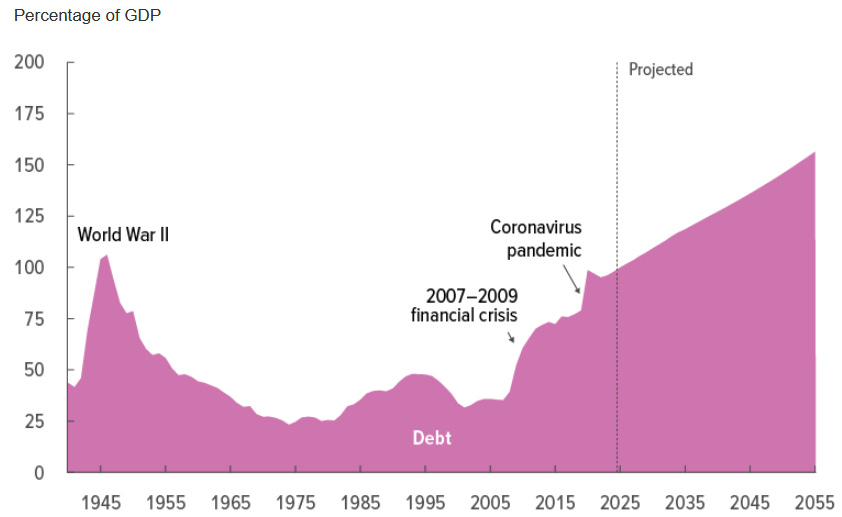
来源:国会预算办公室(2025 年 3 月)

作为一个长期以来钦佩美国的欧洲人,我可能并不孤单地诊断出一种由政治分裂引发的“财政末日机器”。

这个“末日机器”之所以能够继续运转的一个关键原因是美国的主导货币地位以及由此产生的对美国政府资产的需求:美元的“过度特权”扩大了美国联邦政府的财政空间。

但这最终并不能减轻根本性财政改革的必要性。这项改革应该主要围绕增加联邦收入(顺便说一句,这与欧洲的情况相反,欧洲的财政改革应该侧重于削减支出)。

现在,回到稳定币。

稳定币对美国政府债务的需求增加,或许会在短期内放松财政政策的限制。但这并不能解决任何长期问题——它无法摧毁这台末日机器。

事实上,它更有可能阻碍亟需的财政改革。

换句话说,我担心稳定币可能只是美国政客用来自缢的绳索——以及随之而来的过度特权。

然后还有美联储。

我一直认为,鉴于过度特权对财政当局的约束较为宽松,货币政策也必须受到约束:货币政策不能屈从于财政政策的需求(正如特朗普及其运动所宣称的那样)。避免这种情况的一个必要(尽管并非充分)制度条件是美联储的独立性

这里的重点是,如果在此期间美联储的独立性被削弱并导致更高的通胀,那么稳定币最终对美元的地位也无济于事。

稳定币的背书

最终,正如皮耶帕奥洛·贝尼尼奥(Pierpaolo Benigno)所说,关键在于稳定币的背书方式。

在货币主导的体制下(即中央银行提供价格稳定,而财政当局单独负责债务的可持续性),稳定币及其背后的国债最终由税收支持:“要让稳定币安全,国债本身必须安全。”

在财政主导的体制下,稳定币最终由中央银行支持。在这种情况下,稳定币可能会引发通胀,因为美联储可能被迫将相应的发行货币化。

我的结论是,虽然从短期来看,稳定币的增长可能会缓解美国的财政约束,并提升美元的主导货币地位,但从长远来看,稳定币只是为关于美国制度质量的讨论增加了一层复杂性。最终,决定美元能否保持其地位的仍然是美国的财政稳健性以及其中央银行提供低通胀和稳定通胀的能力。


Twitter:https://twitter.com/BitpushNewsCN

比推 TG 交流群:https://t.me/BitPushCommunity

比推 TG 订阅: https://t.me/bitpush

说明: 比推所有文章只代表作者观点,不构成投资建议

Related Reads

Wall Street Morning Report: S&P Earnings Growth Hits 30-Year High, Nvidia Becomes SpaceX's 6th Largest Shareholder

Wall Street Morning Report: S&P 500 earnings growth hits a 30-year high; Nvidia becomes SpaceX's 6th largest shareholder. Market Summary: U.S. stocks ended slightly lower on Friday after record highs, with the S&P 500 posting a weekly gain. Weaker-than-expected July retail sales data significantly reduced market expectations for a September Fed rate hike. Key Themes: * **Macro & Rates:** The probability of the Fed holding rates steady in September rose to ~70%. Geopolitical tensions in the Middle East supported oil prices near $90. Focus this week is on a $16B 20-year Treasury auction testing investor demand amid high yields. * **Corporate Earnings:** S&P 500 Q2 earnings grew 31%, the fastest pace since 1992 excluding recession recoveries, driving a valuation reset. * **AI & Tech Sector Rotation:** The AI investment narrative faces scrutiny over financing and return timelines. Semiconductor stocks saw divergence: memory (SanDisk, Micron) and optical communication (Applied Optoelectronics) surged, while Broadcom fell sharply on credit rating downgrade concerns over AI leasing exposure. * **Notable Moves:** Nvidia disclosed a ~$21B stake in SpaceX. AMD rose 6.5% after a record debt issuance. Reddit rallied ahead of its S&P 500 inclusion. This Week's Highlights: * **Fed Minutes (Thu):** Key for gauging policy divergence and September rate outlook. * **Key Earnings:** Alibaba, Walmart, Nvidia, AMD. * **Events:** Seoul AI Summit, World Robot Conference, potential恒生指数 rebalancing. * **Data:** U.S. jobless claims, Japan core CPI, Korea early export data (a leading indicator for semiconductors).

marsbit51m ago

Wall Street Morning Report: S&P Earnings Growth Hits 30-Year High, Nvidia Becomes SpaceX's 6th Largest Shareholder

marsbit51m ago

BTC in Range-Bound Consolidation, HYPE Daily Rebound Confirmed | Invited Analysis

**Market Analysis: BTC Consolidates in Range, HYPE Shows Daily Rebound Confirmation (Weekly Outlook)** **BTC Analysis:** The market is at a key juncture. Bitcoin is undergoing a daily correction, with a critical focus on whether it can find support and stabilize above the $60,950 level. The adjustment that began from the May 6th high has formed a complex seven-segment structure on the daily chart. Three potential paths are identified: 1. **Continuation of the c-wave rally** (primary scenario), targeting $67,300 initially, then $69,500-$71,000. 2. **Range-bound consolidation** between $60,950 and $65,500, forming an "ascending中枢" before an upward breakout. 3. **Breakdown and secondary探底** if support at $60,950-$61,500 fails. Analysis favors the first two scenarios. The 4-hour chart suggests the current adjustment phase is nearing completion near the strong $60,950-$61,500 support zone. **BTC Strategy:** * **Key Levels:** Support at $62,268, $60,950-$61,500, $57,820. Resistance at $65,500, $67,300, $69,500-$71,000. * **Mid-term:** Current model indicates a bearish structure with ~20% short exposure. Consider adding to shorts (up to 50%) only if price rallies to $69,500-$71,000, shows clear stagnation, and model confirms. * **Short-term (30% capital):** Two tactical plans: * **A) Test shorts** near strong resistance ($69,500-$71,000) upon signs of weakness. * **B) Test longs** near strong support ($60,950-$61,500) upon stabilization signals. **HYPE Analysis:** HYPE has established a daily rebound from the August 2nd low. The 4-hour chart shows a five-segment上升 structure with a formed "ascending中枢". The current (76-77) segment is crucial. Two outcomes are possible: 1. **Breakout (Central离开段):** If price breaks and holds above the $58-$58.5 resistance zone, the uptrend continues. Monitor for momentum背驰 between the initial and breakout segments. 2. **Consolidation (Central Extension):** Failure to hold above $58-$58.5 leads to a return to中枢 consolidation, requiring new signals for direction. **HYPE Strategy:** * **Key Levels:** Support at $50-$52, $45. Resistance at $58.5-$60, descending channel upper rail, $72.97. * **Watch:** Whether price can break/hold above $58-$58.5 to confirm the breakout. * **Action:** * **Existing longs (from $50-$52):** Move stop-loss above entry cost. * **New entrants:** Consider light longs only on a confirmed breakout above $58.5-$60 with a tight stop-loss. Exit quickly if momentum背驰 appears. **General Risk Management:** * Set initial stop-loss immediately upon entry. * Move stop-loss to breakeven at +1% profit. * Trail stop-loss upwards by 1% for every subsequent 1% gain to lock in profits. **Disclaimer:** Market conditions change rapidly. This analysis is for informational purposes only and not investment advice. Trading carries significant risk.

marsbit54m ago

BTC in Range-Bound Consolidation, HYPE Daily Rebound Confirmed | Invited Analysis

marsbit54m ago

Not Chasing AI or Buying Back Shares, Can 'Stingy' Jingdong Still Succeed?

On August 13th, JD.com (JD.US) released its Q2 2026 earnings, delivering a mixed and generally "flat" performance that met low expectations but offered few positives. Overall revenue declined by approximately 3% year-over-year (YoY) to ~¥346.4 billion, aligning with weakened domestic consumption trends. While group operating profit saw a YoY improvement, this was primarily due to reduced losses in the food delivery segment compared to the high-cost "delivery war" period of the previous year. Key details reveal deeper concerns: revenue from JD's core domestic retail segment fell 4.7% YoY. While electronics sales declined less than feared (~12% YoY), growth in daily necessities and advertising services plummeted by about 10 percentage points each, raising doubts about the segment's mid-term growth momentum post-subsidy adjustments. Logistics revenue growth also slowed to 5.9% as the delivery boom faded. Profitability presented a nuanced picture. The retail segment's operating margin edged up slightly YoY but failed to deliver the significant beats seen in past quarters, suggesting efficiency gains may be nearing limits. Losses from the New Businesses segment (including food delivery and overseas ventures) remained elevated at ~¥9.9 billion, as increased overseas investment partially offset reductions in delivery subsidies. Notably, JD's shareholder returns weakened significantly, with share buybacks in H1 2026 annualizing to only about 5% of market cap. The company opted to park cash in short-term investments rather than boost returns, drawing criticism. Looking ahead, JD's performance hinges on a potential recovery in China's e-commerce sentiment in H2 2026 and the scale of ongoing losses in new ventures. While not burdened by massive AI capex like some peers, and offering relative defensive stability, the lack of positive earnings surprises and diminished shareholder returns provide little compelling reason for investors to favor the stock in the near term.

marsbit1h ago

Not Chasing AI or Buying Back Shares, Can 'Stingy' Jingdong Still Succeed?

marsbit1h ago

Trading

Spot
活动图片