侃爷代币 YZY 宣告名人币神话破灭?前 1000 持币地址无“平民”赢家,大户跑的快却山顶站岗

marsbitPublished on 2025-08-26Last updated on 2025-08-27

名人币赛道再起波澜,全球极具影响力但饱受争议的艺术家Kanye West(侃爷)在8月21日突然宣布发布的个人MEME代币YZY,在短时间内市值拉升至30亿美元以上。在短短数小时内,有人靠提前布局获利数百万美元,而更多人则匆匆赶来就被挂在山顶。

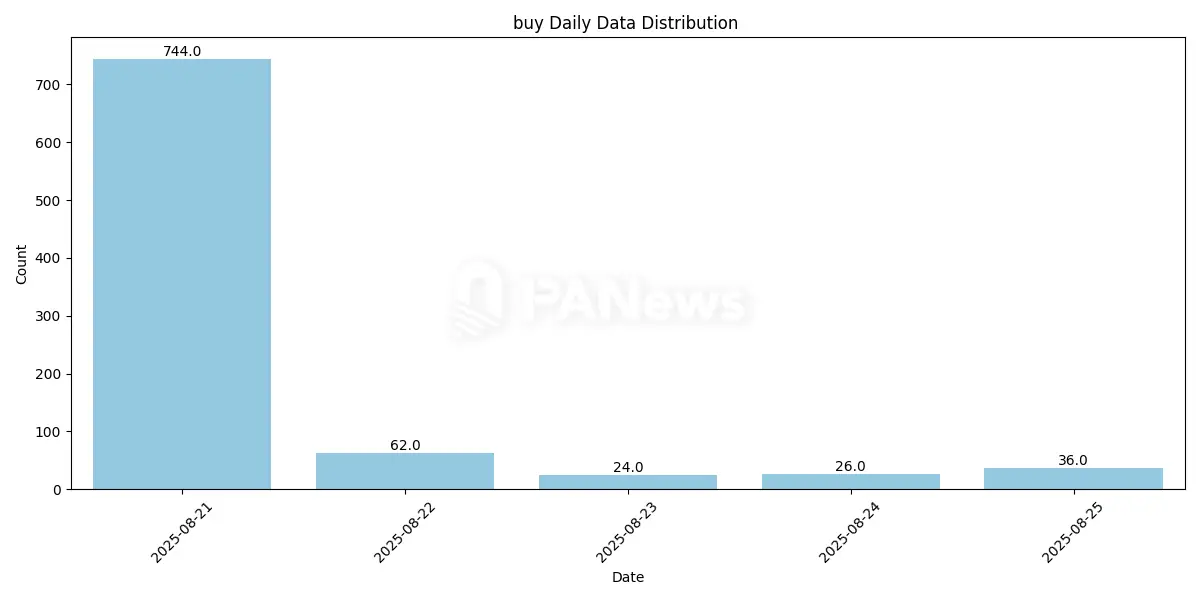
PANews针对YZY的前1000名持仓大户的初次买卖进行了一次分析。这一次,YZY的发行似乎彻底扯掉了所谓名人发币与财富故事之间的虚无纽带。老鼠仓和机器人悉数获利,名人币这场游戏当中再无“平民”赢家。


大户入场加速仍被挂在山顶

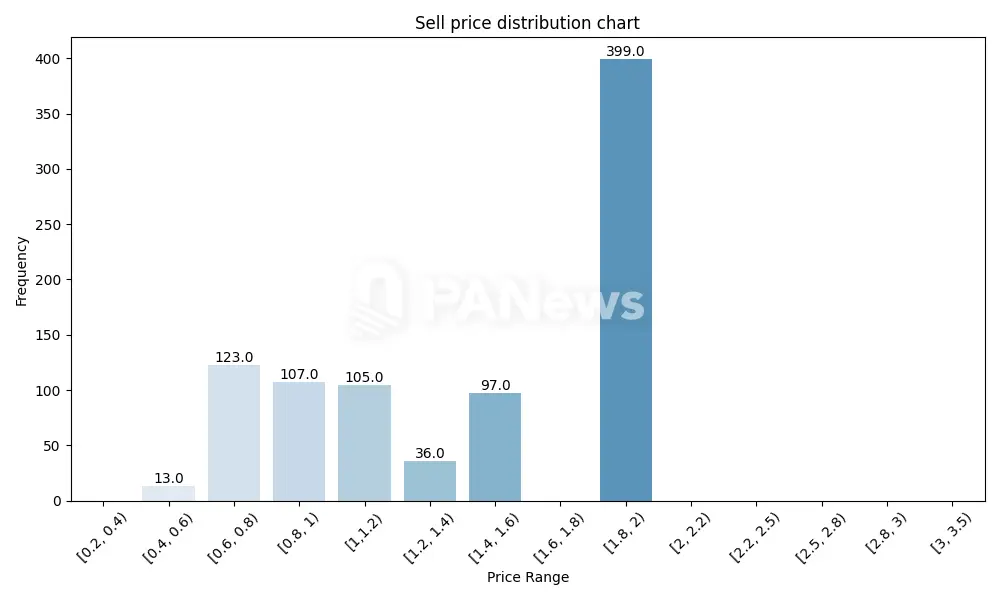
从整体的数据来看,YZY前1000名持币地址初次买入的平均成本价格约为1.45美元。其中,大批大户的初次买入价格约为1.8~2美元的区间,大约有44%的大户初次购入成本在此区间。或许是因为买入即被套牢,YZY的大户们截至8月25日普遍仍未进行初次卖出,893个地址买入之后,约有275个地址卖出了部分代币,卖出占比仅30%左右。
Kanye West

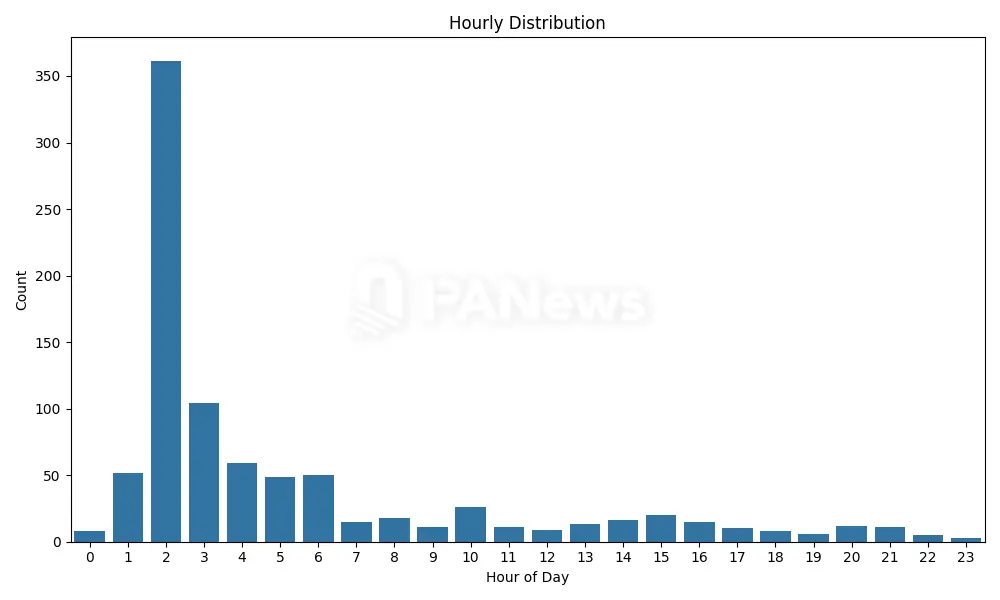
而从时间节点上来看,这些大户们入场的时机并不算慢。基本都集中在8月21日(代币公开的当天),且时间也集中在Kanye公布后的1小时内。有超过一半的地址都是在该代币开盘后2小时内买进的。
Kanye West


Kanye West

从资金规模上来看,这些大户的初次投入平均金额约为28.5万美元。这一数值要远高于Libra的前一千位地址(均值约为9696美元),但远低于TRUMP代币前1000名当时的平均59万美元买入。总体上看,这些大户们的总持仓约为4676万美元(剔除团队持币),占到总市值的8.5%左右,占总流通量的约65.3%。

从卖出的效果来看,虽然只有部分大户进行了卖出操作,但从数据上来看,这些离场的大户基本也是亏损的状态卖出的。平均的初次卖出价格为1.19美元,相比1.45美元的平均入场价,平均亏损比例约为18%。另外,卖出的平均仓位也远远小于入场,仅为1.18万美元。

从这个角度来看, 这次YZY的参与主力似乎不再是散户,而是热衷于名人币的大户们。与此前的TRUMP和LIBRA相比,这次的大户们进场时机更快,且都集中在开盘初期。但无奈后续跟进的市场认可度似乎不足,到8月22日开始,虽然YZY的价格已经回落至初期大户们的一半以下价格,但仍然只有零星的大户们选择在这个阶段进场。


老鼠仓与机器人为刀俎的收割游戏

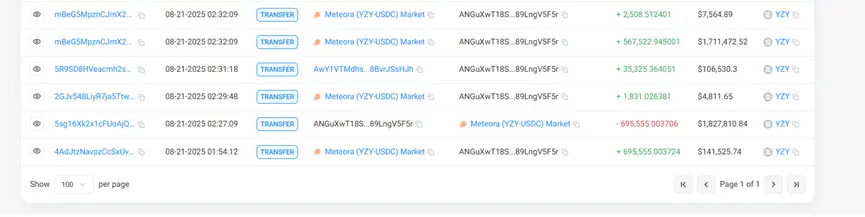
其中单笔买入最高的大户是ANGuXwT18StoX2Ghp3387x6vajPk3sEsxC89LngV5F5r这个地址,该地址在Kanye公布地址后的一分钟内花费20万美元买进了69.5万枚代币,均价约为0.287美元。为了完成这笔买入,该地址不仅设置了40%的滑点,还额外向Jtio支付了3.8枚SOL作为优先费用。

当然,最终在半小时后该地址卖出了182万美元,获利超160万美元。
Kanye West

值得关注的是,该地址也被社区认为是内幕团体的一员。从操作行为上来看,的确存在这种可能性,这个地址于8月19日被创建(YZY的代币也在同一天被创建),然后从币安交易所提现了约20万美元的USDT和49枚SOL。此后,直到YZY上线前该地址没有在做过其他MEME币的交易。很显然,这个地址的创建就是为伏击YZY代币。

在统计的样本当中,有4个地址在开盘后1分钟内买进了YZY。不过这里也有抢开盘的机器人高手,例如6xuMV6W6QVxrVmsZxEdLfV6kfhuBsg3ah1X8rydLfQvy这个地址,该地址自开盘后2分钟内接连投入300枚SOL买进YZY,最终获利约8万美元。从交易行为上看,这个地址经常进行MEME代币的交易,截至目前已进行了超过1万笔交易。

此外,根据Bubblemaps发布的调查表示,此前曾策划并狙击过MELANIA、LIBRA等名人币的Hayden Davis这一次再次出手,通过多笔中心化交易所地址将资金打散转入,并在第一时间对YZY代币进行了狙击,最终获利约1200万美元。


名人币神话破灭

近一年来,从特朗普发行TRUMP之后,名人币的发行赛道曾有一度进入集中发行期。但从结果来看,这些名人代币普遍跌幅都超过九成以上,对投资者造成极大伤害。

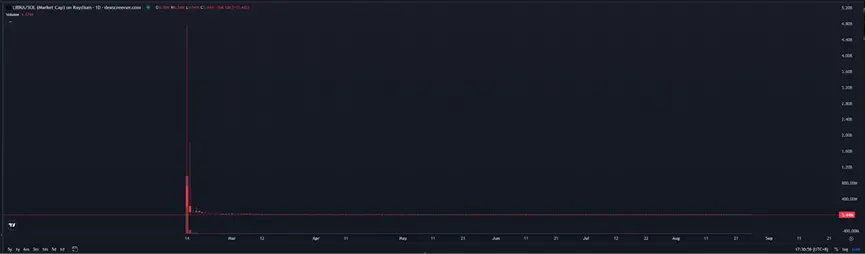
截至目前,TRUMP的流通市值约为16.5亿美元,距离高点下跌约为90%。总统夫人代币MELANIA的流通市值约为1.48亿美元,从高点下跌约为99%。阿根廷总统发行的代币LIBRA市值仅剩540万美元,相比高点时的47亿美元市值蒸发了99.9%。且这些代币的运行轨迹都是同一种L型,自发行初期达到高潮后就再无波澜,一路下滑。
Kanye West

而如今发行的YZY,从持币地址数上来看,2.7万个持币地址远不及之前的几个名人币的热度。另外一方面,大户们高达1.8美元以上的成本区间,和后无来者的窘境,使得抢跑获利的难度指数级增加。从K线上来看,只要没能在10分钟内抢跑入场的大户几乎都被挂在了最高处,且下跌的速度很快,从最高点下跌70%只用了2小时。这种跌幅和速度甚至要比一些无背景的MEME币更夸张。
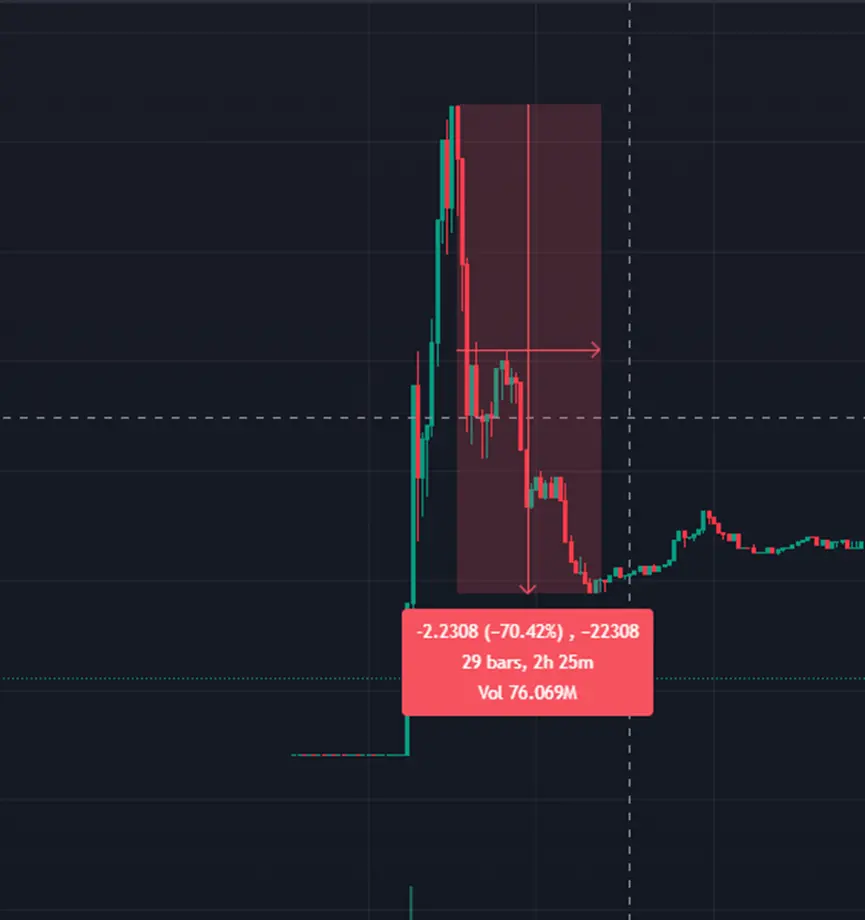
Kanye West

YZY初期走势图

回顾从TRUMP到YZY的众多名人币,我们可以清晰地看到一条相似的轨迹:

闪电战与头部效应:名人币的启动依赖于名人自身的巨大影响力,能够在瞬间吸引全球的目光和资金。这导致了开盘初期的价格飙升,为极少数的“内部人士”或“抢跑专家”创造了惊人的利润空间。他们利用信息优势和技术手段,在散户入场前完成收割。

“大户”接盘与散户的迷惘:与普通MEME币不同,名人币的第二波主要参与者往往是资金雄厚的大户。他们或许错过了最初的黄金一分钟,但凭借对名人效应的迷信和赌徒心态,选择在高位接盘。然而,一旦热度难以持续,后续资金无法跟上,这些大户便和闻风而来的散户一同被套牢。

价值真空与L型走势:剥开名人的光环,这些代币本身几乎没有任何实际价值和应用场景作为支撑。当炒作热潮退去,市场情绪迅速冷却,价格便会“自由落体”,最终形成一条难看的“L”型K线。暴涨的神话只存在于最初的几分钟或几小时,随之而来的是漫长的价值归零之路。从TRUMP到LIBRA,再到如今的YZY,无一例外地验证了这个“铁律”。

YZY的这场风波,再次证明,名人币赛道并非一片价值蓝海,而是一个被信息不对称和市场情绪操控的危险赌场。

在这场游戏中,真正的赢家永远是那些能够提前布局、精准收割的内部人士和资本猎手。对于绝大多数普通投资者而言,当他们从社交媒体上看到消息时,往往已经站在了风险的最高峰。YZY的快速兴起和骤然冷却,为狂热的MEME市场又一次敲响了警钟:在名人光环的照耀下,潜藏的往往是让普通人难以承受的投资深渊。

当下一个“侃爷”出现时,投资者或许应该先问问自己,是想成为别人财富神话里的燃料,还是选择远离这场注定少数人获利的狂欢。

Related Reads

In the Era of Agent Users, Where Does Crypto Value Flow?

Title: Who Makes Money from Agents? The rise of AI Agents as potential blockchain users raises a crucial question: if they become the next billion users, who will capture the value? Traditional crypto value capture theories—like "fat protocols" (where value accrues to the base layer) and "fat applications" (where value accrues to user-facing apps)—assume human users who value UX, brand, and convenience. Agents, however, operate differently: they interact via APIs, have no brand loyalty, and can switch services with near-zero cost. This shift could disrupt existing value flows. Applications might become "headless," offering their routing and infrastructure as APIs to Agents. Alternatively, Agents might bypass intermediaries entirely, allowing protocols to regain value capture ("fat protocols" reborn). A more extreme scenario is that Agents, being purely rational and cost-sensitive, could commoditize the entire stack, compressing margins toward marginal cost and turning crypto into a low-margin utility. However, Agents may not just amplify existing activities; they could enable entirely new ones—like continuous, sub-penny portfolio rebalancing, machine-to-machine commerce, and new market types only viable at automated speeds. This expands the economic pie rather than just redistributing it. Ultimately, the key question for builders is: what will make an Agent return to your service instead of a cheaper alternative? The answer may not be UX but factors like liquidity, latency, settlement guarantees, or a yet-unnamed business model. As humans and Agents will coexist as users, value capture may split: "fat apps" for human-facing services, and a new, evolving model for the Agent-dominated layer.

marsbit21m ago

In the Era of Agent Users, Where Does Crypto Value Flow?

marsbit21m ago

Base MCP, The Next Step for x402

Base has officially launched Base MCP, allowing users to connect their Base Account to AI Agents to perform actions like swaps, transfers, portfolio tracking, and transaction history queries through conversational commands. This move aligns with Base's strategic focus on AI, driven by the broader competition in the emerging Agent-to-Agent payment sector. The evolution of Agent payments has accelerated. In late 2024, the primary method involved insecure browser automation. By 2025, solutions like Coinbase's x402 (providing crypto wallets for Agents), Google's AP2, and Visa's token-based system emerged. x402 has since processed 176 million transactions totaling over $70 million, with a median value between $0.01 and $0.10. Stablecoins, particularly USDC, dominate these settlements due to their negligible transaction costs compared to traditional payment fees, which are prohibitive for micro-payments. Coinbase faces competition from Stripe, which has built a comparable infrastructure for Agent payments with its Tempo blockchain, Privy wallets, Bridge routing (acquired for $1.1B), and the recently launched MPP protocol. Both companies are now competing at the application layer. The core reason AI is central to Base's strategy is to expand the scenarios for Agent payments, ensuring more transactions occur on its network. By securing a dominant position and scale advantage in this nascent field, Coinbase aims to capture the future commercial potential of Agent-driven payments. The launch of Base MCP is thus a strategic step in this larger ambition.

marsbit27m ago

Base MCP, The Next Step for x402

marsbit27m ago

Reframing Ethereum's Valuation: Why the Fee Model is Wrong, and the 'Treasury Logic' is the Future?

"Rethinking Ethereum's Value: The 'Vault Logic' Framework" Traditional valuation models incorrectly treat Ethereum as a company, valuing ETH based on transaction fees ("revenue"). This is flawed. Fees are network friction; a successful network aims to reduce them to zero. Ethereum's average fee has dropped from over $50 in 2021 to around $0.20 today, while transaction volume has tripled. Instead, view Ethereum as a digital vault securing ~$250 billion in on-chain assets (stablecoins, RWAs, L2 bridged funds, wBTC, etc.). Post-merge, Ethereum's security is directly purchased with its own asset: ETH. To attack the network, an attacker must acquire and control staked ETH. Therefore, the vault's security level is intrinsically tied to ETH's market value. Currently, the value of all staked ETH is only ~$72B, protecting ~$250B in assets—a dangerous imbalance. For robust security, the staked ETH securing the network should be valued significantly *higher* than the total value it protects. Applying a conservative security multiplier suggests ETH's fair value should be closer to ~$6,900 (vs. ~$2,070 currently). As on-chain asset value grows into the trillions, ETH's price must rise proportionally to maintain this security budget. Comparisons to free infrastructure like Linux or low-margin utilities like the DTCC are misguided. Their security is provided externally (community, law, banks). Ethereum's security is internal and must be purchased in the open market using ETH. ETH is not the clearinghouse; it is the collateral backing it. The model is not a short-term price predictor but a structural framework. The economic force for ETH appreciation grows monotonically with the adoption of Ethereum for settling value. The narrative that high fees are good is backwards; low fees enable more activity, which increases the value needing protection, thus demanding a more valuable ETH.

marsbit33m ago

Reframing Ethereum's Valuation: Why the Fee Model is Wrong, and the 'Treasury Logic' is the Future?

marsbit33m ago

Justin Sun’s Interview with Hurun Report: A New Order and Certainty for Value Flow in the Era of Transformation

In an interview with *Hurun Report*, Justin Sun, founder of TRON, discussed the evolution of the Web3 industry as it moves from initial exploration to large-scale adoption. He emphasized that the core value of blockchain lies in building an open and inclusive internet of value, enabling anyone globally to transfer and use funds efficiently and at low cost, regardless of location or access to banking. Sun highlighted that projects with lasting impact are those built on genuine demand and real-world usage. He pointed to the stablecoin payment ecosystem as the most mature and scalable application currently, noting that TRON has rapidly become one of the world's largest stablecoin networks. The circulation of USDT on TRON has surpassed $86.3 billion, driven by actual use cases such as cross-border transfers and daily payments, demonstrating strong network effects. Regarding strategy, Sun outlined a methodology combining data-driven iteration, rapid execution, and user-centric focus. He cited the decision to partner with Tether to launch TRC-20 USDT as a key strategic move, based on an assessment of market trends and long-term potential, which has become a significant growth engine for the TRON ecosystem. On globalization, Sun stressed the importance of local compliance and cultural adaptation, noting that success in different markets depends on deep understanding and local partnerships. He also addressed the convergence of AI and blockchain, describing it as a transformative direction where blockchain provides decentralized infrastructure for AI, while AI enhances the intelligence and user experience of blockchain systems. For industry participants and young entrepreneurs, Sun advised continuous learning and adaptability in a fast-changing environment, focusing on building irreplaceable core strengths rather than spreading resources too thinly. Through infrastructure development, global strategy, and technological foresight, TRON aims to advance the practical implementation and evolution of the value internet.

marsbit1h ago

Justin Sun’s Interview with Hurun Report: A New Order and Certainty for Value Flow in the Era of Transformation

marsbit1h ago

Samsung Leverages Technology Cycles, SK Hynix Relies on HBM, What Enabled Micron to Win a Trillion-Dollar Market Cap?

Micron Technology, the Idaho-based memory chip maker, recently saw its market cap surpass $1 trillion, securing its position as one of the top three DRAM manufacturers alongside Samsung and SK Hynix. Its survival and growth story is marked by a unique combination of political maneuvering and hard-won manufacturing efficiency, but also strategic missteps that now challenge its future. Founded in 1978 in Boise without significant government or capital backing, Micron repeatedly turned to Washington for survival during critical junctures. In the 1980s, it filed anti-dumping complaints against Japanese firms, leading to the U.S.-Japan Semiconductor Agreement. Ironically, this created an opening for Samsung, which Micron had earlier licensed its 64K DRAM technology to. In 2002, Micron avoided heavy fines in a price-fixing investigation by acting as a whistleblower against its competitors, cementing its reputation as a "political opportunist." A major strategic error occurred in 2013 with its $2.5 billion acquisition of bankrupt Japanese firm Elpida. This deal burdened Micron with integrating incompatible manufacturing processes just as the industry was pivoting toward HBM (High Bandwidth Memory), a critical technology for AI. SK Hynix had launched its first HBM chip that same year. By the time AI demand exploded with ChatGPT in 2022, SK Hynix commanded about 85% of the HBM3 market, while Micron, playing catch-up, held only around 3%. In 2017, Micron employed similar tactics against a new competitor, Chinese startup Fujian Jinhua, by alleging intellectual property theft, which led to U.S. sanctions effectively crippling the firm. However, this strategy backfired in 2023 when China banned Micron's products from its critical infrastructure, causing its revenue share from China to plummet from 14% in FY2023 to just 7.1% by FY2025. Today, Micron faces a triple squeeze: it lags in the high-margin HBM race, faces pricing pressure in low-end DRAM from Chinese manufacturers like CXMT, and has lost crucial access to the booming Chinese AI server market. Despite its political strategies, Micron's core strength is its exceptional manufacturing cost control, achieved through decades of engineering. Its DRAM chips have a smaller cell area than its rivals, yielding more chips per wafer. This efficiency has been vital for weathering industry downturns. However, this advantage cannot compensate for the decade lost in HBM development. Micron is now racing to ramp up production of its HBM3E, certified by NVIDIA, and develop HBM4. Its future hinges on whether it can close this technological "time debt" through relentless R&D and execution, in a marathon where its competitors, having started earlier, are not slowing down.

marsbit1h ago

Samsung Leverages Technology Cycles, SK Hynix Relies on HBM, What Enabled Micron to Win a Trillion-Dollar Market Cap?

marsbit1h ago

Trading

Spot
Futures

Hot Articles

Discussions

Welcome to the HTX Community. Here, you can stay informed about the latest platform developments and gain access to professional market insights. Users' opinions on the price of MEME (MEME) are presented below.

活动图片