稳定币也能结合 AI?详解 USD.AI 新玩法

marsbitPublished on 2025-08-19Last updated on 2025-08-20

根据Coingecko数据显示,当前全球稳定币市值已超过2850亿美元。而Circle、Kraken等巨头也在纷纷踏入稳定币支付链赛道。

然而,当前绝大多数稳定币项目仍以锚定美元、美债等传统模式为主,整体创新型略显不足,普遍“缺乏想象力”。在这样的背景下,一个与众不同的挑战者正以全新姿态闯入市场。

近日,一个独特融合DePIN、RWA和AI的稳定币项目USD.AI,引发市场热烈讨论。它不只是简单锚定美元,而是通过AI硬件抵押生成收益,填补了计算资源融资的空白。

DeFi

而就在今日早间,USD.AI正式上线并开启存款通道,热度迅速窜升。这有可能带来AI-稳定币融合的新机遇。


项目背景

根据 Rootdata 数据显示,该项目于2024年成立,项目团队方面,USD.AI的核心创始人之一David Choi是知名NFT借贷平台MetaStreer的联合创始人兼CEO,此前曾是Deutsche Bank投资银行分析师。

真正将USD.AI推向聚光灯之下的,是其引人注目的融资背景。

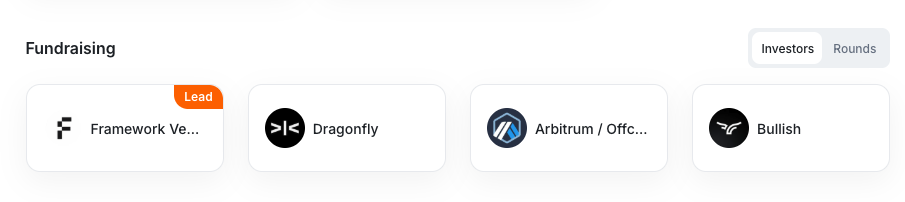
本月14日,USD.AI 宣布完成1340万美元A轮融资,由Framework Ventures领投。

作为一家专注于DeFI和基础设施的投资机构,Framework Ventures曾支持过Uniswap和ChainLink等明星项目,此次参与领投USD.AI,也反映出机构对该项目创新价值的认可。其他投资方阵容同样强大,有知名加密VC Dragonfly,Layer2网络巨头Arbitrum以及刚刚完成IPO上市的热门交易所Bullish等。
DeFi

此轮融资的豪华阵容不仅为USD.AI注入了雄厚资源,也验证了DePIN结合AI的稳定币项目对顶级资本的吸引力,显著提高了市场对其的预期。而在融资信息发布过后,USD.AI项目方趁热打铁,于19日正式上线,引发了市场的广泛讨论。


运作原理与核心机制

在AI算力需求增长的背景下,USD.AI 的设计是将稳定币协议与AI基础设施融资相结合,来解决当前市场上其他项目没有涉足的问题:

中小型AI公司拥有价值高昂的GPU硬件,却难以通过传统渠道获得运营资金。

项目核心目标是通过链上资本支持AI公司硬件采购和运营,填补传统金融在新型AI经济中的融资空白,同时保持稳定币的低风险特性。

USD.AI 围绕“抵押-铸造-投资-收益”这一闭环系统,结合当下热门的RWA与AI概念,在这一轮稳定币浪潮中展示了其独有的创新优势。

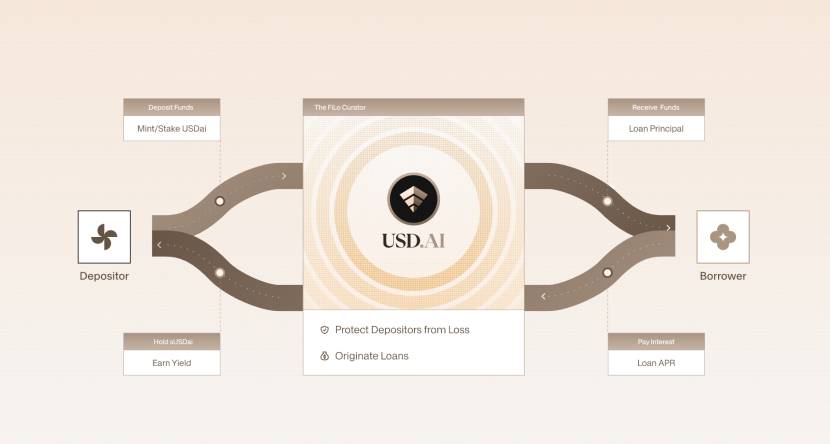
USD.AI的运作原理始于用户以USDT或USDC等稳定币作为抵押品,按1:1比例铸造USDai稳定币。USDai由美国国债和主流稳定币支持以达到锚定美元价格并具有即时赎回能力和一定的流动性,适合DeFi生态中的交易或提供流动性,同时用户可以进一步选择质押USDai获取sUSDai代币,再参与其他DeFi项目获取额外收益,达到“一鱼多吃”的效果。

USD.AI将用户存入资金用于两类资产投资:一是向AI公司提供贷款用于采购GPU等硬件,生成高额利息,当前官网显示年化收益率为6.96%;二是若资金闲置将被用于投资美国国债,提供稳定基础收益。sUSDai持有者可通过DeFi协议放大收益,项目官网给出的目标年化收益率达15%-25%,而USDai持有者则享受低风险稳定收益。
DeFi

USD.AI核心机制包含以下几个关键组成部分,以确保其创新性和稳定性:

1.双代币系统:USDai作为低风险稳定币,适合追求稳定性的用户;sUSDai则面向寻求高收益的投资者,兼具灵活性和风险敞口。这种设计满足不同风险偏好的用户需求,同时保持DeFi生态的兼容性。

2.资产代币化与Caliber框架:通过CALIBER框架,USD.AI将Ai硬件等物理资产代币化为链上资产,结合法律和技术手段确保资产所有权透明且具有法律约束力。链上保险机制进一步降低违约风险。

3.QEV赎回机制:为应对AI基础设施资产的长期性和低流动性,USD.AI设计了QEV机制,通过市场驱动的方式管理sUSDai赎回请求,避免先到先得的低效性,同时确保协议的公平性和协议稳定性。

4.FiLo Curator扩展机制:这一机制允许协议大规模引入新借款人,扩展Ai基础设施投资组合,同时通过结构保护和风险对齐机制维护用户利益,确保收益来源的多样性和可持续性。

总结来说,用户存入USD.AI的资金将被用于贷款给需要GPU等硬件设备算力的AI公司来获取利息,全程透明可查,若资金闲置将用于购买美国国债获取保底收益。

USD.AI的创新机制使其具有独特的竞争优势,相较于传统稳定币项目,USD.AI通过AI基础设施投资实现更高收益;与高风险DeFi协议相比,其风险隔离和保险机制显著降低了系统性风险。

USD.AI此番不仅为稳定币市场注入了新活力,也为Ai经济的资本需求提供了可扩展的解决方案,有望成为稳定币与Ai基础设施融合的先锋项目。


参与方式

目前USD.AI项目已经开放用户存款以及邀请其他用户以获取USD.AI奖励系统Allo积分。

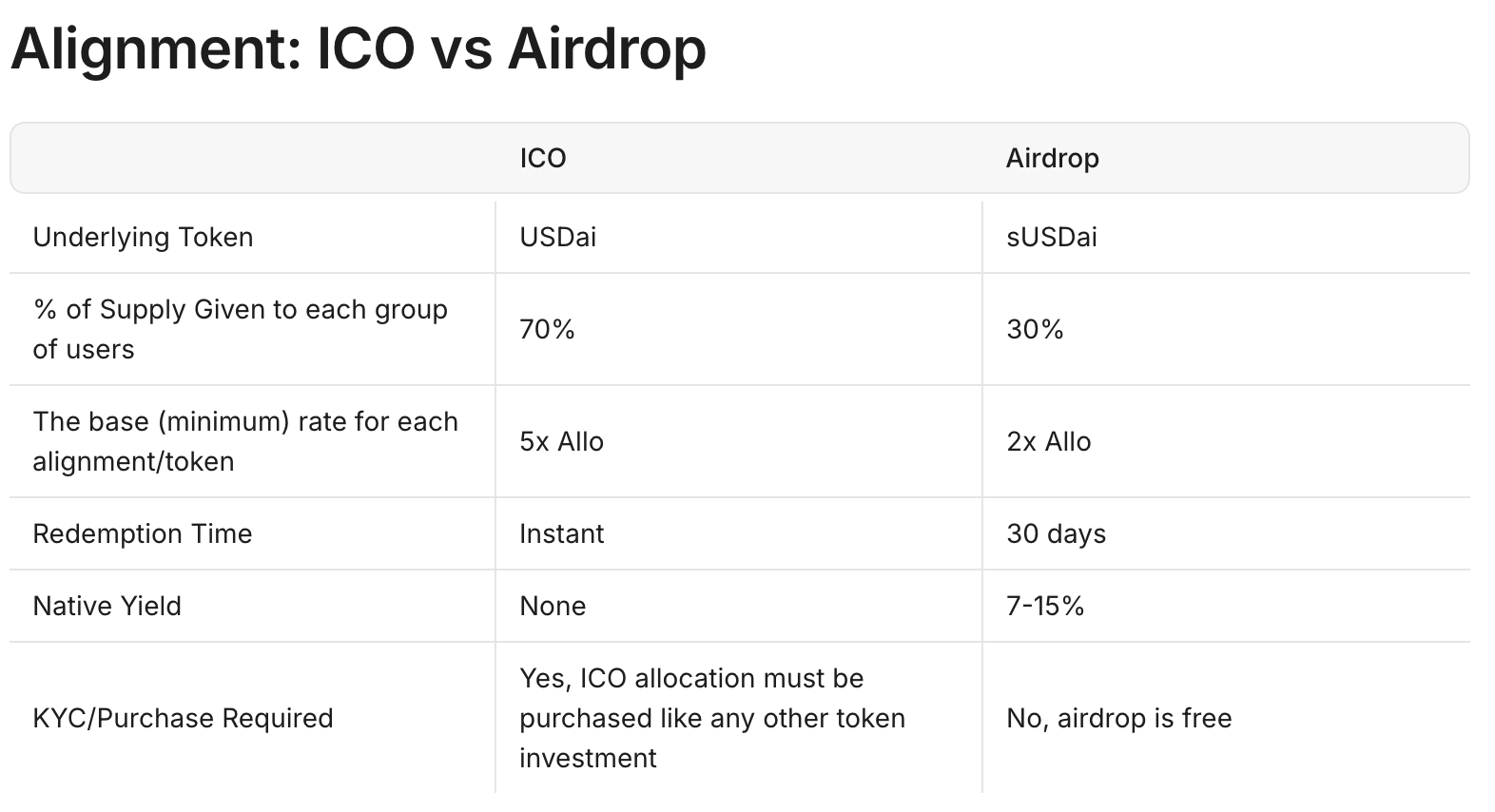
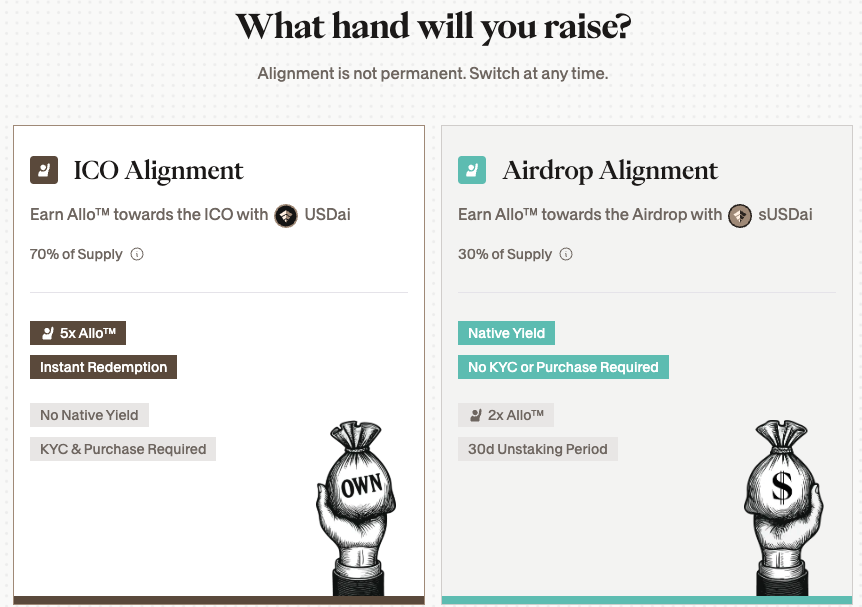
用户可以通过ICO和空投两种方式获得最终代币奖励。所有参与者都将以3000万美元流通量(对应总FDV3亿美元的10%)的项目估值进入。

根据官方推文显示,铸造或质押USDai将会在后续每天持续产出积分,用户可以选择不同的策略决定自己最终获得ICO配额或者空投奖励。

Allo积分活动将会在YPO(累计已支付收益)达到2000万美元时结束。选择ICO配额的用户需要通过KYC,而选择空投的用户则无需过KYC。

更多Allo积分获取进阶玩法可以通过官方推文中的介绍视频了解。
DeFi

简单来说,若想要参与项目ICO,持有USDai即可,若想参与空投则需要将USDai质押获取sUSDai。

当前购买USDai或sUSDai将获得qUSDai,qUSDai为存款排队证明,将会在24小时内自动转为对应代币。

USD.AI目前总存款上限为1亿美元,由于当前所有购入资金均处于qUSDai状态,所以当前TVL仅显示为内测期间存入的5200万美元。
DeFi


市场讨论

当前市场对USD.AI项目的看法呈现两极分化。

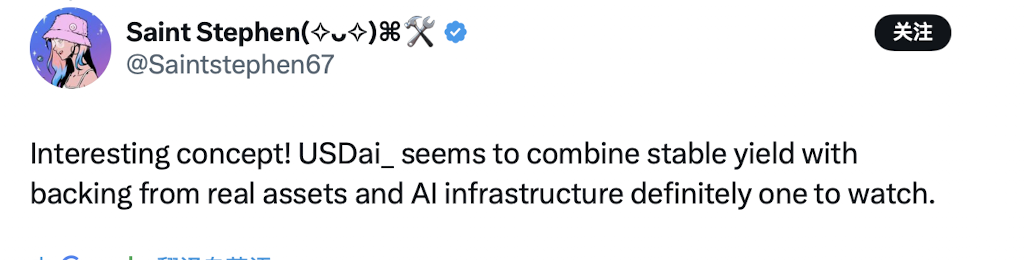
支持的用户普遍认为USD.AI是具有独特创新的稳定币项目,并且结合了当前热门AI概念,让用户可以在保证稳定收益的同时享受到AI红利。给出多种参与策略让不同类型的用户都可以找到适合自己的方案,兼具了稳定币的“稳定”特性的同时还给出了高风险高收益的选择。
DeFi

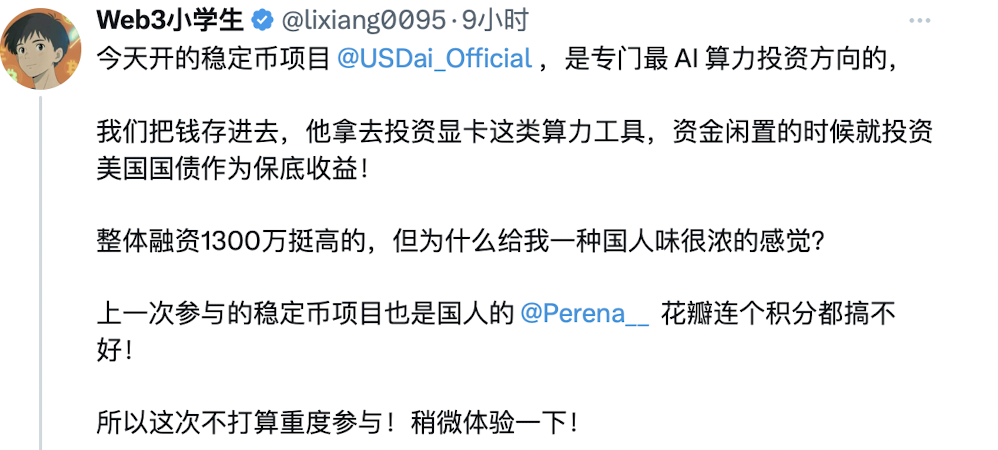
而持反对观点的用户则认为,USD.AI目前披露的信息显示其团队背景可能以华人为主,并且项目只是简单堆砌热门概念,缺乏实质创新。
DeFi

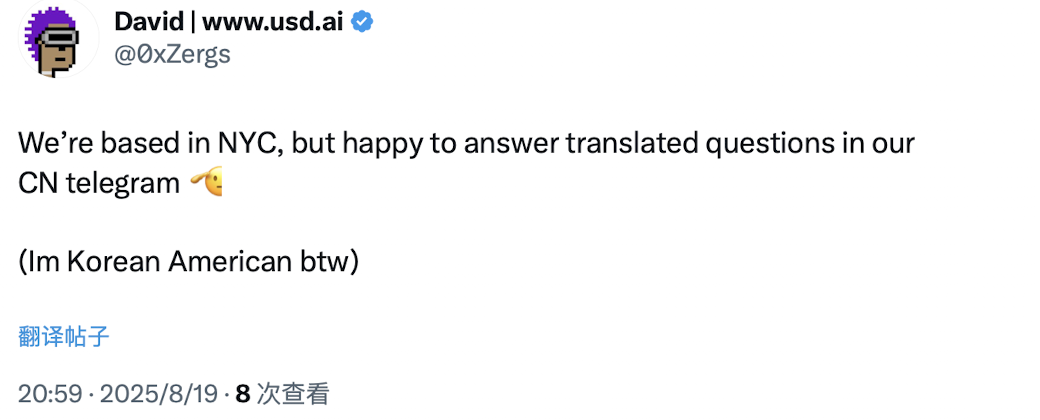
有趣的是,USD.AI核心创始人David刚刚在这条FUD推文下进行了回复,称自己为韩裔美国人,同时表明项目总部位于纽约,但非常乐意为中文用户答疑解惑。
DeFi

笔者认为,USD.AI确实是给出了稳定币这个热门赛道不一样的答卷,但是否能获得市场的青睐与认可,还需要看大家是否愿意“用脚投票”快速打满一亿美元的TVL上限。

其成败与否,也将成为衡量市场对“AI基础设施+稳定币”这一新兴叙事接受度的试金石。

Related Reads

Sharplink CEO: Ethereum's Future Is Playing Out Now

This article presents a perspective from Joseph Chalom, CEO of Sharplink and a former BlackRock executive. He argues that current controversies surrounding the Ethereum Foundation (EF) and ETH's price miss the bigger picture for institutional adoption. Chalom asserts that Ethereum is decisively winning in the three key attributes institutions value most: trust, security, and liquidity. He cites its dominance in stablecoin settlement, tokenized real-world assets (RWA), and high-value DeFi as evidence. This success is attributed to the EF's consistent, long-term protocol development over a decade, including major upgrades like The Merge and a robust future roadmap. He defends Ethereum's decentralization as a core strength, not a weakness, stating institutions require a neutral infrastructure not controlled by any single entity. Comparing ETH to Amazon, Chalom suggests critics focusing on short-term price are missing its potential to become the foundational settlement layer for the entire global financial system. The article encourages a contrarian "be greedy when others are fearful" investment approach, drawing parallels to Warren Buffett's strategy and BlackRock's continued investment during crypto winters. Chalom concludes that while the EF correctly focuses on core protocol attributes (CROPS: Censorship Resistance, Capture Resistance, Open Source, Privacy, Security), a leadership gap exists in market-facing narrative and institutional adoption. He calls for ecosystem participants, including his own firm Sharplink, to become more vocal advocates to support Ethereum's impending "supercycle" of institutional adoption.

链捕手20m ago

Sharplink CEO: Ethereum's Future Is Playing Out Now

链捕手20m ago

Deconstructing the Investment Methodology of the 'Stock God Serenity' in One Article

"Serenity's Bottleneck Investment Methodology: A Deep Dive" This article dissects the "bottleneck point investment" strategy of the pseudonymous investor Serenity, known for exceptional returns (YTD 4502.45%). The core methodology involves identifying a major technological trend (e.g., AI compute expansion), mapping its supply chain, and investing early in the most irreplaceable, supply-constrained upstream component before the market fully values it. The framework is broken down into a five-factor model: 1. **Deterministic Demand**: Anchored in a large, validated trend. 2. **Constrained Supply**: The component must be difficult to replicate or scale quickly. 3. **Low Market Attention**: Opportunities exist where coverage is sparse. 4. **Value Capture**: The company must have pricing power, high margins, and customer lock-in. 5. **Catalyst**: A near-term event to trigger price discovery (earnings, customer ramp, etc.). The article provides illustrative examples like $AXTI (InP substrates for photonics), $RPI (edge hardware for AI agents), and $AAOI/$LITE (components for cloud ASICs). To apply this method, a six-step process is outlined: identify the macro trend, map the supply chain, pinpoint the true bottleneck, gather evidence (client wins, certifications), assess risks ("anti-thesis table"), and size the position according to research depth. Crucially, the article notes significant limitations: risk of overfitting inferences from sparse data, valuation challenges for pre-revenue companies, liquidity/reflexivity risks due to Serenity's own market influence, and survivor bias amplified by a strong AI bull market. The key takeaway is to emulate the rigorous research process—finding the trend, the bottleneck, the evidence—rather than blindly copying specific stock picks, emphasizing the discipline of "walking through the narrow gate."

marsbit45m ago

Deconstructing the Investment Methodology of the 'Stock God Serenity' in One Article

marsbit45m ago

One Article Deconstructs the Investment Methodology of 'Stock God Serenity'

This article deconstructs the "bottleneck point" investment methodology of the renowned investor known as "Serenity" (aleabitoreddit). Characterized by a YTD return of over 4500%, the strategy involves identifying a major, confirmed trend (e.g., AI data center expansion), mapping its supply chain, and then pinpointing a critical, hard-to-replace upstream bottleneck that the market has yet to fully price in. The core framework is a five-factor model: 1) **Certain Demand** from a clear megatrend; 2) **Constrained Supply** with high barriers to entry and slow replication; 3) **Low Market Attention**, where the company is overlooked; 4) **Value Capture** potential through pricing power and market share; and 5) a near-term **Catalyst** to trigger re-evaluation. Case studies include **$AXTI** (InP substrates for photonics), **$RPI** (edge hardware for AI agents), and companies like **$AAOI** and **$LITE** tied to hyperscaler-specific ASIC demand (e.g., Microsoft Maia, Amazon Trainium). The article provides a six-step guide for applying this approach: 1) Identify a validated macro trend; 2) Map the entire supply chain; 3) Find the true bottleneck; 4) Gather concrete evidence (e.g., filings, customer contracts); 5) Perform rigorous risk assessment ("anti-thesis"); 6) Match position size to depth of research. Key limitations are also noted: the risk of narrative overfitting, difficulty in valuing early-stage companies, Serenity's own market-moving influence creating reflexivity, and potential survivorship bias due to the AI bull market. The essence of the method is not to copy picks but to adopt the research process: find the trend, locate the bottleneck, verify with evidence, assess valuation, await a catalyst, and then invest with discipline. The philosophy is summarized as "walking through the narrow gate"—seeking non-consensus, structurally vital points within booming industries before they become widely recognized.

链捕手55m ago

One Article Deconstructs the Investment Methodology of 'Stock God Serenity'

链捕手55m ago

From Suppliers to Shareholders: The Big Three Memory Chip Giants Jointly Invest in Anthropic, AI Supply Chain Power Structure Undergoing Reshuffle

For the first time, memory chip giants Micron, Samsung, and SK hynix have jointly invested in the same AI company, Anthropic, as part of its massive $65 billion Series H funding round. This strategic move, positioning the three rival HBM suppliers as "strategic infrastructure partners," highlights a fundamental shift in the AI industry's power dynamics. With HBM (High Bandwidth Memory) being a critically scarce resource essential for AI model training and inference, securing a stable supply has become a key competitive differentiator. By making these chipmakers shareholders, Anthropic aims to lock in this vital component for its rapid expansion, which includes securing major compute commitments from Amazon, Google, and others. For the memory trio, this investment represents a strategic bet on defining the future of AI hardware. Each company gains: SK hynix reinforces its dominant position in the NVIDIA supply chain; Samsung diversifies its client base beyond NVIDIA; and Micron leverages its geopolitical significance as the sole US-based HBM maker. Their collective move signals that competition in AI is evolving beyond model capability to encompass control over the entire compute supply chain—from chips and memory to power and networking. This vertical integration trend, where infrastructure providers become direct stakeholders in AI firms, marks the industry's maturation as AI transforms from a research project into essential global infrastructure, setting the stage for a new era of ecosystem competition.

marsbit2h ago

From Suppliers to Shareholders: The Big Three Memory Chip Giants Jointly Invest in Anthropic, AI Supply Chain Power Structure Undergoing Reshuffle

marsbit2h ago

Trading

Spot
Futures

Hot Articles

Discussions

Welcome to the HTX Community. Here, you can stay informed about the latest platform developments and gain access to professional market insights. Users' opinions on the price of AI (AI) are presented below.

活动图片