比特币生态大爆发:RGB、BRC 2.0、SAT 20谁将引爆下一波财富效应?

marsbitPublished on 2025-08-11Last updated on 2025-08-12

近期,比特币生态总体活跃度上升,许多开发时间较长的项目也都进入了交付或新里程碑阶段,例如,RGB、sat 20、BRC 2.0 等。Odaily 星球日报将在本文中简要梳理相关项目的进展,供生态玩家自行挖掘财富密码。

RGB 协议:主网首个代币将于 8 月 14 日再次开放申领

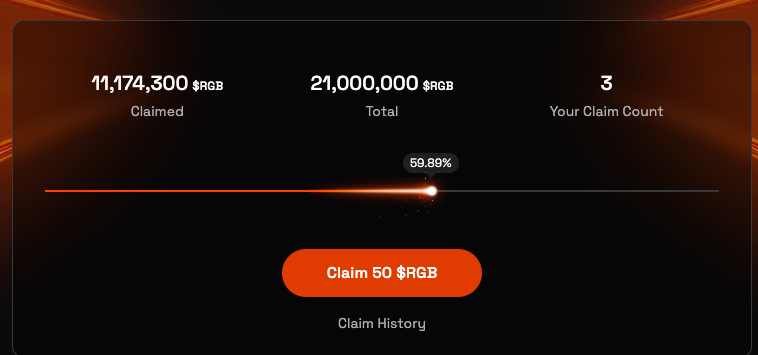
RGB 协议于 8 月 7 日上线比特币主网,同步发行了主网上第一个代币 RGB,总量 2100 万枚,采用公平申领模式,但每次申领需要支付约 4 美元的费用。

按照社区估计 RGB 代币申领完毕需要约 24 小时,然而实际情况是,截止目前(历时 5 天)RGB 代币申领进度为 60%。主要原因或在于活动太过火爆,网站流量及申领队列过长,Bitlight Labs 多次进行服务器升级、暂停申领以升级防御措施打击机器人等行动。
BRC 2.0

根据 官方公告,Bitlight Labs 已基本完成针对机器人申领的防御措施,并计划于 2025 年 8 月 14 日 17:00 发布 Bitlight 钱包 v 1.1.3 版本和重新开放 RGB 代币申领,但此次仅开放 10%的代币作为申领测试,若测试结果满意,将陆续重新开放 RGB 代币剩余进度。

虽然 RGB 协议此次上线主网并未达到用户预期甚至遭受大量 FUD。但从申领过程来看,Bitlight Labs 仍在持续开发改进并积极打击机器人申领行为,一定程度上维护了申领的公平性和代币筹码分散度,不至于造成大量筹码集中在少数人手中的情况,有利于后期社区发展。

即使暂未有官方交易市场,但已分发的 RGB 代币可直接通过钱包转移,目前单张 RGB(50 枚)价格在 10-13 美元,相比申领成本已实现 2-3 倍收益回报。因此,8 月 14 日申领重新开放后,或许申领竞争将进一步加大。关于 RGB 协议的更多介绍及申领教程可阅读 Odaily 此前文章。(相关阅读:苦等两年,RGB 协议上线主网就这?

BRC 2.0 升级:第一阶段推迟至 9 月 2 日

BRC 2.0 是 Best in Slot 推出的一项对 BRC 20 协议的升级,旨在为所有 BRC 20 代币启用与 EVM 兼容的智能合约功能。Best in Slot 原计划于区块高度 909969(约 8 月 14 日)在主网进行 BRC 2.0 第一阶段升级,启用 6 字符 BRC 20 代币并推出 launchpad,但因未准备充分,将升级推迟至区块高度 912,690 进行,约在 9 月 2 日。

或许因为升级日期的推迟,Pre-BRC 2.0 资产市值也整体下跌。第一个 BRC 2.0 概念 NFT Adderrels 当前地板价为 0.0076 BTC(约合 900 美元),较高点下跌 60%。不过 Adderrels 项目方仍在运营当中,更新了质押 NFT 获取代币空投的细节,空投将分三个赛季分发,分别释放的总供应量的 8%、9%、10%, 第一季度代币空投在 9 月 2 日 BRC 2.0 上线时分发。

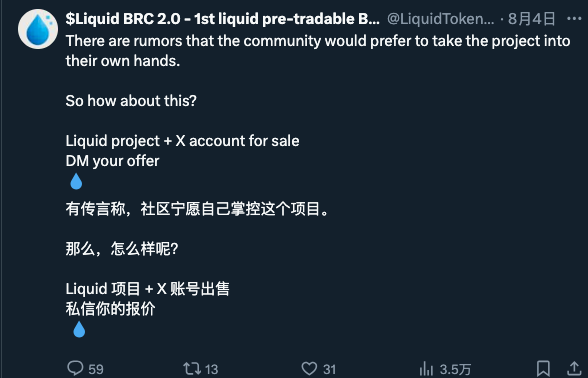
另一个自称为首个在 Ordinals 上铸造的 Pre-BRC 2.0 代币项目 LIQUID 则走向了社区 CTO,此前 LIQUID 原项目方拟向出售整个项目,引起了一波恐慌,目前 LIQUID 的价格 0.00006 BTC,接近铸造成本。
BRC 2.0

关于 BRC 2.0 升级的更多介绍,可阅读 Odaily 此前文章。(相关阅读:主网倒计时,BRC 2.0 升级引爆 BTC 生态,龙头 NFT 月涨百倍|BTC 生态

SAT 20 协议:SatoshiNet 主网上线

SAT 20 协议是一个开发 2 年之久的 BTC 原生资产发行和流通协议,其核心特征是资产绑定聪,跟随聪自由流动。SatoshiNet(聪网)是基于 SAT 20 协议建设的比特币原生 Layer 2,基于闪电通道+平行 BTC 网络,其存在的目的就是为了拓展 BTC 主网原生资产的流动性,支持 Ordinals、Runes、OrdX、BRC 20 等多种协议资产。2025 年 8 月 8 日 SatoshiNet 主网正式上线。

SatoshiNet 的核心在于资产发射合约(LaunchPool)、资产穿越合约(Transcend)、AMM 交易合约(Swap)和限价交易合约(LimitOrder)这四个合约能力上,这些能力使聪网具备即时结算、极低手续费和兼容比特币资产的功能。

目前 SatoshiNet 部署了四个穿越合约,分别为 BTC、pearl 和 rarepizza(ordx 资产)、DOG•GO•TO•THE•MOON(Runes 资产),ordx 是 SAT 20 协议的原生资产发行,其为一个强化版本的 Ordinals 协议,发行的资产称为聪资产(SAT 20 ASSETS),资产绑定在聪上,具有聪的属性。Pearl 是 ORDX 协议的第一个代币,也成为 SatoshiNet 网络的治理代币。

SAT 20 协议公开的团队成员包括市场运营兼英文区业务拓展 huige 和技术主管 尖岗山SATSWAP 是 SatoshiNet 当前第一个 DEX,具有代币发射、交易市场、限价单等功能。

尽管 SAT 20 协议坚持建设了两年并且已经形成了一个坚实的社区,但却没有形成足以破圈的财富效应吸引更多人关注。

比特币原生 Layer 2 Spark:Launchpad 启动

Spark 自称是专为支付和结算打造的比特币原生 L 2,但不支持智能合约,有自己的代币发行标准 LRC 20.8 月 11 日,Spark 协议唯二的节点运营商之一、Spark 浏览器 sparkscan Flashnet 在 Spark 上进行 LRC 20 AMM 功能测试,但测试并不顺利,估计待正式推出 DEX 还需要一些时间。

同时,8 月 1 日比特币生态代币启动平台 Luminex 宣布与 Spark 官方合作推出 Launchpad 也使生态玩家短暂兴奋,但目前仍未推出。但 8 月 11 日,另一个 LRC 20 Launchpad utxo.fun 于 Flashnet 的 AMM 测试同步上线,不过仍然遇到了严重问题,平台处理了用户退款并暂时禁止了发行代币。

但尽管如此,LRC 20 的龙头代币 FSPKS(b 55 e 结尾)单张地板价仍有 100 美元,与 2 美元的初始铸造成本相比,仍有 50 倍的收益。关于 Spark 协议的更多内容,可以阅读 Odaily 此前的文章(相关阅读:详解 Spark 及生态:a 16 z 支持、PayPal 帮创立的新比特币 L 2

BitVM 2 比特币桥 Fiamma:主网上线

Fiamma 是一个比特币财富管理平台,核心产品为一键赚取 BTC 收益的非托管超级应用 Fiamma One 和基于 BitVM 2 构建的 Fiamma Bridge。8 月 6 日,Fiamma 正式上线,可将 BTC 转移到以太坊、Arbitrum、Aptos、BNB Chain、Base 等在内的 11 条链上。

同时为了鼓励用户参与,Fiamma 在 8 月 8 日上线了积分任务,Mint 0.00001 FIABTC 可获得 1 羊驼积分、持有 0.00001 FIABTC 每月可赚取 3 羊驼积分、将 FIABTC 存入 DeFi 协议中每月赚取 12 羊驼积分。FIABTC 1:1 原生锚定 BTC,采用 BitVM 2 技术做到信任最小化,同时结合 Fiamma Bridge 和 Fiamma One,Fiamma 有望在保护 BTC 持有者资金安全的同时为其带来更多链上收益。


Trending Cryptos

Related Reads

Robotic GPT-3 Moment Shakes Silicon Valley: Zero Lines of Code, Learns Instantly, with Investments from Jensen Huang and Fei-Fei Li

Generalist AI's newly released robot foundation model GEN-1.5 is being hailed as the "GPT-3 moment" for embodied AI. The model demonstrates remarkable one-shot and few-shot learning capabilities in physical manipulation tasks. By watching a single 3-12 second demonstration video (physical prompting) without any training or code, the robot can attempt the task with a 59% average success rate across 10 tasks. With just 5 minutes of demonstration data and minimal fine-tuning (10 gradient steps), the success rate jumps to 83%. The most significant breakthrough is the emergence of spontaneous, improvisational problem-solving abilities not present in the training data. For instance, after learning to sweep blocks with a brush, the robot can adapt to use a banana similarly or switch to a completely new "scoop-and-pour" strategy when given a dustpan. Other emergent behaviors include removing obstacles, correcting errors, and spontaneously sorting objects. These capabilities stem from over 8 months of large-scale pre-training on physical interaction data, suggesting the existence of a Scaling Law for embodied intelligence—where model generalization improves with more data and training time. This approach drastically reduces the cost and expertise needed to teach robots new skills, potentially democratizing robot programming. The release coincides with a surge in the humanoid robotics sector, marked by events like the World Robot Conference and significant investments. While the demonstrated tasks are still relatively simple, the scaling trend and emergent behaviors point toward a future where general-purpose robot "brains" could be easily adapted to various hardware "bodies," reshaping the industry's competitive landscape.

marsbit2m ago

Robotic GPT-3 Moment Shakes Silicon Valley: Zero Lines of Code, Learns Instantly, with Investments from Jensen Huang and Fei-Fei Li

marsbit2m ago

Semiconductor Industry Sees a New Wave of Price Hikes, with STMicroelectronics, Maxscend and Others Increasing Prices Intensively

The semiconductor industry is experiencing a new wave of price increases driven by supply-demand dynamics and rising costs. Throughout August, multiple international and domestic semiconductor companies have issued price adjustment notices to clients, with a focus on analog and RF chips. Key companies adjusting prices include STMicroelectronics, which is implementing its third price hike in 2026 effective August 23, citing sustained demand pressure and rising costs across the supply chain. Analog Devices, Inc. (ADI) has also announced a second price increase for 2026, effective September 13, due to "unprecedented" demand growth and escalating manufacturing costs. In China, RF chip leader Zhuosheng Microelectronics issued a price adjustment notice for its full RF product line, effective September 1, its first hike this year, attributing it to rising raw material and foundry costs. Additionally, Chinese MCU manufacturer Nations Technologies announced a 10-20% price increase for some products from October 1. This new round of price hikes has shifted its focus to mature process nodes (e.g., analog, RF, power, MCUs), partly due to AI computing demand consuming 8-inch wafer capacity. This contrasts with the first half of 2026, when the surge was led by AI memory chips like HBM and server DRAM. Analysts note that the long lead time for expanding analog/power semiconductor capacity (18-24 months) may sustain price resilience in the short term. However, downstream manufacturers' cost tolerance and fluctuating global demand could become constraints, potentially limiting further significant price increases. Companies have linked the hikes to ensuring future supply stability by funding capacity expansion.

marsbit5m ago

Semiconductor Industry Sees a New Wave of Price Hikes, with STMicroelectronics, Maxscend and Others Increasing Prices Intensively

marsbit5m ago

Trading

Spot

Hot Articles

What is $BITCOIN

DIGITAL GOLD ($BITCOIN): A Comprehensive Analysis Introduction to DIGITAL GOLD ($BITCOIN) DIGITAL GOLD ($BITCOIN) is a blockchain-based project operating on the Solana network, which aims to combine the characteristics of traditional precious metals with the innovation of decentralized technologies. While it shares a name with Bitcoin, often referred to as “digital gold” due to its perception as a store of value, DIGITAL GOLD is a separate token designed to create a unique ecosystem within the Web3 landscape. Its goal is to position itself as a viable alternative digital asset, although specifics regarding its applications and functionalities are still developing. What is DIGITAL GOLD ($BITCOIN)? DIGITAL GOLD ($BITCOIN) is a cryptocurrency token explicitly designed for use on the Solana blockchain. In contrast to Bitcoin, which provides a widely recognized value storage role, this token appears to focus on broader applications and characteristics. Notable aspects include: Blockchain Infrastructure: The token is built on the Solana blockchain, known for its capacity to handle high-speed and low-cost transactions. Supply Dynamics: DIGITAL GOLD has a maximum supply capped at 100 quadrillion tokens (100P $BITCOIN), although details regarding its circulating supply are currently undisclosed. Utility: While precise functionalities are not explicitly outlined, there are indications that the token could be utilized for various applications, potentially involving decentralized applications (dApps) or asset tokenization strategies. Who is the Creator of DIGITAL GOLD ($BITCOIN)? At present, the identity of the creators and development team behind DIGITAL GOLD ($BITCOIN) remains unknown. This situation is typical among many innovative projects within the blockchain space, particularly those aligning with decentralized finance and meme coin phenomena. While such anonymity may foster a community-driven culture, it intensifies concerns about governance and accountability. Who are the Investors of DIGITAL GOLD ($BITCOIN)? The available information indicates that DIGITAL GOLD ($BITCOIN) does not have any known institutional backers or prominent venture capital investments. The project seems to operate on a peer-to-peer model focused on community support and adoption rather than traditional funding routes. Its activity and liquidity are primarily situated on decentralized exchanges (DEXs), such as PumpSwap, rather than established centralized trading platforms, further highlighting its grassroots approach. How DIGITAL GOLD ($BITCOIN) Works The operational mechanics of DIGITAL GOLD ($BITCOIN) can be elaborated on based on its blockchain design and network attributes: Consensus Mechanism: By leveraging Solana’s unique proof-of-history (PoH) combined with a proof-of-stake (PoS) model, the project ensures efficient transaction validation contributing to the network's high performance. Tokenomics: While specific deflationary mechanisms have not been extensively detailed, the vast maximum token supply implies that it may cater to microtransactions or niche use cases that are still to be defined. Interoperability: There exists the potential for integration with Solana’s broader ecosystem, including various decentralized finance (DeFi) platforms. However, the details regarding specific integrations remain unspecified. Timeline of Key Events Here is a timeline that highlights significant milestones concerning DIGITAL GOLD ($BITCOIN): 2023: The initial deployment of the token occurs on the Solana blockchain, marked by its contract address. 2024: DIGITAL GOLD gains visibility as it becomes available for trading on decentralized exchanges like PumpSwap, allowing users to trade it against SOL. 2025: The project witnesses sporadic trading activity and potential interest in community-led engagements, although no noteworthy partnerships or technical advancements have been documented as of yet. Critical Analysis Strengths Scalability: The underlying Solana infrastructure supports high transaction volumes, which could enhance the utility of $BITCOIN in various transaction scenarios. Accessibility: The potential low trading price per token could attract retail investors, facilitating wider participation due to fractional ownership opportunities. Risks Lack of Transparency: The absence of publicly known backers, developers, or an audit process may yield skepticism regarding the project's sustainability and trustworthiness. Market Volatility: The trading activity is heavily reliant on speculative behavior, which can result in significant price volatility and uncertainty for investors. Conclusion DIGITAL GOLD ($BITCOIN) emerges as an intriguing yet ambiguous project within the rapidly evolving Solana ecosystem. While it attempts to leverage the “digital gold” narrative, its departure from Bitcoin's established role as a store of value underscores the need for a clearer differentiation of its intended utility and governance structure. Future acceptance and adoption will likely depend on addressing the current opacity and defining its operational and economic strategies more explicitly. Note: This report encompasses synthesised information available as of October 2023, and developments may have transpired beyond the research period.

2.0k Total ViewsPublished 2025.05.13Updated 2025.05.13

What is $BITCOIN

Discussions

Welcome to the HTX Community. Here, you can stay informed about the latest platform developments and gain access to professional market insights. Users' opinions on the price of BTC (BTC) are presented below.

活动图片