Key Takeaways
- South Korea’s major banks are partnering with digital finance firms to tap into the booming stablecoin sector.
- Regulators in Seoul are close to approving new stablecoin rules.
- U.S. progress on stablecoin legislation is pushing other countries, including South Korea, to speed up their own regulatory plans.
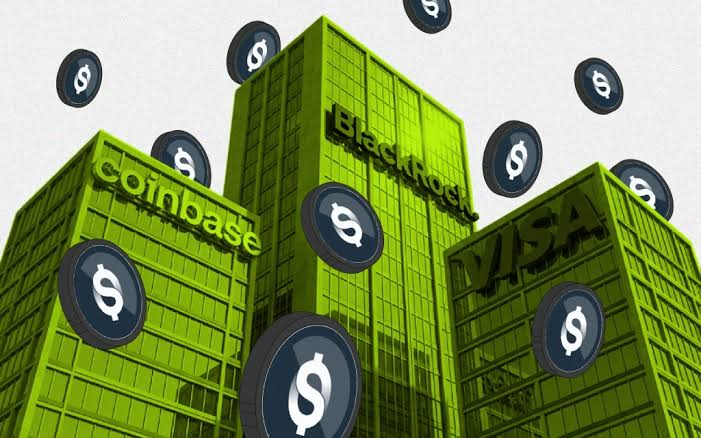
South Korea’s stablecoin ambitions are gaining momentum, with the country’s biggest commercial banks striking deals with digital asset firms to explore new opportunities in the fast-growing sector.
The push comes under the newly elected pro-crypto government, which campaigned on lifting the ban on spot crypto exchange-traded funds and fast-tracking stablecoin regulations.


 322
322
0x Protocol
1inch Network
Aave
Aavegotchi
Acala Token
 Adventure Gold
 Akash Network
 Alchemix
 Alchemy Pay
 Algorand
 Alien Worlds
 Alpha Finance Lab
 Altair
 Ambire AdEx
 Ampleforth Governance Token
 Ankr
Ankr
 APEcoin
 API3
API3
 Aptos
Aptos
 ARPA Chain
 Astar
Astar
 Audius
 Augur
Augur
 Augur V2
 Avalanche
 Axie Infinity
 Badger DAO
 Balancer
 Bancor
 Band Protocol
 Bonded Finance
 Basic Attention Token
 Basilisk
 Biconomy
 Bifrost
 Bitcoin
 Bitcoin Cash
 BitDAO
 Blur
Blur
 Bluzelle
 BitTorrent
 Boba Network
 Solana Name Service
 Cardano
 Cartesi
 Celer Network
 Centrifuge
 Chain Games
 Chainlink
 Chiliz
 Chromia
 Civic
Civic
 Compound
 Coin98
 Convex Finance
 Cosmos
 COTI
COTI
 Crust Shadow
 Curve DAO Token
 Dai
Dai
 Dash
Dash
 Decentraland
 Dent
Dent
 Dogecoin
 dYdX
dYdX
 Energy Web Token
 Enjin Coin
 Enzyme
 EOS
EOS
 Ethereum
 Ethereum Classic
 Ethereum Name Service
 Euler
Euler
 Fantom
 Artificial Superintelligence Alliance
 Filecoin
 Flare
Flare
 Flow
Flow
 Frax Share
 Gala
Gala
 Galatasaray Fan Token
 Gari Network
 GensoKishi Metaverse
 Gitcoin
 GMX
GMX
 Gnosis
 Gstcoin
 Harvest Finance
 Hashflow
 ICON
ICON
 IDEX
IDEX
 iExec RLC
 Immutable
 Injective Protocol
 Internet Computer
 Integritee
 Interlay
 JasmyCoin
 Juno
Juno
 Karura
 Kava.io
 Keep Network
 Keep3rV1
 Rook
Rook
 KILT Protocol
 Kin
Kin
 Kintsugi
 Kusama
 Kyber Network
 Lido DAO Token
 Lisk
Lisk
 Litecoin
 Livepeer
 Loopring
 Maker
Maker
 Marlin
 Mango
Mango
 Marinade Staked SOL
 Mask Network
 Merit Circle
 Mina
Mina
 MIR COIN
 Monero
 Moonbeam
 Moonriver
 Multichain
 MultiversX
 Moonchain
 MyNeighborAlice
 Nano
Nano
 NEAR Protocol
 Nodle
Nodle
 Numeraire
 NYM
NYM
 Ocean Protocol
 OMG Network
 Orca
Orca
 Orchid
 Origin Protocol
 Oxygen
 Parallel Finance
 PAX Gold
 Perpetual Protocol
 Phala Network
 Polkadot
 Polkastarter
 Polygon
 Powerledger
 pSTAKE Finance
 Qtum
Qtum
 Quant
Quant
 Radworks
 Rarible
 Raydium
 Ren
Ren
 Request
 XRP
XRP
 Robonomics.network
 Rocket Pool
 Rubic
Rubic
 Saber
Saber
 Samoyedcoin
 Secret
 Selfkey
 Serum
Serum
 Shiba Inu
 Shiden Network
 Siacoin
 Solana
 Songbird
 Spell Token
 Stacks
 Stafi
Stafi
 Star Atlas
 Star Atlas DAO
 Stargate Finance
 Stellar
 1Step.Finance Step Finance
 STEPN
STEPN
 Storj
Storj
 SuperCoin
 SuperRare
 SushiSwap
 Solar
Solar
 Synapse
 Synthetix
 tBTC
tBTC
 Terra 2.0
 Terra Classic
 TerraUSD
 Terra
Terra
 Terra Virtua Kolect
 Tether
 Tezos
Tezos
 The Graph
 The Sandbox
 THORChain
 Threshold
 Tokemak
 Tribe
Tribe
 TRON
TRON
 TrueFi
 UniFi Protocol
 Uniswap
 USD Coin
 Waves
Waves
 WOO Network
 Wrapped Bitcoin
 Wrapped Axelar
 Wrapped Ethereum
 yearn.finance
 Yield Guild Games
 Zcash
Zcash
 Beam
Beam
 Aevo
Aevo
 Altlayer
 Arkham
 ether.fi
 Safe
Safe
 Zetachain
 Nosana
 WenMoon
 Zeus Network
 Pendle
 PDATA
PDATA
 Big Time
 Portal
 Gravity
 Osmosis
 Kujira
 Hivemapper
 Mantle
 Neutron
 SagaWorld
 Stride
 Renzo
Renzo
 CloudTx
Balancer USD Stable Pool
 0xBitcoin
Crust Shadow
0xBitcoin
Crust Shadow
 Orbitcoin
 r/FortNiteBR Bricks
 Bionic
 MoonSwap
Ambire AdEx
MoonSwap
Ambire AdEx
 00 Token
 Tether EURt
 FunFi
Gstcoin
FunFi
Gstcoin
 Ethena
 Unifi Protocol DAO
Selfkey
Terra Virtua Kolect
Unifi Protocol DAO
Selfkey
Terra Virtua Kolect
 Ampleforth
 ForthBox
 Onyxcoin
Merit Circle
Star Atlas DAO
Onyxcoin
Merit Circle
Star Atlas DAO
 Proof Of Liquidity
Energy Web Token
Proof Of Liquidity
Energy Web Token
 Radar
Alpha Finance Lab
Hashflow
Radar
Alpha Finance Lab
Hashflow
 LCX
LCX
 PayPal USD
 Nano
TerraUSD
Nano
TerraUSD
 UMA
UMA
 JITO
JITO
 EthereumPoW
Moonbeam
Rubic
EthereumPoW
Moonbeam
Rubic
 Afsc Coin
SuperCoin
Afsc Coin
SuperCoin
 aTUSDv1 Aave Interest bearing TUSD
 Dymension
 Helium
Axie Infinity
Helium
Axie Infinity
 Pyth Network
 Bonk
Bonk
 Strike
MultiversX
Strike
MultiversX
 Jupiter
 Sui
Sui
 Dogwifhat
 Sei
THORChain
Sei
THORChain
 Celestia
 Pepe
Pepe
 ETC Cooperative
 Arbitrum
Uniswap
Arbitrum
Uniswap
 Shiba BSC
 Doge Dash
 1Sol
1Sol
 Toncoin
 Stably USD
 Kaspa
Kaspa
 Popcat
 Mog Coin
 Cat In A Dogs World
 zkSync
 Eigenlayer
 TurboStarter
 Echelon Prime
 Memecoin
 GigaSwap
 Ponke
Ponke
 Apu Apustaja
 Athens
 Kamino
 Clearpool
 Goldfinch
 Morpho
 Bounce Token
 Maple Finance
 Parcl
Parcl
 Covalent X Token
 Swell Network
 Litentry
 deBridge
 Puffer
 Globiance USD Stablecoin
 Zeta
Zeta
 Quantoz USDQ
 Quantoz EURQ
 Skycoin

Banks and Digital Finance Firms Join Forces
According to the Korea Times, Korean commercial banks are partnering with domestic and international digital finance companies to invest in stablecoin ventures.
On Monday, Hana Bank — the nation’s third-largest lender — announced a memorandum of understanding (MOU) with Circle, the U.S.-based issuer of USDC, the world’s second-largest stablecoin by market value.
“We have not yet outlined concrete plans for our partnership with Circle. But we expect this collaboration to bring us closer to issuing stablecoins in Korea,” a Hana Bank executive said.
Just last month, OK Savings Bank signed a similar MOU with Danal, a local digital payments company, to work on a won-backed stablecoin.
These partnerships are unfolding as President Lee Jae Myung’s administration advances discussions on legalizing a domestic stablecoin.
South Korea’s Journey From Caution to Crypto Ambition
Despite being a tech-forward nation, South Korea has long taken a cautious approach to crypto, focusing on investor protection.
It was among the first countries to regulate crypto trading but failed to keep pace with evolving rules in the West.
The previous administration delayed stablecoin and tax legislation for years and refused to lift the ban on spot crypto ETFs.
The new leadership in Seoul is signaling a shift. President Lee has pledged to green-light stablecoin regulations and allow spot ETF investments, marking a clear break from the past.
The timing aligns with global momentum — particularly in the United States, where the Trump administration has passed multiple pro-crypto measures.
The stablecoin law and Market Structure Bill have cleared the House of Representatives, with further regulatory clarity expected by year’s end.