CEO Custodia Bank разобрала указ Трампа о криптодебанкинге

cryptonews.ruPublished on 2025-04-10Last updated on 2025-08-11

7 августа президент США Дональд Трамп подписал указ о штрафах для банков за отказ обслуживать криптокомпании. Основательница Custodia Кейтлин Лонг разобрала ключевые аспекты документа.

1/ DIGGING THRU Trump's #debanking executive order—it contains some hidden gems!!! The first one is a doozy—shows the @WhiteHouse understands it can't trust the federal banking regulators: It brought in an overseer to keep 'em honest (with good reason!).https://t.co/Ms3Tedrdrc

— Caitlin Long 🔑⚡️🟠 (@CaitlinLong_) August 8, 2025

Указ направлен на борьбу с операцией Choke Point 2.0 — практикой, при которой банки под давлением регуляторов разрывали связи с криптофирмами.

Надзор вместо доверия

По словам Лонг, главным сюрпризом стало назначение независимого контролера — Администрации малого бизнеса (SBA), которая теперь будет следить за действиями банковских регуляторов (ФРС, FDIC и OCC).

На пост главы SBA Трамп назначил Келли Лоффлер — бывшую главу биткоин-платформы Bakkt и известную сторонницу криптоиндустрии. Как отметила основательница Custodia, это подтверждает серьезность намерений нынешней администрации.

«Это крайне показательно — Белый дом не доверяет трем федеральным банковским регуляторам самостоятельно навести порядок в своих ведомствах. Но SBA имеет юрисдикцию, поэтому его вводят как суперрегулятора над остальными тремя. Тактически это творческий ход. Президент настроен серьезно», — написала она.

Указ Трампа также определяет «политизированный дебанкинг» как отказ в обслуживании любому законному бизнесу, не называя конкретно криптосектор. По мнению Лонг, это создает прецедент: кредитные организации больше не смогут закрывать счета только потому, что их клиент работает с цифровыми активами.

«Банки, которые отказывали в обслуживании или закрывали счета законным криптокомпаниям, понесут ответственность», — заявила она.

Custodia тоже пострадал от дебанкинга, несмотря на соответствие всем нормативным требованиям. В июле 2021 года Лонг раскритиковала ФРС за предвзятое отношение к фирмам, работающим с криптовалютой. В 2022 году банк подал на регулятора в суд.

Основательница Custodia указала на политическую ангажированность в ФРС и FDIC. Данные о пожертвованиях показывают, что 92% средств от сотрудников этих агентств в 2024 году направлялись кандидатам от Демократической партии. По словам Лонг, это могло влиять на решения о «дебанкинге» при Байдене.

Напомним, в феврале 2023 года CEO криптобанка допустила коррупцию в вопросах регулирования индустрии.


Trending Cryptos

Related Reads

Mysterious "Ox Alpha" Large Model Goes Viral with Limited-Time Free Access

A mysterious anonymous AI model named "Ox Alpha," nicknamed "Cow is Coming" by Chinese netizens, has appeared on OpenRouter, sparking widespread speculation. The model offers a 1 million token context, supports text, image, and video inputs, can call tools, and is currently free. Its standout feature is strong coding ability. Initial tests on the DeepSWE benchmark, which evaluates real-world software engineering tasks, showed an 80% pass rate on a subset of tasks, reportedly nearing top-tier code models. However, follow-up tests yielded a 63% score, with variations attributed to different task sets and configurations. The model's true developer is a major topic of debate. The prevailing theory points to Zhipu AI's unreleased GLM-5.3 Flash or its multimodal variant. Evidence cited includes identical visual token consumption patterns with GLM-5V-Turbo for videos, a consistent offset in text token counts compared to GLM-5.3, and similar behavioral traits like refusing audio processing. Zhipu has a precedent of anonymous testing. Simultaneously, another anonymous model, "korrine," appeared on Code Arena, with guesses ranging from Moonshot's Kimi K3.1 to models from Qwen or MiMo, adding to the industry's guessing game. This trend of anonymous "undercover" testing allows for unbiased performance evaluation in platforms like Arena and provides real-world, high-pressure testing through tools like OpenRouter before official release. It also serves as an effective marketing tactic, prolonging discussion through suspense. If Ox Alpha is indeed a "Flash" model, its performance raises expectations for the full-scale version's potential.

marsbit3h ago

Mysterious "Ox Alpha" Large Model Goes Viral with Limited-Time Free Access

marsbit3h ago

Breaking News: DeepSeek Announces All-Day Off-Peak Pricing on Weekends, Making Weekend Work More Cost-Effective?

DeepSeek has announced a significant change to its API pricing model, effective August 23. The new policy removes peak/off-peak distinctions on weekends (Saturdays and Sundays), charging the lower off-peak rate for the entire two-day period. This adjustment has sparked mixed reactions within the developer and professional communities. For developers and businesses heavily reliant on DeepSeek's V4-Flash and V4-Pro APIs, this is welcome news. It allows them to schedule bulk processing tasks on weekends without the higher peak-hour costs, potentially halving their API bills for such workloads. Some users have celebrated the move for making weekend work more cost-effective. However, the announcement has also raised concerns among employees. There is apprehension that companies, particularly in cost-sensitive sectors like AI-powered short drama production, might reorganize work schedules to align with these new cost incentives. Instances are already emerging where teams schedule high-token tasks during cheaper nighttime hours or adjust staff shifts. This has led to worries about a potential shift towards weekend workdays and weekday time-off, prioritizing cost savings over traditional work-life balance. Debate has ensued regarding the practicality of such schedule changes, with questions about increased communication overhead and overall efficiency. Speculation about DeepSeek's motives for the change includes theories that peak pricing correlates with internal model training schedules, though others counter that training is largely automated. The new pricing structure is now in effect, prompting users to reconsider their task scheduling strategies.

marsbit4h ago

Breaking News: DeepSeek Announces All-Day Off-Peak Pricing on Weekends, Making Weekend Work More Cost-Effective?

marsbit4h ago

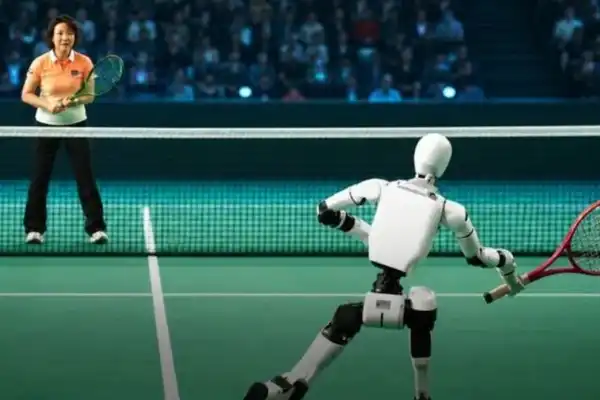
Just Now, The World's First Human vs. Robot Tennis Match Begins, Robot's Desperate Save Leaves Zheng Jie Astonished

Just now, the world's first human vs. robot tennis match began, featuring stunning robotic saves that left tennis star Zheng Jie in awe. This historic event, part of the second World Humanoid Robot Games and broadcast live globally by China Media Group, marked a pivotal moment in Chinese technological innovation and embodied artificial intelligence. The match featured both mixed human-robot doubles and a groundbreaking singles match between Zheng Jie and the "Galaxy Xingzai" humanoid robot developed by Galaxy General. The robot demonstrated impressive skills including serving, forehands, backhands, and strategic court movement, with serves exceeding 100 km/h. It exhibited remarkable adaptability, recovering from a fall to continue play and handling slices and spins. The doubles match highlighted its ability to coordinate dynamically with a human partner. The event's significance extends far beyond a novelty match. Tennis represents an ultimate pressure test for embodied AI, demanding real-time integration of perception, decision-making, full-body motion control, and live博弈 within fractions of a second—a stark contrast to the discrete, contemplative environment of board games like Go mastered by AlphaGo. It directly confronts Moravec's paradox, showcasing AI's move from digital cognition to physical execution. This capability is powered by Galaxy General's proprietary "Galaxy Star Brain" (AstraBrain) model. Its key innovation is a unified architecture that integrates high-level task understanding/tactical decision-making ("brain") and dynamic whole-body motion control ("cerebellum") into a single model, eliminating latency and information loss between separate modules. The model was trained using a two-step process via the "Galaxy Star Workshop" platform. First, it learned foundational movement priors from "imperfect" human motion data (both amateur and professional). Second, it underwent massive-scale evolution in a virtual tennis simulator where multiple AI agents played millions of games against each other. Through this adversarial training, skills like极限救球and recovery from falls emerged autonomously without explicit programming, before being transferred to the physical robot. This "AstraTennis" moment symbolizes a major leap: a decade after AlphaGo conquered the digital world, embodied AI from China has now demonstrated it can operate under the extreme, unpredictable physical pressures of real-world competition.

marsbit4h ago

Just Now, The World's First Human vs. Robot Tennis Match Begins, Robot's Desperate Save Leaves Zheng Jie Astonished

marsbit4h ago

Trading

Spot

Hot Articles

What is $BANK

Bank AI: A Revolutionary Step in the Future of Banking Introduction In an era marked by rapid advancements in technology, Bank AI stands at the intersection of artificial intelligence (AI) and banking services. This innovative project seeks to redefine the financial landscape, enhancing operational efficiency, security measures, and customer experiences through the power of AI. As we embark on this exploration of Bank AI, we will delve into what the project entails, its operational dynamics, its historical context, and significant milestones. What is Bank AI? At its core, Bank AI represents a transformative initiative aimed at integrating artificial intelligence into various banking operations. This project harnesses the capabilities of AI to automate processes, improve risk management protocols, and enhance customer interaction through personalised services. The primary objectives of Bank AI include: Automation of Banking Functions: By leveraging AI technologies, Bank AI aims to automate routine tasks, reducing the burden on human resources and enhancing efficiency. Enhanced Risk Management: The project utilises AI algorithms to predict and identify risks, thereby fortifying security measures against fraud and other threats. Personalisation of Banking Services: Bank AI focuses on offering tailored financial products and services by analysing customer data and behaviours. Improving Customer Experience: The implementation of AI-driven solutions, such as chatbots and virtual assistants, aims to provide users with more human-like interactions, revolutionising the way customers engage with banks. With these goals, Bank AI positions itself as a crucial player in rendering banking more efficient, secure, and user-centric. Who is the Creator of Bank AI? Details regarding the creator of Bank AI remain unknown. As such, no specific individual or organisation has been identified in the available information. The anonymity surrounding the project's inception raises questions but does not detract from its ambitious vision and objectives. Who are the Investors of Bank AI? Similar to the project's creator, specific information regarding the investors or supporting organisations of Bank AI has not been disclosed. Without this information, it is challenging to outline the financial backing and institutional support that might be propelling the project forward. Nevertheless, the importance of having a robust investment foundation is pivotal for sustaining development in such an innovative field. How Does Bank AI Work? Bank AI operates on several innovative fronts, focusing on unique factors that differentiate it from traditional banking frameworks. Below are key operational features: Automation: By applying machine learning algorithms, Bank AI automates various manual processes within banks. This results in reduced operational costs and allows human workers to redirect their efforts towards more strategic activities. Advanced Risk Management: The integration of AI into risk management practices equips banks with tools to accurately predict potential threats such as fraud, ensuring that customer information and assets remain secure. Tailored Financial Recommendations: Through continuous learning from customer interactions, the AI systems develop a nuanced understanding of user needs, enabling them to offer tailored advice on financial decisions. Enhanced Customer Interactions: Utilizing chatbots and virtual assistants powered by AI, Bank AI enables a more engaging customer experience, allowing users to have their queries resolved quickly, thus reducing wait times and improving satisfaction levels. Together, these operational features position Bank AI as a pioneer in the banking sector, establishing new benchmarks for service delivery and operational excellence. Timeline of Bank AI Understanding the trajectory of Bank AI requires a look at its historical context. Below is a timeline highlighting important milestones and developments: Early 2010s: The conceptualisation of AI integration into banking services began to gain attention as banking institutions recognised the potential benefits. 2018: A marked increase in the implementation of AI technologies occurred when banks started using AI tools like chatbots for basic customer service and risk management systems for improved security handling. 2023: The sophistication of AI continued to advance, with generative AI being introduced for more complex tasks such as document processing and real-time investment analysis. This year marked a significant leap in the capabilities afforded to banks by AI technology. 2024-Current Status: As of this year, Bank AI is on an upward trajectory, with ongoing research and developments poised to further enhance capabilities in banking operations. Continued exploration of AI applications hints at exciting developments yet to come. Key Points About Bank AI Integration of AI in Banking: Bank AI focuses on adopting artificial intelligence to streamline banking processes and improve user experiences. Automation and Risk Management Focus: The project strongly emphasises these areas, aiming to shift the burden of routine tasks while enhancing security frameworks through predictive analytics. Personalised Banking Solutions: By harnessing customer data, Bank AI enables tailored banking services that cater to individual user needs. Commitment to Development: Bank AI remains committed to ongoing research and development efforts, ensuring its adaptability and ongoing relevance as technology continues to evolve. Conclusion In summary, Bank AI exemplifies a crucial step forward in the banking industry, leveraging artificial intelligence to reshape operational paradigms, enhance security, and promote customer satisfaction. Despite gaps in information surrounding the creator and investors, the clear objectives and functional mechanisms of Bank AI provide a strong foundation for its ongoing evolution. As AI technology continues to advance and merge with the banking sector, Bank AI is well-positioned to significantly impact the future of financial services, enhancing the way we understand and interact with banking.

411 Total ViewsPublished 2024.04.06Updated 2024.12.03

What is $BANK

Discussions

Welcome to the HTX Community. Here, you can stay informed about the latest platform developments and gain access to professional market insights. Users' opinions on the price of BANK (BANK) are presented below.

活动图片