U.S. Senate to overhaul crypto market structure? What’s coming up next

ambcryptoPublished on 2025-07-22Last updated on 2025-07-23

Key Takeaways

The U.S. Senate Banking Committee has released a new draft aimed at overhauling the country’s digital asset market structure, placing regulatory clarity and investor protection at the forefront.


The U.S. Senate Banking Committee published a discussion draft titled the “Responsible Financial Innovation Act,” with an aim to establish a clear framework for categorizing and regulating digital assets.

The drafts, released on the 22nd of July, mark a follow-up to the CLARITY Act, introduced earlier this month.

What impact will this have overall, and what should stakeholders expect?

A step toward further clarity

The new proposal builds on the momentum of CLARITY act by refining key terms and better defining the scope of authority for U.S. regulatory agencies.

It also calls for public feedback from stakeholders across the crypto and financial sectors.

Senator Tim Scott, who chairs the Banking Committee, emphasized the draft’s goal of modernizing outdated disclosure requirements under the Securities Act of 1933.

According to him, the current framework falls short in addressing the unique characteristics of digital assets.

Senator Scott stated,

“My colleagues and I in the House and Senate share the same goal: to provide clear rules of the road for digital assets that protect investors, foster innovation, and keep the future of digital finance anchored in America.”

One of the most significant updates in the draft is the redefinition of “ancillary assets” a category referring to digital assets tied to investment contracts but lacking features like equity rights, dividends, or debt claims.

This classification helps determine whether a digital asset falls under SEC (Securities and Exchange Commission) oversight or should instead be regulated by the CFTC (Commodity Futures Trading Commission).

Instead of using the House’s previously proposed “maturity” decentralization test, the Senate draft introduces a rights-based approach.

Under this system, the CFTC regulates ancillary assets, while the SEC oversees non-ancillary ones. Projects can self-certify assets as ancillary, but the SEC has 60 days to dispute the classification.

Senator Cynthia Lummis, Chair of the Subcommittee on Digital Assets, also involved in shaping this draft, said the measure is a step toward ending the regulatory uncertainty that continues to plague the industry.

According to Lummis,

“This discussion draft represents a thoughtful, balanced approach that will provide the clarity our innovators need while providing robust consumer protections. We cannot allow regulatory confusion to continue driving American innovation overseas.”

Beyond asset classification, the draft also addresses broader issues. It proposes updates to securities laws aimed at modernizing regulatory practices, deterring illicit financial activity, and supporting innovation in banking.

Background and what follows

For now, the Senate Banking Committee is collecting feedback on the discussion draft. A finalized version could eventually be introduced as formal legislation, which is subject to hearings, amendments, and further debate.

Earlier on the 17th of July, the CLARITY Act passed the House with strong bipartisan support, 294 votes in favor and 134 against.

Still, AMBCrypto noted that it faced pushback from groups like Americans for Financial Reform (AFR), which argued that the bill weakens consumer protections and shifts oversight too far in favor of the industry.


Share

Trending Cryptos

Related Reads

Li Fei-Fei's Latest Long-Form Article: When Video Generation, Robotics, and NVIDIA All Call Themselves World Models, We Need a Taxonomy

In a new article, Dr. Fei-Fei Li addresses the widespread and often inconsistent use of the term "world model" in AI. She proposes a clear, functional taxonomy rooted in the classic Partially Observable Markov Decision Process (POMDP) loop (agent → action → state → observation → agent). According to this framework, current systems called "world models" are different projections of this loop, categorized by their primary output: 1. **Renderers**: Output observations (pixels). Their goal is visual fidelity for human consumption (e.g., video generation models like Sora). They are the most commercially mature but are limited by a focus on appearance over physical accuracy. 2. **Simulators**: Output states (geometric, physical, dynamic representations). They provide a structurally accurate world for both human professionals (e.g., architects) and computational agents (e.g., robots for training). Li argues simulators are the crucial, underappreciated bridge, as they can underpin both rendering and planning. 3. **Planners**: Output actions. Given an observation and a goal, they decide what an agent should do next (e.g., robotic action models). This area is highly promising but remains the least mature for real-world deployment. Li highlights a key trend: the boundaries between these three categories are beginning to blur, as they all rely on a shared underlying understanding of geometry, physics, and dynamics. The logical endpoint is a unified world foundation model capable of switching between rendering, simulation, and planning based on downstream needs. This convergence, she concludes, is central to advancing spatial intelligence—enabling machines not just to talk about the world, but to truly understand, imagine, and interact with it.

marsbit3h ago

Li Fei-Fei's Latest Long-Form Article: When Video Generation, Robotics, and NVIDIA All Call Themselves World Models, We Need a Taxonomy

marsbit3h ago

Forbes Feature: Stablecoin Cross-Border Payments Are Faster, But Not Yet Cheaper

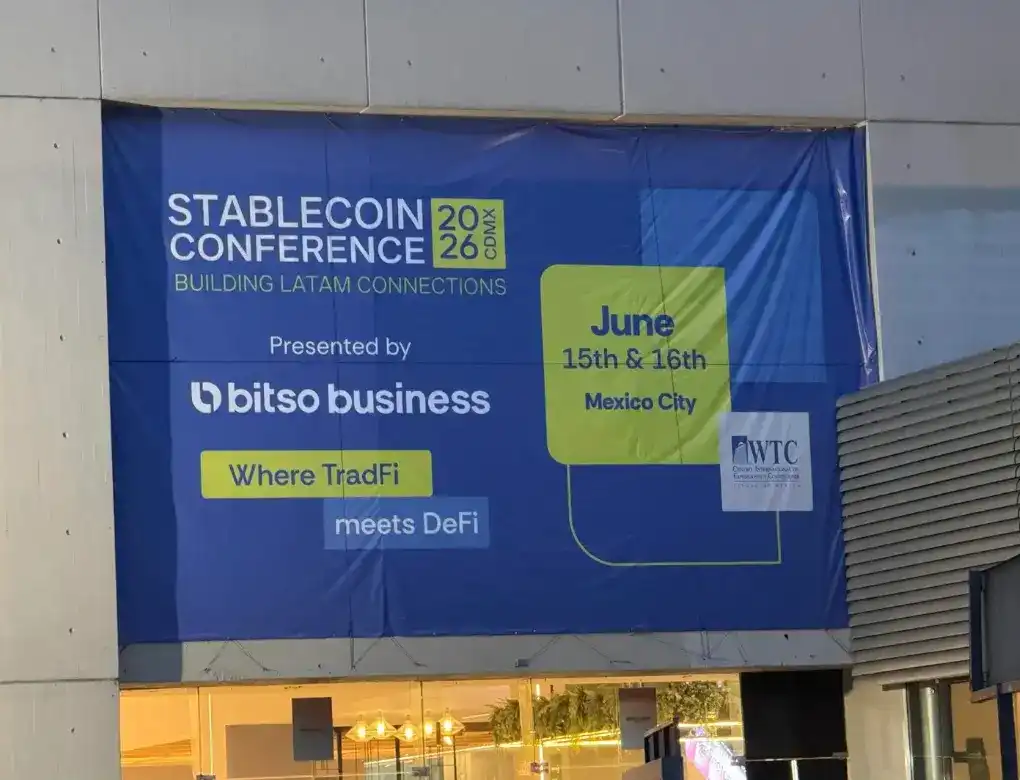
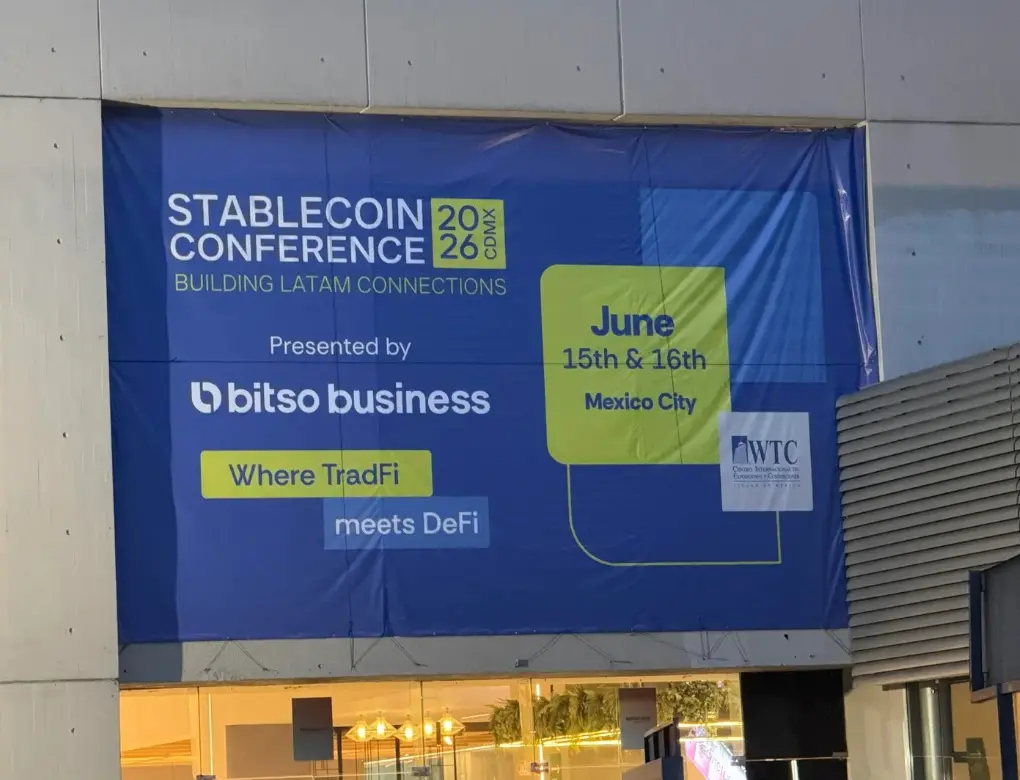
A Forbes feature delves into the state of stablecoin-based cross-border payments, noting rapid growth but a key shortfall: while faster and more accessible, they are not yet cheaper. At a recent industry conference in Mexico City, optimism about technology, regulation, and volume was tempered by discussions with practitioners. The core issue is liquidity. Traditional FX brokers charge 60-70 basis points, and stablecoins promise to slash this to 2-5 basis points. However, this theoretical cost advantage cannot be realized until deep liquidity pools are established at scale, requiring significant institutional capital inflow. A major adoption barrier is trust. Businesses often rely on long-standing relationships with traditional brokers, valuing reliability over marginal cost savings. This shift will be gradual. Furthermore, successful companies in the space are not positioning themselves as replacements for legacy systems like SWIFT, but as complements. They leverage stablecoins for speed while using traditional rails for their standardization and reliability in ensuring accurate payment details—a critical factor for supplier payments to avoid customs issues. Companies like Caliza, experiencing high monthly growth, exemplify this hybrid approach. The industry anticipates consolidation, as long-term viability will depend on securing the essential trifecta: proper licensing, robust fiat on/off-ramps, and deep liquidity. Without these, firms risk being mere intermediaries rather than building sustainable businesses.

marsbit3h ago

Forbes Feature: Stablecoin Cross-Border Payments Are Faster, But Not Yet Cheaper

marsbit3h ago

Trading

Spot

Hot Articles

Discussions

Welcome to the HTX Community. Here, you can stay informed about the latest platform developments and gain access to professional market insights. Users' opinions on the price of S (S) are presented below.

活动图片