PNC Bank Teams Up with Coinbase to Dominate Crypto – Best Crypto to Buy Now!

bitcoinistPublished on 2025-07-23Last updated on 2025-07-23

Abstract

Wall Street just gave crypto a nod that’s hard to ignore. PNC Bank, the seventh largest in the U.S., has...

Trusted Editorial content, reviewed by leading industry experts and seasoned editors. Ad Disclosure

Wall Street just gave crypto a nod that’s hard to ignore.

PNC Bank, the seventh largest in the U.S., has officially joined forces with Coinbase to launch crypto trading and custody services for its 90K corporate clients.

It’s the kind of news that shakes the floorboards of traditional finance. And it’s more proof that digital assets are becoming a core part of the system, not just a weird internet hobby.

So, what does this mean for regular investors like us? Opportunity.

As institutions line up, now’s the time to look at the best crypto to buy now as PNC and Coinbase partner to reshape the space.

We’ve rounded up three of the best crypto projects that could ride this wave. Let’s dive in!

The Banking World Is Going Crypto

Let’s zoom out for a second. PNC’s deal with Coinbase has been years in the making, first hinted at back in 2021 in Coinbase’s shareholder letter. Now it’s real, and fully integrated.

Thanks to this partnership, institutional clients can buy, sell, and store crypto without leaving their banking dashboard.

PNC partnership with Coinbase post on X.

Coinbase’s Crypto-as-a-Service (CaaS) tech does the heavy lifting, and PNC gets to offer a sleek, secure on-ramp into the crypto world.

This move is part of a bigger shift. JPMorgan’s already working on crypto collateral for loans. BNY Mellon is holding stablecoin reserves.

The banking dinosaurs aren’t just watching anymore – they’re hunting. And that means more money flowing into crypto, faster than ever.

1. Best Wallet Token ($BEST) – The Token Powering the Next-Gen Crypto Interface

As major banks like PNC partner with Coinbase to offer crypto services to 90K corporate clients, one thing is clear: infrastructure is everything.

And that’s exactly where Best Wallet Token ($BEST) steps in. It’s not just a coin, it’s the beating heart of one of crypto’s most ambitious wallet ecosystems.
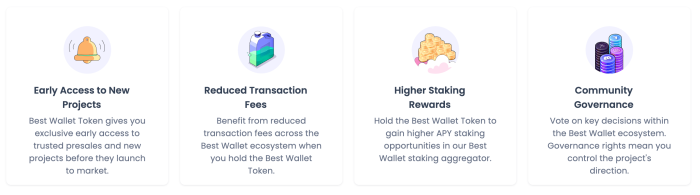
Best Wallet benefits.

Best Wallet is setting out to replace outdated apps like MetaMask with a sleek, secure, and beginner-friendly wallet. And $BEST is the fuel behind it all.

Holding the token unlocks reduced transaction fees, early access to new project launches, higher staking rewards, and even ecosystem governance.

The wallet also features an exclusive iGaming partnership system, where $BEST holders can score free spins, deposit bonuses, and reduced withdrawal fees.

$BEST isn’t just about perks. It’s the key to the Upcoming Tokens tool – an in-app feature that lets users buy into new crypto presales safely, without falling for scam websites.

The token is currently in the presale phase. You can buy $BEST for $0.025375, with $14.1M raised so far.

As institutional adoption accelerates, $BEST could be the smartest gateway play in crypto today.

2. SUBBD Token ($SUBBD) – The Infrastructure Behind Crypto’s Creator Economy

With PNC Bank tapping Coinbase to serve 90K corporate clients, it’s obvious that crypto’s next big play isn’t just about coins – it’s about building real, secure digital ecosystems that can scale with institutional demand.

Enter SUBBD Token ($SUBBD), a project building the tools needed for crypto’s next evolution: communication, content, and creator monetization.

SUBBD is the first AI-powered, Web3-native content and messaging platform. It’s equipped with a built-in AI agent that helps creators and fans connect, transact, and grow, completely cutting out the middlemen.

SUBBD token benefits.

With over 250M combined followers across the platform’s own network and ambassador reach, SUBBD already has the momentum most startups dream of.

The $SUBBD token powers everything: secure messaging, instant crypto payments, creator subscriptions, and premium staking utilities.

Users can stake their tokens during presale for 20% APY, while creators can unlock exclusive features and higher earnings by holding.

Priced at $0.055975, with $868K raised, $SUBBD is still flying under the radar.

As institutional money flows in, privacy, AI, and creator tools are the next frontier – and $SUBBD is building the bridge.

3. Bitcoin Swift ($BTC3) – The AI-Driven Blockchain for Institutional Grade Crypto

With PNC Bank and Coinbase moving crypto into the boardrooms of U.S. corporations, infrastructure-level innovation has never mattered more.

Bitcoin Swift ($BTC3) positions itself squarely in that narrative as an enterprise-grade, AI-enabled blockchain designed for security, scalability, and real utility.
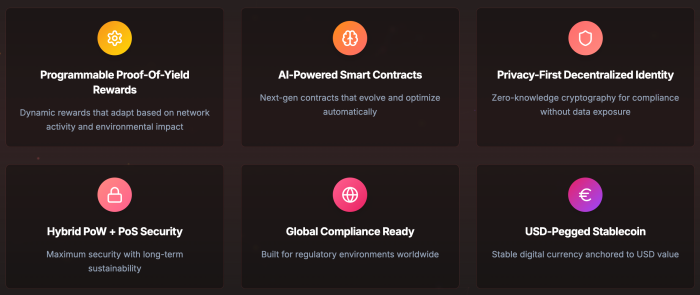
bitcoin swift benefits.

Launched quietly but with impact, $BTC3 kicked off Stage 1 of its presale at $1.00, and quickly raised over $400K in just five days. That shows real demand.

What makes $BTC3 stand out is its hybrid architecture: it combines Proof-of-Work and Proof-of-Stake for strong security, layered with a dynamic Proof-of-Yield system.

This AI-powered reward mechanism adjusts based on network participation and environmental considerations, offering participants about 143% APY.

But it doesn’t stop there. Bitcoin Swift uses smart contracts and adaptive AI agents that evolve with user activity. It also features AI-powered governance that vets proposals before voting, helping build trust and regulatory readiness.

For the institutions now entering crypto, solutions like $BTC3 aren’t just buzz – they’re the kind of robust systems banks will need.

As PNC and Coinbase level up institutional access, Bitcoin Swift is building the infrastructure to support that evolution.

Why Now Is the Time to Act

PNC’s move with Coinbase marks a real shift in crypto’s future.

Projects like Best Wallet Token ($BEST), SUBBD Token ($SUBBD), and Bitcoin Swift ($BTC3) are building the infrastructure institutions will rely on.

From secure wallets to AI-powered platforms, these crypto presales offer a rare early-in advantage. If you’re hunting for the best altcoins or best presale buys, this might be your moment.

This article is for informational purposes only and shouldn’t be considered financial advice. Always do your own research (DYOR) before investing in crypto.

Editorial Process for bitcoinist is centered on delivering thoroughly researched, accurate, and unbiased content. We uphold strict sourcing standards, and each page undergoes diligent review by our team of top technology experts and seasoned editors. This process ensures the integrity, relevance, and value of our content for our readers.

As a crypto writer, Bogdan’s responsibilities are split between researching and writing articles and entertaining the team with his humor bordering on the politically incorrect, an aspiring Bill Burr, if you will. Thanks to his 12+ years of writing experience in just as many fields, including tech, cybersecurity, modelling, fitness, crypto, and other topics-that-shall-not-be-named, he's become a genuine asset to the team. While his position as a senior writer at PrivacyAffairs thought him valuable lessons about the power of self-management, his entire writing career was and is an exercise in self-improvement. Now, he's ready to sink his teeth into crypto and teach people how to take control of their own money on the blockchain. With fiat as an eternally devaluing currency, Bitcoin and altcoins seem like the best-fitting alternative for Bogdan. Bogdan’s biggest professional accomplishment, aside from securing a position as a main writer for Bitcoinist, was his 5-year run as a writing manager at Blackwood Productions, where he coordinated a team of four writers. During that time, he learned the value of teamwork and that of creating a working environment that breeds efficiency, positivity, and friendship.

Trending Cryptos

Related Reads

Li Fei-Fei's Latest Long-Form Article: When Video Generation, Robotics, and NVIDIA All Call Themselves World Models, We Need a Taxonomy

In a new article, Dr. Fei-Fei Li addresses the widespread and often inconsistent use of the term "world model" in AI. She proposes a clear, functional taxonomy rooted in the classic Partially Observable Markov Decision Process (POMDP) loop (agent → action → state → observation → agent). According to this framework, current systems called "world models" are different projections of this loop, categorized by their primary output: 1. **Renderers**: Output observations (pixels). Their goal is visual fidelity for human consumption (e.g., video generation models like Sora). They are the most commercially mature but are limited by a focus on appearance over physical accuracy. 2. **Simulators**: Output states (geometric, physical, dynamic representations). They provide a structurally accurate world for both human professionals (e.g., architects) and computational agents (e.g., robots for training). Li argues simulators are the crucial, underappreciated bridge, as they can underpin both rendering and planning. 3. **Planners**: Output actions. Given an observation and a goal, they decide what an agent should do next (e.g., robotic action models). This area is highly promising but remains the least mature for real-world deployment. Li highlights a key trend: the boundaries between these three categories are beginning to blur, as they all rely on a shared underlying understanding of geometry, physics, and dynamics. The logical endpoint is a unified world foundation model capable of switching between rendering, simulation, and planning based on downstream needs. This convergence, she concludes, is central to advancing spatial intelligence—enabling machines not just to talk about the world, but to truly understand, imagine, and interact with it.

marsbit1h ago

Li Fei-Fei's Latest Long-Form Article: When Video Generation, Robotics, and NVIDIA All Call Themselves World Models, We Need a Taxonomy

marsbit1h ago

Forbes Feature: Stablecoin Cross-Border Payments Are Faster, But Not Yet Cheaper

A Forbes feature delves into the state of stablecoin-based cross-border payments, noting rapid growth but a key shortfall: while faster and more accessible, they are not yet cheaper. At a recent industry conference in Mexico City, optimism about technology, regulation, and volume was tempered by discussions with practitioners. The core issue is liquidity. Traditional FX brokers charge 60-70 basis points, and stablecoins promise to slash this to 2-5 basis points. However, this theoretical cost advantage cannot be realized until deep liquidity pools are established at scale, requiring significant institutional capital inflow. A major adoption barrier is trust. Businesses often rely on long-standing relationships with traditional brokers, valuing reliability over marginal cost savings. This shift will be gradual. Furthermore, successful companies in the space are not positioning themselves as replacements for legacy systems like SWIFT, but as complements. They leverage stablecoins for speed while using traditional rails for their standardization and reliability in ensuring accurate payment details—a critical factor for supplier payments to avoid customs issues. Companies like Caliza, experiencing high monthly growth, exemplify this hybrid approach. The industry anticipates consolidation, as long-term viability will depend on securing the essential trifecta: proper licensing, robust fiat on/off-ramps, and deep liquidity. Without these, firms risk being mere intermediaries rather than building sustainable businesses.

marsbit1h ago

Forbes Feature: Stablecoin Cross-Border Payments Are Faster, But Not Yet Cheaper

marsbit1h ago

Li Feifei's Latest Article: When Video Generation, Robotics, and NVIDIA All Claim to Have 'World Models,' We Need a Taxonomy

"World Model" has become a widely used yet ambiguous term in AI. Drawing from the classic POMDP framework (agent → action → state → observation), this article proposes a functional taxonomy to clarify the concept. It identifies three distinct types, categorized by their output in the perception-action loop: 1. **Renderers**: Output visual observations (pixels). These models, like advanced video generators, prioritize visual fidelity but often lack underlying physical accuracy. 2. **Simulators**: Output the state of the world (geometry, physics, dynamics). They provide a structurally accurate representation for professionals (e.g., architects) and serve as training environments for robots and AI agents. 3. **Planners**: Output actions. Given an observation and a goal, they determine what an agent should do next, closing the perception-action loop (e.g., vision-language-action models). While renderers are currently the most commercially mature and planners are the most aspirational, the article argues that **simulators are the crucial, underappreciated hub**. By working at the level of geometry and physics, a simulator can project upwards to create visuals for humans and downwards to predict action consequences for agents. The future lies in the convergence of these three functions. Emerging research and products, like World Labs' Marble model which outputs both visual splats and physical collision meshes, are beginning to blur these boundaries. The logical endpoint is a unified world foundation model capable of rendering, simulating, and planning based on a shared understanding of spatial and temporal structures—ultimately enabling machines to understand, imagine, and interact with the physical world.

链捕手2h ago

Li Feifei's Latest Article: When Video Generation, Robotics, and NVIDIA All Claim to Have 'World Models,' We Need a Taxonomy

链捕手2h ago

Trading

Spot

Hot Articles

What is $BANK

Bank AI: A Revolutionary Step in the Future of Banking Introduction In an era marked by rapid advancements in technology, Bank AI stands at the intersection of artificial intelligence (AI) and banking services. This innovative project seeks to redefine the financial landscape, enhancing operational efficiency, security measures, and customer experiences through the power of AI. As we embark on this exploration of Bank AI, we will delve into what the project entails, its operational dynamics, its historical context, and significant milestones. What is Bank AI? At its core, Bank AI represents a transformative initiative aimed at integrating artificial intelligence into various banking operations. This project harnesses the capabilities of AI to automate processes, improve risk management protocols, and enhance customer interaction through personalized services. The primary objectives of Bank AI include: Automation of Banking Functions: By leveraging AI technologies, Bank AI aims to automate routine tasks, reducing the burden on human resources and enhancing efficiency. Enhanced Risk Management: The project utilises AI algorithms to predict and identify risks, thereby fortifying security measures against fraud and other threats. Personalization of Banking Services: Bank AI focuses on offering tailored financial products and services by analysing customer data and behaviours. Improving Customer Experience: The implementation of AI-driven solutions, such as chatbots and virtual assistants, aims to provide users with more human-like interactions, revolutionising the way customers engage with banks. With these goals, Bank AI positions itself as a crucial player in rendering banking more efficient, secure, and user-centric. Who is the Creator of Bank AI? Details regarding the creator of Bank AI remain unknown. As such, no specific individual or organisation has been identified in the available information. The anonymity surrounding the project's inception raises questions but does not detract from its ambitious vision and objectives. Who are the Investors of Bank AI? Similar to the project's creator, specific information regarding the investors or supporting organisations of Bank AI has not been disclosed. Without this information, it is challenging to outline the financial backing and institutional support that might be propelling the project forward. Nevertheless, the importance of having a robust investment foundation is pivotal for sustaining development in such an innovative field. How Does Bank AI Work? Bank AI operates on several innovative fronts, focusing on unique factors that differentiate it from traditional banking frameworks. Below are key operational features: Automation: By applying machine learning algorithms, Bank AI automates various manual processes within banks. This results in reduced operational costs and allows human workers to redirect their efforts towards more strategic activities. Advanced Risk Management: The integration of AI into risk management practices equips banks with tools to accurately predict potential threats such as fraud, ensuring that customer information and assets remain secure. Tailored Financial Recommendations: Through continuous learning from customer interactions, the AI systems develop a nuanced understanding of user needs, enabling them to offer tailored advice on financial decisions. Enhanced Customer Interactions: Utilizing chatbots and virtual assistants powered by AI, Bank AI enables a more engaging customer experience, allowing users to have their queries resolved quickly, thus reducing wait times and improving satisfaction levels. Together, these operational features position Bank AI as a pioneer in the banking sector, establishing new benchmarks for service delivery and operational excellence. Timeline of Bank AI Understanding the trajectory of Bank AI requires a look at its historical context. Below is a timeline highlighting important milestones and developments: Early 2010s: The conceptualization of AI integration into banking services began to gain attention as banking institutions recognised the potential benefits. 2018: A marked increase in the implementation of AI technologies occurred when banks started using AI tools like chatbots for basic customer service and risk management systems for improved security handling. 2023: The sophistication of AI continued to advance, with generative AI being introduced for more complex tasks such as document processing and real-time investment analysis. This year marked a significant leap in the capabilities afforded to banks by AI technology. 2024-Current Status: As of this year, Bank AI is on an upward trajectory, with ongoing research and developments poised to further enhance capabilities in banking operations. Continued exploration of AI applications hints at exciting developments yet to come. Key Points About Bank AI Integration of AI in Banking: Bank AI focuses on adopting artificial intelligence to streamline banking processes and improve user experiences. Automation and Risk Management Focus: The project strongly emphasizes these areas, aiming to shift the burden of routine tasks while enhancing security frameworks through predictive analytics. Personalized Banking Solutions: By harnessing customer data, Bank AI enables tailored banking services that cater to individual user needs. Commitment to Development: Bank AI remains committed to ongoing research and development efforts, ensuring its adaptability and ongoing relevance as technology continues to evolve. Conclusion In summary, Bank AI exemplifies a crucial step forward in the banking industry, leveraging artificial intelligence to reshape operational paradigms, enhance security, and promote customer satisfaction. Despite gaps in information surrounding the creator and investors, the clear objectives and functional mechanisms of Bank AI provide a strong foundation for its ongoing evolution. As AI technology continues to advance and merge with the banking sector, Bank AI is well-positioned to significantly impact the future of financial services, enhancing the way we understand and interact with banking.

1.1k Total ViewsPublished 2024.04.05Updated 2024.12.03

What is $BANK

How to Buy BANK

Welcome to HTX.com! We've made purchasing Lorenzo Protocol (BANK) simple and convenient. Follow our step-by-step guide to embark on your crypto journey.Step 1: Create Your HTX AccountUse your email or phone number to sign up for a free account on HTX. Experience a hassle-free registration journey and unlock all features.Get My AccountStep 2: Go to Buy Crypto and Choose Your Payment MethodCredit/Debit Card: Use your Visa or Mastercard to buy Lorenzo Protocol (BANK) instantly.Balance: Use funds from your HTX account balance to trade seamlessly.Third Parties: We've added popular payment methods such as Google Pay and Apple Pay to enhance convenience.P2P: Trade directly with other users on HTX.Over-the-Counter (OTC): We offer tailor-made services and competitive exchange rates for traders.Step 3: Store Your Lorenzo Protocol (BANK)After purchasing your Lorenzo Protocol (BANK), store it in your HTX account. Alternatively, you can send it elsewhere via blockchain transfer or use it to trade other cryptocurrencies.Step 4: Trade Lorenzo Protocol (BANK)Easily trade Lorenzo Protocol (BANK) on HTX's spot market. Simply access your account, select your trading pair, execute your trades, and monitor in real-time. We offer a user-friendly experience for both beginners and seasoned traders.

5.0k Total ViewsPublished 2025.05.09Updated 2026.06.02

How to Buy BANK

Discussions

Welcome to the HTX Community. Here, you can stay informed about the latest platform developments and gain access to professional market insights. Users' opinions on the price of BANK (BANK) are presented below.

活动图片