$4M Coinbase Scam Ends in Designer Splurge and Casino Blowout

bitcoinistPublished on 2025-06-23Last updated on 2025-06-23

Abstract

Crypto scams have become more frequent and more sophisticated as the industry grows. Billions of dollars have been taken by...

Trusted Editorial content, reviewed by leading industry experts and seasoned editors. Ad Disclosure

Crypto scams have become more frequent and more sophisticated as the industry grows. Billions of dollars have been taken by malicious actors targeting crypto users, and even those with a technical background have failed to avoid them.
Coinbase COIN COINUSD
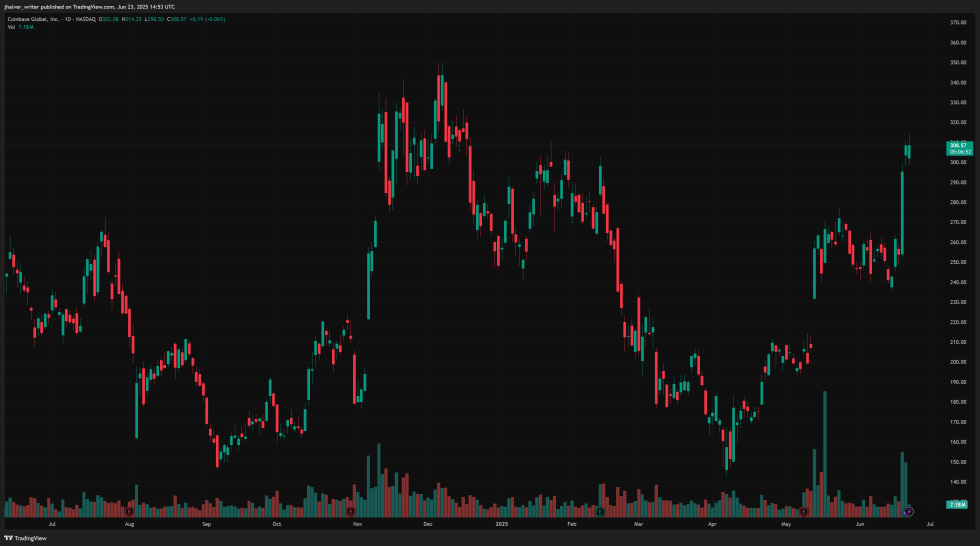
Coinbase's stock price trends to the upside on the daily chart. Source: COINUSD on Tradingview

Coinbase Scams Affects Elderly Victims

Top investigator ZachXBT unveiled a scam allegedly conducted by Christian ‘DayTwo’ Nieves. According to the investigation, the bad actor stole over $4 million from Coinbase users by impersonating a customer support representative for the crypto exchange.

As seen on the image below, and as per the investigation, the perpetrator used the stolen funds to buy luxury items. ZachXBT claims that most of the stolen funds were lost while gambling at online casinos.

coinbase crypto coin coinusd

DayTwo's Instagram account showing luxury items allegedly purchased with stolen funds. Source: ZachXBT via X

The investigator explained the Modus Operandi used by DayTwo to conduct the scam. As per the findings, the bad actor operated a call center where he also worked as a caller, later he convinced crypto users to install and set up a Coinbase wallet.

These wallet’s private keys were compromised, allowing the group to move and withdraw funds without the owners’ authorization. In order to verify the malicious activities conducted by Daytwo and his associates, ZachXBT tracked a $240,000 transaction stolen from an elderly victim.

As seen in the video, recorded in November 2024, $240,000 were directly linked to the wallet involved in the scam. A portion of the stolen assets were converted to Monero (XMR) and deposited into an online casino, Roobet.

Stolen Funds Lost in Crypto Gambling

ZachXBT also claims that it was usual for DayTwo to gamble with his friends while streaming on Discord. In one of these sessions, DayTwo shows his user name for the online casino Roobet, ‘pawsonhips,’ accidentally leaking one of the addresses connected to the scams.

The investigator stated:

I traced out his casino deposit address which links onchain to 30+ suspected thefts. I expect there’s many additional victims I am unable to directly link. While there’s potentially overlap between multiple threat actors the vast majority of activity pertains to Daytwo.

As DayTwo lost more and more funds on the online casino, and the proceeds from the scams declined, the less funds he deposited on Roobet. Moreover, the bad actor and his friends also openly discussed criminal activities on their Discord calls. ZachXBT added:

It’s rare we see a social engineering scammer with such blatant disregard to mask their identity while flexing stolen funds all over social media.  As Daytwo is not a minor it’s a rather easy case for law enforcement to pursue. Sadly any recovery for victims is likely a small amount given the funds were mostly gambled away after thefts.

Cover image from Unsplash, chart from Tradingview

Editorial Process for bitcoinist is centered on delivering thoroughly researched, accurate, and unbiased content. We uphold strict sourcing standards, and each page undergoes diligent review by our team of top technology experts and seasoned editors. This process ensures the integrity, relevance, and value of our content for our readers.

Related Reads

Collateral Dollars: How Does a 'Second-Layer Dollar' Above Stablecoins Form?

Collateral Dollars: How Does a "Second Layer of Dollars" Form on Top of Stablecoins? Most assume stablecoins replicate Eurodollar functions, expanding the offshore dollar system. However, stablecoins primarily replace specific functions like operational dollar balances for settlement. They do not inherently create new dollar credit; they substitute existing claims. The key question is: what happens when financial intermediaries use stablecoins as collateral to create a new layer of dollar-denominated claims? This "collateral dollar" channel operates through secured lending, not direct money creation. A money-like event only occurs when a liability issued against the controlled stablecoin is funded, rolled over, or accepted at near-par value by another balance sheet. The discount (haircut) prices the gap between "effective control over the token" and "reliable convertibility to bank dollars." Elasticity stems not from the stablecoin itself but from the liability issued against it and the willingness of third-party balance sheets to treat that liability as a near-par asset. Compared to the traditional Eurodollar system—where elasticity originates from bank deposit creation—the stablecoin collateral chain is structurally different. Eurodollar deposits are credit-expansive from inception. Stablecoins are initially substitutive; elasticity emerges later if an intermediary's liability against them gains monetary acceptance. Stablecoins disrupt specific tiers of the offshore dollar system, mainly replacing operational settlement balances. They do not replace the need for full dollar balance-sheet capacity (credit lines, hedging, maturity transformation). For systemic impact, the second-layer liability must pass three tests: transferability, funding capacity, and monetary acceptance (being fundable or held at par by others). Pressure transmission also differs. In the Eurodollar system, stress moves up a hierarchy of claims. In a stablecoin collateral chain, the second-layer liability can lose its money-like status well before the underlying stablecoin faces a run, often triggered by haircut increases and margin calls that create a dynamic spiral of falling token prices and rising discounts. In conclusion, the "collateral dollar" is not the stablecoin itself. It is the second-layer liability issued against a controlled token balance that is willing to be funded and maintained at near-par value. Its existence depends on that liability surviving the leap from "token liquidity" to "bank dollar liquidity."

marsbit46m ago

Collateral Dollars: How Does a 'Second-Layer Dollar' Above Stablecoins Form?

marsbit46m ago

Collateral Dollars: How the 'Second-Layer Dollar' Above Stablecoins Takes Shape?

"Collateralized Dollars: How a 'Second Layer of Dollars' Forms on Top of Stablecoins" Most assume stablecoins replicate Eurodollars and expand the offshore dollar system, but this is not accurate. Stablecoins primarily replace certain functions within the existing system, especially operational dollar balances for daily settlement. The critical question is what happens when financial intermediaries create a new layer of dollar claims *on top of* stablecoins. This article explains how this new collateralized funding channel works. Stablecoins introduce tokenized private dollar claims. Even if issuers and reserves are within the US legal perimeter, their circulation and use as collateral can become economically "offshore." Enforceable control over collateral opens a secured credit channel but does not itself create a monetary claim. A true monetary event occurs only when another balance sheet funds, rolls over, or accepts a liability issued against the controlled token at near-par value. The discount prices the gap between "effective control over the token" and "reliable convertibility into bank dollars." Elasticity comes from the balance sheet issuing the liability against the token and from third-party willingness to treat that liability as a near-par asset. Collateralized Dollars are not the stablecoins themselves; they are the second-layer liability that another balance sheet is willing to issue, fund, and maintain at near-par against a controlled token balance. The Eurodollar system is a hierarchy of claims, with elasticity originating in expandable bank liabilities. In contrast, the stablecoin collateral chain starts with a tokenized asset. It gains systemic significance only when an intermediary's liability against that token is treated as money-like by other balance sheets. Key determining factors include: who has effective control, the legal/operational path to bank dollars, and whether the resulting claim can still be financed near-par under stress. Pressure in this new channel manifests differently. The upper-layer (intermediary) claim fails first, losing its money-like status, potentially while the underlying stablecoin remains solvent. Increased haircuts and forced sales can create a destructive feedback loop, widening the very gap the discount measures. In conclusion, the Eurodollar analogy has limits. Reserve quality supports the underlying token's solvency, but the leverage, credit, and liabilities built atop it face a separate test. Collateral eligibility is not monetary acceptance. Only when a claim built on stablecoins survives the leap from "token liquidity" to "bank dollar liquidity" do Collateralized Dollars truly exist.

链捕手52m ago

Collateral Dollars: How the 'Second-Layer Dollar' Above Stablecoins Takes Shape?

链捕手52m ago

Don't Be Misled by the $1.25 Billion Cap: MicroStrategy's Three-Pronged Bitcoin Sale Pools Hide Massive Selling Pressure

Don't Be Misled by the $1.25B Cap: Strategy's Three-Tier Bitcoin Sales Plan Hides Massive Potential Selling Pressure Strategy recently sold 3,588 BTC (~$216M) to fund a dividend and replenish its dollar reserve, while claiming its $1.25B "reserve build" capacity remains fully available. This highlights a key nuance: the widely cited $1.25B limit applies only to sales for "Building" the reserve. Strategy's broader capital framework, however, allows Bitcoin sales for three primary purposes, each with different scales: 1. **Building the Reserve:** Selling BTC to raise up to $1.25B for the reserve. 2. **Covering Priority Share Expenses:** Selling BTC to pay dividends/interest or to replenish the reserve after such payments are made from it (no specified limit). 3. **Share Repurchase Funding:** Selling BTC to fund up to $1B each in convertible note and common stock repurchases (totaling $2B potential). Combined, just the capped "Build" and "Repurchase" channels could facilitate over $3B in Bitcoin sales, excluding the uncapped "Cover Expenses" channel. The accounting distinction between "Building" (adding cash before a payout) and "Replenishing" (adding cash after a payout) is operationally blurry but allows sales like the recent $216M transaction without touching the $1.25B "Build" quota. This gives Strategy significant flexibility. The move signifies a strategic shift: Strategy is transforming from a simple Bitcoin accumulator into an active capital manager, akin to a hedge fund. Bitcoin is now a financial lever to balance pressures between common stock, convertible notes, dollar reserves, and Bitcoin holdings. This creates inherent tensions—actions benefiting one part of the capital structure may harm another. Investors must understand that the potential Bitcoin sales are far greater than the surface-level $1.25B figure. Strategy has become a complex financial entity where every term in its disclosures matters. Betting on it now is a wager on its active capital management skill to navigate these internal contradictions without a systemic failure.

Foresight News59m ago

Don't Be Misled by the $1.25 Billion Cap: MicroStrategy's Three-Pronged Bitcoin Sale Pools Hide Massive Selling Pressure

Foresight News59m ago

Trading

Spot
活动图片