这场“空军狂欢”还能持续多久?

marsbitPublished on 2025-06-22Last updated on 2025-06-23

随着美国突袭伊朗核设施基地一事的逐渐扩散,加密市场再度迎来猛烈下跌,BTC 一度失守 10 万美元大关,ETH 价格则下跌至 2300 美元下方,由此,一场属于空军的牛市或许已然拉开了帷幕。

近几日,无论是做空的个人交易者还是机构,几乎都处于盈利状态,不少交易员甚至扬眉吐气一般对外发声,堪称“打了个翻身仗”。

目前来看,市场仍处于地缘政治冲突下的恐慌性下跌与小幅回弹之间左右横跳的状态,Odaily星球日报将于本文探讨“空军牛市”的后续持续时间及关键性影响因素,供读者参考。注:本文仅为观点视角分享,不构成投资建议。

空军大牛市 VS 震荡型陷阱:只要你开空,就能赚钱?

在伊以局势越发紧张的当下,曾经作为避险资产的 BTC 如今已经成为全球经济体中的一部分,“伊以冲突,钱包买单”已成为不少加密人群无奈的自嘲。而在这样的市场形势下,做空群体却是赚得盆满钵满的那一小撮人。

“空军头子”发威:做空 16 种代币,浮盈近 1000 万美元

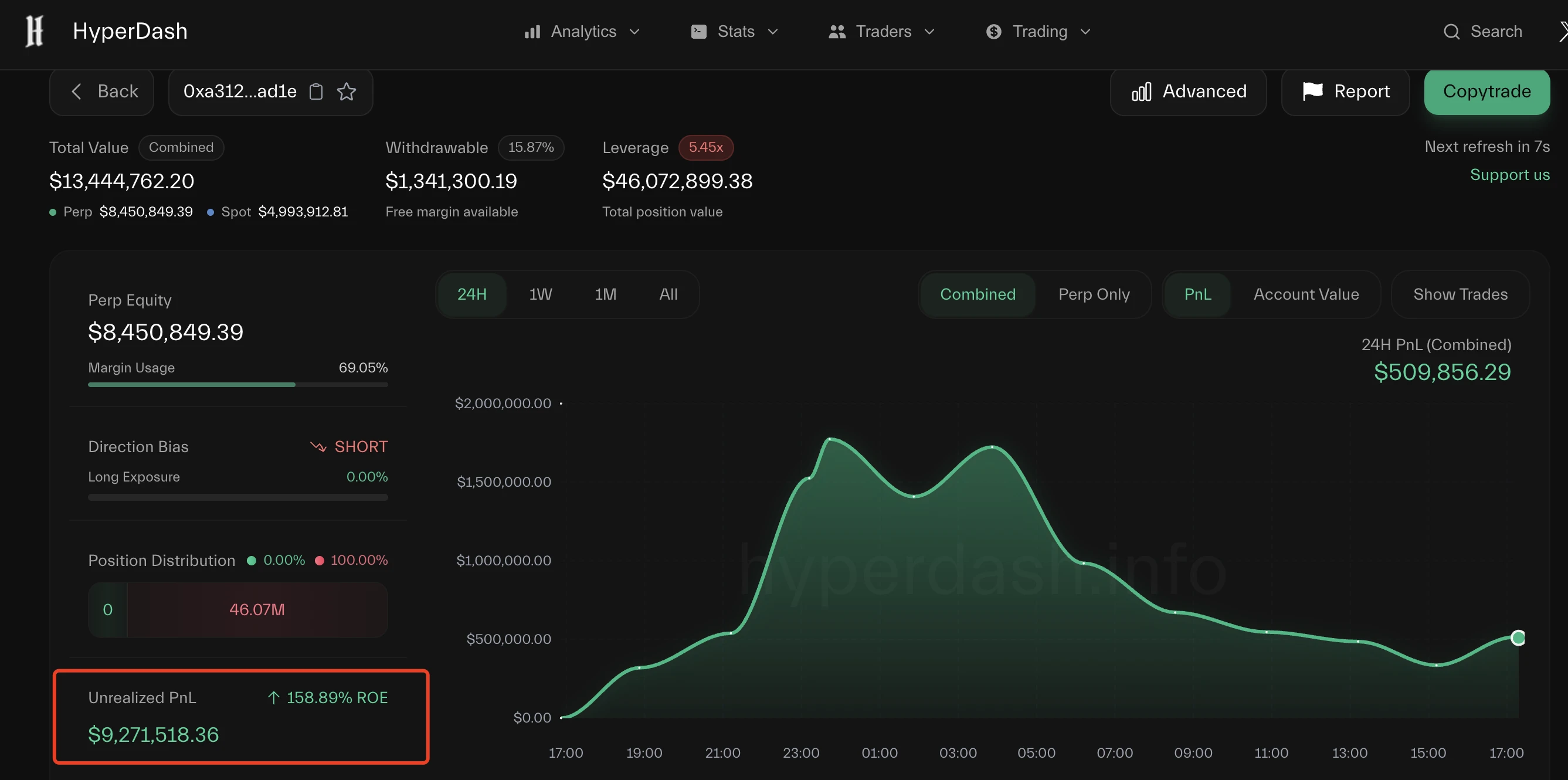
6 月 20 日,Hyperliquid 上一位做空 16 个山寨币的“空军头子”累计盈利暂报 968 万美元,远高于上周的 356 万美元,彼时,其 16 个持仓中有 15 个为浮盈状态,唯一浮亏的 HYPE 亏损已缩窄至 192 万美元,整体仓位价值约为 5330 万美元。

值得一提的是,该巨鲸于 6 月 17 日已部分平仓了 ETH、PEPE、INIT、XRP 在内的多个标的,锁定了部分利润。
做空

https://hyperdash.info/zh-CN/trader/0xa312114b5795dff9b8db50474dd57701aa78ad1e

目前,该地址已提出 134 万美元资金,账户下浮盈利润仍然高达 927 万美元。值得一提的是,造成其唯一损失的代币是 HYPE,目前浮亏约 170 万美元。

无独有偶的是,“空军头子”不止一个。

“空军巨鲸/机构”:做空 58 个代币,浮盈超 2000 万美元

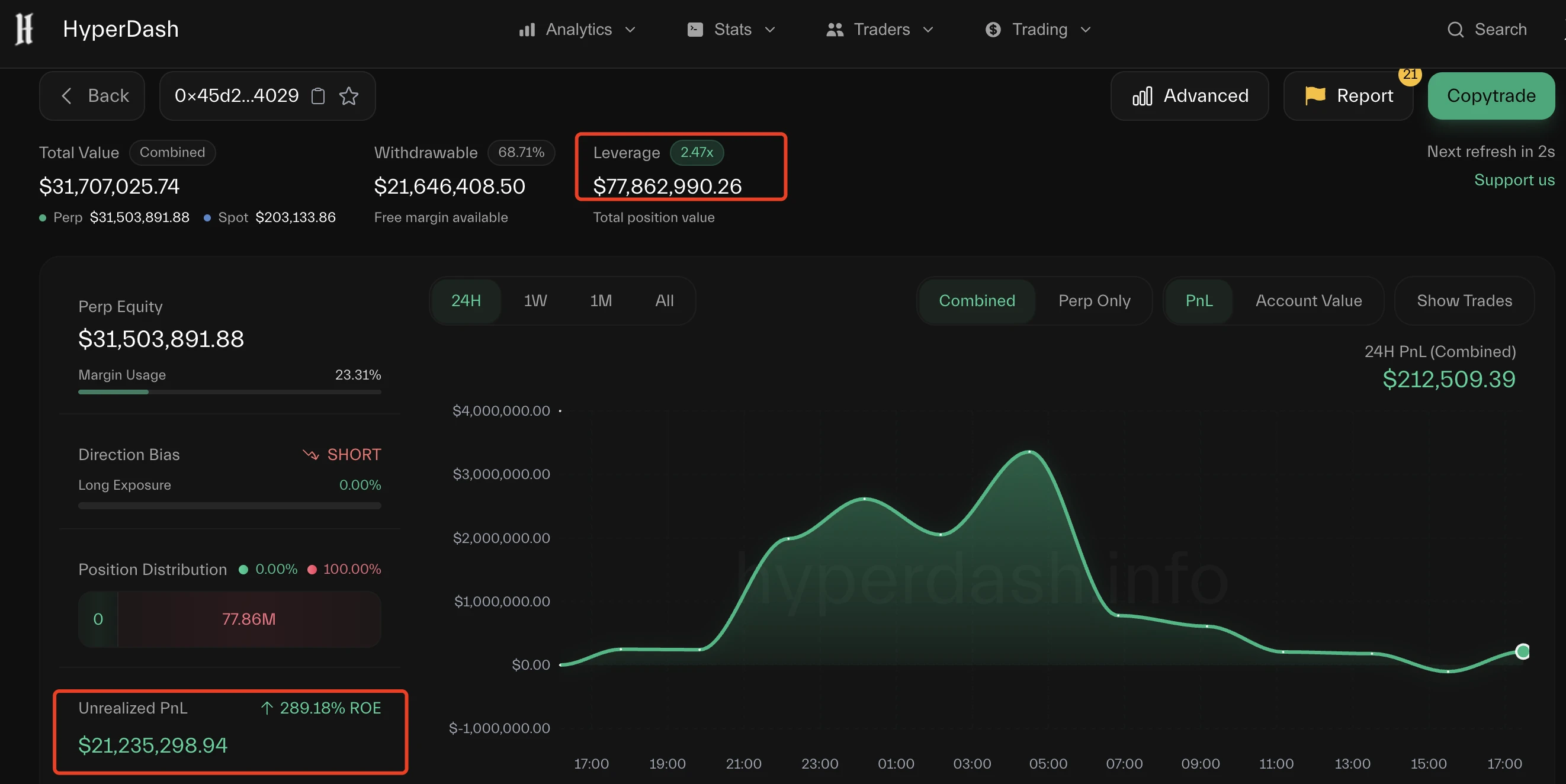
6 月 16 日起,某巨鲸/机构开启了自己的“空军之旅”——其在 Hyperliquid 上开空 58 个币种,包括 BTC、ETH、SOL、XRP、PEPE、FARTCOIN、DOGE、AAVE、HYPE 等。目前,该地址浮盈 2134 万美元,其仓位规模达到 7779 万美元, 58 个空单中只有两个为浮亏状态,为 HYPE(浮亏约 428 万美元)、 AAVE(浮亏约 1.6 万美元);战绩最好的则是 ETH, 浮盈 443.8 万美元。
做空

https://hyperdash.info/zh-CN/trader/0x45d26f28196d226497130c4bac709d808fed4029

ETH 聪明钱:顶部做空,浮盈超 2000 万美元

除了“无脑做空”的空军头子,此次做空热潮中还包括了“ETH 聪明钱玩家”。

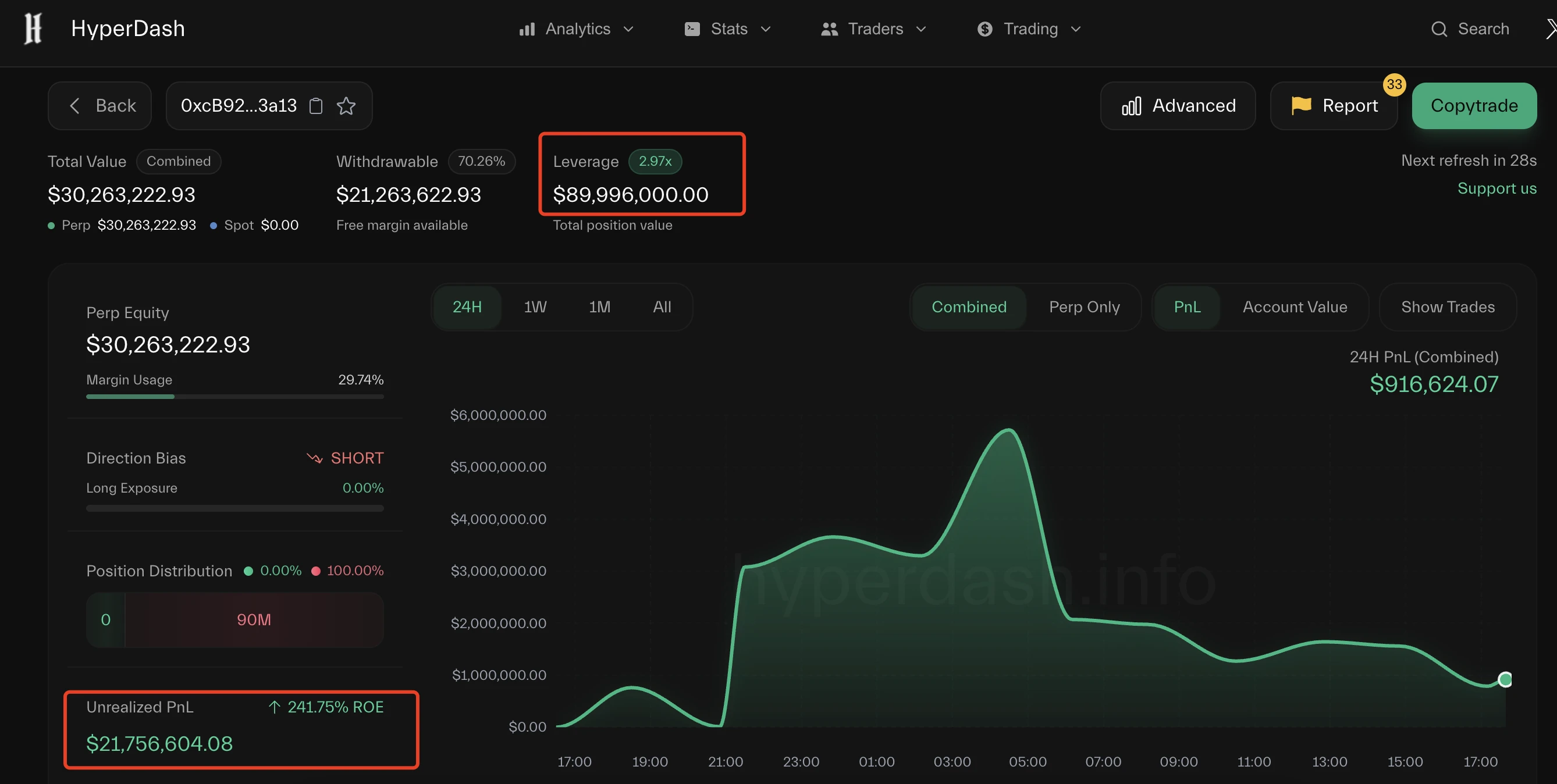
据 LookonChain 监测,某底部做多 ETH 聪明钱过去一个月操作几乎完美无缺,每次都能在 ETH 大幅下跌之前平仓,在顶部做空,此前一个月曾狂赚 2000 万美元。目前,该地址累计浮盈超 2175 万美元,仓位价值高达约 9000 万美元。
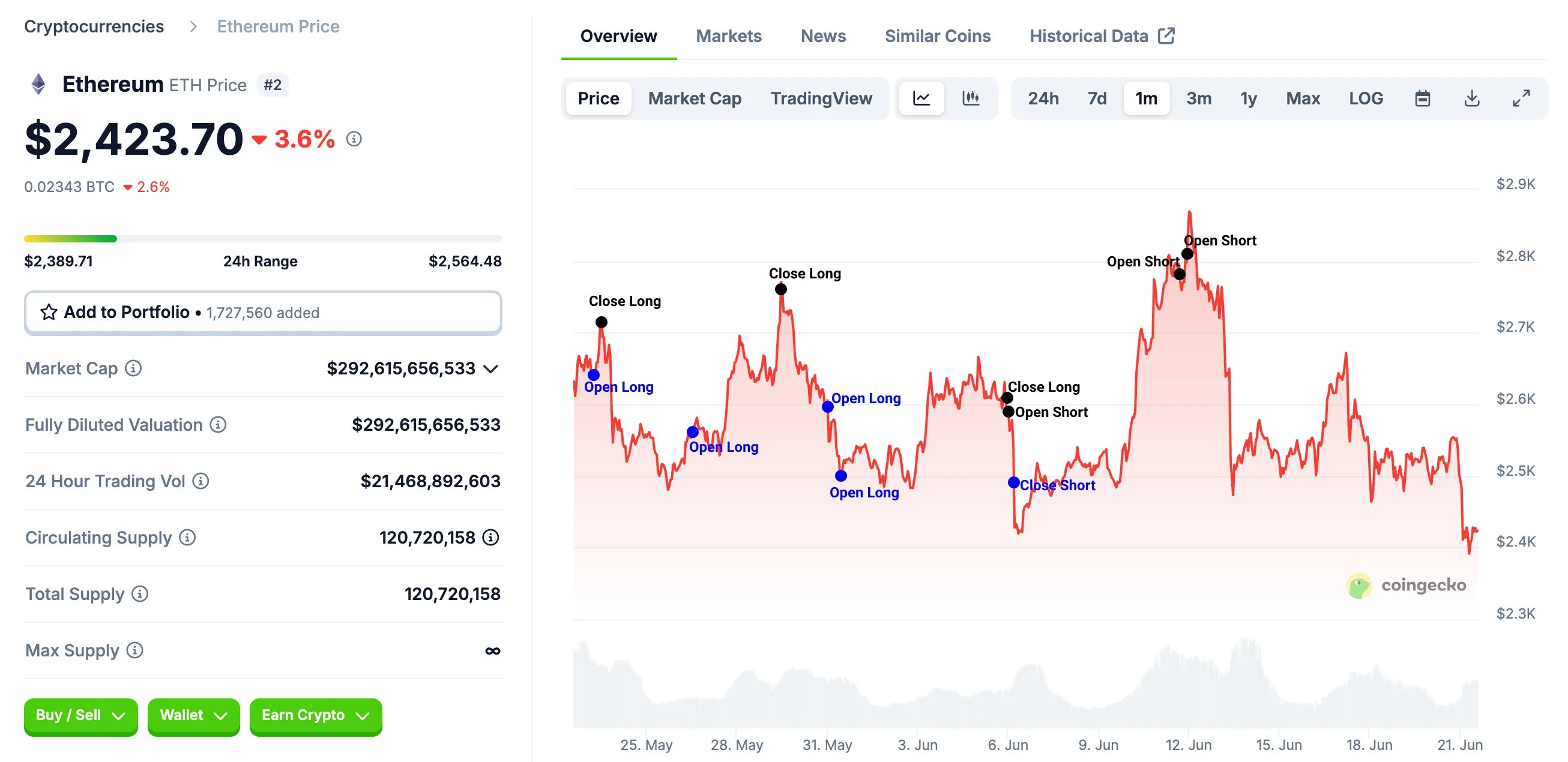
做空

做空

https://hyperdash.info/trader/0xcB92C5988b1D4f145a7B481690051F03EaD23a13

业内人士观点一览:数据党统计、交易员观点、美股山寨牛市、特朗普等“不稳定因素”

身处当下市场,针对目前下跌震荡的局势,业内人士也纷纷给出了自己的观点看法,有人从数据方面出发,有人则更多基于宏观层面风险给出自身观点,也有人认为此前 Circle 上市及美股山寨牛市一定程度上影响了加密市场的流动性,结合美国总统特朗普“冒天下之大不韪”做出的种种骚操作,共同构成了加密市场的“不稳定因素”。

数据统计:半年内新低代币数量达 294 个

据加密 KOL @zxw 018018  发文统计,前 1000 交易量币种中:半年新高标的代币仅有 9 个;半年新低标的代币数量则高达 294 个。他个人认为,这是“山寨持续归零中”的一大表现。

交易员James Wynn:增持空单,BTC 短期目标为 9.3 到 9.5 万美元

此前因做多 BTC 而声名鹊起、最终又因高频开单的交易员 James Wynn 近日发文表示,已“加大仓位做空”,并将比特币短期目标价定在 93, 000 至 95, 000 美元。

他指出,在更多国家可能加入战局的背景下,市场仍未充分反映现实风险。此外,美国并无降息预期,所谓的多头逻辑仅依赖全球流动性扩张,但这并非来自美元体系。此外,其进一步提出阴谋论,认为美国政府可能希望通过某种“黑天鹅事件”迫使比特币下跌,从而为其自身创造低位建仓的机会。(当然,这纯属主观个人臆想。)

而美国突袭伊朗核设施一事确实在某种程度上加剧了外界对伊以冲突扩大化的猜测与市场“用脚投票”的下跌走势。

美股山寨牛市:BTC 储备阵营壮大,Circle 引领稳定币板块

对加密市场产生重大影响的另一重因素,则在于 BTC ETF、ETH ETF 通过之后的美股市场。

一方面,Strategy 的“囤币策略”被 Metaplanet 等上市公司成功验证,成为不少上市公司储备资金、拉升股价的拿手好戏,这进一步影响了圈外资金流入加密市场的可能性和规模;另外一方面,携“稳定币第一股”概念强势登陆美股的 Circle 以及波场 TRON 反向合并的 SRM 公司成为美股市场的“山寨王者”,稳定币板块由此引领了近期的美股山寨牛市。
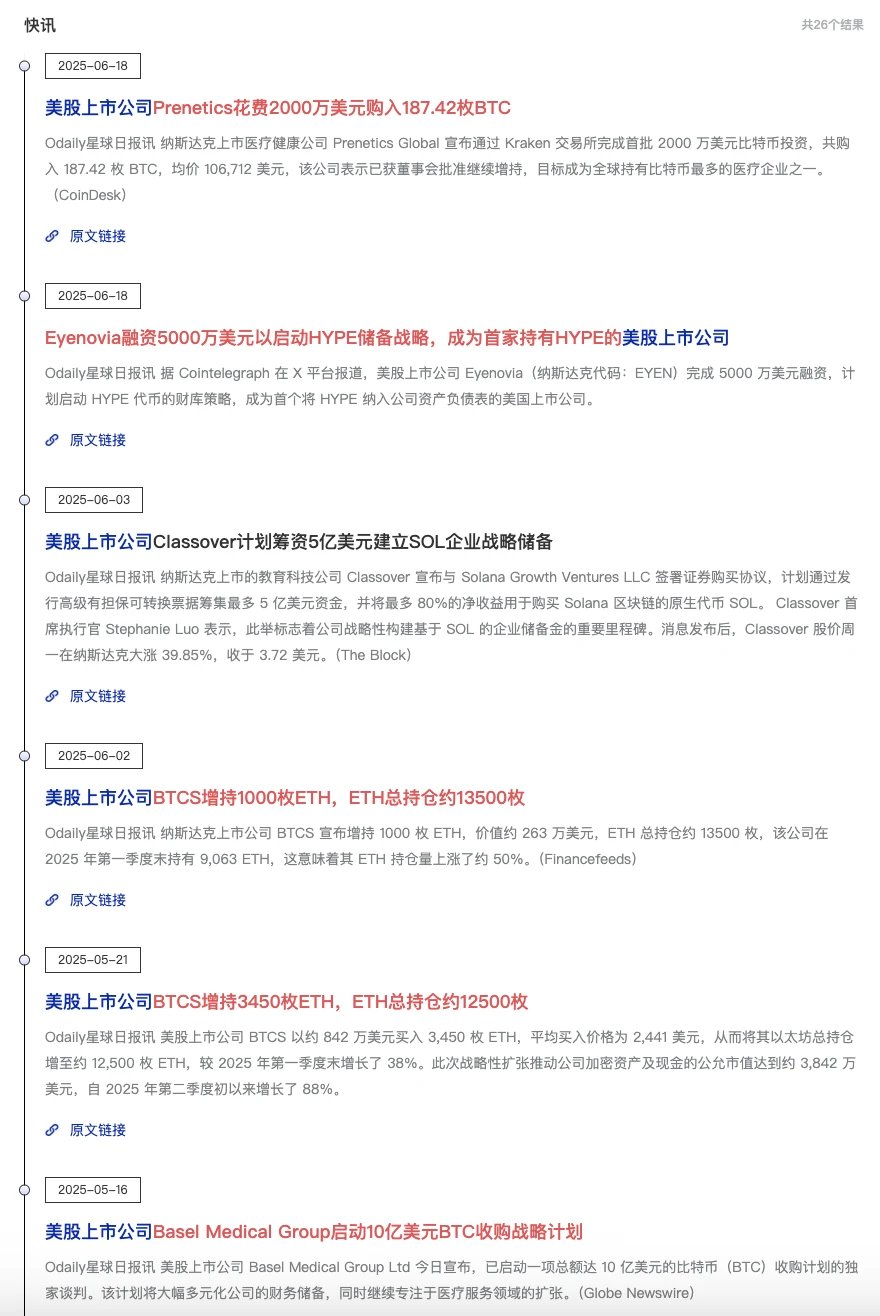
做空

美股上市公司囤币近况

出乎不少加密人群意料的是,Circle 股价居然一路飙升至如今的接近 260 美元,这在一定程度上也对山寨币市场产生了“虹吸效应”,资金流动性进一步萎缩。

特朗普促使局部地区热战进一步白热化,美国处于战争泥潭边缘

至于特朗普,对于现在的伊以冲突而言,毫无疑问是个十足的搅屎棍。

6 月 20 日,美国白宫就伊朗问题给出的态度是:美国总统特朗普将在两周内决定是否对伊朗采取军事行动

而就在短短的 2 天后,特朗普则耀武扬威般对外界表示,美军已完成对伊朗福尔多、纳坦兹和伊斯法罕三处核设施的打击行动,其中福尔多为主要目标并已实施全弹量投掷。

如此反复多变的政治态度与雷厉风行的军事打击,进一步加剧了中东地区伊以局势的紧张程度,最新消息显示,伊朗方面计划关闭石油运输咽喉管道——霍尔木兹海峡,此举已得到伊朗议会批准,但仍需等待最高安全机构最终决定。

甚至,特朗普还喊出了“MIGA”(Make Iran Great Again)的口号,暗示伊朗当局应考虑政权更迭。

不得不说,商人出身的特朗普对于发动战争的心理压力远远小于拜登等政客,而其造成的严重后果,或许需要加密市场连同全世界的经济体系买单。

结语:短期市场修复仍看美方态度,目前处悲观态势

综合来看,加密市场的“山寨 G”早有端倪,而伊以冲突以及美国的直接下车无疑是这一结果的催化剂。而短期内的市场修复,仍然主要依赖于美方的后续表态及跟进,尤其是特朗普的发言与动作。

交易员 Eugene Ng Ah Sio 此前发文表示,已开启比特币和一些山寨币的多单,认为“美国的轰炸行动,加上霍尔木兹海峡的关闭”是一次对早期多头的连续打击,已经足够洗盘,现在正是“逢低买入”的时候。

但特朗普能否如图 4 月时那般“先发起关税贸易战,后发利好言论救市”,目前仍是个未知数。

或许,对于大多数人来说,有限做空是比无脑做多更具性价比的选择。

Trending Cryptos

Related Reads

How to Detect AI-Generated Videos? A Review of Dynamic, Traceable, and Explainable Detection Systems

**How to Detect AI-Generated Videos: A Survey on Dynamic, Traceable, and Explainable Detection Systems** With rapid advances in AI video generation (e.g., Sora, Veo), creating highly realistic, multi-minute videos is now possible, widening the gap with detection research. Current AI video detection, often limited to unreliable binary classifications, is insufficient. This survey, accepted at ACL 2026, reframes the goal as **"factual fidelity verification"**—checking if a video's content (who, when, where, what) aligns with the real world perceptually and cognitively. It categorizes AI-generated videos into three paradigms: **Local Manipulation Videos (LMV**, e.g., face swaps), **Audio-Visual Editing (AVE**, e.g., lip-syncing), and **Generative Video Synthesis (GVS**, fully synthetic videos like Sora's). Detection challenges evolve from visual artifacts in LMV to multi-modal inconsistencies in AVE and higher-level world knowledge violations in GVS. The core proposal is a **Vision-Language Dual-View framework** with four hierarchical layers: 1. **Layer 1 (Intrinsic Visual Cues):** Analyzes low-level signal statistics, noise patterns, and physiological signals. 2. **Layer 2 (Spatiotemporal Consistency):** Checks for temporal coherence in object motion and scene dynamics. 3. **Layer 3 (Cross-Modal Consistency):** Verifies alignment between video, audio, and text within the video. 4. **Layer 4 (Language-Guided World-Level Reasoning):** Uses external knowledge, facts, and physical laws to judge semantic plausibility and factual correctness. The survey traces a shift in detection focus from lower layers (1 & 2) toward higher, language-involved layers (3 & 4). It also reviews evolving evaluation metrics and datasets tailored for each video paradigm. The conclusion advocates for a **dynamic, evidence-first detection system** that moves beyond simple classification. Future trustworthy detection requires combining visual evidence (from CV) with semantic reasoning and explanation (from NLP & multimodal AI), ultimately creating traceable and explainable judgments about a video's adherence to real-world constraints.

marsbit24m ago

How to Detect AI-Generated Videos? A Review of Dynamic, Traceable, and Explainable Detection Systems

marsbit24m ago

It Turns Out the First Real-World Application of AI x Crypto is in Security Auditing

The article explores the surprising trend where AI's first major impact on crypto has been in security auditing, not in areas like trading or analytics. It details how AI-powered tools are dramatically lowering the barrier to finding smart contract vulnerabilities, enabling attackers to scan thousands of contracts and execute exploits within minutes. This has rendered traditional, manually-produced audit reports with their month-long validity periods increasingly obsolete, creating a critical "structural crack" in the old security model. Cases like Drift Protocol and KelpDAO show that even extensively audited protocols can be hacked through social engineering, operational flaws, or infrastructure misconfigurations beyond pure code review. Attackers are also using AI to find and exploit vulnerabilities in years-old, deployed contracts. Notably, OpenZeppelin's co-founder has expressed a grim view that "all DeFi is insecure" due to AI's asymmetric advantage. In response, the audit industry is undergoing a fundamental shift. While there's a short-term spike in defensive re-audits, the long-term business model is changing. Firms are developing AI-assisted systems and moving from one-time report deliveries towards embedded, continuous services like real-time monitoring and formal verification. Examples include AI tools uncovering critical, previously missed vulnerabilities in heavily audited protocols like Curve Finance and Zcash. The conclusion is that security must become a continuous investment, not a one-time checkbox, and audit firms must rapidly evolve their tools and service models to survive.

marsbit31m ago

It Turns Out the First Real-World Application of AI x Crypto is in Security Auditing

marsbit31m ago

Never expected that the first tangible application of AI x Crypto is in security auditing

Unexpectedly, the initial major application of AI in the Crypto sphere has turned out to be security auditing. In 2026, DeFi has faced significant security challenges, with 121 hacking incidents resulting in approximately $942 million in losses. While AI was expected to first impact areas like quantitative trading, its initial breakthrough has instead transformed security auditing by drastically lowering the cost and skill barrier for finding smart contract vulnerabilities. The traditional audit model is facing obsolescence. Advanced AI models, such as Claude Mythos, enable attackers to scan thousands of contracts and identify vulnerability patterns at scale, compressing the time from discovery to execution to mere minutes. This renders the month-long validity of traditional audit reports ineffective. Notably, attacks now frequently target well-audited, established protocols by exploiting business logic flaws, operational security weaknesses, and even years-old historical contracts, demonstrating that old audit reports offer zero protection. This pressure is forcing a fundamental shift in the industry. In the short term, a wave of defensive re-auditing is occurring, driven by projects seeking to meet new AI-era security standards and regulatory requirements. In the long run, audit firms' business models are diverging. The one-time report delivery model is declining in value, as evidenced by platforms like Code4rena shutting down. Leading firms are now pivoting towards AI-powered defense, integrating continuous monitoring, real-time on-chain risk detection, and embedding security directly into the development phase, as seen with tools like OpenZeppelin's Skills system. Ultimately, the era of "audit once, secure forever" is over. Security must become a continuous, embedded infrastructure investment for projects. For audit companies, survival depends on proactively transforming from traditional service providers into platforms offering AI-native, ongoing security solutions.

链捕手38m ago

Never expected that the first tangible application of AI x Crypto is in security auditing

链捕手38m ago

Trading

Spot

Hot Articles

What is $BITCOIN

DIGITAL GOLD ($BITCOIN): A Comprehensive Analysis Introduction to DIGITAL GOLD ($BITCOIN) DIGITAL GOLD ($BITCOIN) is a blockchain-based project operating on the Solana network, which aims to combine the characteristics of traditional precious metals with the innovation of decentralized technologies. While it shares a name with Bitcoin, often referred to as “digital gold” due to its perception as a store of value, DIGITAL GOLD is a separate token designed to create a unique ecosystem within the Web3 landscape. Its goal is to position itself as a viable alternative digital asset, although specifics regarding its applications and functionalities are still developing. What is DIGITAL GOLD ($BITCOIN)? DIGITAL GOLD ($BITCOIN) is a cryptocurrency token explicitly designed for use on the Solana blockchain. In contrast to Bitcoin, which provides a widely recognized value storage role, this token appears to focus on broader applications and characteristics. Notable aspects include: Blockchain Infrastructure: The token is built on the Solana blockchain, known for its capacity to handle high-speed and low-cost transactions. Supply Dynamics: DIGITAL GOLD has a maximum supply capped at 100 quadrillion tokens (100P $BITCOIN), although details regarding its circulating supply are currently undisclosed. Utility: While precise functionalities are not explicitly outlined, there are indications that the token could be utilized for various applications, potentially involving decentralized applications (dApps) or asset tokenization strategies. Who is the Creator of DIGITAL GOLD ($BITCOIN)? At present, the identity of the creators and development team behind DIGITAL GOLD ($BITCOIN) remains unknown. This situation is typical among many innovative projects within the blockchain space, particularly those aligning with decentralized finance and meme coin phenomena. While such anonymity may foster a community-driven culture, it intensifies concerns about governance and accountability. Who are the Investors of DIGITAL GOLD ($BITCOIN)? The available information indicates that DIGITAL GOLD ($BITCOIN) does not have any known institutional backers or prominent venture capital investments. The project seems to operate on a peer-to-peer model focused on community support and adoption rather than traditional funding routes. Its activity and liquidity are primarily situated on decentralized exchanges (DEXs), such as PumpSwap, rather than established centralized trading platforms, further highlighting its grassroots approach. How DIGITAL GOLD ($BITCOIN) Works The operational mechanics of DIGITAL GOLD ($BITCOIN) can be elaborated on based on its blockchain design and network attributes: Consensus Mechanism: By leveraging Solana’s unique proof-of-history (PoH) combined with a proof-of-stake (PoS) model, the project ensures efficient transaction validation contributing to the network's high performance. Tokenomics: While specific deflationary mechanisms have not been extensively detailed, the vast maximum token supply implies that it may cater to microtransactions or niche use cases that are still to be defined. Interoperability: There exists the potential for integration with Solana’s broader ecosystem, including various decentralized finance (DeFi) platforms. However, the details regarding specific integrations remain unspecified. Timeline of Key Events Here is a timeline that highlights significant milestones concerning DIGITAL GOLD ($BITCOIN): 2023: The initial deployment of the token occurs on the Solana blockchain, marked by its contract address. 2024: DIGITAL GOLD gains visibility as it becomes available for trading on decentralized exchanges like PumpSwap, allowing users to trade it against SOL. 2025: The project witnesses sporadic trading activity and potential interest in community-led engagements, although no noteworthy partnerships or technical advancements have been documented as of yet. Critical Analysis Strengths Scalability: The underlying Solana infrastructure supports high transaction volumes, which could enhance the utility of $BITCOIN in various transaction scenarios. Accessibility: The potential low trading price per token could attract retail investors, facilitating wider participation due to fractional ownership opportunities. Risks Lack of Transparency: The absence of publicly known backers, developers, or an audit process may yield skepticism regarding the project's sustainability and trustworthiness. Market Volatility: The trading activity is heavily reliant on speculative behavior, which can result in significant price volatility and uncertainty for investors. Conclusion DIGITAL GOLD ($BITCOIN) emerges as an intriguing yet ambiguous project within the rapidly evolving Solana ecosystem. While it attempts to leverage the “digital gold” narrative, its departure from Bitcoin's established role as a store of value underscores the need for a clearer differentiation of its intended utility and governance structure. Future acceptance and adoption will likely depend on addressing the current opacity and defining its operational and economic strategies more explicitly. Note: This report encompasses synthesised information available as of October 2023, and developments may have transpired beyond the research period.

459 Total ViewsPublished 2025.05.13Updated 2025.05.13

What is $BITCOIN

Discussions

Welcome to the HTX Community. Here, you can stay informed about the latest platform developments and gain access to professional market insights. Users' opinions on the price of BTC (BTC) are presented below.

活动图片