战争如何影响比特币?五年价格轨迹深度解析

Odaily星球日报Published on 2025-06-21Last updated on 2025-06-21

Abstract

从乌克兰到伊朗,地缘政治下的比特币的投资逻辑和角色演变。

2025 年 6 月 13 日凌晨,以色列方面发起了“狮子崛起行动”,袭击了伊朗多个城市、军事基地以及核设施。近日,伊朗最大加密交易所 Nobitex 遭遇以色列黑客攻击,造成数千万美元稳定币损失。比特币在硝烟中悄然波动,一路上涨接近 11 万美元后再次下跌。从 2020 年至 2025 年间发生的多场重大战争冲突中,我们可以观察到比特币价格对地缘政治事件的敏感性反应。本文将深入分析近五年来主要战争冲突对比特币价格走势的影响,以及过往战争结束后加密市场的恢复轨迹。

俄乌冲突的分水岭时刻

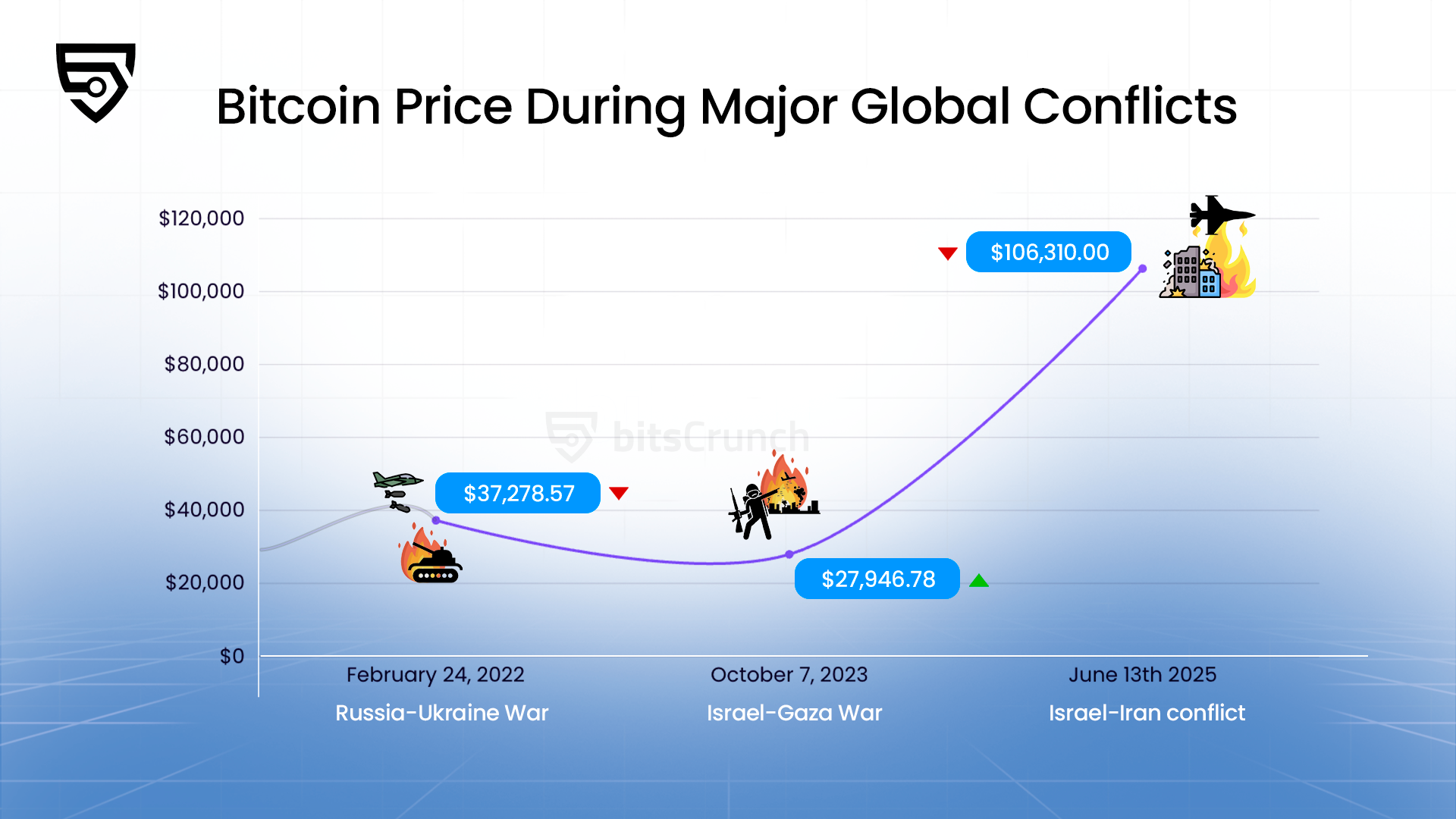
俄乌冲突于 2022 年 2 月 24 日全面爆发,外界猜测俄罗斯资金将流向例如比特币等的加密货币,比特币的价格飙升了 20% ,一度突破 4.5 万美元。同一时刻,俄罗斯寡头试图通过比特币转移被冻结的资产,似乎印证着加密货币的“危机价值”。

然而长期来看,当战争推高欧洲天然气价格至历史峰值,美联储被迫开启四十年来最激进加息,比特币在 2022 年上演 65% 的崩盘。虽然这种下跌不能完全归因于战争,但地缘政治不确定性无疑加剧了市场的悲观情绪。
战争如何影响比特币?五年价格轨迹深度解析

数据来源:bitscrunch.com

有趣的是,战争的持续性反而为比特币提供了新的叙事支撑。乌克兰政府通过加密货币筹集了数百万美元的捐款,凸显了数字货币在传统金融体系受限情况下的独特价值。同时,面对西方制裁,俄罗斯也在一定程度上转向加密货币作为规避制裁的工具,这进一步强化了比特币作为替代性金融工具的地位。

值得注意的是, 2014 年时,比特币在俄罗斯入侵乌克兰后陷入了长期熊市。然而,到了 2022 年,比特币已经发展成为一个更大、更强、更被机构投资者接受的资产类别。

以色列战争的市场考验

2023 年 10 月 7 日,以色列-加沙冲突战争爆发。10 月 11 日,根据 bitsCrunch 数据,比特币跌破 27000 美元,创下自 9 月以来的新低,交易员普遍将此归因于中东冲突对投资者情绪的负面影响。2023 年加沙冲突期间,USDT 转账量周增 440% ,稳定币正成为新基础设施。

自以色列-哈马斯冲突开始以来,数字资产价格并未出现显著波动。这种相对稳定性反映了加密货币市场对地缘政治事件敏感性的降低。

伊朗以色列冲突

2024 年 4 月伊朗以色列冲突下,导弹袭击当日,比特币波动率仅± 3% ,不足 2022 年俄乌开战时的 1/3 。贝莱德 ETF 单日净流入$ 4.2 亿,形成波动缓冲垫。现货 ETF 日均交易量占比达 55% ,战争情绪被机构订单流稀释。

bitsCrunch 的数据显示,即使在目前以色列对伊朗发动空袭等重大地缘政治事件中,比特币市场也并未出现恐慌模式。虽然比特币在 2025 年 6 月战争初始 24 小时内下跌了 4.5% 至 104343 美元,以太坊跌了 8.2% 至 2552 美元,但这种跌幅相对于事件的严重性来说仍然是可控的,显示出了较强的韧性。

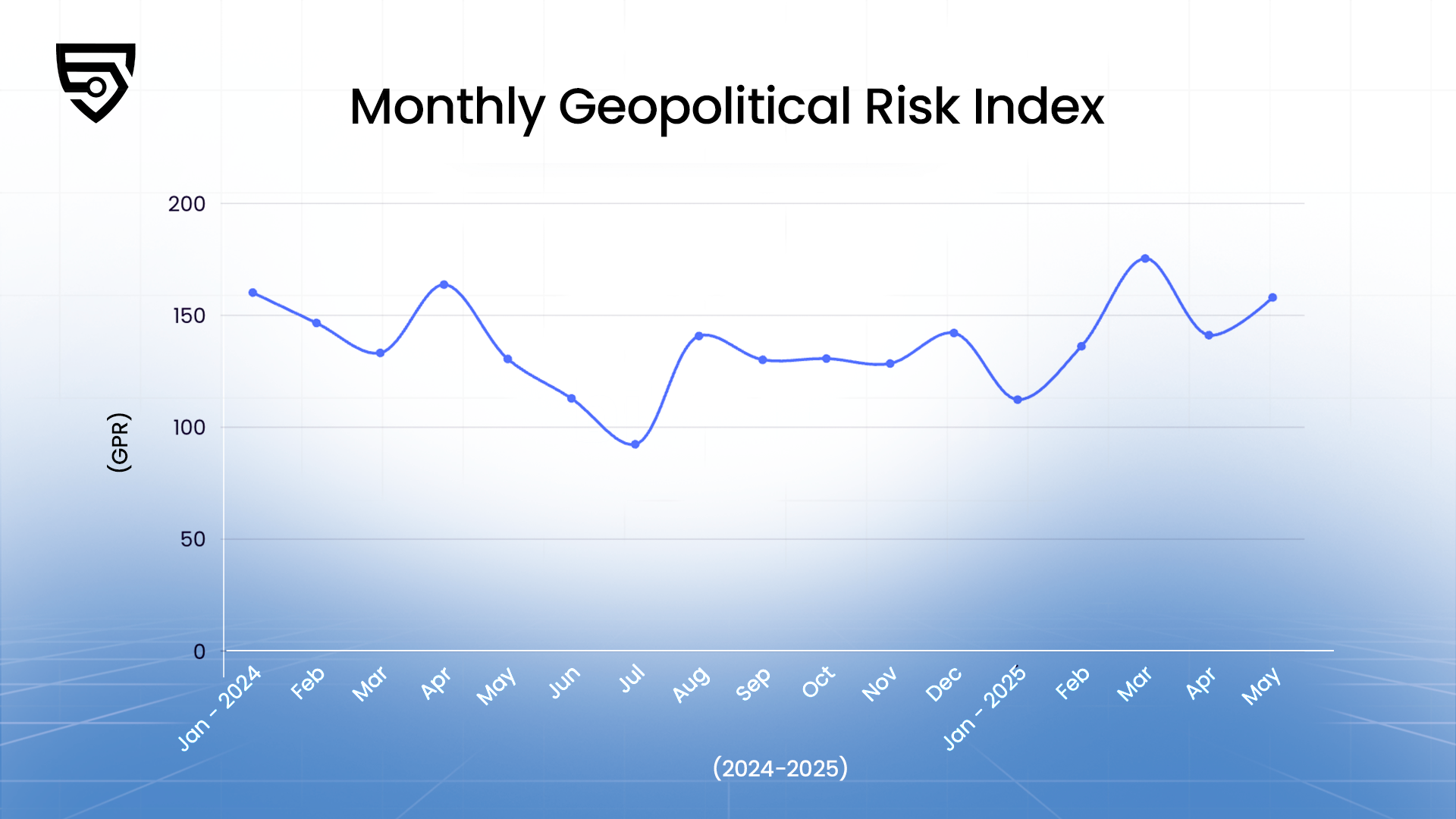
然而,根据地缘政治风险 (GPR) 指数,我们发现,目前来说,指数呈现上升趋势,约为 158 左右。此前超过 150 的时间节点还是 2024 年初的时候。这个指数由 Dario Caldara 和 Matteo Iacoviello 构建。地缘政治风险 (GPR) 指数在两次世界大战前后、朝鲜战争初期、古巴导弹危机期间以及“ 9 · 11 ”事件后达到峰值。地缘政治风险越高,投资、股价和就业率就越低。地缘政治风险越高,发生经济灾难的概率也就越高,全球经济的下行风险也就越大。
战争如何影响比特币?五年价格轨迹深度解析

数据来源:bitscrunch.com

观察资本逻辑的最佳窗口

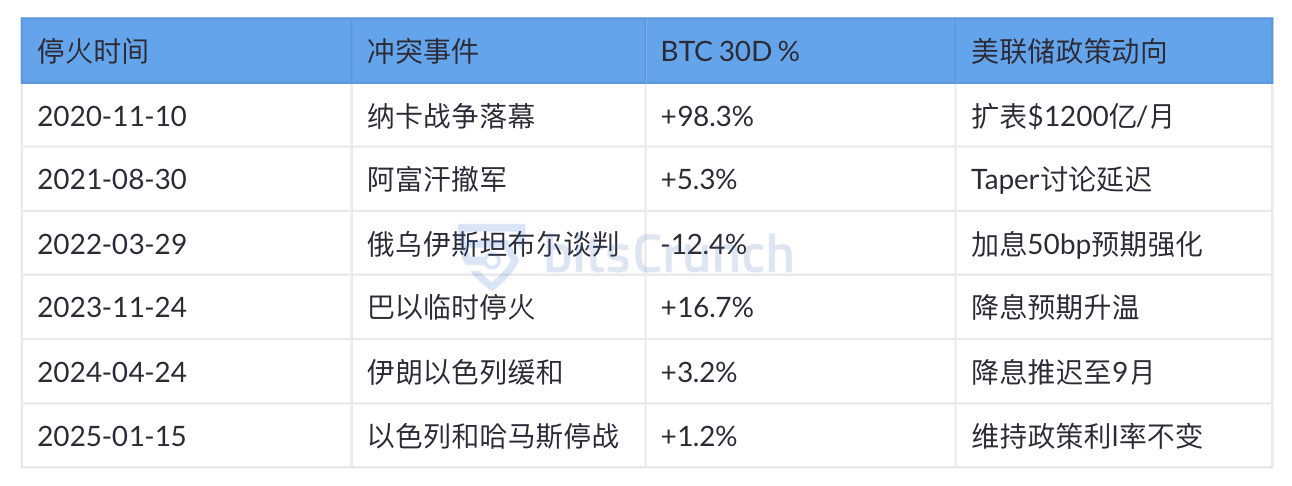
停火协议签署的时刻,往往是观察资本逻辑的最佳窗口。2020 年 11 月纳卡战争落幕,比特币在随后 30 天近乎翻倍。这场高加索小国的领土争端之所以引爆加密市场,核心在于战争未改变全球宽松基调,美联储每月 1200 亿美元的购债计划持续灌溉风险资产。与之形成镜像的是 2022 年 3 月俄乌谈判,短暂的停火希望被美联储加息 50 个基点的预告击碎,比特币应声下 12% 。
战争如何影响比特币?五年价格轨迹深度解析

数据来源:bitscrunch.com

2023 年 11 月巴以临时停火当天,加密衍生品市场爆仓 2.1 亿美元。埃及场外交易所 BTC 兑埃镑汇率溢价从 8.2% 降至 2.1% ,战乱地区需求逐渐退潮。战争叙事很快便被 ETF 审批、减半周期等原生叙事覆盖。2025 年 1 月 15 日,以色列和哈马斯同意达成停战和交换战俘的提议。随后比特币直线上涨,再次突破 10 万美元后下跌。中东冲突期间的市场表现促使人们重新审视比特币的避险资产属性——比特币和以太坊还不能被视为黄金市场的安全避险资产。

进入机构时代

数字资产的战争价值并未消失,而是在场景化重构。乌克兰政府收到的 1.27 亿美元加密捐款,占其早期国际援助的 6.5% ;加沙地下网络通过比特币矿机维持通信网络;伊朗石油商利用混币器突破制裁...这些边缘地带的真实应用,正在形成与华尔街并行不悖的暗线生态。当主流市场关注 ETF 资金流时,战乱地区的对加密货币的需求成为观察数字资产的新指标。

当前加密市场已形成清晰的战争响应机制:原油价格触发通胀警报,VIX 恐慌指数,以及 Deribit 上未平仓合约等。bitsCrunch 数据显示,地缘冲突释放的避险资金中最终流入加密领域的不足 5% ,这个数字在 ETF 时代可能进一步萎缩。

真正的转折点在于货币政策。当美联储降息通道打开,停火协议签署将成为资本涌入的加速器。2025 年 6 月 18 日,美国利率期货价格反映美联储 9 月降息概率为 71% ,声明发布前为 60% , 9 月降息概率小幅升高。但若战争引发能源供应链断裂,即便战事平息,滞胀阴影仍将压制加密市场。关注美联储利率依旧是重中之重。

战后的加密市场恢复模式

从已结束的冲突来看,战争的结束通常会带来市场信心的逐步恢复。对于比特币市场而言,和平进程的推进通常会减少地缘政治风险溢价,使得投资者更愿意承担风险。这种风险偏好的回升往往有利于比特币等风险资产的价格表现。

如果比特币在战争期间表现出了良好的抗风险能力,机构投资者可能会增加其在投资组合中的权重。相反,如果表现不佳,则可能面临资金流出的压力。从近期的表现来看,比特币在地缘政治危机中的相对稳定性可能会提升其在机构投资者心目中的地位。

结语

展望未来,随着技术的不断进步和监管框架的逐步完善,比特币等加密货币有望在全球金融体系中扮演更加重要的角色。虽然短期内仍可能面临各种挑战和波动,但其作为数字时代重要金融工具的地位已经得到了初步确立。

在这个充满不确定性的时代,比特币等数字资产正在重新定义我们对货币、价值储存和金融系统的理解。虽然道路可能充满挑战,但这种变革的历史意义和潜在价值不容忽视。

Trending Cryptos

Related Reads

Bitcoin Approaches $80,000 Milestone, HYPE Hits New All-Time High | Invited Analysis

The cryptocurrency market experienced a significant surge this week, with Bitcoin rising sharply by 26.72% to approach the key psychological level of $80,000, peaking at $79,515. Simultaneously, the token HYPE broke its all-time high, reaching $83.38. This rally has shifted market sentiment from widespread pessimism to active bullish positioning. The article provides a technical analysis of both assets. For Bitcoin, the analysis details a multi-week corrective structure since October 2025, with the current price testing the upper boundary of a wide consolidation range between $57,820 and $82,850. The primary scenario anticipates a rejection near this upper resistance, leading to a pullback within the range (Path Two), though paths for a breakout or a breakdown are also outlined. On the daily chart, Bitcoin is analyzed as being in the final stages (wave c) of a five-wave rally from the July low. For HYPE, the article recounts a successful bullish call initiated on February 23, which has yielded a maximum gain of 225.7% to date. With the price achieving a new all-time high, the analysis suggests the upward trend is intact, with the next target around $90. The weekly strategy for Bitcoin involves waiting for a potential pullback to key support zones ($73,500-$75,000 or $67,300-$69,100) for short-term long opportunities, while maintaining a neutral medium-term stance. For HYPE, the strategy advises existing long positions to trail stop-losses, while new entrants could consider buying on a successful retest of the $77 support level. The article concludes with standard risk management rules and a disclaimer that the content is for informational purposes only and not investment advice.

Odaily星球日报9m ago

Bitcoin Approaches $80,000 Milestone, HYPE Hits New All-Time High | Invited Analysis

Odaily星球日报9m ago

Goldman Sachs Research Report: China's Semiconductor Self-sufficiency Rate Rises to 70%, 2030 Capital Expenditure Target $82 Billion

Goldman Sachs Report Analysis: China's Semiconductor Self-Sufficiency Rises to 70% by Quantity, 2030 Capex Target at $82 Billion. China's semiconductor industry has achieved significant progress in "quantity," but a substantial gap remains in "quality," according to a Goldman Sachs report. The analysis notes China's IC self-sufficiency rate by unit count reached 70% as of June 2026, nearly doubling from 38% in 2010, though the value-based self-sufficiency gap persists due to bottlenecks like lithography equipment. The report significantly revises China's 2030 semiconductor capital expenditure forecast upward by 79% to $82 billion, driven by self-sufficiency goals, generative AI demand, and customer localization strategies. Capex is expected to grow 10-15% annually from 2026 to 2030. Key findings include a rapidly narrowing supply-demand gap for advanced logic nodes (7nm and below), projected to shrink from 92% in 2025 to 34% by 2035, fueled by AI server demand. The China AI chip TAM is forecast to reach $678 billion by 2030 under a base case, with the DRAM market hitting $257 billion by 2028, featuring strong HBM growth. The report initiates coverage on China's leading DRAM maker, CXMT, with a Buy rating and a 129 yuan price target, citing benefits from AI-driven demand and supply chain diversification. Equipment localization is rising, but global suppliers remain crucial for advanced node yield. Risks include intensifying competition, softer end-demand, and geopolitical uncertainty. The industry is transitioning from volume expansion to quality breakthroughs, with capex, advanced node gaps, and AI/HBM demand driving a sector re-rating.

marsbit9m ago

Goldman Sachs Research Report: China's Semiconductor Self-sufficiency Rate Rises to 70%, 2030 Capital Expenditure Target $82 Billion

marsbit9m ago

Mass Production Timelines Shift Collectively, Is Glass Substrate Facing Its First Major Test?

The article discusses the shift in the glass substrate industry from initial announcements to practical delivery and reliability testing. In mid-to-late 2026, key developments include Intel and Lens Technology advancing AI-era glass substrate packaging cooperation, Avaco launching a TGV pilot line in South Korea, and reports that Samsung Electro-Mechanics is facing delays, potentially pushing mass production beyond 2028. The core challenge has moved from material comparisons to rigorous customer reliability certifications, focusing on thermal cycling, humidity resistance, and stable electrical performance post-processing. Samsung Electro-Mechanics' reported delay, linked to client sample reliability bottlenecks, reflects a broader industry trend where timelines are being adjusted. Other players like SKC/Absolics, LG Innotek, and DNP are also targeting initial supply systems or pilot lines between 2027-2028, with mainstream adoption potentially post-2030. The delays highlight that the current hurdle is supply-side technical maturity—particularly achieving stable yields and passing client certifications—rather than a lack of demand driven by AI and HPC. The collaboration between Intel and Lens Technology focuses on establishing design and verification standards. Meanwhile, Japanese firms like Shinko Electric and DNP are progressing with multi-layer wiring and stress control. Chinese panel makers, led by BOE, are rapidly entering with automated pilot lines and customer testing. On the material side, companies like Corning are exploring glass substrates for co-packaged optics (CPO), potentially offering an earlier application path than core substrates. Ultimately, the central barrier is TGV (Through Glass Via) yield, currently around 60-70%, lower than organic substrates, with higher costs due to glass brittleness and process complexity. The industry's current phase represents its first major test in transitioning from lab R&D to volume manufacturing, with success hinging on overcoming these yield and certification challenges.

marsbit24m ago

Mass Production Timelines Shift Collectively, Is Glass Substrate Facing Its First Major Test?

marsbit24m ago

Crypto Bull Is Back, Which Assets Bounced the Hardest?

The cryptocurrency market experienced a significant surge last week, with Bitcoin rallying over 26% to nearly $79,500, its strongest weekly gain since March 2023, fueling discussions of a renewed bull market. This rebound highlighted several key market dynamics. First, short-term directional shifts are increasingly tied to U.S. policy cycles. The rally was driven by two major catalysts: the U.S. Treasury's announcement to increase long-term bond buybacks, easing macro liquidity pressures, and former President Trump's push for clearer crypto legislation, boosting regulatory certainty and risk appetite. Second, Bitcoin spot ETFs solidified their role as a leading market indicator. In the week ending August 21, U.S. Bitcoin and Ethereum spot ETFs saw a combined net inflow of $2.6 billion, the highest since October 2025, signaling strong institutional re-entry. Third, the rally followed a clear capital rotation pattern: Bitcoin's breakout ignited broader gains, with Ethereum (up nearly 30%), major altcoins, and meme coins sequentially posting larger percentage increases. Analysis of the top performers among the top 50 altcoins by market cap revealed the week's biggest gainers: ENA (Ethena) led with a 100.75% surge, fueled by a Coinbase partnership. It was followed by PUMP (Pump.fun, up 88-99%), STX (Stacks, up 82-94%), TRUMP (Official Trump, up 79-91%), and ZEC (Zcash, up 75.15%), which uniquely reached a new all-time high. Meme coins like BOME on Solana also saw explosive gains, exemplifying the high-risk, high-reward sentiment. The rally illustrated a clear path: Bitcoin set the stage, major coins like Ethereum led the charge, and altcoins/meme coins delivered the most explosive returns, mapping the gradient of returning market enthusiasm.

marsbit36m ago

Crypto Bull Is Back, Which Assets Bounced the Hardest?

marsbit36m ago

Trading

Spot

Hot Articles

What is $BITCOIN

DIGITAL GOLD ($BITCOIN): A Comprehensive Analysis Introduction to DIGITAL GOLD ($BITCOIN) DIGITAL GOLD ($BITCOIN) is a blockchain-based project operating on the Solana network, which aims to combine the characteristics of traditional precious metals with the innovation of decentralized technologies. While it shares a name with Bitcoin, often referred to as “digital gold” due to its perception as a store of value, DIGITAL GOLD is a separate token designed to create a unique ecosystem within the Web3 landscape. Its goal is to position itself as a viable alternative digital asset, although specifics regarding its applications and functionalities are still developing. What is DIGITAL GOLD ($BITCOIN)? DIGITAL GOLD ($BITCOIN) is a cryptocurrency token explicitly designed for use on the Solana blockchain. In contrast to Bitcoin, which provides a widely recognized value storage role, this token appears to focus on broader applications and characteristics. Notable aspects include: Blockchain Infrastructure: The token is built on the Solana blockchain, known for its capacity to handle high-speed and low-cost transactions. Supply Dynamics: DIGITAL GOLD has a maximum supply capped at 100 quadrillion tokens (100P $BITCOIN), although details regarding its circulating supply are currently undisclosed. Utility: While precise functionalities are not explicitly outlined, there are indications that the token could be utilized for various applications, potentially involving decentralized applications (dApps) or asset tokenization strategies. Who is the Creator of DIGITAL GOLD ($BITCOIN)? At present, the identity of the creators and development team behind DIGITAL GOLD ($BITCOIN) remains unknown. This situation is typical among many innovative projects within the blockchain space, particularly those aligning with decentralized finance and meme coin phenomena. While such anonymity may foster a community-driven culture, it intensifies concerns about governance and accountability. Who are the Investors of DIGITAL GOLD ($BITCOIN)? The available information indicates that DIGITAL GOLD ($BITCOIN) does not have any known institutional backers or prominent venture capital investments. The project seems to operate on a peer-to-peer model focused on community support and adoption rather than traditional funding routes. Its activity and liquidity are primarily situated on decentralized exchanges (DEXs), such as PumpSwap, rather than established centralized trading platforms, further highlighting its grassroots approach. How DIGITAL GOLD ($BITCOIN) Works The operational mechanics of DIGITAL GOLD ($BITCOIN) can be elaborated on based on its blockchain design and network attributes: Consensus Mechanism: By leveraging Solana’s unique proof-of-history (PoH) combined with a proof-of-stake (PoS) model, the project ensures efficient transaction validation contributing to the network's high performance. Tokenomics: While specific deflationary mechanisms have not been extensively detailed, the vast maximum token supply implies that it may cater to microtransactions or niche use cases that are still to be defined. Interoperability: There exists the potential for integration with Solana’s broader ecosystem, including various decentralized finance (DeFi) platforms. However, the details regarding specific integrations remain unspecified. Timeline of Key Events Here is a timeline that highlights significant milestones concerning DIGITAL GOLD ($BITCOIN): 2023: The initial deployment of the token occurs on the Solana blockchain, marked by its contract address. 2024: DIGITAL GOLD gains visibility as it becomes available for trading on decentralized exchanges like PumpSwap, allowing users to trade it against SOL. 2025: The project witnesses sporadic trading activity and potential interest in community-led engagements, although no noteworthy partnerships or technical advancements have been documented as of yet. Critical Analysis Strengths Scalability: The underlying Solana infrastructure supports high transaction volumes, which could enhance the utility of $BITCOIN in various transaction scenarios. Accessibility: The potential low trading price per token could attract retail investors, facilitating wider participation due to fractional ownership opportunities. Risks Lack of Transparency: The absence of publicly known backers, developers, or an audit process may yield skepticism regarding the project's sustainability and trustworthiness. Market Volatility: The trading activity is heavily reliant on speculative behavior, which can result in significant price volatility and uncertainty for investors. Conclusion DIGITAL GOLD ($BITCOIN) emerges as an intriguing yet ambiguous project within the rapidly evolving Solana ecosystem. While it attempts to leverage the “digital gold” narrative, its departure from Bitcoin's established role as a store of value underscores the need for a clearer differentiation of its intended utility and governance structure. Future acceptance and adoption will likely depend on addressing the current opacity and defining its operational and economic strategies more explicitly. Note: This report encompasses synthesised information available as of October 2023, and developments may have transpired beyond the research period.

2.1k Total ViewsPublished 2025.05.13Updated 2025.05.13

What is $BITCOIN

Discussions

Welcome to the HTX Community. Here, you can stay informed about the latest platform developments and gain access to professional market insights. Users' opinions on the price of BTC (BTC) are presented below.

活动图片