Ripple’s XRP Ledger Embraces Decentralized Governance With XAO DAO

TheCryptoTimesPublished on 2025-06-19Last updated on 2025-06-19

The Ripple’s XRP Ledger ecosystem is making its first serious move towards community-driven governance with the upcoming launch of XAO DAO, a decentralized autonomous organization built to shift power from centralized decision-makers to XRPL’s users.

Announced on June 17, the XAO DAO is a utility-first, governance-led model built to support proposals, fund development, and manage decision-making entirely on-chain. 

XAO DAO is being positioned as the XRPL’s new governance backbone, a proper, structured system where the community gets to decide what happens next. From proposal submissions to grant funding, it gives members the tools to actively shape the XRPL’s roadmap.

But what sets it apart is the way voting works. Instead of letting whales dominate the process, XAO DAO is setting vote weight based on XRP held during a defined snapshot window. 

XAO DAO is building a system where participation leads to results. Members can propose new ideas, vote on real funding decisions, and even share in the impact created by the projects they support.

The DAO is preparing to issue grants across several verticals. Developers building dApps on XRPL, validators setting up nodes, early-stage XRPL startups, even researchers and universities looking into blockchain, all of them could be eligible. 

There’s even a category for branding and regulatory engagement, which shows that XAO DAO isn’t just thinking in code, but in communication and policy too.

That funding process isn’t ad hoc. It follows a cycle: community joins, proposals go live, votes happen, grants are deployed, and projects get built. The ecosystem benefits, and the cycle starts again. It’s a governance flywheel, one meant to keep spinning without centralized hands on the wheel.

It also comes with a hard line: no token launch. The DAO will run without a native token. If users want to be involved, they can participate. And in a crypto market where every second DAO seems more interested in tokenomics than utility, that’s a refreshing shift.

So why now?

Because XRPL is at a point where it needs it. With stablecoin integration around the corner and more developers building on the network than ever before, the Ripple’s XRPL community needed a mechanism to decide, fund, and move, without waiting for top-down calls. XAO DAO is the answer to that gap. 

For XRP holders and XRPL builders who’ve long wanted a seat at the table, this is it. There’s no price chart to follow. No Discord to spam for an airdrop. Just the choice to step in and help shape what the XRPL becomes next.

XAO DAO won’t make headlines for its market cap; it isn’t trying to. But it could quietly become one of the most important additions to the XRPL in years.

Also Read: Ripple-Backed 3iQ Launches North America’s 1st XRP ETF on TSX


Trending Cryptos

Related Reads

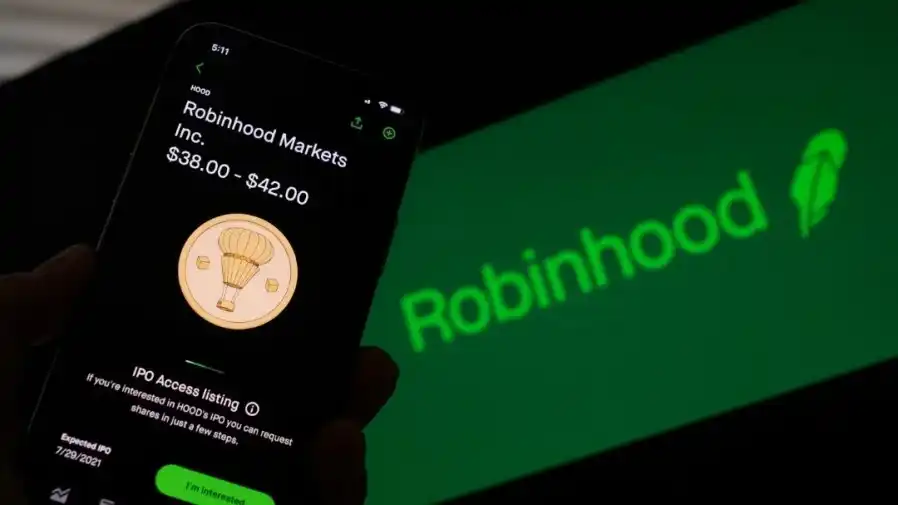
Behind Robinhood's Chain Launch and Tokenized Stocks: No Equity Rights, How Far Can This Packaging Game Go?

Robinhood is launching its own Layer 2 blockchain (Robinhood Chain) and "tokenized stocks," but these are not actual equity shares. The tokens are legally structured as debt securities or derivatives, offering economic exposure to a reference stock without granting voting rights or direct ownership. This move represents Robinhood's strategy to expand from a traditional brokerage into a "financial super app," building a user-friendly, programmable financial interface on top of complex, legally compliant, and jurisdiction-specific backend structures. The company's existing business remains strong, driven by options, event contracts, and stock trading. The new blockchain and tokenization efforts are an ambitious layer of infrastructure built atop this core, aiming to make financial products more portable and globally accessible via crypto rails. Key components include the Robinhood Wallet, Bitstamp acquisition (for institutional reach), the Lighter perpetual contracts platform, and Robinhood Earn (DeFi yield). The central challenge is the "brokerage chain paradox": maintaining a simple, intuitive user experience while the underlying assets are highly structured, regulated, and legally distinct from direct ownership. The success of this strategy depends on users, developers, and regulators accepting this model. If the complexity is misunderstood or deemed misleading, it could create product liability issues and stall expansion. The initiative is a significant infrastructure play, but its long-term viability hinges on navigating this fundamental tension between simplicity and legal reality.

marsbit23m ago

Behind Robinhood's Chain Launch and Tokenized Stocks: No Equity Rights, How Far Can This Packaging Game Go?

marsbit23m ago

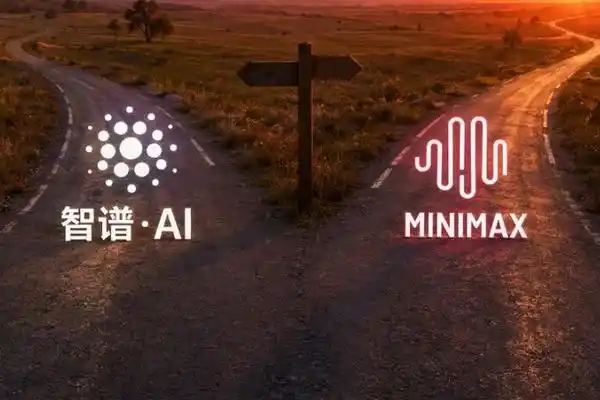
Zhipu, Afraid of Becoming the Next MiniMax

Title: Zhipu, Fearing to Become the Next MiniMax In July 2026, amid the success of its coding-focused AI, Zhipu's founder, Tang Jie, issued an internal letter titled "The Giant Wave Has Come." It notably avoided celebrating recent triumphs, such as Zhipu's trillion-HKD market cap and booming MaaS revenue driven by its GLM-5.2 model in coding applications. Instead, the letter pivoted the narrative to future-oriented concepts like Long Horizon Task, Autonomous Agents, Self-Evolving systems, and AGI. This strategic shift in messaging followed the sharp devaluation of its competitor, MiniMax. After its lock-up period expired, MiniMax's stock plummeted as the market began evaluating it with traditional SaaS metrics like ARR and user growth, rather than as a frontier AI pioneer. Seeing this, Tang Jie aimed to preempt a similar revaluation of Zhipu. He fears that if the market starts viewing Zhipu primarily as a profitable "AI coding company," its valuation would become anchored to conventional financial metrics, losing the premium associated with AGI potential. Therefore, the letter reframed Zhipu's mission. While acknowledging that coding was the current commercial driver, Tang positioned Zhipu on the "infrastructure path," akin to OpenAI and Anthropic. The new focus is on developing agents capable of complex, long-term planning and autonomous operation—moving from assisting individuals (OPC: One Person Company) to automating entire organizations (NPC: No People Company). This "Touch High" plan explicitly prioritizes long-term AGI research over short-term monetization. The article frames this as a critical divergence in China's AI landscape: the "commercialization path" (exemplified by MiniMax) versus the "infrastructure path" (chosen by Zhipu). The former risks being judged harshly by internet-era metrics once growth slows, while the latter risks failing if technological breakthroughs stall. Tang Jie's letter is thus a calculated move to secure Zhipu's identity as an AGI contender, buying time before the inevitable market demand for commercial proof. The core question remains: can Zhipu's "mo gao" (reach high) plan achieve genuine technological leaps fast enough to outpace the market's diminishing patience for stories over substance?

marsbit24m ago

Zhipu, Afraid of Becoming the Next MiniMax

marsbit24m ago

Trading

Spot

Hot Articles

Discussions

Welcome to the HTX Community. Here, you can stay informed about the latest platform developments and gain access to professional market insights. Users' opinions on the price of S (S) are presented below.

活动图片