比特币链上的重合交易

btcstudyPublished on 2025-06-17Last updated on 2025-06-18

作者:BitMEX Research

来源:https://blog.bitmex.com/bitcoins-duplicate-transactions/

摘要:在比特币区块链上,有两对一模一样的交易,其中一对夹在另一对之间,而且全都出现在 2010 年 11 月中旬。重合交易可能会导致混淆,而比特币开发者已经想尽各种办法与之搏斗了多年。这问题仍未得到完全解决,下一次可能重合会发生在 2046 年。虽然现在与重合交易有关的风险是很小的,但它依然是一个值得思考的有趣 bug。
dupes

概述

正常的一笔比特币交易会花费来自过往交易的至少一个输出,也即是会引用前序交易的交易标识符(TXID)。这些未花费的输出只能花费一次 —— 要是能花费两次,那就意味着你可以重复花费同一笔比特币,那比特币就没有价值了。然而,实际上,比特币链上出现过两对完全一样的交易。这是有可能的,因为 coinbase 交易(让出块者获得区块奖励的交易)并没有任何交易输入,而是产生了新的货币。因此,有可能两笔不同的 coinbse 交易会发送相同的数额到同一个地址中、并以完全相同的方式构造出来,从而它们是完全一样的。因为交易是一样的,所以它们的 TXID 也是一样的(TXID 是交易数据的哈希摘要)。除此之外,导致 TXID 重合的唯一可能性便是哈希碰撞(两个不同的原像产生了完全相同的哈希值);对于一种密码学安全的哈希函数来说,这被假设是不太可能的、不会出现的。对于 SHA256 哈希算法来说,哈希碰撞在比特币和其它地方都从来没有发生过。

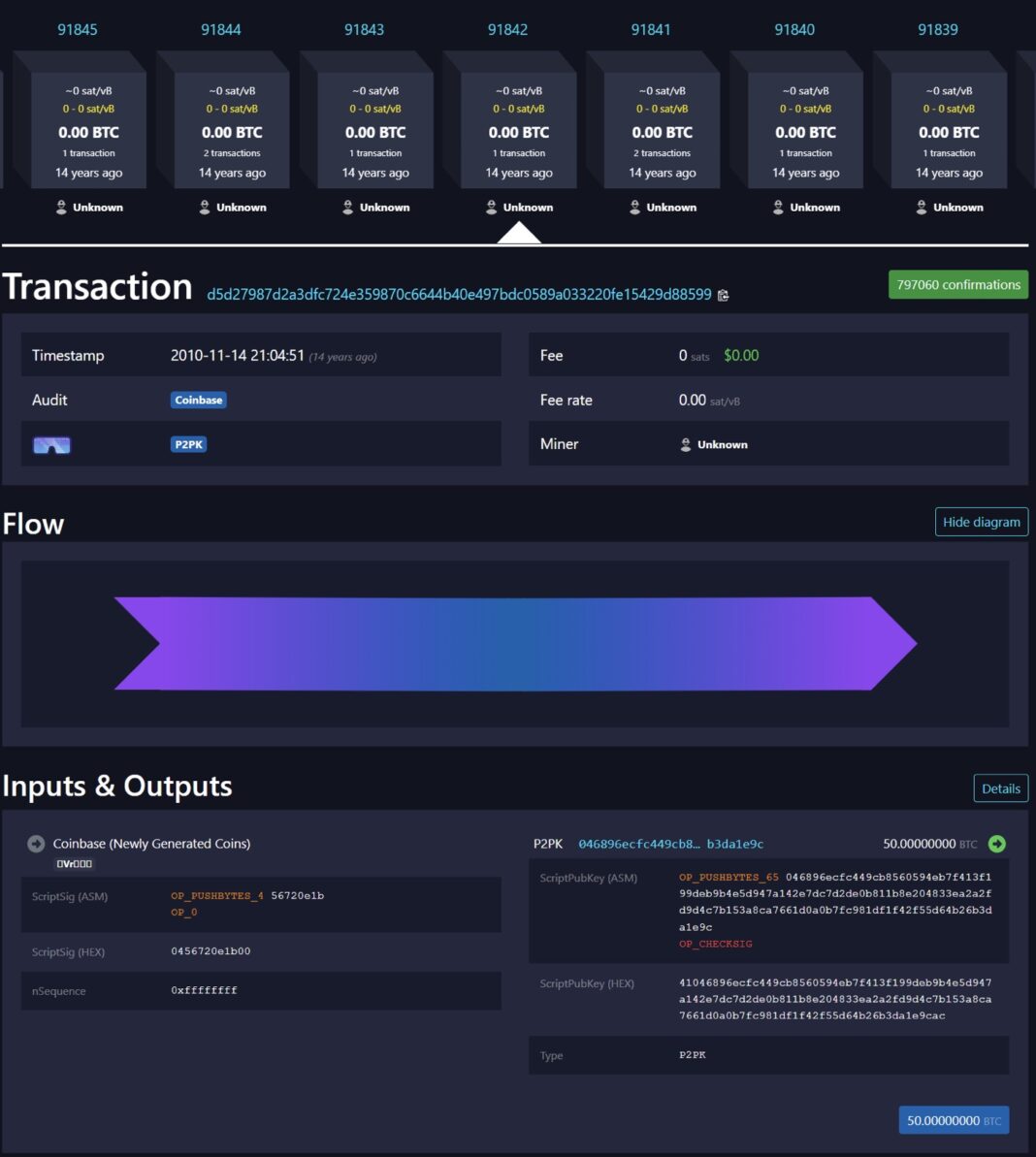
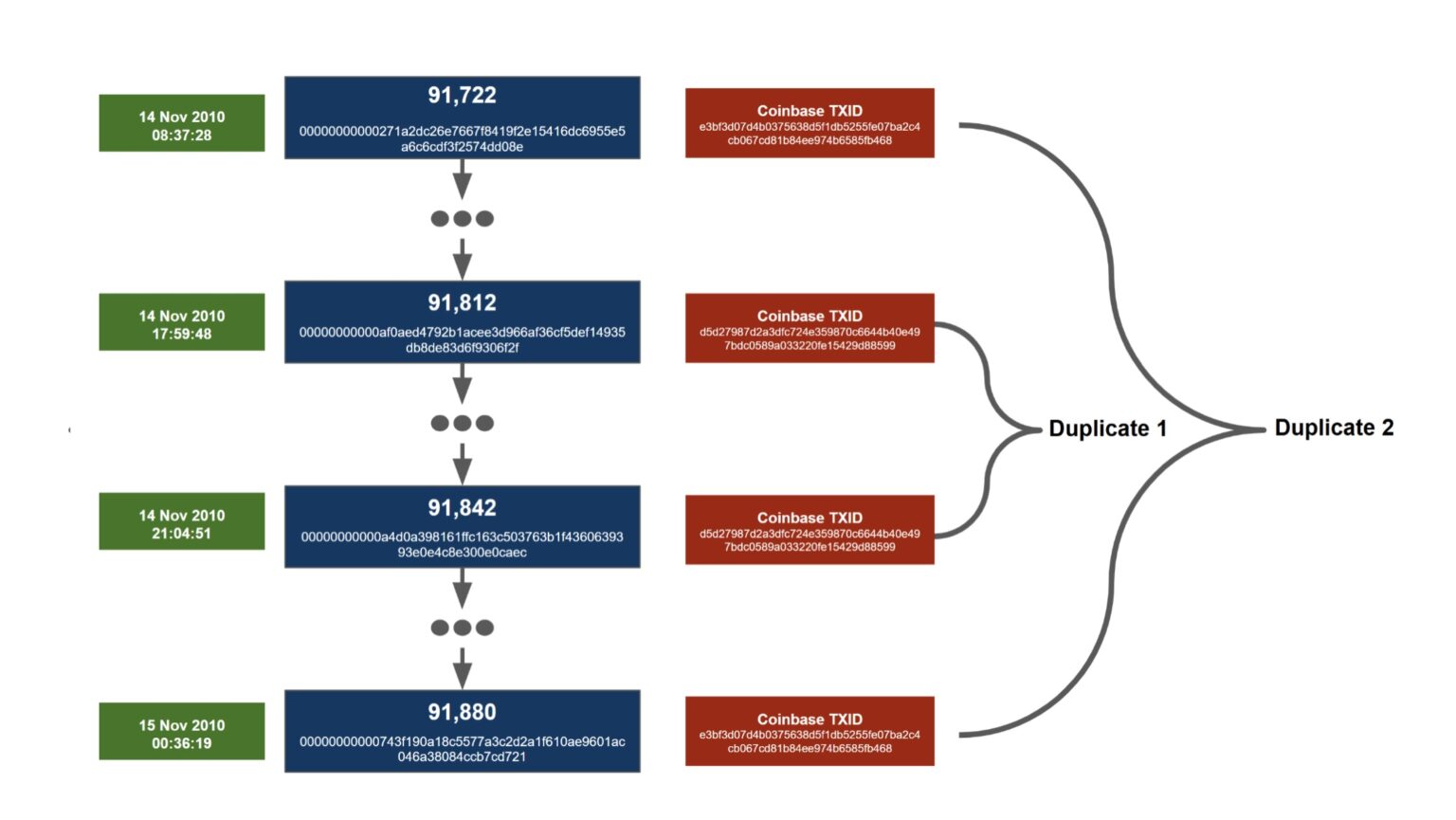
这两对相同的交易的发生时间都很接近,在 2010 年 11 月 14 日 UTC 时间 08:37 到 2010 年 11 月 15 日 UTC 时间 00:38 之间。第一对交易交易把第二对交易夹在中间,就像三明治一样。我们将 d5d2….8599 当作第一对重合交易,因为它是最先出现重合的,虽然(奇怪的是),更早的一笔交易 e3bf….b468 与未来的一笔交易产生的重合。

重合交易的细节

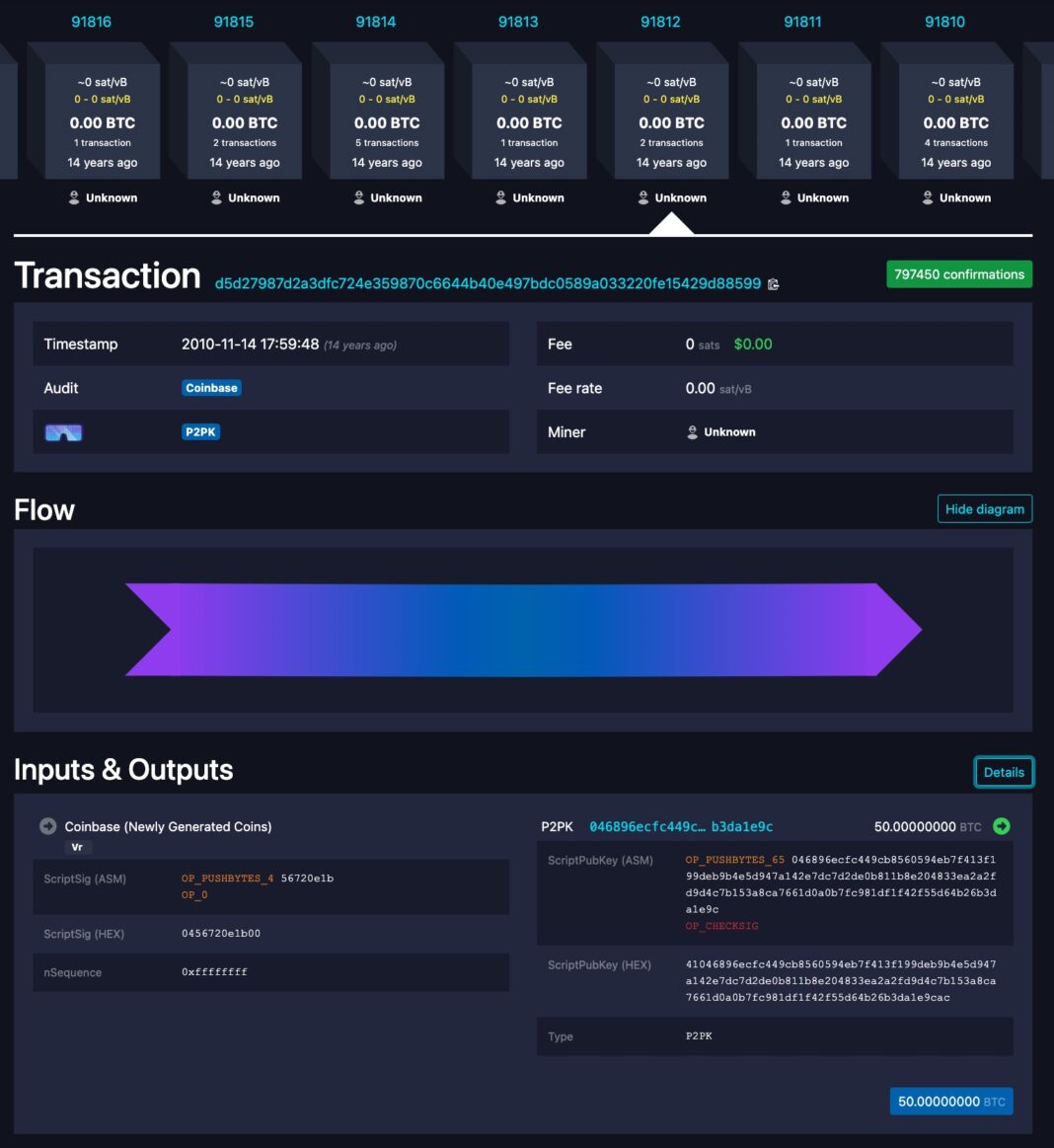
在下文中,你可以看到来自 mempool.space 区块浏览器的两张截图,它们是第一对重合交易,发生在两个不同的区块中。
duplicate-1-1

duplicate-1-2

有趣的是,如果你给区块浏览器网站输入相关的 URL 来查询它们,mempool.space 区块浏览器在显示第一对重合交易(d5d2….8599)时默认显示更早的区块(高度 91812)中的那一笔;而在显示第二对重合交易(e3bf….b468)时则默认显示更晚的区块(高度 91880)。Blockstream.info 和 Btcscan.org 的结果也是一样的。根据我们的基础测试,Blockchain.com 和 Blockchair.com 不一样,它们总是显示更新的那一个区块。

在这里涉及到的 4 个区块中,只有一个包含了 coinbase 交易以外的其它交易,那就是高度为 91812 的区块;该交易将 1 BTC 和 19 BTC 汇集成一个价值 20 BTC 的输出。

这些输出能够花费吗?

因为有两对一模一样的 TXID,后来的交易要引用它们就发生了难题。每一笔重合交易都价值 50 BTC。因此,这些重合交易总计涉及 4 * 50 BTC = 200 BTC;或者,也可以说是 2 * 50 BTC = 100 BTC,这就取决于你怎么理解它们了。从一个角度看,有 100 BTC 并不存在。截至今日,全部 200 BTC 都还没有被花费。就我们所知(不一定完全准确),如果有人知道这些输出背后的私钥,那么可以花费这些比特币,然而,一旦花费,这些 UTXO 就将从数据库中移除,而相关重合交易中的 50 BTC 就会因此变得不可花费(丢失),所以,只有 100 BTC 是可以找回的。至于花费的到底是来自哪个区块的交易(较早出现的那一笔还是较晚出现的那一笔),那是无法定义的,不可能说得清楚。

在重合交易产生之前,当事人是可以花费交易中所有的比特币的;当事人可以之后再创建重合输出,从而在数据库(或者说未花费输出集合)中创建一个新的条目。如果真是这样,那就意味着不仅会出现重合交易,还可能出现带有重合的已花费输出的重合交易。如果真是这样,那就开启了创建甚至更多重合交易的可能性,在这些输出被花费的时候,产生重合交易的链条。当事人得非常小心安排事件的顺序,确保总是在重合交易创建之前先花掉它,不然,可能就有一部分比特币永远找不回来了。这些新的重合交易将不是 coinbase 交易,而是 “常规” 交易。幸运的是这一切没有发生。

重合交易带来的问题

重合交易显然是坏事。它会给钱包和区块浏览器带来混淆,让比特币的来源变得模糊。它还产生了许多攻击和爆破的可能性。比如说,你可能会使用两笔重合交易,给同一个人支付两次。然后,当这人决定花费这些资金的时候,就发现只有一半是可以花费的。还比如说,这也可能给交易所带来危险、让交易所资不抵债,攻击者没有任何代价,因为他们可以在存入资金后立即要求取款。

禁止带有重合 TXID 的交易

为了缓解重合交易问题,在 2012 年 2 月,比特币开发者 Pieter Wuille 提出了 BIP30,这个 BIP 禁止了创造与已有 TXID 重合的交易,除非之前那笔交易已被完全花费掉。这一软分叉应用在 2012 年 3 月 15 日之后的所有区块上。

在 2012 年 9 月,比特币开发者 Greg Maxwell 修改了规则,将 BIP30 检查应有在所有区块上(而不仅仅是 2012 年 3 月 15 日之后产生的区块)。上文提到的两组重合交易被处理为例外。这修复了一些 DoS 漏洞。技术上来说,这是另一次软分叉,虽然规则变更仅适用于 6 个月以前产生的区块,所以不具备常规的协议规则变更所具有的任何风险。

BIP30 检查是重度计算。节点必须检查一个新区快中的所有交易输出,看哪一个输出的输出点(output endpoints)是否已经存在于 UTXO 集中。这可能是为什么 Wuille 设计了只检查未花费的输出。如果要检查(从创世区块以来的)所有输出,那计算量会更加恐怖,而剪枝模式也不再可能实现。(译者注:剪枝模式是删去一部分历史区块,但保留完整的 UTXO 集,从而可以验证新区块的节点运行模式。)

BIP34

在 2012 年 7 月,比特币开发者 Gavin Andresen 提出了 BIP34,这个软分叉在 2013 年 3 月激活。该协议变更要求 coinbase 交易包含区块高度,同时启用了区块格式的版本区分。区块高度要作为添加到 coinbase 交易的 scriptSig(脚本签名)中的第一个元素。conbase 交易脚本签名中的第一个字节要指明区块高度数字所用的字节数量,然后就是区块高度数字本身。在第一个 160 年(2 ^ 23 / (144 blocks/day * 356 day/year))里,第一个字节应该都是 0x03。这就是为什么今天的 coinbase 脚本签名(的十六进制编码)总是以 03 开头。这一软分叉似乎完全解决了重复交易问题,现在所有交易都应该是独一无二的了。

在 BIP34 已经得到采用之后,2015 年的 11 月,比特币开发者 Alex Morcos 向 Bitcoin Core 软件仓库添加了一个合并请求,该变更意味着节点将停止执行 BIP30 检查。毕竟,因为 BIP34 已经修复了这个问题,这种昂贵的检查也就不再必要了。当时还不知道,但从技术上来说,这确实是一次硬分叉,会将未来以极小概率出现的区块判为无效。现在来说,这种潜在的硬分叉不重要了,因为几乎没有人还运行 2015 年 11 月以前发布的节点软件。在 forkmonitor.info,我们正在运行 Bitcoin Core 0.10.3,它是在 2015 年 10 月 发布的。因此,这是一个遵循硬分叉以前规则的客户端,依然会执行昂贵的 BIP30 检查。

区块 198 3702 的问题

后来人们发现,有一些在 BIP34 激活以前的区块的 coinbase 交易,其脚本签名的开头恰好跟未来(BIP34 规则下)有效的区块一致。因此,虽然 BIP34 在绝大部分情况下都修复了问题,但还不是 100% 修复。在 2018 年,比特币开发者 John Newbery 列出了这些可能重合的完全列表,如下:

老区块新区块预计新区块到来的日期
209,920209,92128/11/2012*
176,684490,89721/10/2017*
164,3841,983,70213/01/2046
169,8953,708,17928/10/2078
170,3073,709,18303/11/2078
171,8963,712,99030/11/2078
172,0693,713,41303/12/2078
172,3573,714,08207/12/2078
172,4283,714,26509/12/2078
183,6693,761,47102/11/2079
196,9884,275,80612/08/2089
174,1515,208,85411/05/2107
201,5775,327,83314/08/2109
206,0397,299,94111/02/2147
206,3547,299,94111/02/2147

- 来源:https://gist.github.com/jnewbery/df0a98f3d2fea52e487001bf2b9ef1fd -

关于 “*” 的注解: 这些区块已经在 2012 年和 2017 年挖出,它们的 coinbase 交易并没有重合。209921 区块(第一次增发量减半的倒数第 79 个区块)不可能重合,因为那时候还实行 BIP30 检查。

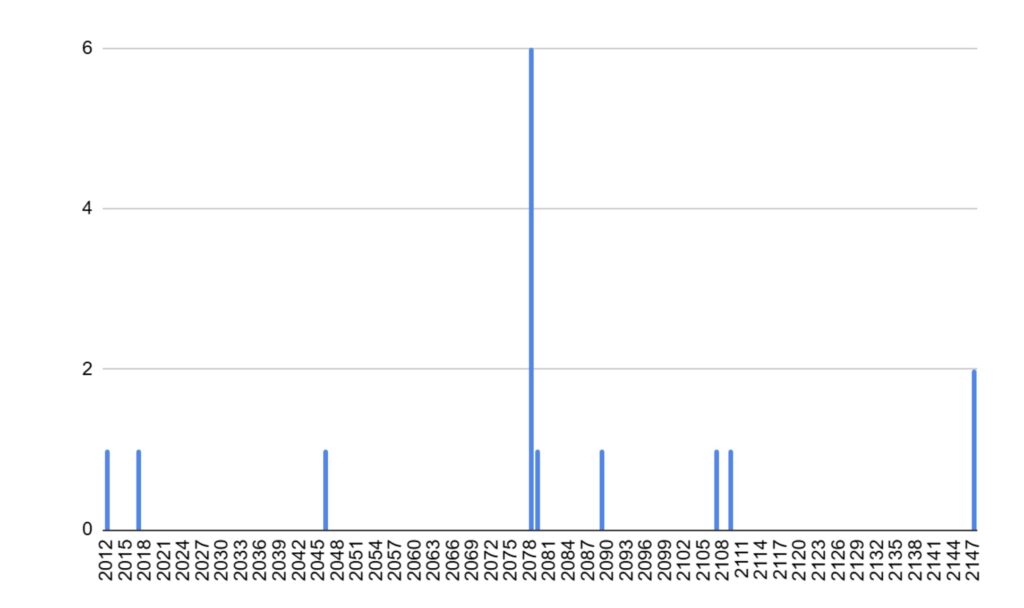
重合 coinbase 交易的可能数量年度表
duplicate-blocks-per-year

- 来源:https://gist.github.com/jnewbery/df0a98f3d2fea52e487001bf2b9ef1fd -

因此,下一个可能出现重合交易的区块是 198 3702 高度,预计会在大约 2046 年 1 月产生。高度为 16 4384 的区块产生于 2012 年 1 月,其 coinbase 交易发送了 170 BTC 到 7 个不同的地址。因此,如果 2046 年的一个矿工要发动这种攻击,就不仅要能够挖出这个区块,还得烧掉接近 170 BTC 的手续费,总成本会稍微高于 170 BTC(包括了 0.09765625 BTC 区块补贴的机会成本)。基于当前的比特币汇率 88500 美元,这需要付出 1500 万美元的代价。至于谁拥有 2012 年这笔 coinbase 交易中的 7 个地址,则是未知的,有很大概率这些私钥以及丢失了。这笔 coinbase 交易的所有 7 个输出都已经被花掉了,其中 3 个是在同一笔交易中花掉的。我们认为,这些资金可能跟 Pirate40 庞氏骗局有关,虽然这只是一种猜测。因此,这种攻击似乎不仅是非常昂贵的,还几乎是完全无用的。要花费相当相当大的一笔钱,才能将一个运行 31 年的软件的节点从网络中踢出。

(译者注:此处的逻辑是,BIP34 并不禁止重合交易出现,BIP30 才禁止。因此,如果 198 3702 高度创造出了重合交易,只会对仍在运行 BIP30 检查的节点带来困扰 —— 将它从已经不再运行 BIP30 检查的节点所组成的网络中分叉出去。当然,因此也可以说,在当前,关于如何处理重合交易,我们是没有明确标准的。)

下一个可能发生危险的区块,其 coinbase 交易可能跟 2012 年 3 月出现的高度为 16 9985 的区块重合。历史上这笔 coinbase 交易的输出只略微超过 50 BTC,远远低于 170 BTC。50 BTC 当然跟当时的区块补贴有关,而在有重合危险的未来,2078 年,区块补贴会低得多。因此,为了利用这个漏洞,矿工要烧掉大约 50 BTC 的手续费,这些手续费是拿不回来的,因为它们必须发送给在 2012 年的交易中出现的输出。谁也不知道 2078 年比特币的价格,但这种攻击可能也是极度昂贵的。因此,这一问题可能不是比特币面临的主要风险,但依然算是一个困扰。

自 2017 年隔离见证升级以来,coinbase 交易还可以包含一个对区块内所有交易的承诺。这些 BIP34 以前的区块并不包含见证数据承诺。因此,为了产生重合的 coinbase 交易,矿工需要从区块中剔除所有花费隔离见证输出的交易,这就进一步地增加了攻击的机会成本,因为能够纳入区块的、支付手续费的交易就更少了。

结论

重合交易 bug 看起来不是比特币的重大安全问题,因为利用它的难度非常高、代价非常昂贵,而且机会也很罕见。然而,这依然是一个有趣的问题,考虑到其时间尺度和重合交易的有趣特性。尽管如此,开发者已经在这个问题上花费了大量时间,2046 这个日期可能一直埋在一些开发者的脑海中,作为修复这个问题的最后期限。有不少办法可以修复这个问题,可能需要一次软分叉。一种可能的办法是让(coinbase 交易包含)隔离见证承诺成为强制要求。

(完)

Trending Cryptos

Related Reads

Aave Founder Dismisses Reports Of Payward’s ‘70% Discount’ Stake Purchase

Aave founder Stani Kulechov has dismissed reports claiming that Kraken's parent company, Payward, was negotiating to purchase a 15% stake in Aave Group at a steep 70% discount. The reported deal proposed a $71 million investment at a $385 million valuation, which was framed as a significant discount compared to AAVE's fully diluted token valuation. Kulechov rejected this narrative, stating AAVE would not be sold at such a discount, and highlighted Aave's protocol revenue. The article clarifies the distinction between different entities within the Aave ecosystem—Aave Group, Aave Labs, Aave DAO, and AAVE token holders—noting that an equity discussion in a related company does not equate to selling the protocol or transferring DAO control. It underscores the sensitivity of major DeFi protocols to strategic investment rumors and the importance of accurate terminology to avoid misleading readers. While strategic discussions are common in the crypto sector, Kulechov specifically denied the discounted sale framing. The situation highlights that future developments should be monitored via official Aave channels, and market reactions may depend on whether token holders view the denial as value-supportive or focus on potential future distributions. The key takeaway is the founder's rejection of the 70% discount story, while leaving room for strategic partnerships under different terms.

bitcoinist34m ago

Aave Founder Dismisses Reports Of Payward’s ‘70% Discount’ Stake Purchase

bitcoinist34m ago

Trading

Spot

Hot Articles

What is $BITCOIN

DIGITAL GOLD ($BITCOIN): A Comprehensive Analysis Introduction to DIGITAL GOLD ($BITCOIN) DIGITAL GOLD ($BITCOIN) is a blockchain-based project operating on the Solana network, which aims to combine the characteristics of traditional precious metals with the innovation of decentralized technologies. While it shares a name with Bitcoin, often referred to as “digital gold” due to its perception as a store of value, DIGITAL GOLD is a separate token designed to create a unique ecosystem within the Web3 landscape. Its goal is to position itself as a viable alternative digital asset, although specifics regarding its applications and functionalities are still developing. What is DIGITAL GOLD ($BITCOIN)? DIGITAL GOLD ($BITCOIN) is a cryptocurrency token explicitly designed for use on the Solana blockchain. In contrast to Bitcoin, which provides a widely recognized value storage role, this token appears to focus on broader applications and characteristics. Notable aspects include: Blockchain Infrastructure: The token is built on the Solana blockchain, known for its capacity to handle high-speed and low-cost transactions. Supply Dynamics: DIGITAL GOLD has a maximum supply capped at 100 quadrillion tokens (100P $BITCOIN), although details regarding its circulating supply are currently undisclosed. Utility: While precise functionalities are not explicitly outlined, there are indications that the token could be utilized for various applications, potentially involving decentralized applications (dApps) or asset tokenization strategies. Who is the Creator of DIGITAL GOLD ($BITCOIN)? At present, the identity of the creators and development team behind DIGITAL GOLD ($BITCOIN) remains unknown. This situation is typical among many innovative projects within the blockchain space, particularly those aligning with decentralized finance and meme coin phenomena. While such anonymity may foster a community-driven culture, it intensifies concerns about governance and accountability. Who are the Investors of DIGITAL GOLD ($BITCOIN)? The available information indicates that DIGITAL GOLD ($BITCOIN) does not have any known institutional backers or prominent venture capital investments. The project seems to operate on a peer-to-peer model focused on community support and adoption rather than traditional funding routes. Its activity and liquidity are primarily situated on decentralized exchanges (DEXs), such as PumpSwap, rather than established centralized trading platforms, further highlighting its grassroots approach. How DIGITAL GOLD ($BITCOIN) Works The operational mechanics of DIGITAL GOLD ($BITCOIN) can be elaborated on based on its blockchain design and network attributes: Consensus Mechanism: By leveraging Solana’s unique proof-of-history (PoH) combined with a proof-of-stake (PoS) model, the project ensures efficient transaction validation contributing to the network's high performance. Tokenomics: While specific deflationary mechanisms have not been extensively detailed, the vast maximum token supply implies that it may cater to microtransactions or niche use cases that are still to be defined. Interoperability: There exists the potential for integration with Solana’s broader ecosystem, including various decentralized finance (DeFi) platforms. However, the details regarding specific integrations remain unspecified. Timeline of Key Events Here is a timeline that highlights significant milestones concerning DIGITAL GOLD ($BITCOIN): 2023: The initial deployment of the token occurs on the Solana blockchain, marked by its contract address. 2024: DIGITAL GOLD gains visibility as it becomes available for trading on decentralized exchanges like PumpSwap, allowing users to trade it against SOL. 2025: The project witnesses sporadic trading activity and potential interest in community-led engagements, although no noteworthy partnerships or technical advancements have been documented as of yet. Critical Analysis Strengths Scalability: The underlying Solana infrastructure supports high transaction volumes, which could enhance the utility of $BITCOIN in various transaction scenarios. Accessibility: The potential low trading price per token could attract retail investors, facilitating wider participation due to fractional ownership opportunities. Risks Lack of Transparency: The absence of publicly known backers, developers, or an audit process may yield skepticism regarding the project's sustainability and trustworthiness. Market Volatility: The trading activity is heavily reliant on speculative behavior, which can result in significant price volatility and uncertainty for investors. Conclusion DIGITAL GOLD ($BITCOIN) emerges as an intriguing yet ambiguous project within the rapidly evolving Solana ecosystem. While it attempts to leverage the “digital gold” narrative, its departure from Bitcoin's established role as a store of value underscores the need for a clearer differentiation of its intended utility and governance structure. Future acceptance and adoption will likely depend on addressing the current opacity and defining its operational and economic strategies more explicitly. Note: This report encompasses synthesised information available as of October 2023, and developments may have transpired beyond the research period.

466 Total ViewsPublished 2025.05.13Updated 2025.05.13

What is $BITCOIN

Discussions

Welcome to the HTX Community. Here, you can stay informed about the latest platform developments and gain access to professional market insights. Users' opinions on the price of BTC (BTC) are presented below.

活动图片