As crypto legislation advances through the US Congress, two senators have sent a letter to Meta founder Mark Zuckerberg inquiring about the company’s stablecoin strategy following recent reports alleging that the tech giant is planning to launch a private currency.
Democrats Question Meta’s Stablecoin Plans
On Wednesday, Democratic Senators Elizabeth Warren and Richard Blumenthal questioned Meta’s alleged plan to establish a private currency in a letter addressed to Mark Zuckerberg, the company’s founder and CEO.
The Senators expressed concerns about the “troubling reports” of Meta’s plan to revive its private currency. As reported by Bitcoinist, Facebook’s parent company is allegedly in discussions with multiple crypto companies about potentially integrating a stablecoin into its platforms for payments.
According to the report, Meta has reached out to crypto infrastructure companies, focusing on the “ability to pay individuals across different regions without the high fees associated with other forms of payments, such as wire transfers.”
The lawmakers affirmed that Big Tech companies issuing or controlling private currencies, such as stablecoins, would “threaten competition across the economy, erode financial privacy, and cede control of the U.S. money supply to monopolistic platforms that have a history of abusing their power.”
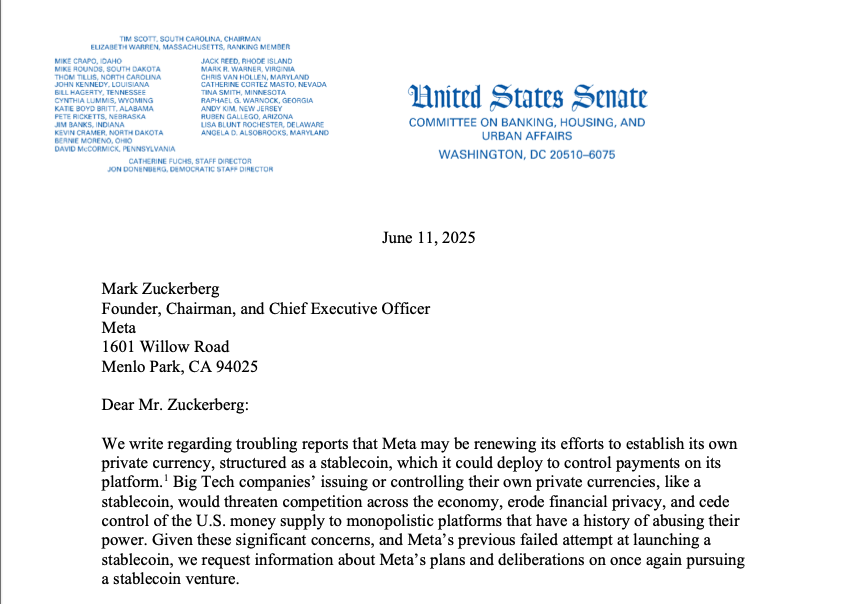
Excerpt from Senators Warren and Blumenthal's letter to Zuckerberg. Source: Senate Banking Committee
They also highlighted Meta’s previous failed attempt to launch its Libra project, which collapsed in 2022 under massive pressure from US regulators and politicians. Therefore, Senators Warren and Blumenthal requested information about Meta’s plans and deliberations regarding the potential resumption of a stablecoin venture before June 17, 2025.
In the letter, the democratic lawmakers asked Zuckerberg to provide a list of the stablecoin companies Meta had consulted since January 2025. Additionally, they requested information on whether the company is considering owning, controlling, affiliating with, or forming a joint venture or partnership with an existing stablecoin company. They also inquired whether Meta is considering launching a stablecoin individually or in collaboration with another company.
Big Tech Companies Awaiting Regulation
It’s worth noting that multiple Big Tech companies, including Apple, Google, Airbnb, and X, are reportedly exploring the adoption of stablecoins to lower transaction costs and streamline cross-border payments since the beginning of the year, seemingly fueled by the Trump administration’s friendly approach toward the digital assets industry.
The lawmakers highlighted that Meta’s renewed interest in a stablecoin project comes as the US Congress works on related bills. Notably, the Guiding and Establishing National Innovation for US Stablecoins (GENIUS) Act passed the latest cloture motion, advancing to the next legislative stage after a 68-30 vote.
The bipartisan bill, introduced by Republican Senator Bill Hagerty, aims to establish a “safe and pro-growth regulatory framework that will unleash innovation.” However, it has faced heavy backlash from Senate Democrats, including Warren, who have raised concerns about the president’s crypto ventures.
The Wednesday letter affirmed that the legislation includes provisions that would enable the Trump administration to profit and allow Big Tech companies to issue a stablecoin, which makes it “more critical than ever that Congress and the public fully understand the extent of Meta’s plans.”
Based on this, the lawmakers also asked Zuckerberg whether Meta or any of its affiliates lobbied Congress or federal agencies on crypto legislation pending before the 119th Congress, including the GENIUS Act and the Stablecoin Transparency and Accountability for a Better Ledger Economy (STABLE) Act.
Lastly, they questioned the company’s CEO whether they would oppose an amendment that would prohibit Big Tech companies from owning, controlling, or affiliating with stablecoin issuers.
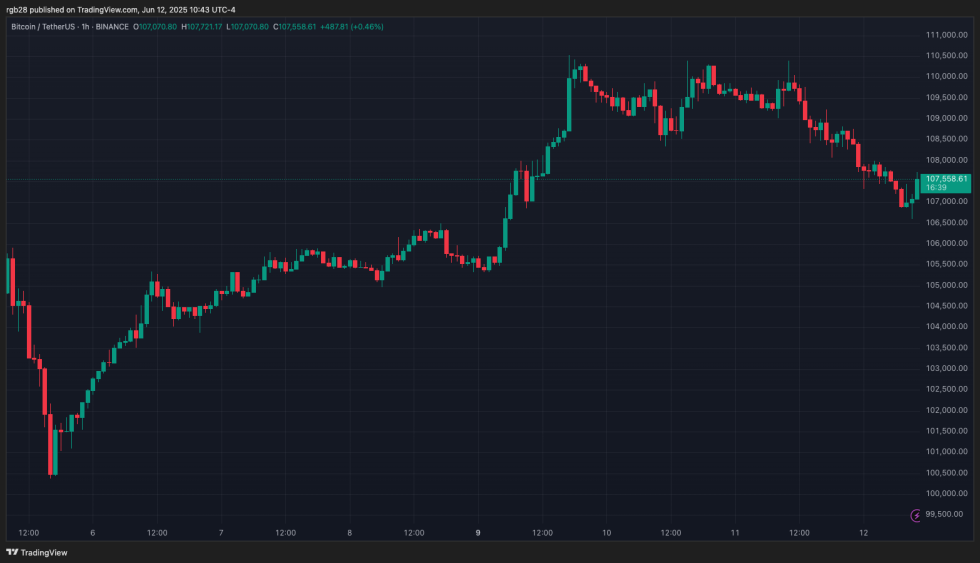
Bitcoin (BTC) trades at $107,558 in the one-week chart. Source: BTCUSDT on TradingView

Related Posts