Глава Consensys Джо Любин может стать «Майклом Сейлором» для Ethereum

cryptonews.ruPublished on 2025-01-28Last updated on 2025-05-28

Основатель и глава Consensys Джозеф Любин готовится занять ключевую роль в продвижении ETH как корпоративного актива. Он собирается возглавить совет директоров одной из первых публичных компаний, которая начнёт накапливать эфир в своей казне.

Компания SharpLink Gaming, работающая в сфере маркетинга для ставок и онлайн-казино, объявила 27 мая о планах привлечь $425 млн для создания корпоративного ETH-резерва.

Чтобы собрать средства, компания разместит более 69,1 млн своих акций. Подход практически зеркалит стратегию Майкла Сейлора и его компании Strategy, которая годами скупает биткоин.

Сразу после завершения сделки Джо Любин станет председателем совета директоров SharpLink. По данным из анонса, главным инвестором выступает Consensys, но в сделке также участвуют Pantera Capital, Arrington Capital, Galaxy Digital, Hivemind Capital и Primitive Ventures.

На фоне новости эфир подрос почти на 6% и торгуется чуть ниже отметки $2700.

По стопам Сейлора

Идея с корпоративным резервом эфира напрямую перекликается с тем, что сделал Майкл Сейлор ещё в 2020 году, когда начал скупать биткоин для своей компании.

Его фирма Strategy начинала как обычный разработчик ПО под именем MicroStrategy, но всё изменилось, когда Сейлор стал покупать BTC и активно продвигать его в массах. Он до сих пор уверен, что все, и компании, и частные лица, должны покупать как можно больше биткоина и держать его, даже если это происходит на самом пике.

Сейлор даже предлагал создать национальный биткоин-резерв, который, по его словам, мог бы «обнулить госдолг США» — сейчас он составляет $36,9 трлн.

Сегодня Strategy владеет 580 250 BTC, это примерно 2,74% от общего предложения, или около $64 млрд по текущим ценам. И компания продолжает покупать: 26 мая Сейлор объявил о новой закупке 4 020 BTC на $427 млн.

SharpLink Gaming, как и Strategy, торгуется на Nasdaq и становится одной из первых публичных компаний, решившихся на формирование казны в ETH.

Впрочем, крупные держатели эфира среди компаний уже есть. Например, инвестиционная фирма Abraxas Capital Management, хоть и не торгуется на бирже, но активно скупает ETH. Сейчас у них на балансе почти $947 млн в токенах.

При этом у Abraxas есть и биткоин, но в начале мая компания продала BTC на $150 млн.

Интерес к созданию криптовалютных казначейств среди компаний становится всё более заметным. Причём это уже не только история про биткоин. В апреле другая Nasdaq-компания, Upexi, заявила о планах привлечь $100 млн для закупки токенов Solana. А сегодня они впервые раскрыли стратегию использования своего SOL-резерва.

Читайте также: Запрещённая Garantex продолжает отмывку через Tornado Cash: $261 000 в эфире на выходе из тени

Акции взлетают

«Это захватывающее время для всего сообщества Ethereum», — заявил Джо Любин, сооснователь Ethereum, в пресс-релизе SharpLink.

Он добавил, что рад «вывести возможности Ethereum на публичный рынок». По его словам, Consensys намерена работать с SharpLink как стратегический партнёр и консультант, помогая выстроить корпоративную стратегию по эфиру.

SharpLink — компания, занимающаяся маркетингом в сфере онлайн-казино, ставок и iGaming. Её интерес к крипте проснулся ещё в феврале, когда стало известно о покупке 10% акций одного из криптоказино.

Новость о вхождении в мир Ethereum тут же подстегнула рынок, акции SharpLink взлетели более чем на 430%.
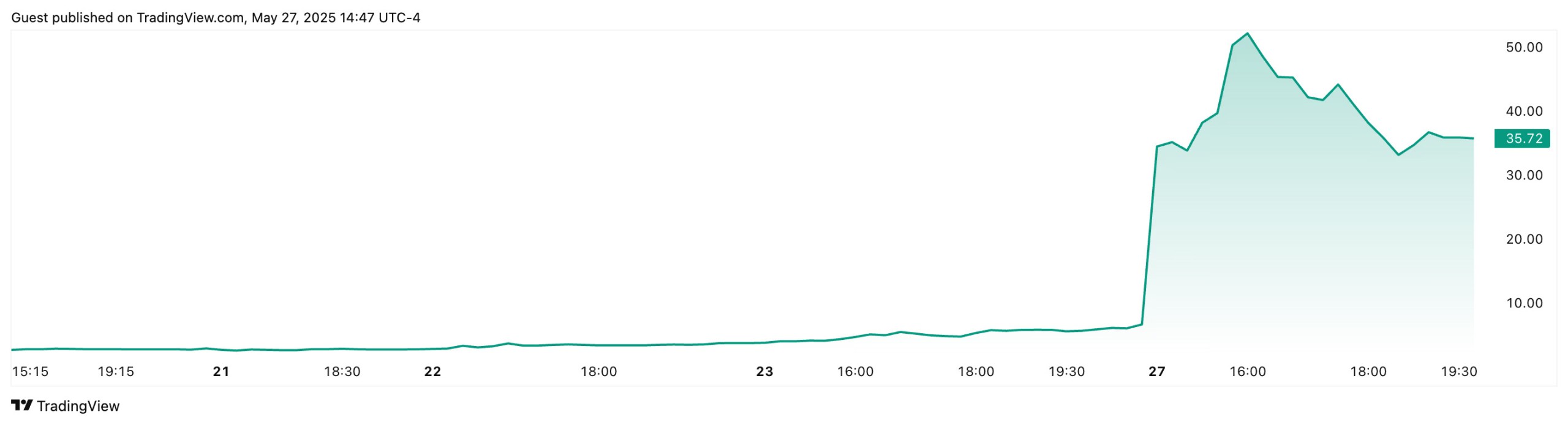
SharpLink, динамика акций за 5 дней. Источник: TradingView

«Это важный шаг в истории нашей компании и выход за пределы основного бизнеса», — заявил основатель и CEO SharpLink Роб Фитиан.

Он добавил:

«После завершения сделки мы с нетерпением ждём начала работы с Consensys и рады видеть Джозефа в составе совета директоров».

Любин официально вступит в должность председателя совета после закрытия сделки.

Читайте также: Trump Media вложит $2,5 млрд в биткоин после публичного опровержения инвестиций на $3 млрд


Trending Cryptos

Related Reads

Chainlink Adds 6,100 Wallets In Two Days In Strongest Growth Burst Of 2026

Chainlink experienced its strongest wallet growth burst of 2026, adding approximately 6,100 new addresses in just two days. This notable increase in network participation occurred despite LINK's price trading in a difficult market environment alongside other altcoins. The surge in new wallets is seen as a positive signal for user and investor interest, suggesting the ecosystem continues to attract attention even when price action is weak. Wallet growth is considered a useful metric as it measures real participation rather than just price speculation. For an infrastructure project like Chainlink, whose value is tied to oracle services, data, and real-world assets, such growth indicates ongoing engagement with its core technology. However, the article notes that this data point, while constructive, is not conclusive on its own. The nature of the new wallets—whether they belong to small holders, new users, or exchange-related entities—remains unclear. The report maintains a balanced perspective, stating that while this wallet growth is a positive adoption signal for LINK bulls, it does not guarantee a price increase. Skeptics may question whether this user growth translates into value capture for the token. The key takeaway is that this burst of activity should be monitored alongside other factors like transaction volume, price structure, and broader market trends for a more complete picture. The signal requires follow-through in price and demand to be fully validated.

bitcoinist45m ago

Chainlink Adds 6,100 Wallets In Two Days In Strongest Growth Burst Of 2026

bitcoinist45m ago

In the AI Era, What's Left for Bitcoin?

As Bitcoin falls below $60,000, the author reflects on the relationship between AI and Bitcoin, seeing them as two sides of the same coin. In the AI era, the cost of generating content has plummeted, making fake text, images, and videos increasingly easy and cheap to produce. This has led to a fundamental shift: while AI dramatically lowers the cost of information production, it also undermines trust and authenticity online. What becomes truly valuable is not more content, but the ability to verify what is real—"verifiability." This perspective offers a new lens for Bitcoin. Its massive energy consumption, often criticized as wasteful, is reinterpreted. While AI burns energy to enhance "capability" and efficiency, Bitcoin burns energy to produce "verifiability." Its purpose is not to be trusted but to enable a system where no trust in intermediaries—banks, platforms, or developers—is needed. Every transaction and the entire ledger's history is secured by cryptography and a decentralized network of nodes, making it independently verifiable. AI cannot forge a transaction on the Bitcoin network because the system is designed for proof, not generation. The author draws a historical parallel to the Renaissance: the printing press drastically reduced the cost of copying knowledge, while double-entry bookkeeping reduced the cost of trust in commerce. Today, AI is the new printing press, reducing content creation costs to near zero. Blockchain, and Bitcoin as its pioneer, may be the modern equivalent of double-entry bookkeeping—a foundational technology for verifying digital asset ownership and historical records without centralized authorities. Thus, AI and blockchain are not competitors. AI lowers the cost of creation; blockchain lowers the cost of verification. In an age where AI can generate anything, true scarcity may lie not in more content, but in independently verifiable facts. Whether the market will reprice Bitcoin accordingly remains uncertain, but its core value proposition as a "machine for producing verifiability" becomes strikingly relevant.

marsbit2h ago

In the AI Era, What's Left for Bitcoin?

marsbit2h ago

Trading

Spot

Hot Articles

Discussions

Welcome to the HTX Community. Here, you can stay informed about the latest platform developments and gain access to professional market insights. Users' opinions on the price of ETH (ETH) are presented below.

活动图片