矿工持仓创周期新低 + 中美关税豁免,比特币开启狂暴模式

深潮Published on 2025-05-12Last updated on 2025-05-12

10 万美金只是起点?

撰文:Lawrence,火星财经

第一部分:比特币矿工抛售压力降至 2024 年以来最低——市场蓄力再创新高?

1. 矿工行为转变:从抛售转向持有

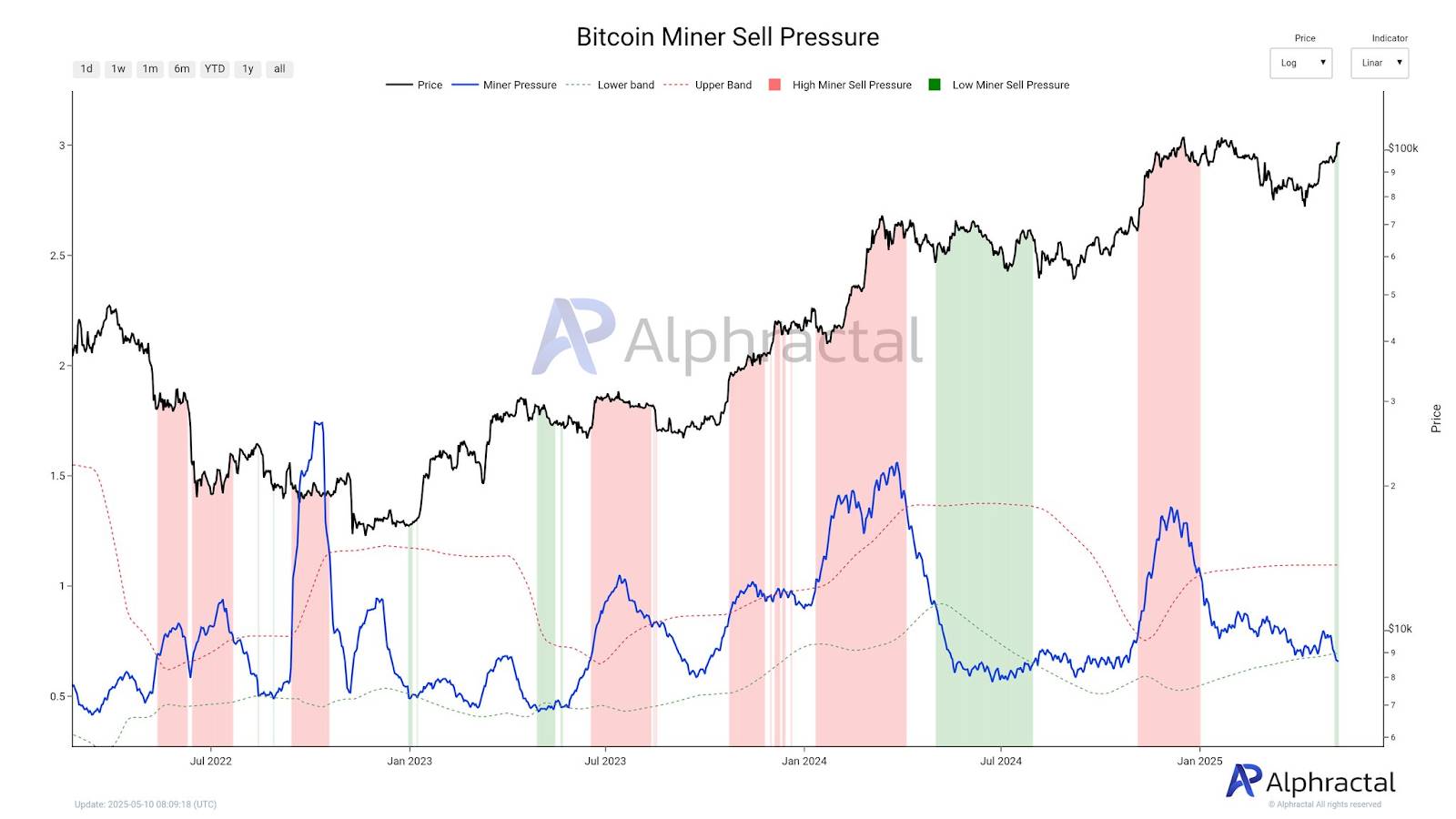
根据加密货币分析平台 Alphractal 的最新数据,比特币矿工抛售压力指标(衡量矿工 30 天内流出量与储备量的比率)已跌破下轨,达到 2024 年以来的最低水平。这一现象表明,矿工正从过去「抛售以覆盖运营成本」的模式转向战略性囤积。

这与 2024 年减半后矿工收入腰斩的困境形成鲜明对比(当时矿工日抛售量从 900 枚增至 1200 枚),但当前市场环境的变化促使矿工调整策略:

  • 盈利预期驱动囤积:随着比特币价格近期突破 10 万美元并逼近历史高点,矿工更倾向于持有比特币以等待更高收益,而非短期套现。

  • 行业结构性优化:上市公司主导的矿业规模化发展(如 Bitfarms、CleanSpark)降低了低效矿工的退出风险,行业集中度提升缓解了抛压。

  • 历史经验借鉴:过去周期中,矿工过度杠杆化和长期持有曾导致流动性危机(如 2018 年熊市),如今更注重短期财务稳定性。

2. 链上数据揭示的市场韧性

Alphractal 的矿工卖压指标显示,当前市场结构与 2024 年初的「恐慌性抛售」截然不同:

  • 长期持有者主导:目前持有时间超过 6 个月的比特币占比超 80%,远低于历史周期顶部的短期持有者主导比例 1,为价格提供稳定支撑。

  • 交易所储备新低:比特币交易所储备量持续下降,表明市场正处于「高速累积期」,抛售压力被场外交易或机构持仓分散。

  • 衍生品市场风险:尽管现货市场稳定,但 10 万至 11 万美元区间存在大量高杠杆多头头寸,若价格波动可能引发数十亿美元级清算潮。

3. 价格走势与未来预期

截至 2025 年 5 月 12 日,比特币价格报 104,250 美元,24 小时涨幅 1%,过去 1 个月累计上涨超 30%。市场对后续走势的分歧焦点在于:

  • 技术面信号:RSI(75)显示超买,但 MACD 持续上行;关键支撑位 10,000 美元若失守可能触发短期持有者抛售。

  • 宏观变量影响:美联储降息预期(若 2025 年降息超 100 基点)可能为比特币提供「戴维斯双击」机会,但滞胀风险或削弱其避险属性。

  • 矿工行为动态:若价格突破 11 万美元,矿工抛售压力可能回升,但当前低抛售水平预示市场或进入「冷静上涨期」。

第二部分:中美贸易协议「实质性进展」背后的市场疑虑

1. 白宫声明与协议轮廓

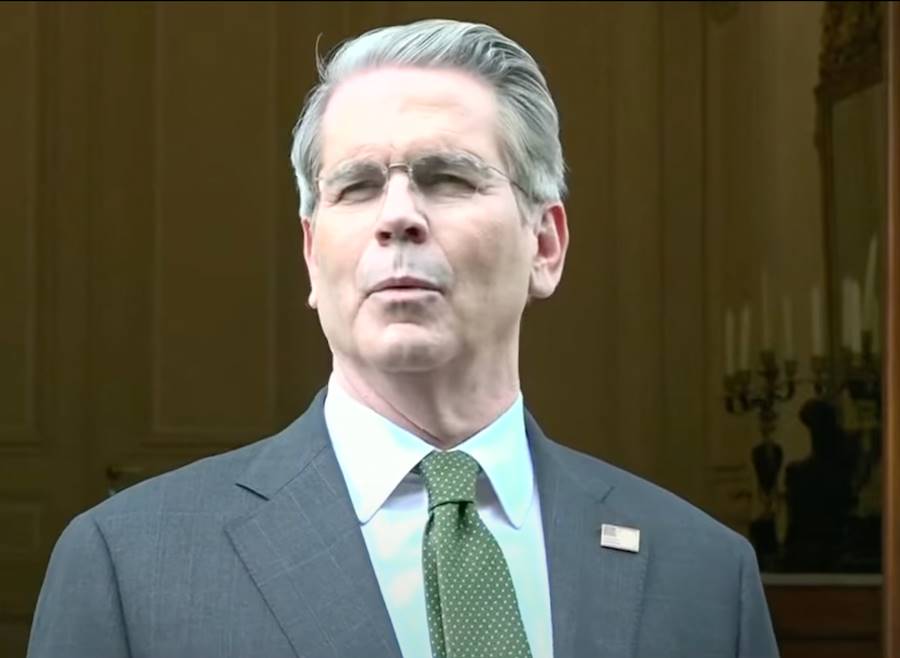
5 月 11 日,美国财政部长斯科特·贝森特与贸易代表杰米森·格里尔联合宣布,美中贸易谈判取得「实质性进展」,双方就以下领域达成原则性共识:

  • 市场准入:中国承诺扩大美国农产品进口,美国部分科技产品关税豁免延长。

  • 知识产权保护:建立跨境执法协作机制,降低技术转让壁垒。

  • 争端解决机制:设立常设磋商平台以预防贸易摩擦升级。

2. 市场反应与隐忧

尽管官方释放积极信号,但缺乏协议细节导致投资者谨慎乐观:

  • 不确定性残留:特朗普政府政策反复性(如 2024 年电子关税豁免「一日游」)削弱市场信任,协议落地前风险资产仍承压。

  • 结构性矛盾未解:中美在半导体、人工智能等领域的竞争性政策(如「贸易战 2.0」)可能通过非关税手段延续。

  • 流动性影响分化:若协议推动美元指数(DXY)回落,比特币或受益于「反法币」叙事重启;但若谈判破裂引发避险需求,黄金可能分流资金。

3. 全球经济的连锁效应

中美贸易缓和可能带来的系统性影响包括:

  • 供应链重塑:协议或加速「近岸外包」趋势,墨西哥、东南亚制造业枢纽地位提升,加密货币跨境支付需求增长。

  • 通胀缓解预期:关税削减有望降低美国 CPI 压力,为美联储降息提供空间,间接利好风险资产。

  • 地缘风险转移:若中美合作强化,俄乌冲突、中东局势等「替代性危机」可能成为市场波动新源头。

第三部分:双主线交织下的市场博弈与投资策略

1. 比特币与宏观政策的共振

  • 利率敏感性与相关性:比特币与纳斯达克指数相关性(0.78)显示其仍未脱离传统风险资产框架,中美贸易协议若提振科技股,比特币或同步受益。

  • 矿工行为作为先行指标:历史数据显示,矿工抛售压力触底后,比特币往往进入上行周期(如 2023 年矿工投降后的牛市),当前低抛售水平或预示类似趋势。

2. 风险与机会评估

  • 短期波动风险:比特币衍生品杠杆堆积与中美协议细节不明朗可能引发价格震荡,支撑位 10,000 美元成多空分水岭。

  • 长期叙事强化:比特币 ETF 日均吸筹量(800 枚)仍高于矿工产出(450 枚),机构化进程抵消部分市场冲击。

结语:复杂市场中的确定性逻辑

2025 年 5 月的全球市场正站在比特币「减半后周期」与中美「贸易关系再平衡」的双重节点。矿工的低抛售压力与白宫的协议进展看似独立,实则共同指向一个核心命题:流动性重构下的资产再定价。无论是比特币突破前高还是中美协议落地,市场终将验证一个真理——在宏观铁幕与加密叙事的碰撞中,只有兼具弹性与效率的资产才能赢得长期胜利。

Trending Cryptos

Related Reads

Earning Six Figures and Still Struggling to Rent in San Francisco

A couple in San Francisco with a combined tech income over $360,000 struggled for months to find a one-bedroom apartment under $5,000 per month. Their story highlights how the AI wealth boom, driven by upcoming IPOs from companies like OpenAI and Anthropic, is dramatically escalating the city's cost of living. Even six-figure salaries are becoming insufficient for a comfortable lifestyle. The article details the financial reality for tech workers earning around $180,000 annually. After taxes, retirement contributions, and healthcare, take-home pay is roughly $7,000 per month. With average rents exceeding $3,800 and one-bedrooms often costing $4,500-$5,200, discretionary income shrinks to $1,500-$2,500. This contrasts sharply with reported median total compensations of $640,000 at OpenAI and $420,000 at Anthropic. The AI gold rush is identified as the primary driver. The scale of potential wealth from these IPOs, far surpassing previous tech booms, is flooding the housing market. Data shows San Francisco's average rent is now the highest in the U.S., with vacancy rates in desirable neighborhoods plummeting to around 3%. The overall cost of living is 65.6% above the national average. The piece features multiple professionals, including a 25-year-old with a $250,000 salary, facing housing instability, fierce competition for rentals, and a persistent, low-grade financial anxiety despite high earnings. It concludes that the rapid concentration of AI wealth is redefining what constitutes a "high salary" in San Francisco, pushing out mid-tier tech talent and creating a stark divide between those in the AI sector and everyone else.

marsbit1h ago

Earning Six Figures and Still Struggling to Rent in San Francisco

marsbit1h ago

Rate Hikes to Save STRC, Selling Bitcoin to Preserve Credit: Strategy Picks Its Two Most Expensive Paths

Over the past six weeks, Strategy has faced a significant crisis of confidence, with its core securities MSTR and STRC experiencing sharp price declines. The situation escalated as the company utilized dollar reserves intended for dividends and interest payments to repurchase debt, and then sold a small amount of Bitcoin for the first time since 2022—an action that contradicted its "never sell" narrative and signaled potential liquidity strain. In response, Strategy introduced a Digital Credit capital framework. This formalized a series of measures to manage the pressure down its capital structure: ordinary shareholders have already borne costs through equity dilution from an $11.5 billion ATM offering; new rules enforce a hard dollar reserve covering at least 12 months of expected dividend and interest payments; the STRC dividend rate was increased from 11.5% to 12%; and, most notably, Bitcoin was officially integrated into the capital toolkit, with board authorization to sell up to $1.25 billion worth if needed to support obligations and repurchase programs. The market reacted with a mix of relief and skepticism. While the announcement triggered a sharp single-day rally in both MSTR and STRC, the preferred shares still trade at a significant discount. Supporters view the framework as pragmatic crisis management that provides a price floor and clearer rules. Critics argue that institutionalizing Bitcoin sales undermines the core investment thesis and, with Bitcoin's price below the company's average cost basis, amounts to selling assets at a loss to maintain its financial structure. The broader context shows institutional Bitcoin buying drying up, highlighting that Strategy's challenges and new framework are now a key indicator for overall market risk sentiment. Ultimately, the framework buys time, but STRC's return to par value depends on market belief in the company's ability to cover dividends without further dilution or substantial Bitcoin sales—a task that would be easier if Bitcoin's price recovers.

链捕手1h ago

Rate Hikes to Save STRC, Selling Bitcoin to Preserve Credit: Strategy Picks Its Two Most Expensive Paths

链捕手1h ago

Trading

Spot

Hot Articles

What is $BITCOIN

DIGITAL GOLD ($BITCOIN): A Comprehensive Analysis Introduction to DIGITAL GOLD ($BITCOIN) DIGITAL GOLD ($BITCOIN) is a blockchain-based project operating on the Solana network, which aims to combine the characteristics of traditional precious metals with the innovation of decentralized technologies. While it shares a name with Bitcoin, often referred to as “digital gold” due to its perception as a store of value, DIGITAL GOLD is a separate token designed to create a unique ecosystem within the Web3 landscape. Its goal is to position itself as a viable alternative digital asset, although specifics regarding its applications and functionalities are still developing. What is DIGITAL GOLD ($BITCOIN)? DIGITAL GOLD ($BITCOIN) is a cryptocurrency token explicitly designed for use on the Solana blockchain. In contrast to Bitcoin, which provides a widely recognized value storage role, this token appears to focus on broader applications and characteristics. Notable aspects include: Blockchain Infrastructure: The token is built on the Solana blockchain, known for its capacity to handle high-speed and low-cost transactions. Supply Dynamics: DIGITAL GOLD has a maximum supply capped at 100 quadrillion tokens (100P $BITCOIN), although details regarding its circulating supply are currently undisclosed. Utility: While precise functionalities are not explicitly outlined, there are indications that the token could be utilized for various applications, potentially involving decentralized applications (dApps) or asset tokenization strategies. Who is the Creator of DIGITAL GOLD ($BITCOIN)? At present, the identity of the creators and development team behind DIGITAL GOLD ($BITCOIN) remains unknown. This situation is typical among many innovative projects within the blockchain space, particularly those aligning with decentralized finance and meme coin phenomena. While such anonymity may foster a community-driven culture, it intensifies concerns about governance and accountability. Who are the Investors of DIGITAL GOLD ($BITCOIN)? The available information indicates that DIGITAL GOLD ($BITCOIN) does not have any known institutional backers or prominent venture capital investments. The project seems to operate on a peer-to-peer model focused on community support and adoption rather than traditional funding routes. Its activity and liquidity are primarily situated on decentralized exchanges (DEXs), such as PumpSwap, rather than established centralized trading platforms, further highlighting its grassroots approach. How DIGITAL GOLD ($BITCOIN) Works The operational mechanics of DIGITAL GOLD ($BITCOIN) can be elaborated on based on its blockchain design and network attributes: Consensus Mechanism: By leveraging Solana’s unique proof-of-history (PoH) combined with a proof-of-stake (PoS) model, the project ensures efficient transaction validation contributing to the network's high performance. Tokenomics: While specific deflationary mechanisms have not been extensively detailed, the vast maximum token supply implies that it may cater to microtransactions or niche use cases that are still to be defined. Interoperability: There exists the potential for integration with Solana’s broader ecosystem, including various decentralized finance (DeFi) platforms. However, the details regarding specific integrations remain unspecified. Timeline of Key Events Here is a timeline that highlights significant milestones concerning DIGITAL GOLD ($BITCOIN): 2023: The initial deployment of the token occurs on the Solana blockchain, marked by its contract address. 2024: DIGITAL GOLD gains visibility as it becomes available for trading on decentralized exchanges like PumpSwap, allowing users to trade it against SOL. 2025: The project witnesses sporadic trading activity and potential interest in community-led engagements, although no noteworthy partnerships or technical advancements have been documented as of yet. Critical Analysis Strengths Scalability: The underlying Solana infrastructure supports high transaction volumes, which could enhance the utility of $BITCOIN in various transaction scenarios. Accessibility: The potential low trading price per token could attract retail investors, facilitating wider participation due to fractional ownership opportunities. Risks Lack of Transparency: The absence of publicly known backers, developers, or an audit process may yield skepticism regarding the project's sustainability and trustworthiness. Market Volatility: The trading activity is heavily reliant on speculative behavior, which can result in significant price volatility and uncertainty for investors. Conclusion DIGITAL GOLD ($BITCOIN) emerges as an intriguing yet ambiguous project within the rapidly evolving Solana ecosystem. While it attempts to leverage the “digital gold” narrative, its departure from Bitcoin's established role as a store of value underscores the need for a clearer differentiation of its intended utility and governance structure. Future acceptance and adoption will likely depend on addressing the current opacity and defining its operational and economic strategies more explicitly. Note: This report encompasses synthesised information available as of October 2023, and developments may have transpired beyond the research period.

527 Total ViewsPublished 2025.05.13Updated 2025.05.13
What is $BITCOIN

Discussions

Welcome to the HTX Community. Here, you can stay informed about the latest platform developments and gain access to professional market insights. Users' opinions on the price of BTC (BTC) are presented below.

活动图片