MIRAI币7天吸金1.3亿!当AI皮囊套上区块链骨架,我们还需要真人明星吗?

marsbitPublished on 2025-05-11Last updated on 2025-05-12

2025年5月,一场横跨虚拟偶像、人工智能与区块链的资本实验在东京悄然启动。由日本头部虚拟人公司Aww Inc.与Solana生态AI平台Holoworld联合推出的MIRAI项目,凭借顶流IP“imma”的号召力,在短短一周内募集超1290万美元资金,打破日本Web3项目募资纪录。这个试图将二次元文化与去中心化金融深度绑定的项目,究竟是元宇宙叙事的“新范式”,还是泡沫狂欢的又一注脚?

​​一、项目背景:从涩谷街头的虚拟偶像到区块链“新物种”​​

​​1. Aww Inc.:虚拟人帝国的缔造者​​

作为日本最早布局虚拟人赛道的公司之一,Aww Inc.自2018年推出初代虚拟偶像imma以来,已构建起涵盖Ria、Plusticboy等20余个虚拟IP的矩阵。其核心商业模式是​​“虚拟人即服务”(VaaS, Virtual as a Service)​​,通过品牌代言、潮牌联名、影视植入等方式实现商业变现。

项目

imma的破圈效应堪称现象级:SK-II的全球护肤广告中,她与真人模特共同出镜;宝马东京原宿体验店开业时,其全息投影担任“数字店长”;甚至日本JR山手线的车厢广告中,每日通勤族都能看到她的动态影像。这种“虚实无界”的沉浸式营销,使Aww Inc.成为三菱UFJ、资生堂等传统巨头的战略合作伙伴。


​​2. Holoworld:Solana生态的AI基建狂魔​​

Holoworld的定位是“虚拟人上链基础设施”,其核心产品AVA AI引擎可通过3D扫描与深度学习,将真人动作实时映射至虚拟形象。

项目

此前发行的治理代币$AVA(市值峰值达3亿美元,当前市值9000万美元)已接入超50个元宇宙平台,并为韩国女团aespa、欧美虚拟网红Lil Miquela提供链上身份确权服务。

此次与Aww Inc.的合作,本质是​​“IP资源+技术基建”的垂直整合​​:Aww贡献imma的IP资产与粉丝流量,Holoworld提供AI生成工具与链上交互协议,共同搭建虚拟人经济生态。


​​二、代币经济学:超募1290万美元背后的设计逻辑​​

5月10日,在链上虚拟人类 MIRAI 开启募资后两天不到,官方发文宣布,Mirai 代币预售现已提前结束,筹集到的金额已经远远超出了我们最初的目标。团队计划退还多余资金。


链上数据显示,Mirai 的预售地址已收到 76,423.42 枚 SOL,约合 1295 万美元。


​​1. 代币分配:集中化治理与流动性博弈​​

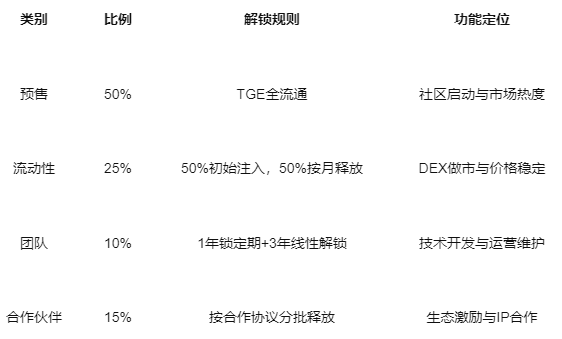
根据白皮书,MIRAI代币总量10亿枚,分配结构呈现明显“资源导向”特征:
项目


项目

这种设计暗含两大争议:

  • ​​中心化风险​​:团队与合作伙伴合计持有25%代币,且预售份额高度集中(前100地址占比超60%),社区治理可能沦为“橡皮图章”;
  • ​​流动性陷阱​​:25%的流动性池采用分阶段释放,或导致早期价格剧烈波动。历史数据显示,类似模型项目(如SkyAI)上线首周振幅普遍超过300%。


​​2. 超额募资与退款机制:市场情绪的“双刃剑”​​

原定5万枚SOL的募资目标最终以76,831枚SOL(约1290万美元)提前收官,超募比例达153.6%。项目方承诺按比例退还超额资金,但链上数据显示,前10大地址贡献了42%的资金量,​​“鲸鱼控盘”​​特征显著。

退款机制虽能短期提振信心(参考SLERF事件后的大幅反弹),但也可能引发“囚徒困境”:部分投资者为规避退款损失,选择在二级市场抛售,导致价格螺旋下跌。


​​三、价格预测:多维因子博弈下的走势推演​​

​​1. 短期(1-3个月):做市商操盘与流动性博弈​​

Wintermute的深度介入(链上标签显示其测试地址参与预售,最大单笔 Wintermute 相关,转入预售地址近 15wu 881sol )为项目注入强心剂。参考$AVA的上线表现:

  • ​​首日表现​​:2024年Q4上线时,$AVA开盘价0.12美元,24小时内冲高至0.87美元(涨幅625%),随后回落至0.35美元;
  • ​​做市策略​​:Wintermute通过“脉冲式拉升+阶梯式出货”完成初期控盘,首周换手率高达580%。

若MIRAI复制该路径,可能呈现以下阶段:

  • ​​开盘冲高​​:借助imma社媒热度(Twitter粉丝超86万),价格或快速突破0.5美元,约合市值5000万美元;
  • ​​获利回吐​​:预售投资者中约30%为“打新工作室”,可能在2-3倍收益后批量撤资;
  • ​​流动性虹吸​​:25%的初始流动性池若集中在Raydium,可能引发MEV机器人狙击,加剧波动。


​​2. 中期(3-6个月):生态落地与叙事验证​​

项目路线图显示,Q3将上线​​Mirai Terminal测试版​​,支持三大功能:

  • ​​虚拟人铸造​​:用户可通过AVA AI生成专属形象,并铸造为NFT;
  • ​​打赏经济​​:粉丝用MIRAI代币购买虚拟礼物,imma等IP可获得分成;
  • ​​品牌联名池​​:合作伙伴(如优衣库、Loft)可发起限量数字商品众筹。


该阶段需关注两大指标:

  • ​​MAU(月活用户)​​:若未能突破10万门槛,代币可能陷入“有价无市”;
  • ​​IP分成占比​​:imma相关交易是否占生态70%以上,反映生态多样性缺陷。


​​3. 长期(1年以上):虚拟人赛道的“死亡交叉”​​

虚拟偶像的生命周期定律显示,头部IP的热度峰值通常维持18-24个月(如初音未来、洛天依)。imma自2018年出道已进入第七年,尽管通过“跨次元营销”延长生命周期,但Z世代用户审美疲劳风险加剧。

若团队未能孵化新IP或拓展应用场景(如VR演唱会、AIGC内容平台),代币可能沦为“MEME化资产”,依赖社区炒作维持估值。


​​结语:虚拟与现实的“次元壁”能被代币打破吗?​​

MIRAI的野心不仅是发行一枚代币,而是试图构建“虚拟人-粉丝-品牌”的三位一体经济体系。其成功与否,取决于能否将imma的流量势能转化为链上活跃度,并突破“工具化”瓶颈,打造真正的数字身份范式。

然而,当资本狂欢散去,我们需要回答一个本质问题:​​区块链究竟为虚拟偶像赋予了新价值,还是仅仅披上了一层去中心化的“皇帝新衣”?​​ 或许只有时间能给出答案,但在此之前,投资者务必系好安全带——这趟穿越次元壁的旅程,注定颠簸。

Trending Cryptos

Related Reads

You Use Claude and Codex Every Day, but Meta Has Restricted Internal Use

In May, Meta imposed internal restrictions on its engineers regarding the use of Claude Code and Codex, two widely used AI programming tools. Despite being a major client, Meta's guidelines, still in effect, prohibit these external models from being used for specific tasks to prevent potential "escalations with partners." The core concern is "distillation"—the risk that outputs from Claude or Codex could inadvertently contaminate the training data and evaluation processes for Meta's in-house AI coding assistant, MetaCode. If MetaCode is trained or evaluated using data generated by these external models, it risks learning their capabilities rather than developing its own, blurring the line of intellectual origin. The restrictions are precise: engineers cannot use the external models to generate test questions, debug source code, or suggest test cases. AI-generated content is also barred from environments accessible to MetaCode. However, AI can still assist with peripheral tasks like workflow setup and code organization, provided all outputs are manually reviewed. This caution reflects a broader industry dilemma. While distillation is a common technique, using a competitor's model output for training raises legal and ethical questions about the ownership of derived capabilities. Contractual terms from companies like OpenAI and Anthropic explicitly forbid using their outputs to build competing products, putting enforcement power in the hands of rivals. The move is also financially motivated, as Meta seeks to reduce its hefty internal AI spending, estimated in the billions this year. Meta's policy illustrates the delicate balance companies must strike: leveraging powerful external AI tools while safeguarding the integrity and independence of their own AI development. As AI systems increasingly help build other AIs, distinguishing the origin of capabilities becomes a fundamental challenge for the entire industry.

marsbit1h ago

You Use Claude and Codex Every Day, but Meta Has Restricted Internal Use

marsbit1h ago

Why Do We Need an AI Content Perspective Today?

The article "Why Do We Need an AI Content Perspective Today?" explores the complex and often contentious integration of AI into the cultural and creative industries, particularly film and television. It begins with the cancellation of Amazon's AI-generated animation "Punky Duck," highlighting the ethical debates surrounding AI content. AI's rapid advancement is transforming video production, enabling cost-effective, full-length AI films (e.g., "RAPHAEL," "Dreams of Violets") while sparking industry resistance over issues like "synthetic actors." The core debate has shifted from whether to use AI to how to use it responsibly. The article analyzes why AI's entry into film is uniquely unsettling. It distinguishes between "cultural fast food" (short-form, fast-paced content like micro-dramas) and "cultural main courses" (traditional, long-form film/TV). AI currently excels at the former, matching its fragmented narratives, shallow emotional needs, and free-to-consumer models. However, venturing into the latter challenges the human-centric essence of storytelling—creativity, emotional depth, and the unique value of human labor and experience. While AI can generate massive volumes of content and lower costs, it risks devaluing human creativity, leading to homogenized output, and creating unfair competition through potential intellectual property infringement. Its efficiency also amplifies content safety risks, making preemptive governance crucial. To counter these risks, the article proposes establishing clear boundaries guided by a human-centered AI content perspective. It outlines four principles: 1) Amplify, rather than displace, human creative space; 2) Respect and protect human creative output; 3) Ensure human creative control and responsibility remain paramount; and 4) Guarantee transparency and traceability in AI creation. The conclusion emphasizes that humans must act as the "helmsmen" of technology, steering AI development to enhance, not replace, the core human values at the heart of cultural expression.

marsbit2h ago

Why Do We Need an AI Content Perspective Today?

marsbit2h ago

Planck Retracted? The Father of Quantum Tripped by an Algorithm

The recent discovery that two articles (published in 1940 and 1942) by Max Planck, the Nobel laureate and founder of quantum theory, are marked as "retracted" on Springer's digital platform highlights a curious clash between historical publishing practices and modern automated systems. An investigation suggests these retractions are algorithmic errors, not due to fraud or misconduct. The papers, philosophical reflections on science published in *Die Naturwissenschaften*, were likely flagged by the platform's systems. One article, a republished lecture, may have been mistaken for duplicate publication. Another, sharing a title with a prior article by a different author (a common practice for continuing debates at the time), may have triggered a similar automated check. The digital versions have even been replaced with blank pages, contrary to normal practice of preserving retracted texts. This incident underscores how contemporary digital infrastructure, built around concepts like "self-plagiarism" and strict copyright, can misclassify and obscure legitimate historical scholarly communication. It serves as a warning that digital archives are not neutral mirrors of the past but are filtered by platform rules, potentially distorting the scientific record. As AI systems increasingly rely on such databases, such erroneous metadata could propagate, affecting how future tools interpret and access historical knowledge.

marsbit2h ago

Planck Retracted? The Father of Quantum Tripped by an Algorithm

marsbit2h ago

Trading

Spot

Hot Articles

Discussions

Welcome to the HTX Community. Here, you can stay informed about the latest platform developments and gain access to professional market insights. Users' opinions on the price of AI (AI) are presented below.

活动图片