Доля Ethereum (ETH) на рынке упала до минимума за 5 лет

cryptonews.ruPublished on 2024-11-17Last updated on 2025-04-17

Доминирование Ethereum постепенно снижалось в последние два года. Это говорит о том, что инвесторы больше не отдают приоритет ETH. Вместо этого средства, вероятно, переходят к биткоину и другим альткоинам, таким как Solana или XRP

Однако аналитики видят в этой ситуации большую возможность. Многие считают, что сейчас инвесторам выпал редкий шанс выгодно накопить ETH.

Слабость или возможность

По словам аналитика Rekt Capital, доминирование Ethereum (ETH.D) упало с 20% в июне 2023 года до 8% в 2025 году. На момент написания оно было еще ниже — около 7,3%.

ETH.D показывает долю рыночной капитализации Ethereum от общей капитализации крипторынка. Снижение показателя — сигнал о том, что интерес инвесторов к ETH уменьшается не только по сравнению с прошлым, но и относительно других активов на рынке.

Rekt Capital поделился графиком, на котором ETH.D касается зеленой зоны поддержки. Исторически именно из этой зоны Ethereum обычно разворачивается и набирает рыночную силу.
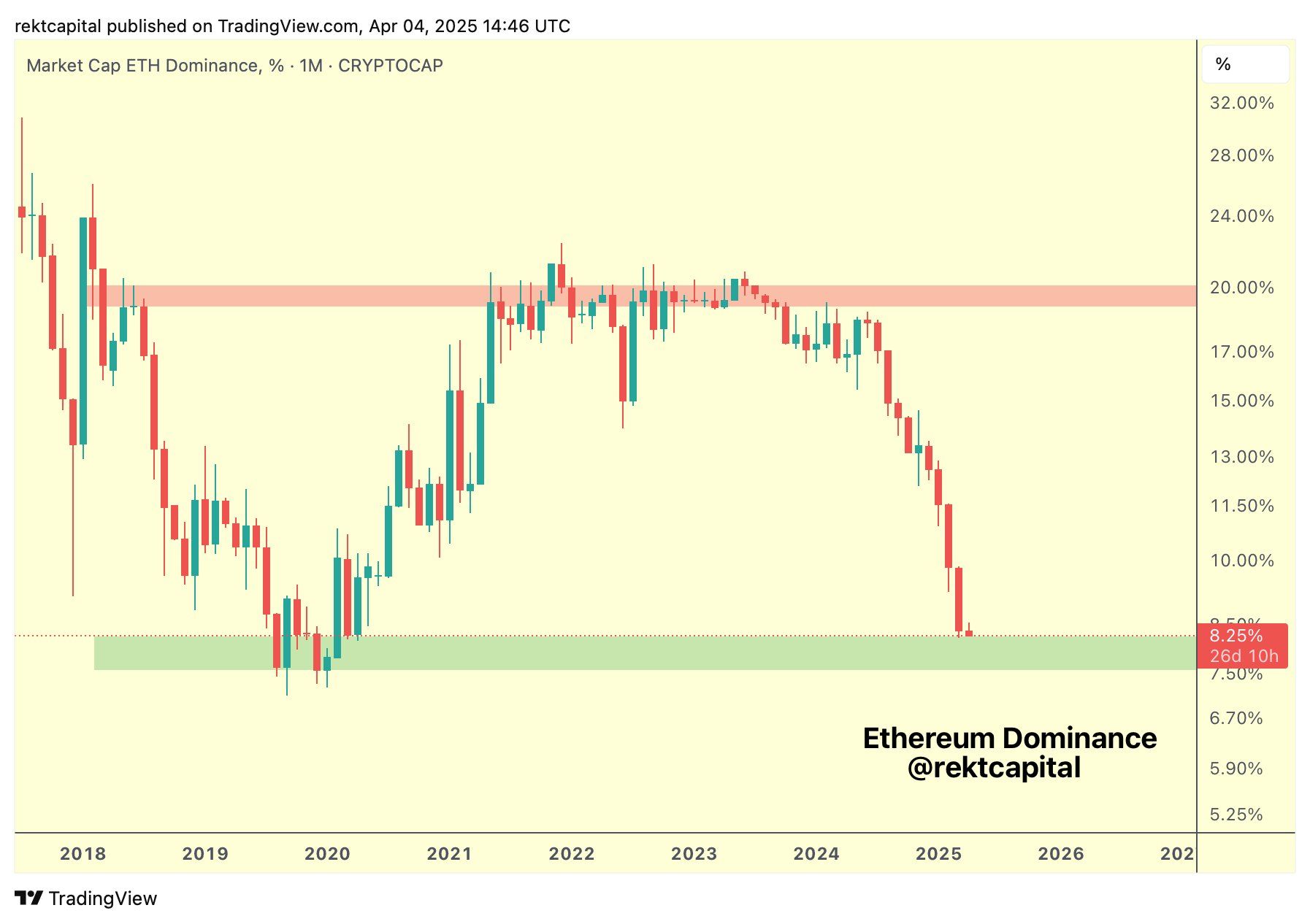
Динамика доминирования Ethereum. Источник: Rekt Capital

Rekt Capital задался вопросом, сможет ли Ethereum повторить этот исторический паттерн, и назвал его сильным сигналом к покупке.

«С июня 2023 года доминирование Ethereum снизилось с 20% до 8%. Исторически, из этой зеленой зоны Ethereum часто возвращался к более сильным позициям на рынке. Сможет ли он повторить это снова?» — написал Rekt Capital.

Аналитик CryptoAnup также увидел в этом падении шанс, который нельзя упускать. Он подчеркнул, что когда ETH.D достигает минимальных значений, это часто сигнализирует о хорошем моменте для накопления ETH перед новым ростом.

«Похоже, доминирование ETH нашло поддержку — скоро возможен отскок!», — предсказал CryptoAnup.

Тем не менее киты активно распродают ETH. На этой неделе адреса, содержащие от 100 тыс. до 1 млн ETH, продали около 1,19 млн ETH, что составляет более $1,8 млрд. Эти продажи усиливают снижение цены и доминирования ETH.

Объем ETH в прибыли достиг 4-летнего минимума

Помимо снижения доминирования, данные от Glassnode показывают, что процент ETH в прибыли также упал до самого низкого уровня за последние 4 года.
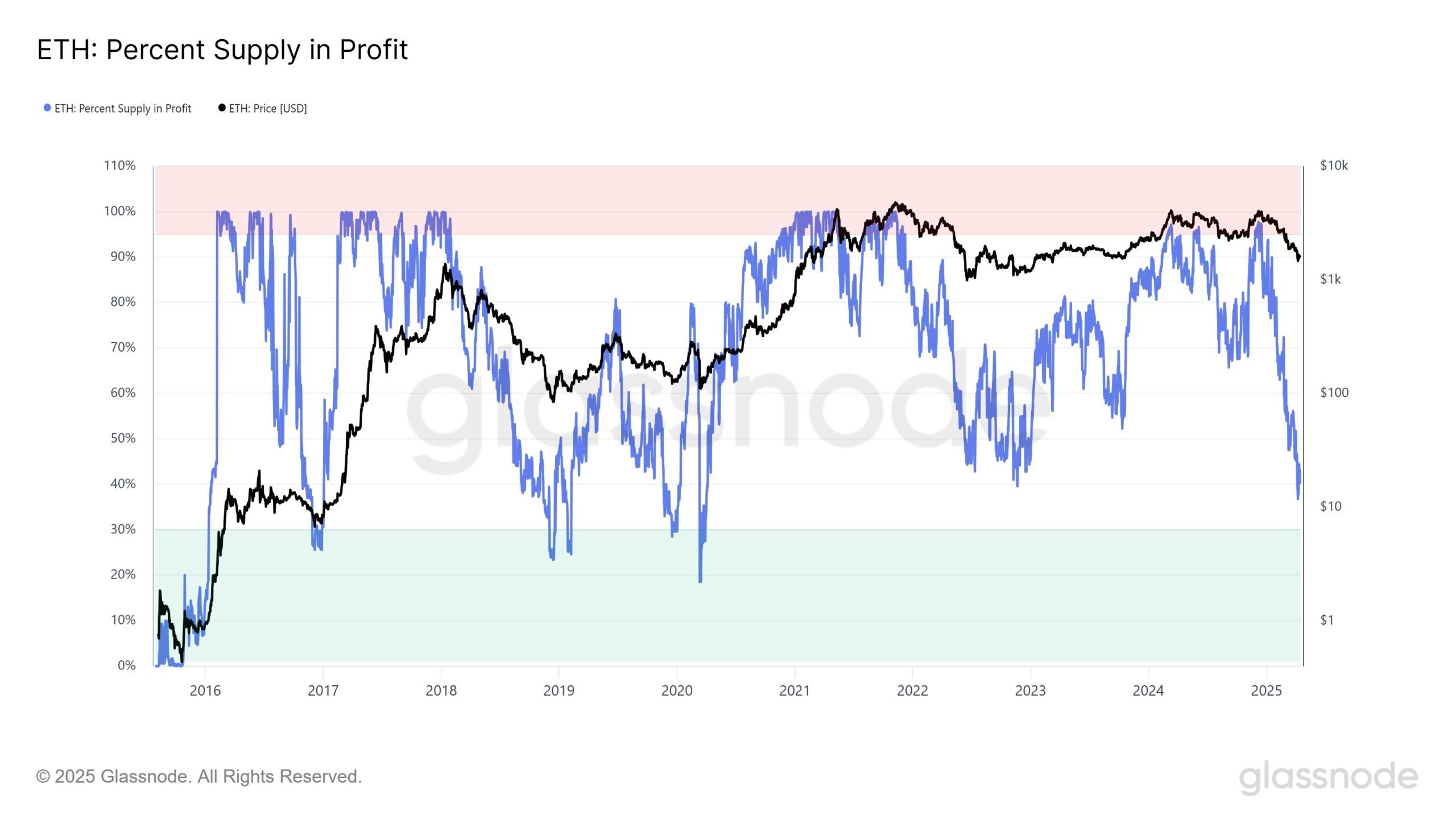
Процент ETH в прибыли. Источник: Glassnode

Только 40% ETH сейчас в прибыли — это значительное снижение по сравнению с 97,5% в начале декабря 2024 года. Аналитик Venturefounder отметил, что если этот показатель упадет ниже 30%, это станет сигналом к редкой возможности для покупки, которая появлялась всего несколько раз за последнее десятилетие.

«Процент ETH в прибыли (40%) сейчас ниже, чем на дне последнего медвежьего рынка (42%), когда ETH торговался по $800. Смотрим ончейн, это уже сигнал к действию», — сказал Venturefounder.

Venturefounder также подчеркнул важность другого показателя: рыночная стоимость Ethereum упала до уровня его ончейн реализованной стоимости. Реализованная стоимость показывает среднюю цену, по которой все токены ETH перемещались в последний раз. Когда рыночная цена достигает этого уровня, это часто указывает на редкое окно для покупки. Исторически такие моменты предшествовали значительным ценовым ралли.
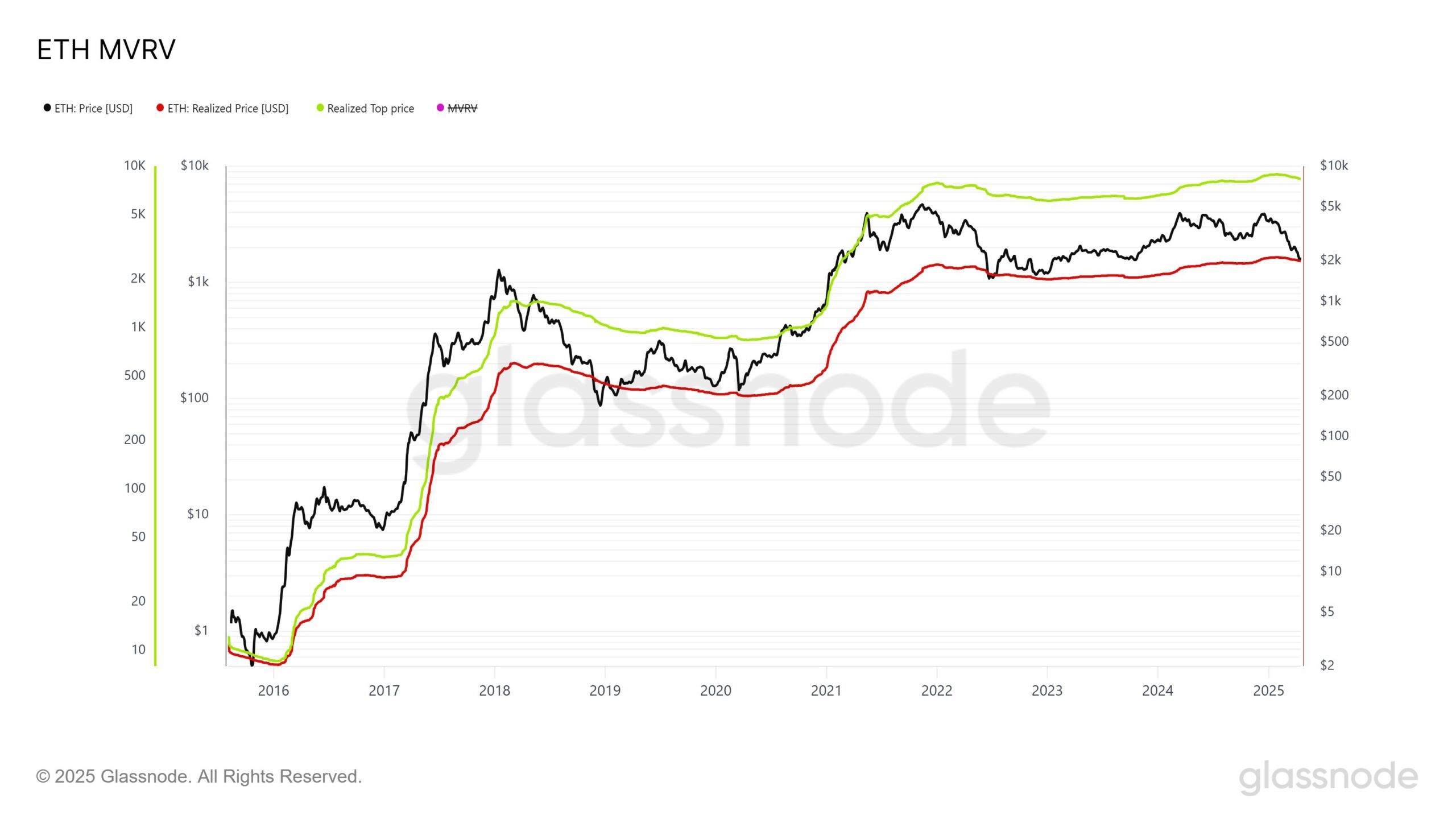
Ethereum MVRV. Источник: Glassnode

«Смотрим на этот долгосрочный график ETH. Хочется ли вам купить Ethereum или продать Ethereum? Будьте честны», — прокомментировал Venturefounder.


Trending Cryptos

Related Reads

Li Fei-Fei's Latest Long-Form Article: When Video Generation, Robotics, and NVIDIA All Call Themselves World Models, We Need a Taxonomy

In a new article, Dr. Fei-Fei Li addresses the widespread and often inconsistent use of the term "world model" in AI. She proposes a clear, functional taxonomy rooted in the classic Partially Observable Markov Decision Process (POMDP) loop (agent → action → state → observation → agent). According to this framework, current systems called "world models" are different projections of this loop, categorized by their primary output: 1. **Renderers**: Output observations (pixels). Their goal is visual fidelity for human consumption (e.g., video generation models like Sora). They are the most commercially mature but are limited by a focus on appearance over physical accuracy. 2. **Simulators**: Output states (geometric, physical, dynamic representations). They provide a structurally accurate world for both human professionals (e.g., architects) and computational agents (e.g., robots for training). Li argues simulators are the crucial, underappreciated bridge, as they can underpin both rendering and planning. 3. **Planners**: Output actions. Given an observation and a goal, they decide what an agent should do next (e.g., robotic action models). This area is highly promising but remains the least mature for real-world deployment. Li highlights a key trend: the boundaries between these three categories are beginning to blur, as they all rely on a shared underlying understanding of geometry, physics, and dynamics. The logical endpoint is a unified world foundation model capable of switching between rendering, simulation, and planning based on downstream needs. This convergence, she concludes, is central to advancing spatial intelligence—enabling machines not just to talk about the world, but to truly understand, imagine, and interact with it.

marsbit4h ago

Li Fei-Fei's Latest Long-Form Article: When Video Generation, Robotics, and NVIDIA All Call Themselves World Models, We Need a Taxonomy

marsbit4h ago

Forbes Feature: Stablecoin Cross-Border Payments Are Faster, But Not Yet Cheaper

A Forbes feature delves into the state of stablecoin-based cross-border payments, noting rapid growth but a key shortfall: while faster and more accessible, they are not yet cheaper. At a recent industry conference in Mexico City, optimism about technology, regulation, and volume was tempered by discussions with practitioners. The core issue is liquidity. Traditional FX brokers charge 60-70 basis points, and stablecoins promise to slash this to 2-5 basis points. However, this theoretical cost advantage cannot be realized until deep liquidity pools are established at scale, requiring significant institutional capital inflow. A major adoption barrier is trust. Businesses often rely on long-standing relationships with traditional brokers, valuing reliability over marginal cost savings. This shift will be gradual. Furthermore, successful companies in the space are not positioning themselves as replacements for legacy systems like SWIFT, but as complements. They leverage stablecoins for speed while using traditional rails for their standardization and reliability in ensuring accurate payment details—a critical factor for supplier payments to avoid customs issues. Companies like Caliza, experiencing high monthly growth, exemplify this hybrid approach. The industry anticipates consolidation, as long-term viability will depend on securing the essential trifecta: proper licensing, robust fiat on/off-ramps, and deep liquidity. Without these, firms risk being mere intermediaries rather than building sustainable businesses.

marsbit4h ago

Forbes Feature: Stablecoin Cross-Border Payments Are Faster, But Not Yet Cheaper

marsbit4h ago

Trading

Spot

Hot Articles

Discussions

Welcome to the HTX Community. Here, you can stay informed about the latest platform developments and gain access to professional market insights. Users' opinions on the price of ETH (ETH) are presented below.

活动图片