BTC波动率周回顾(二月10日-17日)

Odaily星球日报Published on 2025-02-18Last updated on 2025-02-19

Abstract

本周市场非常安静,一直保持在狭窄的通道内交易(这个通道由最开始的楔形形态转换而来)。支撑位牢固地保持在95.75千美元以下的位置,一直延伸到94-95千美元;同时在98千美元及以上持续看到卖出...

BTC波动率周回顾(二月10日-17日)

关键技术指标:(二月 10 日 下午四点 -> 二月 17 日 下午四点 香港时间)

  • BTC 对 USD 下跌 1.4% ( 97.5 千美元 -> 96.15 千美元),ETH 对 USD 上涨 1.9% ( 2.64 千美元->2.69 千美元)

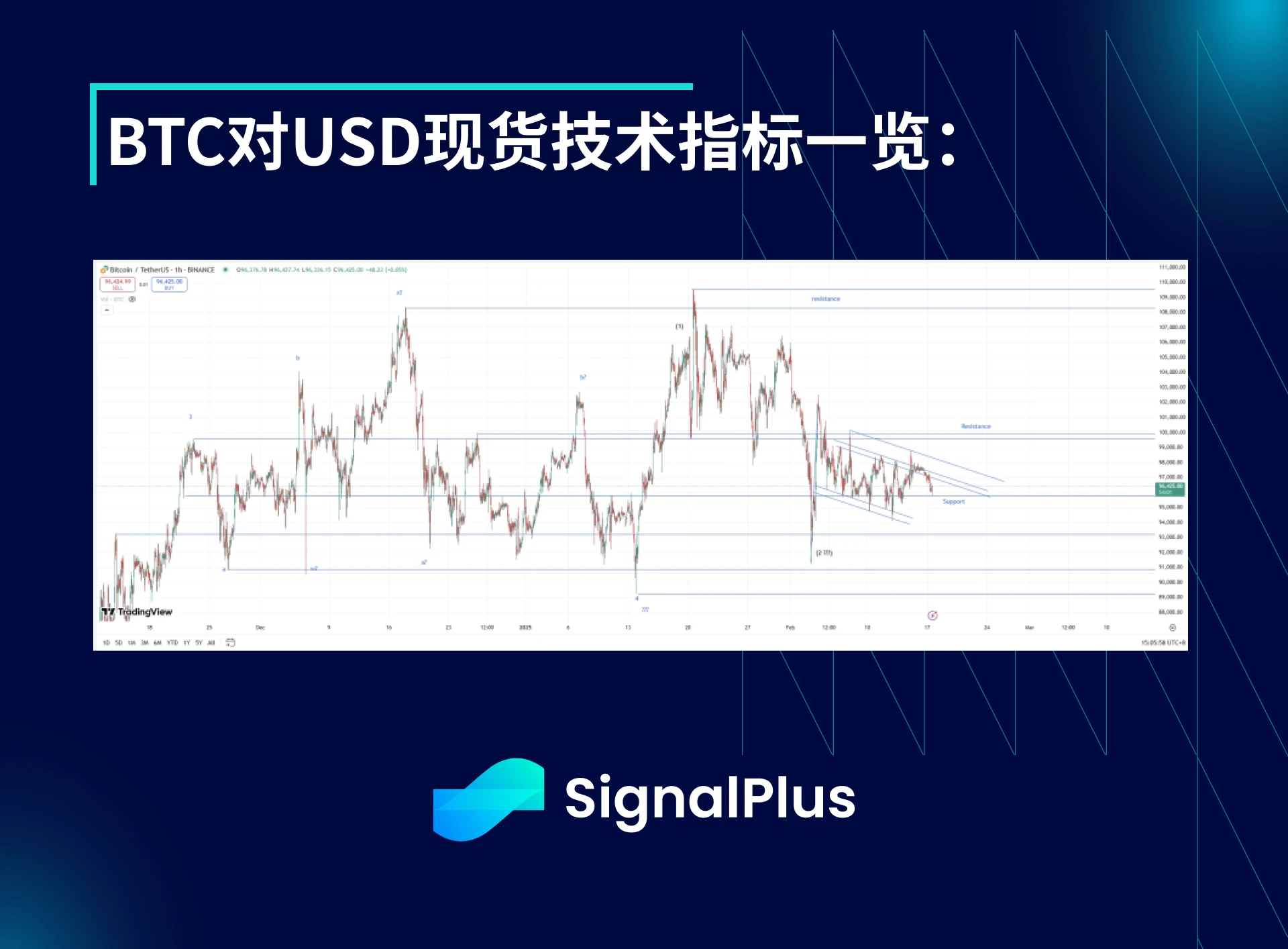
现货技术指标一览

BTC波动率周回顾(二月10日-17日)

本周市场非常安静,一直保持在狭窄的通道内交易(这个通道由最开始的楔形形态转换而来)。支撑位牢固地保持在 95.75 千美元以下的位置,一直延伸到 94-95 千美元;同时在 98 千美元及以上持续看到卖出。考虑到下方强劲的支撑,我们仍然认为接下来几个交易日内价格会走出现在的区间。但随着实际波动率持续深度走低,隐含波动率可能需要一段时间才能才会移动到 40 多的水平。目前阻力位在 98-99 千美元之间,更高在 100 千美元以上;如果下方的 94-95.7 千美元被突破,更强力的支撑会在 89-91 千美元出现。

中期我们依然对比特币保持乐观的态度,预计会交易到 120-130 千美元的区间。但预计发生的时间会推迟到今年晚些时候。

市场主题

  • 总体而言本周宏观市场相对平静。尽管 CPI 和 PPI 略超预期。对美联储降/升息的动作,市场目前似乎已经找到了平衡。同时对特朗普关税新闻的敏感度也在逐渐下降(市场对本周的“对等关税”新闻反应温和)。

  • 加密货币再次表现平平,比特币仍然稳固在 94-99 千美元区间内。在强劲的 CPI 指数发布后,价格走势从区间底部反弹,表明在此有强力的支撑,但在暴涨到 98 千美元后很快回撤。以太坊也继续保持在 2.55-2.85 千美元的区间内,但局部上的波动更大。其他小币涨跌不一,SOL 在三月初的供应锁定前被大量卖出。

  • 加密货币专家萨克斯周五给市场带来了乐观情绪,声称加密货币即将出现非常积极的发展。加密货币工作小组首份条款的初步截止日期为本周五 22 日,所以我们预期本周晚时会看到市场对一些新闻或者流言的骚动。但在出现更实在的催化剂之前,总体而言市场似乎不愿继续追高。

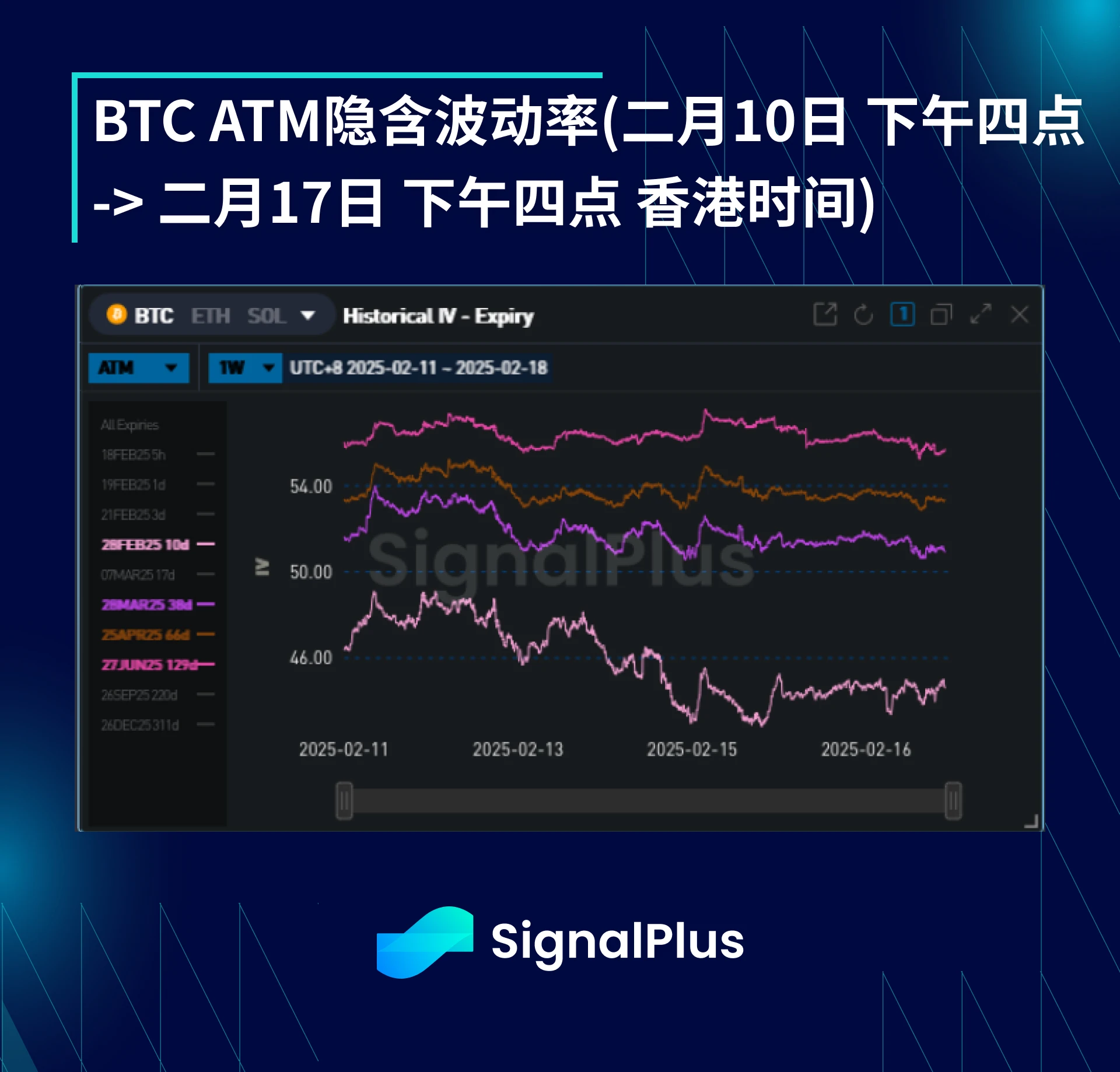
BTC ATM 隐含波动率

BTC波动率周回顾(二月10日-17日)

  • 本周隐含波动率水平在横盘中略有下跌并逐渐找到支撑,因为其绝对水平相较于此前肉眼可见的低。但这掩饰了期限结构相当陡峭这一事实。随着较低波动的交易日逐渐到期,远期的到期日应该被逐渐抬高。但事实上并没有被抬高(横盘或者下跌),本质上说明远日的波动率在逐渐下跌。结合最近较低的实际波动率,说明持有远期多头的成本相当高。

  • 如果币价继续维持在 94-100 千美元以内,我们预计 ATM 隐含波动率会继续下降,再加上相当陡峭的期限结构,我们认为最优的交易策略是局部持有三月到期的空头头寸。与此同时,在更短期上持有区间外的翼部多头保护可以在币价突破时提供充足的保护。

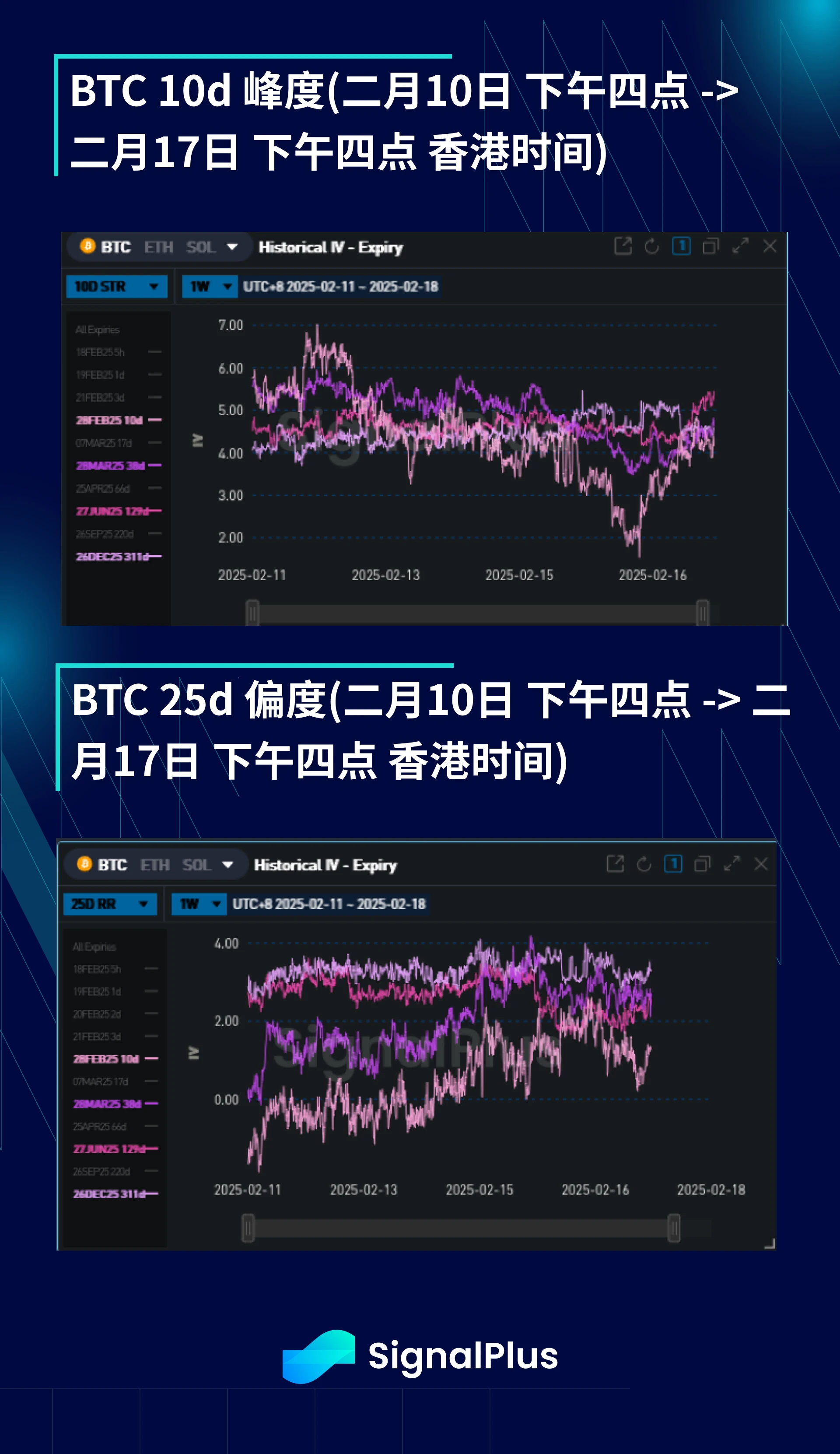
BTC 偏度/峰度

BTC波动率周回顾(二月10日-17日)

  • 随着数次对 94-95 千美元的强劲支撑位的突破以失败告终,本周偏度逐渐朝上方偏移。同时也是因为市场也对持有该区间外的空头相当谨慎,考虑到当前较低的隐含波动率水平以及当币价不论超哪一边突破后,实际波动率和隐含波动率都可能快速上涨。

  • 峰度本周在短期期限外都相当沉默。不断收缩的币价波动范围证实市场对 95-100 千美元之间的局部行权价需求量很低,同时又因为较低的波动率水平对持有该范围外的空头非常谨慎。

祝大家本周/本月交易好运!

BTC波动率周回顾(二月10日-17日)

您可在 t.signalplus.com 使用 SignalPlus 交易风向标功能,获取更多实时加密资讯。如果想即时收到我们的更新,欢迎关注我们的推特账号@SignalPlusCN,或者加入我们的微信群(添加小助手微信,请删除英文和数字中间的空格:SignalPlus 123)、Telegram 群以及 Discord 社群,和更多朋友一起交流互动。SignalPlus Official Website:https://www.signalplus.com

Trending Cryptos

Related Reads

Goldman Sachs Research Report Analysis: Circle and USDC Are Moving Beyond the Crypto World, Cross-Border Payments and AI Agents Become New Battlegrounds

Goldman Sachs published a summary of its meeting with Circle Internet Group (issuer of USDC) on July 5th. The core takeaway is that stablecoins, led by USDC, are evolving from a crypto-native tool into foundational infrastructure for traditional finance and the AI economy. USDC's use cases are rapidly expanding beyond crypto trading into cross-border payments, e-commerce, capital market settlements, and notably, payments for AI agents. Circle's management emphasized that stablecoin growth is now decoupled from crypto market cycles, driven by this diversification. They outlined five key application layers and highlighted USDC's network effects, global liquidity depth, and regulatory compliance as competitive moats. Circle distinguishes USDC from bank-issued tokenized deposits, arguing the former is an open, internet-native system without bank credit risk. Strategically, Circle is building a broader fintech platform with its Arc Layer 1 blockchain, the Circle Payments Network for cross-border transfers, and an "Agentic Stack" to serve AI agent economies, where USDC already dominates. Regarding regulation, Circle views potential U.S. legislation like the CLARITY Act as a catalyst for growth rather than a constraint, expecting it to encourage broader institutional adoption and active usage. Goldman Sachs maintains a Neutral rating on Circle with a $96 price target, noting the company's shift from a pure stablecoin issuer to a financial infrastructure provider. Key risks include competition from USDT and potential earnings pressure from declining interest rates on its reserve assets.

marsbit18m ago

Goldman Sachs Research Report Analysis: Circle and USDC Are Moving Beyond the Crypto World, Cross-Border Payments and AI Agents Become New Battlegrounds

marsbit18m ago

The Robinhood Stock Tokens You Bought Are Just Debts from Jersey Island

The Robinhood stock tokens you buy are essentially debt securities issued by a shell company in Jersey, not real equity. These tokens merely track stock prices like NVIDIA or Apple but grant no shareholder rights like voting or dividends. If the underlying company fails, you have no claim on its assets. Instead, you hold a debt instrument from Robinhood Assets (Jersey) Limited, which promises returns based on stock performance. If this Jersey entity goes bankrupt, you become an unsecured creditor. This complex structure stems from Robinhood's past crisis during the 2021 GameStop short squeeze, where T+2 settlement caused liquidity issues. The blockchain-based tokens enable instant settlement, theoretically preventing such trading halts. The product is classified by the SEC as a "linked security" or structured note, carrying counterparty risk not borne by actual shareholders. It is available globally but excluded from the US, UK, and other major markets, while Robinhood offers a fully compliant, asset-backed token model in Europe under MiFID II. The system relies on oracles for pricing, which poses risks like manipulation and faulty liquidations seen in DeFi exploits. Robinhood profits from spreads and aims to become a full-chain settlement layer. Meanwhile, competitors like Ondo have launched SEC-registered, fully compliant equity tokens in the US with actual voting rights and dividends. Robinhood’s Jersey debt model appears as a transitional, regulatory-arbitrage product, aiming to capture market share ahead of future regulatory clarity.

Foresight News50m ago

The Robinhood Stock Tokens You Bought Are Just Debts from Jersey Island

Foresight News50m ago

Trading

Spot

Hot Articles

What is $BITCOIN

DIGITAL GOLD ($BITCOIN): A Comprehensive Analysis Introduction to DIGITAL GOLD ($BITCOIN) DIGITAL GOLD ($BITCOIN) is a blockchain-based project operating on the Solana network, which aims to combine the characteristics of traditional precious metals with the innovation of decentralized technologies. While it shares a name with Bitcoin, often referred to as “digital gold” due to its perception as a store of value, DIGITAL GOLD is a separate token designed to create a unique ecosystem within the Web3 landscape. Its goal is to position itself as a viable alternative digital asset, although specifics regarding its applications and functionalities are still developing. What is DIGITAL GOLD ($BITCOIN)? DIGITAL GOLD ($BITCOIN) is a cryptocurrency token explicitly designed for use on the Solana blockchain. In contrast to Bitcoin, which provides a widely recognized value storage role, this token appears to focus on broader applications and characteristics. Notable aspects include: Blockchain Infrastructure: The token is built on the Solana blockchain, known for its capacity to handle high-speed and low-cost transactions. Supply Dynamics: DIGITAL GOLD has a maximum supply capped at 100 quadrillion tokens (100P $BITCOIN), although details regarding its circulating supply are currently undisclosed. Utility: While precise functionalities are not explicitly outlined, there are indications that the token could be utilized for various applications, potentially involving decentralized applications (dApps) or asset tokenization strategies. Who is the Creator of DIGITAL GOLD ($BITCOIN)? At present, the identity of the creators and development team behind DIGITAL GOLD ($BITCOIN) remains unknown. This situation is typical among many innovative projects within the blockchain space, particularly those aligning with decentralized finance and meme coin phenomena. While such anonymity may foster a community-driven culture, it intensifies concerns about governance and accountability. Who are the Investors of DIGITAL GOLD ($BITCOIN)? The available information indicates that DIGITAL GOLD ($BITCOIN) does not have any known institutional backers or prominent venture capital investments. The project seems to operate on a peer-to-peer model focused on community support and adoption rather than traditional funding routes. Its activity and liquidity are primarily situated on decentralized exchanges (DEXs), such as PumpSwap, rather than established centralized trading platforms, further highlighting its grassroots approach. How DIGITAL GOLD ($BITCOIN) Works The operational mechanics of DIGITAL GOLD ($BITCOIN) can be elaborated on based on its blockchain design and network attributes: Consensus Mechanism: By leveraging Solana’s unique proof-of-history (PoH) combined with a proof-of-stake (PoS) model, the project ensures efficient transaction validation contributing to the network's high performance. Tokenomics: While specific deflationary mechanisms have not been extensively detailed, the vast maximum token supply implies that it may cater to microtransactions or niche use cases that are still to be defined. Interoperability: There exists the potential for integration with Solana’s broader ecosystem, including various decentralized finance (DeFi) platforms. However, the details regarding specific integrations remain unspecified. Timeline of Key Events Here is a timeline that highlights significant milestones concerning DIGITAL GOLD ($BITCOIN): 2023: The initial deployment of the token occurs on the Solana blockchain, marked by its contract address. 2024: DIGITAL GOLD gains visibility as it becomes available for trading on decentralized exchanges like PumpSwap, allowing users to trade it against SOL. 2025: The project witnesses sporadic trading activity and potential interest in community-led engagements, although no noteworthy partnerships or technical advancements have been documented as of yet. Critical Analysis Strengths Scalability: The underlying Solana infrastructure supports high transaction volumes, which could enhance the utility of $BITCOIN in various transaction scenarios. Accessibility: The potential low trading price per token could attract retail investors, facilitating wider participation due to fractional ownership opportunities. Risks Lack of Transparency: The absence of publicly known backers, developers, or an audit process may yield skepticism regarding the project's sustainability and trustworthiness. Market Volatility: The trading activity is heavily reliant on speculative behavior, which can result in significant price volatility and uncertainty for investors. Conclusion DIGITAL GOLD ($BITCOIN) emerges as an intriguing yet ambiguous project within the rapidly evolving Solana ecosystem. While it attempts to leverage the “digital gold” narrative, its departure from Bitcoin's established role as a store of value underscores the need for a clearer differentiation of its intended utility and governance structure. Future acceptance and adoption will likely depend on addressing the current opacity and defining its operational and economic strategies more explicitly. Note: This report encompasses synthesised information available as of October 2023, and developments may have transpired beyond the research period.

645 Total ViewsPublished 2025.05.13Updated 2025.05.13

What is $BITCOIN

Discussions

Welcome to the HTX Community. Here, you can stay informed about the latest platform developments and gain access to professional market insights. Users' opinions on the price of BTC (BTC) are presented below.

活动图片