买买买!日本企业疯狂加码比特币

marsbitPublished on 2025-02-13Last updated on 2025-02-14

加密资产

一、日本企业的加密资产配置浪潮

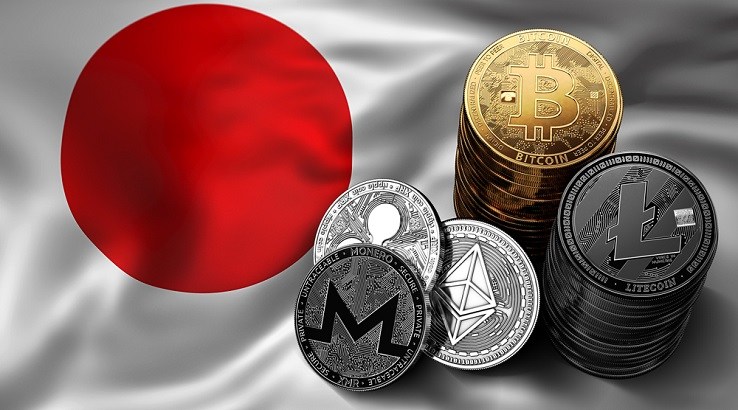
2025年初,日本企业掀起了一场前所未有的加密货币配置热潮,呈现出从传统金融巨头到中小型上市公司的全梯队入场。特别是以Remixpoint为例,其加密投资的轨迹极具代表性,反映了日本企业在面对全球经济不确定性时的战略布局。

1月9日,Remixpoint宣布额外购买30亿日元(约1900万美元)的比特币,计划在监测市场趋势的同时逐步增持。1月14日,该公司增持了33.34枚BTC,使其总持仓量增至333.189枚。1月21日,Remixpoint又斥资5亿日元(319万美元),以1599万日元的均价购买31.27枚比特币。截至1月23日,公司加密资产的总市值已达到87.89亿日元,其中比特币持仓量为447.43枚,并持有以太坊1102.86枚、Solana 12581.38枚、XRP 80.21万枚、Dogecoin 280.23万枚,整体浮盈为12.89亿日元。

在2025年1月30日发布的公告中,Remixpoint决定继续加码比特币投资,董事会批准了增持20亿日元(约1289万美元)加密资产的计划。首批5亿日元(约322万美元)已于1月31日完成,新增购买30.83枚BTC,使公司总持仓增至509.33枚BTC。

不仅是Remixpoint,其他日本公司也纷纷加入了加密货币购买行列,显示出企业对加密资产的浓厚兴趣。手机游戏公司Gumi计划购买价值10亿日元(约658万美元)的比特币,并表示将通过质押协议Babylon来获得二次收益。医疗集团SBC也宣布将购买10亿日元(约670万美元)的比特币,以实现资产多元化和对抗通胀的战略目标。

此外,SBI集团在其加密业务上的强劲表现也为行业注入了信心。SBI集团加密业务部门在2023年第三季度营收同比增长103.5%,同时其交易平台SBI VC Trade和BITPoint的账户数量也增长了15.3%。该集团的加密资产布局不仅推动了公司自身的盈利模式转型,也加速了日本金融与Web3产业的融合。

Coincheck,作为日本领先的加密货币交易平台之一,也在加密市场的复苏中受益。根据2023财年第三季度的财报,Coincheck的营收跃升至7.82亿美元,较第二财季增长75%。尽管存在净亏损,但强劲的收入增长反映了机构入场对市场流动性的提升。

这些加密资产配置不仅反映了企业在面对全球宏观经济压力时的应对策略,更表明了日本企业在加密货币和Web3领域的深度布局。这一波由政策松绑与经济压力共同驱动的囤币潮,正在重塑日本的加密市场格局,从Remixpoint的激进增持到SBI的生态化扩张,企业级需求正在成为日本加密市场的新增长极。


二、企业囤币潮的三大驱动力

Remixpoint和其他日本企业的大规模加密资产购买背后,隐藏着对未来市场的深刻预判和应对策略,特别是在当前全球经济和金融环境的不确定性下,企业的投资决策愈加注重多元化和风险对冲。

对抗日元贬值与通胀压力

日本长期以来的超宽松货币政策导致了日元贬值和通胀压力的持续加剧,2023年日本核心通胀率创下40年新高,达到3.1%。这一经济背景促使企业加速寻找抗通胀资产,特别是比特币等具有全球通用性的加密资产。Metaplanet的CEO明确表示,囤币成为对冲日元贬值的核心策略。随着日元兑美元汇率不断走低,越来越多的日本企业选择将现金储备转向比特币、以太坊等加密资产,从而规避本币贬值带来的风险。这一趋势也促使了金融巨头如SBI集团在加密业务上的大力投入,其加密部门营收同比激增103.5%,进一步验证了这一战略的有效性。

政策松绑与税改预期

2025年,日本金融厅计划出台一项新的加密资产监管改革方案,预示着加密市场的进一步开放和成熟。根据改革方案,加密资产将被归类为证券类金融产品,同时计划将目前高达55%的税率降低至20%,这一改革极大地激发了企业的投资热情。企业希望通过提前布局,趁政策红利期获得更大利益。例如,Remixpoint便是利用这一预期,提前进行加密资产的多次增持,来应对可能到来的政策红利和税改。税率的降低不仅为企业提供了更多的财务自由度,也为加密市场带来了更多的机构投资者,增强了市场的稳定性。

产业协同需求

除了对冲经济风险和税务优化之外,产业协同也是推动日本企业加密资产配置的关键因素。传统金融机构正在通过加密资产重构盈利模式。例如,SBI集团在其加密业务中实现了显著的增长,其旗下交易平台SBI VC Trade和BITPoint的账户数量环比增长15.3%,反映出企业对加密行业的深度布局。同时,SBI集团通过投资加密资产和参与区块链技术,致力于构建一个融合传统金融和Web3技术的生态系统。此外,企业还通过产品创新加强市场的适应性,例如SBI与日本知名交易平台bitFlyer合作推出了比特币保险产品,进一步降低了加密资产持有的风险。

这一切都表明,在日本,企业对加密货币的投资已不仅仅是资产配置,更是对未来Web3时代产业布局的前瞻性战略。随着政策逐步松绑和税改的推动,日本加密市场正迎来从零星投资向系统性布局的转变,企业级需求将成为日本加密行业发展的核心驱动力。


三、日本加密行业现状:突破与挑战并存

日本加密行业正处于快速发展和转型的关键阶段,政策逐步松绑,市场规模和参与度不断提升。然而,在这一增长的背后,依然存在着突破与挑战并存的局面。

首先,政策创新与监管成熟度领先。日本金融厅的监管改革计划正为加密市场的发展提供了明确的方向。2024年,日本成为全球首个颁布DAO立法的国家,允许设立有限责任公司形式的去中心化自治组织(DAO),为去中心化组织的合规化铺平了道路。此外,2023年日本还出台了全球首个稳定币监管法案,成为吸引机构资金的有力信号。2025年6月,日本金融厅还将推出一项重大的加密资产监管改革方案,旨在将加密资产归类为证券类金融产品,并降低目前高达55%的税率至20%,这无疑将为企业和投资者提供更为清晰和友好的政策环境。

然而,在政策的利好推动下,Web2巨头主导的生态扩张也带来了独特的局面。日本的加密市场由索尼、软银、NTT DoCoMo等传统金融和电信巨头主导,它们通过子公司和战略投资逐步进入加密货币、NFT、数字证券等多个领域。这些巨头的“保守式创新”路径一方面为市场带来了资金和技术支持,另一方面也让本土的风险投资机构和初创企业面临较大的压力,必须依赖这些巨头的资源才能在市场上站稳脚跟。与欧美市场相比,日本的加密市场风险资本相对匮乏,这也使得初创企业的发展面临更多挑战。

然而,GameFi与NFT的爆发潜力却为日本加密行业带来了希望。日本的动漫文化和游戏产业在全球范围内都拥有强大的影响力,这为区块链游戏的落地提供了肥沃的土壤。区块链游戏《My Crypto Heroes》和《Crypto Spells》等,凭借动漫IP的优势,已吸引了全球大量玩家的参与。在区块链游戏中,70%以上是基于移动端开发的,这契合了日本用户的习惯,但依然面临着链上交互体验的瓶颈。未来,随着技术的进一步完善和创新,GameFi和NFT有望成为日本加密市场的增长引擎,吸引更多的玩家和投资者。


四、未来展望:税改能否激活“加密新日本”?

日本加密行业的未来发展在很大程度上取决于即将出台的税制改革。2025年,税改的落地进度将成为日本加密行业最重要的变量之一。随着日本金融厅计划将加密资产税率从目前的55%降低至20%,这一政策变动或许会引发三重效应,从而激活“加密新日本”的潜力。

首先,资金回流将成为税改带来的直接效应。过去几年,许多日本企业和投资者因高额税率而将加密资产投资转移至新加坡、香港等加密友好型地区。然而,税率的降低将显著提高日本市场的吸引力,预计将推动大量流失的资金和人才回流。这将为日本加密市场注入新的活力,也有可能促进跨国企业将其加密业务迁回日本。

其次,散户扩容是税改可能带来的另一个效应。通过NISA(日本的个人储蓄账户免税通道),加密投资可能成为日本家庭资产配置的新选项。随着税率的降低,个人投资者将能以更低的税负参与加密市场,这将大大激发散户对加密资产的兴趣。加密货币作为一种多元化的投资工具,尤其是在全球经济不确定性增加的背景下,可能会成为日本家庭投资组合中的重要组成部分。

最后,机构入场也将因税改而迎来新一轮增长。随着加密资产的税负减轻,养老金、保险资金等长期投资者可能会逐步涉足比特币ETF等合规产品。这些机构资金的入场将为市场提供更多流动性,并增强市场的成熟度和稳定性。与此同时,机构投资者的参与也有助于推动加密货币市场的监管完善,使其更具透明度和合规性,从而吸引更多的国际资金流入。

然而,日本加密市场要真正实现从“政策试验田”到“全球加密枢纽”的蜕变,仍需在创新与风险之间找到平衡。企业囤币的财务激进性、DAO治理的合规边界、以及Web3与传统产业的融合效率,都将是未来发展中的关键因素。特别是在DAO治理和去中心化金融(DeFi)领域,日本需要出台更为细致的监管政策,以确保创新不被过度束缚,同时避免市场的过度波动。

尽管面临挑战,若税改按计划顺利落实,日本不仅有机会重振其加密市场的竞争力,还可能在全球范围内成为Web3产业的领导者之一。随着政策和市场环境的不断改善,日本加密市场的未来充满了潜力和希望。

Trending Cryptos

Related Reads

Tiger Research: Three Strategies for Financial Institutions to Keep Up with the Tokenization Wave

Tiger Research's in-depth report analyzes the strategic choices for financial institutions entering the rapidly growing Real-World Asset (RWA) tokenization market. With the market projected to be worth $25-36 billion and a lack of complete regulatory frameworks in many jurisdictions, institutions face three options: waiting for domestic legislation, using regulatory sandboxes for limited experiments, or moving first into established overseas markets to gain a competitive edge. Tokenization is not magic; it requires meticulous preparation. Before entry, institutions must strategically plan across six core areas: choosing a jurisdiction, obtaining necessary licenses, defining the asset type, targeting the appropriate investor base, selecting settlement currencies, and designing operational requirements like custody and governance. The report outlines two main operational paths. The first is a direct jurisdictional path, establishing a legal presence in mature markets like Hong Kong, Singapore, or the U.S., often leveraging local licensed platforms to accelerate market entry. The second is a chain-native path, using platforms like Ondo or Plume that are built with regulatory compliance embedded, allowing for faster, more flexible market access without being tied to a specific jurisdiction. Ultimately, the report advises against waiting for perfect regulation. The preparation process can take 6-12 months and requires thorough legal review. Using the example of a mid-sized securities firm, it details steps from evaluating existing entities to final execution. The core message is that accumulating real-world operational experience is paramount, as the market is moving ahead and will not wait for latecomers.

Foresight News18m ago

Tiger Research: Three Strategies for Financial Institutions to Keep Up with the Tokenization Wave

Foresight News18m ago

Unitree's IPO Frenzy: The Real Mystery is How It Will Spend the 42 Billion Raised

Unitree, a Chinese robotics company, is set for a public listing after its IPO registration was approved by regulators. The company, which started with quadruped robots and has expanded into humanoids, plans to raise approximately 4.2 billion yuan through its offering. The article traces Unitree's rapid growth from its founding in 2016 to its current status. It highlights key milestones like the 2021 CCTV Spring Festival Gala performance, the 2023 launch of its affordable Go2 robot dog and the H1 humanoid robot, and a series of subsequent product launches. By 2025, the company reported revenue of 1.71 billion yuan, profitability, and sales exceeding 5,500 humanoid robots. As the first publicly-listed humanoid robot company on China's STAR Market, Unitree's main challenges are sustaining growth and deploying its newly raised capital effectively. The humanoid robot sector in China is crowded, with over 140 companies. Competitors include UBTech (focusing on industrial and consumer markets), Fourier, and international players like Tesla Optimus and 1X NEO. The article outlines three critical challenges for Unitree: establishing a strong second product line beyond its quadruped robots, maintaining its price advantage while ensuring quality, and successfully advancing its embodied AI capabilities through partnerships like the one with NVIDIA for the H2 Plus platform. Unitree's likely strategy involves a "developer tools + industry benchmarks" approach: using low-cost models like the R1 and G1 to build developer adoption and volume, leveraging high-end platforms for AI training, and securing pilot projects in sectors like logistics and manufacturing to build case studies. The company's future success hinges on converting its current momentum in shipments and pilot programs into sustainable, large-scale commercial contracts as the broader market evolves.

marsbit1h ago

Unitree's IPO Frenzy: The Real Mystery is How It Will Spend the 42 Billion Raised

marsbit1h ago

Examining the Open USD Partner Lineup: Follow Who's Joining to See Where the Money Flows

**Title: Deciphering the Open USD Partner Roster: Following the Money** The launch of Open USD is notable less for the stablecoin itself and more for its expansive list of over 140 founding partners, which reads like a "who's who" of global finance and tech. This coalition, including asset managers like BlackRock, card networks Visa and Mastercard, banks (BNY Mellon, Standard Chartered, etc.), tech giants (Google, IBM), merchants (Shopify), and crypto firms (Coinbase, Ripple, Aave, MetaMask), signals a strategic shift. The diverse membership reveals that stablecoins are increasingly viewed not as products to compete over, but as shared infrastructure too critical to be left to any single entity. Each partner category has distinct motives. Asset managers like BlackRock seek to manage the large, sticky cash reserves, a lucrative fee-generating opportunity. Merchants like Shopify aim for lower-cost settlement and potential yield on balances. Banks join defensively to retain custody and settlement roles, fearing deposit outflows to stablecoins. Tech companies bet on programmable money for future machine-to-machine commerce. Crypto firms gain mainstream legitimacy and distribution channels. Remarkably, the consortium includes direct competitors (Visa vs. Mastercard, Coinbase vs. Ripple), indicating that the fear of exclusion from this emerging financial layer outweighs competitive rivalries. However, this shared governance could also lead to slow decision-making. The roster's composition is the real message: it represents a collective bet that a widely accepted, consortium-owned stablecoin is preferable to proprietary versions or having none at all. For incumbents like Circle and Tether, this alliance poses a significant threat, as potential clients have collectively chosen to build their own alternative. The absence of major U.S. retail banks (busy with their own tokenized deposit networks) is equally telling. In essence, the partner list maps where the industry believes value and risk will flow in a tokenized dollar future, marking stablecoin's evolution from a product to a utility.

Foresight News2h ago

Examining the Open USD Partner Lineup: Follow Who's Joining to See Where the Money Flows

Foresight News2h ago

Trading

Spot

Hot Articles

What is $BITCOIN

DIGITAL GOLD ($BITCOIN): A Comprehensive Analysis Introduction to DIGITAL GOLD ($BITCOIN) DIGITAL GOLD ($BITCOIN) is a blockchain-based project operating on the Solana network, which aims to combine the characteristics of traditional precious metals with the innovation of decentralized technologies. While it shares a name with Bitcoin, often referred to as “digital gold” due to its perception as a store of value, DIGITAL GOLD is a separate token designed to create a unique ecosystem within the Web3 landscape. Its goal is to position itself as a viable alternative digital asset, although specifics regarding its applications and functionalities are still developing. What is DIGITAL GOLD ($BITCOIN)? DIGITAL GOLD ($BITCOIN) is a cryptocurrency token explicitly designed for use on the Solana blockchain. In contrast to Bitcoin, which provides a widely recognized value storage role, this token appears to focus on broader applications and characteristics. Notable aspects include: Blockchain Infrastructure: The token is built on the Solana blockchain, known for its capacity to handle high-speed and low-cost transactions. Supply Dynamics: DIGITAL GOLD has a maximum supply capped at 100 quadrillion tokens (100P $BITCOIN), although details regarding its circulating supply are currently undisclosed. Utility: While precise functionalities are not explicitly outlined, there are indications that the token could be utilized for various applications, potentially involving decentralized applications (dApps) or asset tokenization strategies. Who is the Creator of DIGITAL GOLD ($BITCOIN)? At present, the identity of the creators and development team behind DIGITAL GOLD ($BITCOIN) remains unknown. This situation is typical among many innovative projects within the blockchain space, particularly those aligning with decentralized finance and meme coin phenomena. While such anonymity may foster a community-driven culture, it intensifies concerns about governance and accountability. Who are the Investors of DIGITAL GOLD ($BITCOIN)? The available information indicates that DIGITAL GOLD ($BITCOIN) does not have any known institutional backers or prominent venture capital investments. The project seems to operate on a peer-to-peer model focused on community support and adoption rather than traditional funding routes. Its activity and liquidity are primarily situated on decentralized exchanges (DEXs), such as PumpSwap, rather than established centralized trading platforms, further highlighting its grassroots approach. How DIGITAL GOLD ($BITCOIN) Works The operational mechanics of DIGITAL GOLD ($BITCOIN) can be elaborated on based on its blockchain design and network attributes: Consensus Mechanism: By leveraging Solana’s unique proof-of-history (PoH) combined with a proof-of-stake (PoS) model, the project ensures efficient transaction validation contributing to the network's high performance. Tokenomics: While specific deflationary mechanisms have not been extensively detailed, the vast maximum token supply implies that it may cater to microtransactions or niche use cases that are still to be defined. Interoperability: There exists the potential for integration with Solana’s broader ecosystem, including various decentralized finance (DeFi) platforms. However, the details regarding specific integrations remain unspecified. Timeline of Key Events Here is a timeline that highlights significant milestones concerning DIGITAL GOLD ($BITCOIN): 2023: The initial deployment of the token occurs on the Solana blockchain, marked by its contract address. 2024: DIGITAL GOLD gains visibility as it becomes available for trading on decentralized exchanges like PumpSwap, allowing users to trade it against SOL. 2025: The project witnesses sporadic trading activity and potential interest in community-led engagements, although no noteworthy partnerships or technical advancements have been documented as of yet. Critical Analysis Strengths Scalability: The underlying Solana infrastructure supports high transaction volumes, which could enhance the utility of $BITCOIN in various transaction scenarios. Accessibility: The potential low trading price per token could attract retail investors, facilitating wider participation due to fractional ownership opportunities. Risks Lack of Transparency: The absence of publicly known backers, developers, or an audit process may yield skepticism regarding the project's sustainability and trustworthiness. Market Volatility: The trading activity is heavily reliant on speculative behavior, which can result in significant price volatility and uncertainty for investors. Conclusion DIGITAL GOLD ($BITCOIN) emerges as an intriguing yet ambiguous project within the rapidly evolving Solana ecosystem. While it attempts to leverage the “digital gold” narrative, its departure from Bitcoin's established role as a store of value underscores the need for a clearer differentiation of its intended utility and governance structure. Future acceptance and adoption will likely depend on addressing the current opacity and defining its operational and economic strategies more explicitly. Note: This report encompasses synthesised information available as of October 2023, and developments may have transpired beyond the research period.

656 Total ViewsPublished 2025.05.13Updated 2025.05.13

What is $BITCOIN

Discussions

Welcome to the HTX Community. Here, you can stay informed about the latest platform developments and gain access to professional market insights. Users' opinions on the price of BTC (BTC) are presented below.

活动图片