Мем-коин TRUMP подешевел на 75%

cryptonews.ruPublished on 2023-09-03Last updated on 2025-02-03

Масштабная просадка на крипторынке повлекла за собой падение мем-коина TRUMP, запущенного Дональдом Трампом накануне инаугурации. Несмотря на усилия президента по продвижению актива, цена упала на 75% относительно пика.
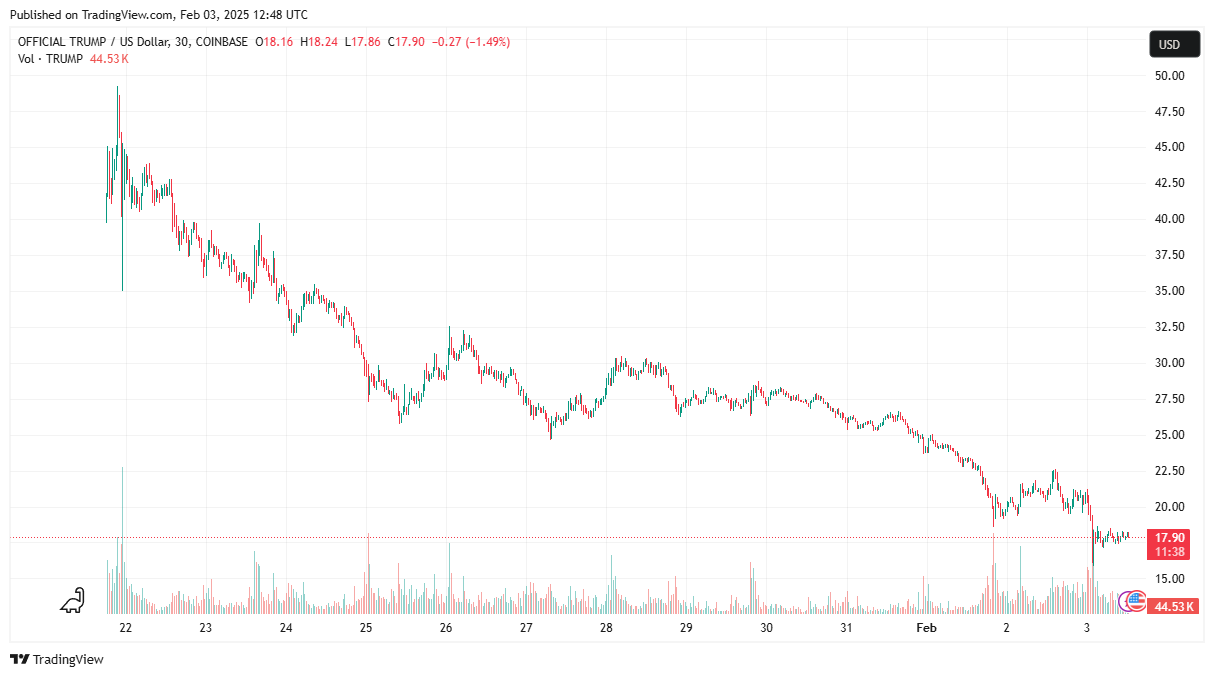
30-минутный график TRUMP/USD биржи Coinbase. Данные: TradingView.

На момент написания токен торгуется на уровне $18, частично восстановившись после достижения минимума в $15,86. Капитализация составляет $3,59 млрд.

Исторический максимум цены TRUMP зафиксирован 21 января на отметке $48,59.
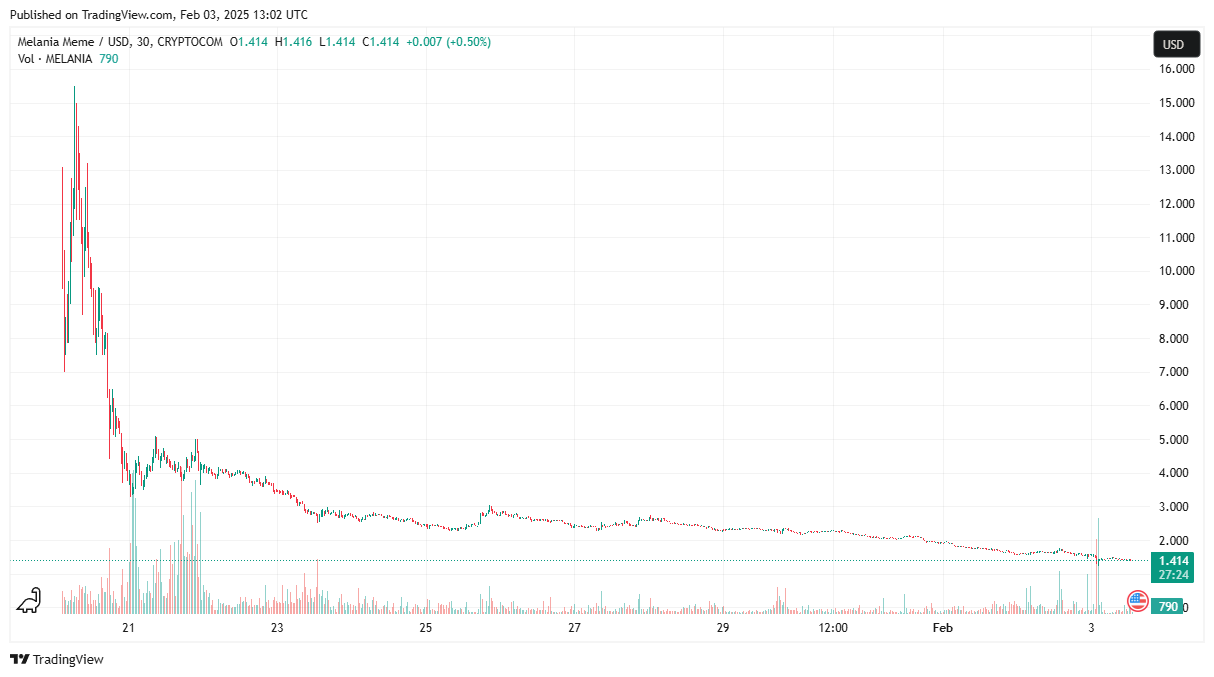
30-минутный график MELANIA/USD биржи Crypto.com. Данные: TradingView.

Мем-коин супруги президента Мелании Трамп MELANIA, запущенный вскоре после TRUMP, продолжил падение. На момент написания цена составляет около $1,42 — на 90% ниже ATH в $15,5.

На фоне отрицательных тенденций на рынке криптовалютные вложения компании Трампов World Liberty Financial (WLFI) подешевели на 21%.

Согласно источникам Reuters, за две недели торгов TRUMP сгенерировал от $80 млн до $100 млн комиссий. По меньшей мере 50 крупнейших покупателей заработали свыше $10 млн каждый. Около 200 000 кошельков потеряли деньги на сделках с мем-коином.

Напомним, в январе Trump Media & Technology Group (TMTG) — компания-оператор соцсети Truth Social — объявила о планах инвестировать $250 млн в биржевые фонды, акции криптокомпаний и цифровые активы.

Related Reads

Margin Exhausted, "Brother Huang Li Cheng" Begins Selling Monkeys at a Loss

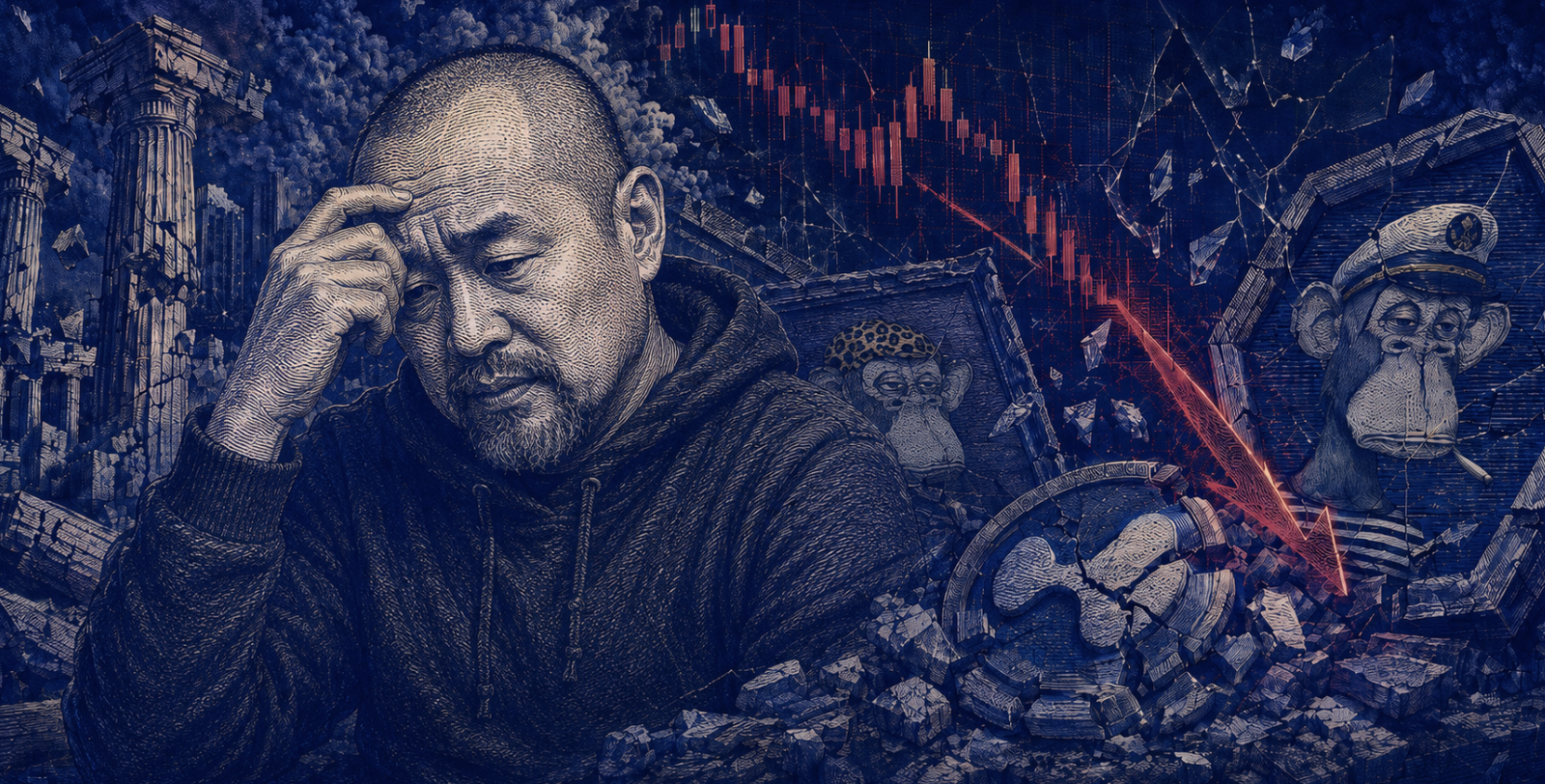
Taiwanese crypto whale "Machi Big Brother" Jeffrey Huang has been forced to sell his prized Bored Ape Yacht Club (BAYC) NFTs at significant losses to cover mounting losses from a highly leveraged ETH long position on Hyperliquid. Over the past month, Huang sold 34 BAYC NFTs for 326 ETH (approx. $514,000), realizing a loss of 399 ETH (approx. $631,000). The proceeds were transferred to Hyperliquid to replenish margin for his perpetual contract trades. One ape, BAYC #6057, bought for 76.84 ETH four years ago, was sold for just 7.65 ETH, a 90% loss in ETH terms. Huang began his high-leverage (25-40x) ETH long strategy in September 2025 when ETH was around $4,700. While his account once showed over $45 million in unrealized profit, the subsequent crash of ETH to the $1,600 range erased all gains. As of June 26, his cumulative losses on Hyperliquid reached $33.85 million, with over 335 liquidations earning him the community nickname "King of Liquidations." With conventional funds depleted, Huang's once-valuable NFT collection, which at its peak included around 200 BAYCs and was worth tens of millions, has become a lifeline. His remaining ~150 BAYCs, valued at roughly $1.6 million at current floor prices, provide only limited runway for his persistent high-stakes trading. Huang rose to prominence in crypto as a key figure in popularizing BAYC NFTs in Asia during the 2021 bull market. His pivot to perpetual contracts has now led to a cycle where his iconic "monkeys" are being sold to fund a failing trading strategy.

Foresight News20m ago

Margin Exhausted, "Brother Huang Li Cheng" Begins Selling Monkeys at a Loss

Foresight News20m ago

Quantum Computing Approaches "Q-Day": How Encryption Policy, Investment Logic, and Risk Management Are Reshaping the Landscape

Quantum Computing Nears 'Q-Day': Shaping Encryption Policy, Investment Logic, and Risk Management Quantum technology is increasingly intersecting with cryptocurrency policy and cybersecurity discussions as the potential 'Q-Day'—when quantum computers could break current encryption—approaches. While summer brings fast-paced crypto market dynamics, new U.S. legislation, and AI debates, the emerging dimension is how quantum advancements will reshape the digital asset landscape. The next phase of crypto investment is being shaped by two converging forces: clearer regulatory frameworks and cryptographic evolution driven by quantum computing. Investors stand to benefit from reduced uncertainty, but must also recognize that quantum readiness is becoming a core risk factor. Public blockchains rely on cryptography for security, and sufficiently advanced quantum machines could undermine these foundations. This does not mean imminent network collapse, but investors can no longer dismiss the timeline as irrelevant. Key questions now include whether projects have identified their cryptographic dependencies, formulated migration plans to post-quantum cryptography, and established governance for upgrades. For policymakers, the link is clear. Effective crypto policy must look beyond token classification and disclosure to address the underlying infrastructure. As stablecoins, tokenized assets, and blockchain payments integrate deeper into finance, cryptographic resilience becomes a systemic issue. Failure to prepare could lead to investor losses, operational failures, and legal disputes. Policy should encourage risk disclosure, require major intermediaries to maintain upgrade and response plans, and foster coordination across the ecosystem—rather than impose a single technical fix. The sustainability of cryptocurrencies will increasingly depend on their security infrastructure's ability to adapt to these accelerating technological pressures.

Foresight News46m ago

Quantum Computing Approaches "Q-Day": How Encryption Policy, Investment Logic, and Risk Management Are Reshaping the Landscape

Foresight News46m ago

Bitcoin's Five-Wave Adjustment Nears End, Opportunities Emerge in HYPE Support Zone | Invited Analysis

**Bitcoin's Five-Wave Adjustment Nears End, HYPE Support Zone Presents Opportunity | Guest Analysis** This week, Bitcoin (BTC) is in the final stage of a five-wave corrective structure. The formation of 'Endpoint 44' is key: a level above $58,110 suggests a high probability of a technical rebound, leading likely to wide-range consolidation. A break below $58,110 without bullish divergence warrants caution for further downside. Mid-term bearish positions are maintained at 20%, with 30% of capital reserved for short-term scalping opportunities based on predefined support/resistance levels and three scenario-based plans (A/B/C). Simultaneously, HYPE has entered the 55-56 segment of its own five-wave correction from its $76.94 high. If 'Endpoint 56' forms above the prior low (Endpoint 54), creating a double-bottom pattern, a rebound is significantly likely. A light long position (under 30% allocation) can be considered upon stabilization in the support zone. Last week's BTC short-term strategy, guided by proprietary quantitative models, successfully executed two short trades (1x leverage), yielding a total return of approximately 6.21%. The market move validated the prior weekly forecast of a retest towards the $59,100 support. **Core Trading Views Summary:** * **BTC:** Focus on the formation of 'Endpoint 44'. A scenario above $58,110 allows for tentative longs. Key resistances: $60,900-$62,300, ~$65,500, $67,300-$69,500. Key supports: ~$58,100, ~$55,000. * **HYPE:** Monitor the final position of 'Endpoint 56'. Key resistances: ~$65.5, ~$71.5. Key supports: ~$58.5, $52-$54 zone. Strategy favors buying on dips upon stabilization in support areas with confirmed model signals, with strict position control. **Risk Disclaimer:** Financial markets are volatile. All analysis, models, and strategies herein are based on personal technical analysis for journaling purposes only, not investment advice. Trade at your own risk.

Odaily星球日报1h ago

Bitcoin's Five-Wave Adjustment Nears End, Opportunities Emerge in HYPE Support Zone | Invited Analysis

Odaily星球日报1h ago

AI Sweeps the Globe, So Why Is Crypto + AI Facing Gloom?

The article "AI Sweeps the Globe, But Why Is Crypto + AI So Bleak?" analyzes the disconnect between the booming AI industry and the struggling crypto+AI sector. It argues the issue is not flawed logic but severe demand-supply mismatch across four key sub-sectors. Decentralized compute and storage projects offer theoretical benefits like cost savings and data sovereignty but lack a decisive technical edge over entrenched cloud providers (AWS, GCP). Enterprises are unwilling to risk migration for unproven infrastructure that can't guarantee the performance and reliability needed for critical AI workloads. ZKML and privacy solutions address important issues like model verification but solve non-urgent, long-term concerns for most businesses currently focused on core performance and ROI. Demand here is likely to be regulation-driven (e.g., EU AI Act) rather than organic. AI agent infrastructure is developing foundational tech for a future multi-agent economy. However, the current market phase is dominated by internal process automation within single companies, making this technology premature. AI agent payments is highlighted as the only sub-sector where blockchain competes on a level playing field with traditional finance, as neither has adequately solved the challenges of machine-to-machine micropayments and real-time settlement. Overall, crypto+AI projects are building for future needs (data ownership, decentralization, transparency) that don't align with the industry's immediate priorities (performance, cost, stability). The absence of a flagship, large-scale use case further hinders mainstream adoption and capital inflow. The path forward requires either adapting to current market demands or patiently building the foundational infrastructure for the next phase of AI.

marsbit1h ago

AI Sweeps the Globe, So Why Is Crypto + AI Facing Gloom?

marsbit1h ago

Trading

Spot
活动图片