JPMorgan: Фонды на базе SOL и XRP могут обойти ETH-ETF в первые полгода после запуска

investing.ruPublished on 2025-01-14Last updated on 2025-01-14

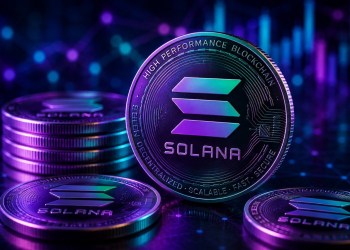
GetBlock Magazine - Что произошло? По мнению аналитиков банка JPMorgan, новые биржевые продукты (ETP) на базе криптовалют, ожидающие одобрения Комиссии США по ценным бумагам и биржам (SEC), могут привлечь значительные инвестиции. Инвесторы ожидают появления на рынке первых спотовых биржевых фондов (ETF) на базе токена блокчейна Solana (SOL) и токена XRP от финтех-компании Ripple после инаугурации Дональда Трампа 20 января и начала работы новой дружественной к криптовалютам администрации.

Материал Cointelegraph

Что еще известно? В отчете от 13 января эксперты JPMorgan спрогнозировали, что фонды на базе SOL и XRP в первые полгода после одобрения могут превзойти по объему активов под управлением (AUM) аналогичные продукты на базе Ethereum.

Спотовые ETH-ETF были допущены на рынок в июле 2024 года, к настоящему моменту они накопили активы на 10,87 млрд долларов, что составляет 2,92% от рыночной капитализации второй по величине криптовалюты.

Эти результаты гораздо скромнее в сравнении со спотовыми биткоин-фондами, которые появились на ведущих американских фондовых биржах в начале 2024 года. Такие продукты собрали под управлением 105,05 млрд долларов или 5,67% капитализации первой криптовалюты.

Особенностью американских спотовых ETH-ETF является то, что SEC не разрешила эмитентам помещать купленные от имени инвесторов монеты в стейкинг, который принес бы дополнительную доходность.

Опираясь на индексы внедрения, в JPMorgan подсчитали, что SOL-фонды могут привлечь от 3 до 6 млрд долларов, тогда как приток XRP-фондов составит от 4 до 8 млрд.

Так, биткоин-ETF имеют 6%-й показатель принятия, поскольку они привлекли около 6% капитализации актива. Соответственно, для ETH-фондов показатель близок к 3%.

Вместе с тем аналитики отмечают, что спрос на альткоины среди инвесторов менее стабилен, что затрудняет прогнозирование эффективности новых фондов.

«За исключением нескольких основных токенов (BTC, ETH, SOL), эпизодический характер крипторынка обусловлен изменением настроений инвесторов и появлением новых трендовых монет, которые могут привлечь дополнительное внимание в течение ограниченного времени.Мы не считаем, что токены с такой ограниченной глубиной смогут стать основой для биржевых продуктов», — говорится в отчете.

Читайте оригинальную статью на сайте GetBlock Magazine

Trending Cryptos

Related Reads

Will There Be a Next Wave of Web3 Games? Veteran Player's Review: At the Peak of Hype, You Should at Least Sell Half

**Title: Is There Another Wave for Web3 Gaming? A Veteran Player's Review: When Hype Peaks, You Must Exit at Least Half** **Summary:** In an interview, veteran player "Earn Money Chicken" shares his journey and reflections on Web3 gaming. He transitioned from being a traditional in-game trader to a Web3 gamer, having profited from games like Mobox, StepN, and Seraph, but also experiencing significant losses. He defines himself primarily as a player, not an investor, attracted to Web3 games for the blend of earning potential, engaging gameplay, and the satisfaction of researching game mechanics. While he enjoys strategic "gambling" within games, he emphasizes it's not about zero-sum competition with other players. The interview explores the complex, often adversarial relationship between players, projects, and major investors (whales). The player's experience as a traditional game merchant helped develop his analytical mindset for spotting opportunities, but wasn't directly transferable. He identifies the core sources of profit in early Web3 gaming as **"era红利" (era-specific红利)** and strategic foresight, not just simple calculations. He warns that the biggest mistake ordinary players make is calculating their return-on-investment (ROI) period at peak hype, as asset and yield depreciation can trap them. Reflecting on his wins and losses, he now advocates for managing expectations. His most successful exit was from Seraph, where he sold at a relatively good time. The key problem with current Web3 games, he argues, is that most are not mature games first. A successful Web3 game must primarily be a **good, fun game** with a genuine player base willing to spend money for enjoyment, not just participants seeking profit. The blockchain element should solve problems within that context, not be the primary driver. While he believes the sector might see another speculative boom (possibly another strong "Ponzi" model attracting hype), a truly mature and sustainable Web3 game likely needs to come from a traditional major game studio. It would leverage a proven IP, mature content, a functional NFT trading system, and attract both traditional and crypto-native players, offering more normalized returns rather than extreme暴利. His final advice: Newcomers without prior experience should avoid the space now, as it's like searching for a diamond in the rough. For those remaining, the rule is: be brave when assets are low and overlooked, but **when everyone is talking about it (at peak hype), you must sell at least half your holdings.**

marsbit3m ago

Will There Be a Next Wave of Web3 Games? Veteran Player's Review: At the Peak of Hype, You Should at Least Sell Half

marsbit3m ago

The Most Hidden AI Winners

"The Most Under-the-Radar AI Winners" While core AI giants and their direct suppliers have dominated headlines, a group of seemingly unrelated, decades-old manufacturing companies have emerged as major beneficiaries. A key example is Japan's TOTO, famous for bathroom fixtures. Its stock soared 145% in a year, driven not by its mainstay toilet business but by its nearly 40-year-old semiconductor ceramic component unit. Specifically, TOTO manufactures electrostatic chucks—critical, hard-to-replace parts for advanced chip manufacturing processes like etching and EUV lithography. This segment, though only 9% of revenue, contributed over 54% of operating profit in FY2025 with a 43% margin. High barriers to entry, including deep know-how in high-purity ceramic sintering and long supplier certification cycles (5+ years), secure its position. This pattern repeats across industries. Nitto Boseki, a 128-year-old glass fiber maker, saw its stock rise 325% due to near-monopoly supply of T-glass, an essential low-expansion material for AI chip substrates. Similarly, Ajinomoto, the global MSG leader, commands 80-95% of the market for ABF film, a vital insulating layer in chip packaging. These "hidden" segments, often born from deep materials science expertise, are now bottleneck supplies in the AI hardware chain, enjoying pricing power and high margins. In China's A-share market, the theme combines this AI-driven demand with domestic substitution. Companies like Zhongci Electronic (advancing in electrostatic chucks) and Honghe Technology & Feilihua (in high-end electronic glass fabrics) are gaining traction. The investment thesis hinges on whether these domestic players can rapidly scale qualified capacity to capture the supply gap within the critical time window. Ultimately, these cases show that in the AI supply chain, high-profit concentrations exist not only at the cutting-edge tech frontier but also in indispensable, difficult-to-replicate materials and components. Market recognition often lags behind fundamental profit shifts, creating potential for significant re-ratings as traditional industrial firms are re-evaluated as key enablers of advanced semiconductor manufacturing.

marsbit28m ago

The Most Hidden AI Winners

marsbit28m ago

The Most Secretive Winners of the AI Boom

"The Most Hidden AI Winners" An unlikely group of companies are emerging as major beneficiaries of the AI boom, not from designing chips, but from supplying critical materials and components essential for advanced semiconductor manufacturing. These 'hidden winners' are traditional manufacturers whose deep expertise in materials science has become indispensable. Japanese companies are leading this trend. Toto, globally known for bathroom fixtures, has seen its stock surge 145% over the past year, driven by its 40-year-old semiconductor ceramics business, which now contributes over half of its operating profit. Its electrostatic chucks are vital for advanced chip production and require years of expertise to manufacture. Similarly, Nittobo, a 128-year-old textile firm, controls 90% of the market for T-glass, a low-expansion glass fiber essential for AI chip substrates. Ajinomoto, the world's largest MSG producer, dominates the market (80-95% share) for ABF insulating film used in chip packaging. The core insight is that chasing "advanced" chips paradoxically increases reliance on traditional, high-precision material science where supply cannot be quickly replicated. These materials are now critical bottlenecks in the AI supply chain. This trend is mirrored in China's A股 market, framed by the theme of 'import substitution'. Companies like Zhongci Dianzi (electrostatic chucks) and Honghe Technology (ultra-thin electronic cloth) are making progress, but face the test of scaling production and matching Japanese rivals' quality. The key tension lies in the slow change of market perception. While profit structures rapidly shift towards high-margin tech components, these firms retain their traditional industry classifications, creating a valuation gap that is gradually closing as their roles in the AI ecosystem become undeniable.

链捕手35m ago

The Most Secretive Winners of the AI Boom

链捕手35m ago

DeFi Enters a Moment of Value Reassessment: Risks and Opportunities Behind the $70 Billion TVL

DeFi Enters a Moment of Value Reassessment: Peril and Opportunity Behind $70 Billion TVL On July 1st, the total value locked (TVL) across all DeFi protocols fell below $70 billion to approximately $69.358 billion, hitting its lowest point since February 2024. This decline signals a significant contraction in DeFi liquidity and marks a new adjustment phase for the industry, far from its 2021 peak of over $180 billion. The primary drivers of this TVL drop are a general decrease in crypto market risk appetite, which leads capital to exit volatile sectors like DeFi first, and the fading effectiveness of the high-yield liquidity incentive models that fueled the initial DeFi boom. Many protocols' high TVL figures were built on temporary subsidy-driven capital rather than genuine demand. Furthermore, capital is migrating to newer narratives like AI, RWA, and modular infrastructure. This cooldown exposes DeFi's growth bottlenecks: innovation has slowed with rampant protocol copycats, real yields have normalized to single digits, and poor user experience continues to hinder mass adoption beyond crypto-natives. However, the TVL decline does not spell the end for DeFi. The metric itself is limited, as it fluctuates with underlying asset prices. The industry is shifting from capital accumulation to efficiency competition, leveraging Layer 2 solutions and modular architecture to do more with less locked value. Crucially, DeFi is expanding into real-world financial use cases like the tokenization of real-world assets (RWA) and the growth of the stablecoin ecosystem, moving its value proposition from speculative token subsidies to real cash flows. In conclusion, while short-term pressures from liquidity contraction and user growth stagnation persist, the sector is undergoing a necessary value reassessment. DeFi is transitioning from a subsidy-driven, hype-based era toward a more mature, rational, and efficiency-focused phase, with long-term growth hinging on meeting real-world financial needs through RWA, stablecoins, and robust infrastructure.

marsbit55m ago

DeFi Enters a Moment of Value Reassessment: Risks and Opportunities Behind the $70 Billion TVL

marsbit55m ago

Trading

Spot

Hot Articles

What is XRP 2.0

XRP 2.0: A New Frontier in the Cryptocurrency Landscape Introduction to XRP 2.0 In the ever-evolving realm of cryptocurrency, new projects continuously emerge, vying for attention and adoption. One such promising initiative is XRP 2.0, a novel cryptocurrency project designed to leverage advanced blockchain technology and robust encryption methodologies. While the name draws parallels with Ripple’s XRP, it’s crucial to note that XRP 2.0 operates independently, focusing on enhancing transaction security, privacy, and scalability. As the digital financial landscape increasingly embraces decentralized solutions, XRP 2.0 aims to contribute meaningfully to web3 and the overall expansion of crypto projects. What is XRP 2.0? At its core, XRP 2.0 is a cryptocurrency project that aims to create a secure and decentralized digital currency ecosystem. Its foundational technology integrates sophisticated blockchain principles with cutting-edge encryption techniques. The overarching goal of XRP 2.0 is to establish itself as a reliable and efficient platform enabling swift transaction execution while prioritizing enhanced privacy protections for its users. The project is promoted as a solution to many limitations faced by existing cryptocurrencies, proposing a system that can handle a higher volume of transactions with improved speed and privacy. This versatility positions XRP 2.0 as a significant contender in a marketplace riddled with various digital currencies. Who is the Creator of XRP 2.0? The identity of the creator behind XRP 2.0 has been flagged as ‘Wilbur.’ However, comprehensive details regarding Wilbur or their associated entity remain elusive. The anonymity of many cryptocurrency creators is not an uncommon phenomenon in the industry, often designed to maintain a degree of privacy and security. Who are the Investors of XRP 2.0? As of now, specific information related to the investment foundations or organizations supporting XRP 2.0 is not publicly available. In the cryptocurrency sector, the backing by reputed investors can significantly influence a project's credibility and success, yet the transparency regarding the financial supporters of XRP 2.0 has not been established. How Does XRP 2.0 Work? XRP 2.0 stands out by employing a combination of blockchain technology and advanced encryption algorithms that ensures secure and decentralized transactions. Its innovative structure includes unique features designed to foster user engagement and broaden functionalities beyond conventional cryptocurrency transactions. Among these features, XRP 2.0 incorporates AI-powered capabilities, such as text-to-image and text-to-speech functionalities. These additions are designed to enhance the interactive experience for users, promoting broader applicability across various sectors. By bridging technological advancements with user-centered design, XRP 2.0 aims to capture the attention of a diverse range of individuals and enterprises looking to integrate cryptocurrency solutions into their operational frameworks. Timeline of XRP 2.0 Understanding XRP 2.0 requires examining the milestones that have defined its journey thus far: July 23, 2023: XRP 2.0 is introduced as a novel cryptocurrency project, aiming to revolutionize secure and decentralized transaction capabilities in the blockchain domain. September 8, 2023: The launching of another project, XRP20, occurs, marking the emergence of an ERC-20 token on the Ethereum blockchain that remains unrelated to XRP 2.0. November 13, 2023: The XRP Ledger undergoes a significant update with the release of rippled server software version 2.0.0. It is essential to note that this development is disconnected from the XRP 2.0 cryptocurrency project. Key Points About XRP 2.0 To distill the essence of XRP 2.0, several critical factors emerge: Unique Features: The inclusion of features like AI-powered text-to-image and text-to-speech further diversifies the potential applications of XRP 2.0. Blockchain Technology: The framework utilizes advanced blockchain mechanisms and encryption protocols, ensuring a secure and decentralized environment for transactions. Scalability and Privacy: XRP 2.0 prioritizes enhanced privacy protections in transaction processes and the scalability necessary to accommodate a growing user base. No Affiliation with Ripple: Importantly, despite its name, XRP 2.0 does not have any allegiance or collaboration with Ripple’s XRP, distinguishing its operational framework and objectives within the cryptocurrency ecosystem. Conclusion XRP 2.0 represents an ambitious venture into the cryptocurrency sphere, aiming to offer a combination of security, privacy, and efficiency in digital transactions. By integrating sophisticated technologies and user-friendly features, the project sets out to broaden the horizons of what cryptocurrency can achieve in today's digital economy. While the anonymity of its creator and lack of disclosed investors might raise questions for some, XRP 2.0's focus on advanced functionalities and decentralisation enhances its appeal amidst an increasingly crowded crypto market. As the cryptocurrency landscape continues to evolve, XRP 2.0 may yet emerge as a pivotal player in the expansion of secure and scalable blockchain solutions.

1.0k Total ViewsPublished 2024.04.01Updated 2024.12.03

What is XRP 2.0

Discussions

Welcome to the HTX Community. Here, you can stay informed about the latest platform developments and gain access to professional market insights. Users' opinions on the price of XRP (XRP) are presented below.

活动图片