BCG:未来五年 RWA 行业规模或达 6000 亿美元

marsbitPublished on 2024-10-29Last updated on 2024-10-30

大量来自主要传统金融机构的新研究报告预测未来几年现实世界资产代币化将出现大幅增长和采用。

资产

根据几份来自主要传统金融机构的最新研究报告,未来五年,现实世界资产 (RWA) 代币化将呈现爆炸式增长,到 2030 年,其管理资产规模可能超过 6000 亿美元。

全球咨询公司波士顿咨询集团在 10 月 29 日的一份报告中将 RWA 代币化称为“资产管理的第三次革命”。

BCG 董事总经理兼合伙人 David Chan 表示:“我们看到了代币化基金领域投资者需求不断增长的趋势。”

该论文由 Aptos Labs 和 Invesco 联合撰写,估计代币化基金管理资产在短短七年内即可达到全球共同基金和交易所交易基金 (ETF) AUM 的 1%。

研究人员指出:“这意味着到 2030 年,AUM 将超过 6000 亿美元。”

Cointelegraph 报道称,到 2030 年,该行业可能会增长 50 倍。

“在未来一段时间内,我们预计这一趋势将继续下去,尤其是当受监管的链上货币(如受监管的稳定币、代币化存款和中央银行数字货币 (CBDC) 项目)实现时,”Chan 补充道。
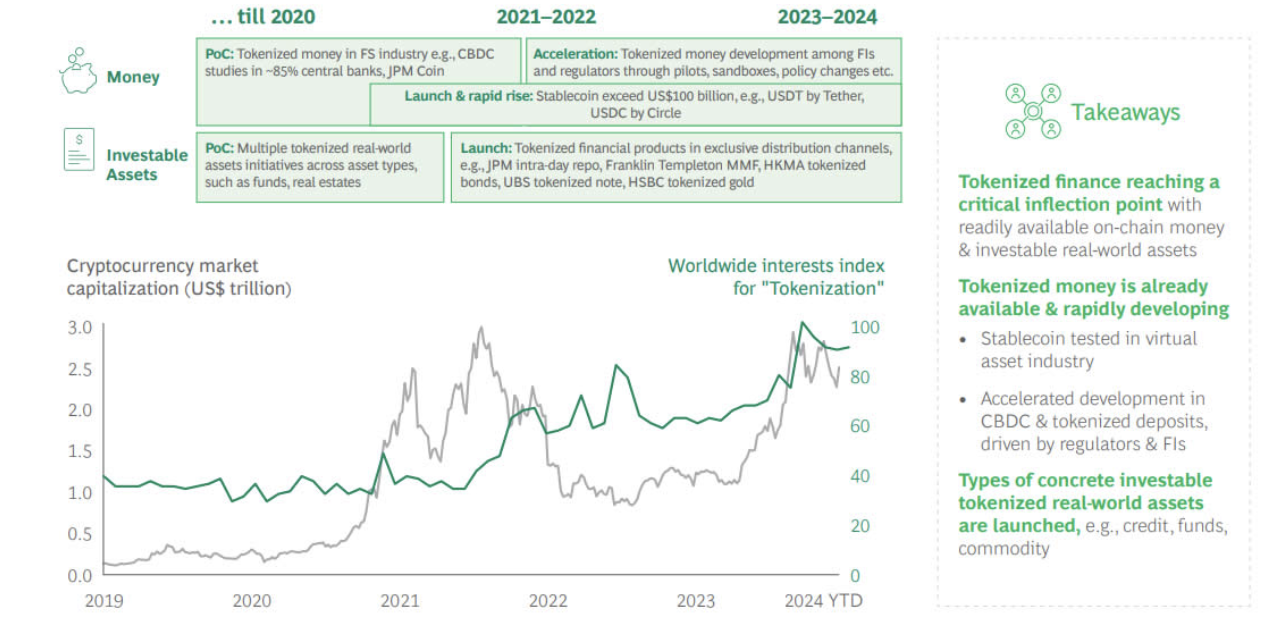
资产

代币化现实世界金融资产的发展。资料来源:BCG

此外,道富环球投资管理公司的另一篇论文指出,债券有望引领代币化现实世界资产的大规模采用,因为债券的结构特征使其成为区块链发行的理想选择。

道富环球投资管理公司的研究人员在 10 月份关于资本市场资产代币化的报告中写道:“债券市场已经成熟,可以采用代币化资产。”

宏观政策研究主管 Elliot Hentov 和宏观政策策略师 Vladimir Gorshkov 表示:“这些工具的复杂性、发行成本的重复性以及中介机构之间的激烈竞争,既支持快速采用,也支持产生重大影响。”

他们补充说,区块链技术可以在“重视交易速度的市场(如回购和掉期)”中发挥重要作用。

报告解释说,债券本质上是具有固定到期日的债务工具,具有三个主要特征,使其非常适合代币化:可以通过代币化降低的经常性成本、可以通过智能合约自动化的复杂性以及可以通过链上转移促进的抵押品使用。
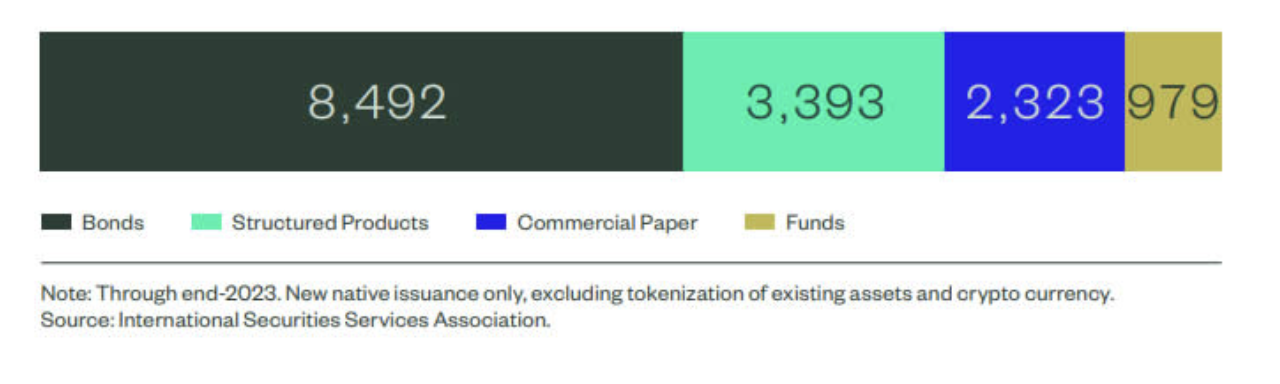
资产

债券市场是代币化已经可见的市场。资料来源:道富银行

报告还指出,私募股权基金表现出较高的变革潜力,但由于现有系统运行良好,公开股权基金的采用潜力较低。

研究人员表示,房地产和个人私募股权代币化面临重大挑战,大宗商品具有直接所有权的潜力,但面临监管限制。

金融稳定委员会本月还发布了一份关于资产代币化的研究报告。它表示,RWA 代币化的采用率较低,但正在增长,其中大多数代币化用于政府债务,其次是债务基金、支付代币和大宗商品的股权。

行业分析平台 rwa.xyz 在 10 月 29 日 X 上的一篇文章中指出,机构和资产管理公司的 RWA 研究论文最近有所增加。

该平台表示,RWA 非链上总价值为 132.5 亿美元,今年迄今增长了 60%。

Related Reads

Embodied Intelligence 'Gaokao' is Insanely Hard, Humans Score 100, Best Model Only 12.8

Embodied AI Faces a Daunting "Everest": New Benchmark Reveals Huge Gap Between Models and Humans A comprehensive new benchmark for robotic manipulation, RoboDojo, has been released, painting a stark picture of the current state of embodied AI. It serves as a unified evaluation platform covering both simulation and real-world robot tasks. The benchmark assesses five core capabilities: Generalization (adapting to new scenes/objects), Memory, Precision manipulation, Long-Horizon multi-step tasks, and Open semantic understanding. It includes 42 simulation tasks and 18 standardized real-world tasks across three dual-arm robot platforms. The results are sobering. In simulation, the best-performing generalist robot policy achieved an average success rate of only 8.80%. Performance in the real world was slightly higher but still low, with the top model succeeding 12.8% of the time on average. In stark contrast, human experts scored 76.03% in simulation and 100% in real-world tests. The benchmark highlights significant, uneven gaps in current models' abilities. While some excel in specific areas like visual recognition or simple actions, they struggle with reliability, especially in long-horizon tasks where errors accumulate and in open-ended semantic instructions. The low scores, particularly in real-world deployment with physical uncertainties like camera noise and contact dynamics, underscore that today's models are far from being robust, general-purpose operational robots. RoboDojo is more than just a ranking; it's an infrastructure designed for fair, reproducible comparison. Its companion system, XPolicyLab, standardizes the interface for different models to be evaluated. Maintained by an academic consortium without commercial ties, it aims to provide a community-wide "altitude meter" to track genuine progress toward reliable and generalizable robot manipulation.

marsbit1h ago

Embodied Intelligence 'Gaokao' is Insanely Hard, Humans Score 100, Best Model Only 12.8

marsbit1h ago

Trading

Spot
活动图片