一周代币解锁:TAIKO、PIXEL、AXS、EIGEN将有高比例解锁

Odaily星球日报Pubblicato 2024-10-13Pubblicato ultima volta 2024-10-13

Introduzione

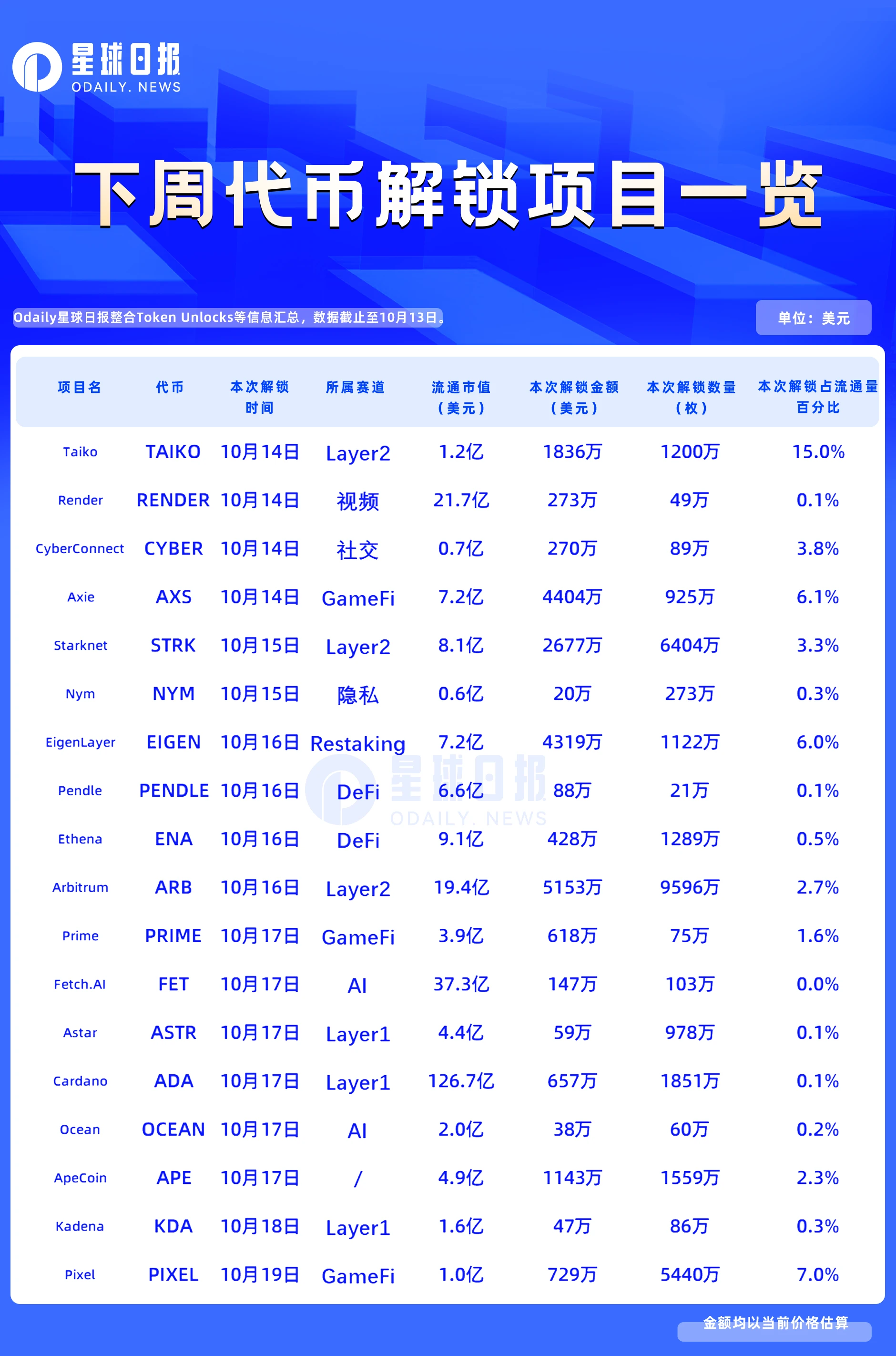
18个项目共2.3亿美元解锁来袭。

下周, 18 个项目迎来代币解锁事件,TAIKO、PIXEL、EIGEN、AXS 解锁超 5% 。
一周代币解锁:TAIKO、PIXEL、AXS、EIGEN将有高比例解锁

Taiko

项目推特:https://twitter.com/taikoxyz

项目官网:https://taiko.xyz/

本次解锁数量: 1200 万枚

本次解锁金额:约 1836 万美元

Taiko 是一个以太坊等效的 ZK-Rollup,通过在去中心化、无需许可且安全的 Layer 2 架构中支持所有 EVM 操作码来扩展以太坊。

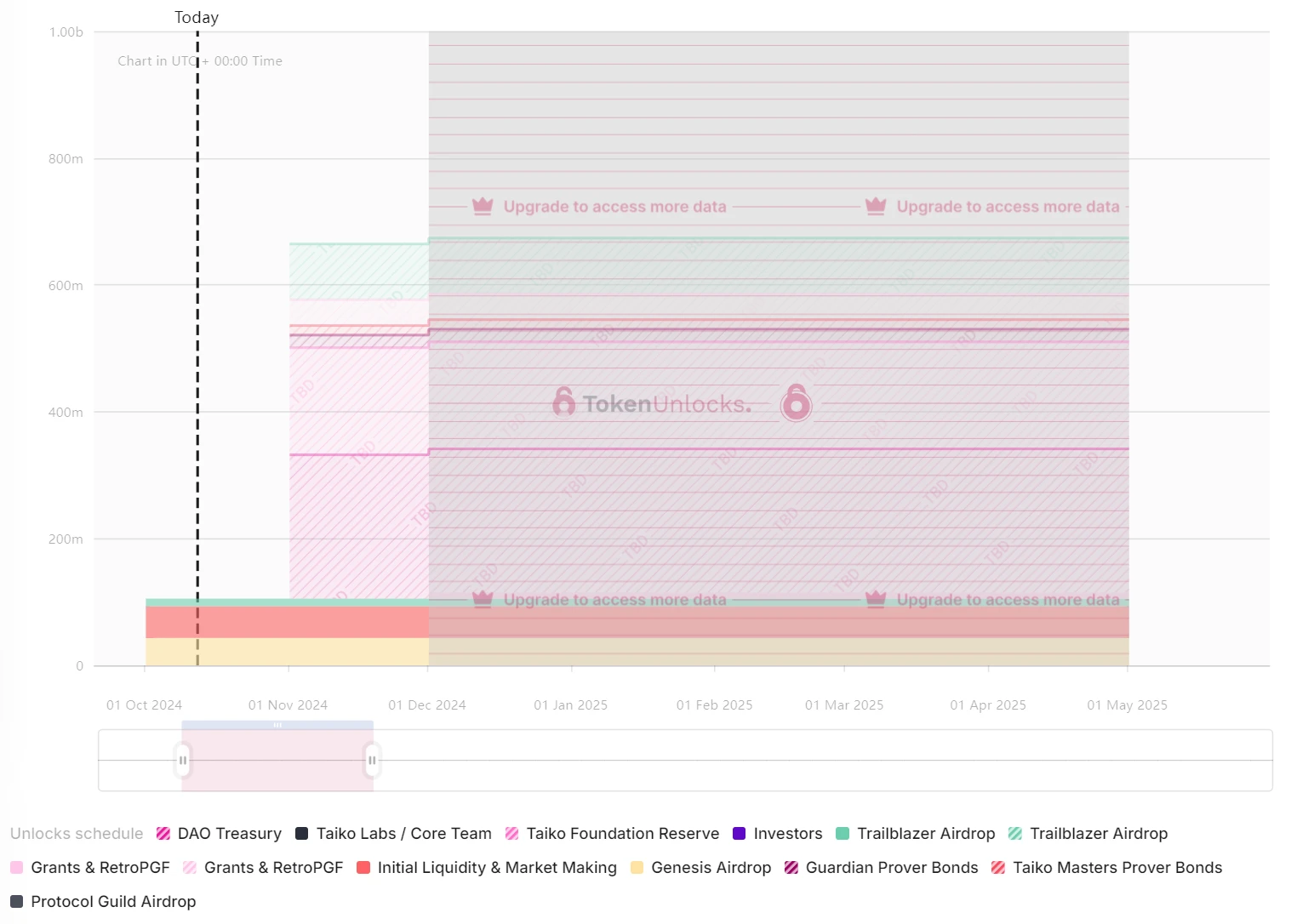
TAIKO 当前流通量仅为 9% ,本轮解锁全部用于 Trailblazer 空投,共 1200 万枚,价值 1836 万美元。

具体释放曲线如下:
一周代币解锁:TAIKO、PIXEL、AXS、EIGEN将有高比例解锁

Pixels

项目推特:https://twitter.com/pixels_online

项目官网:https://www.pixels.xyz/

本次解锁数量: 5440 万枚

本次解锁金额:约 729 万美元

Pixels 是一款元宇宙农场P2E游戏,于 2021 年推出,以 16 位像素风格为特色,为玩家提供在像素世界中互动、耕种、游玩迷你游戏并获得代币奖励。允许使用 PFP 类型的 NFT 作为游戏头像。

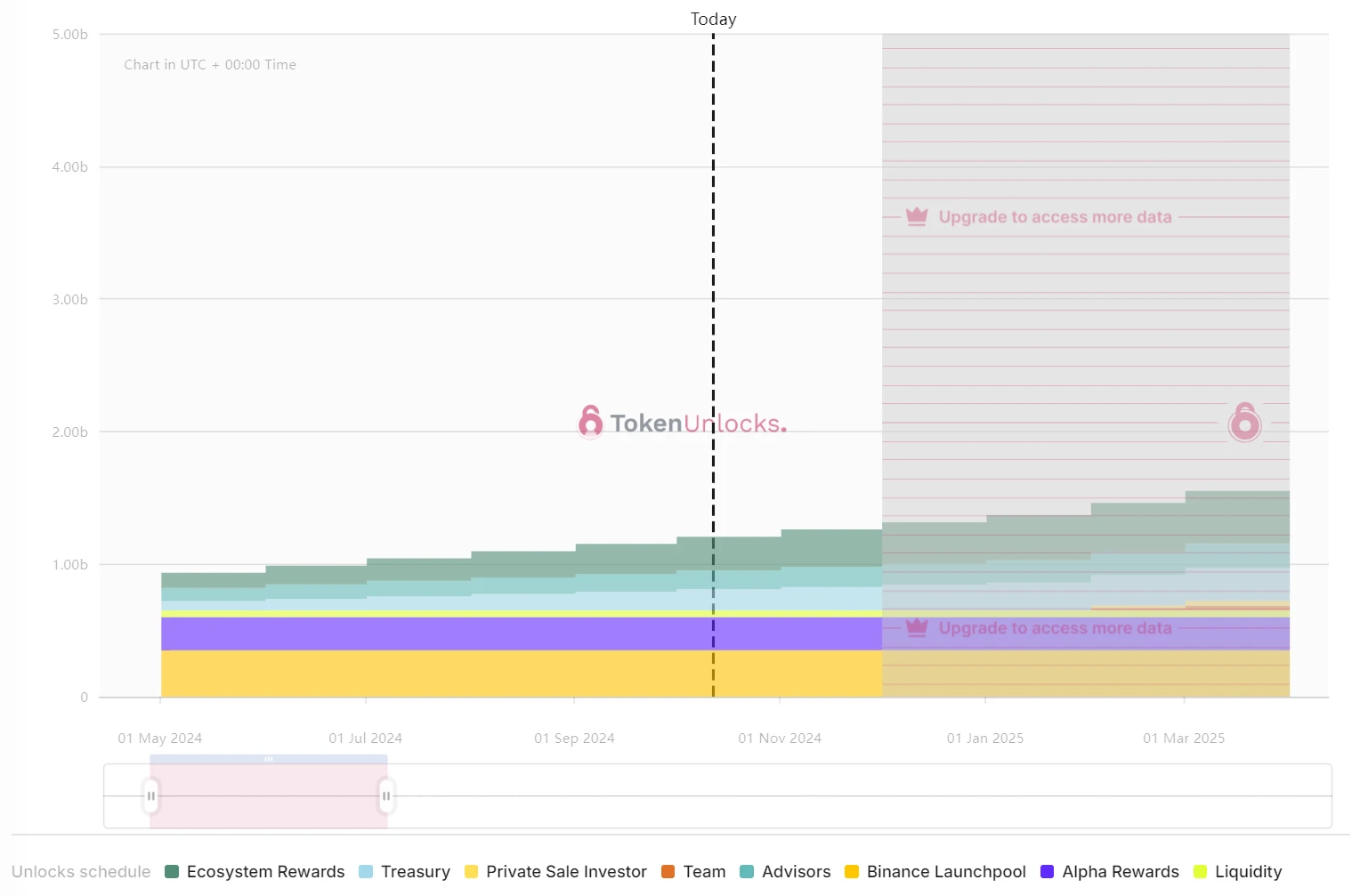
Pixels 继续进行常规 Cliff 解锁,分别为生态奖励 2833 万枚(346 万美元)、财库 1771 万枚(216 万美元)、顾问 833 万枚(102 万美元)。

具体释放曲线如下:
一周代币解锁:TAIKO、PIXEL、AXS、EIGEN将有高比例解锁

Axie Infinity

项目推特:https://twitter.com/axieinfinity

项目官网:https://axieinfinity.com/

本次解锁数量: 925 万枚

本次解锁金额:约 4404 万美元

Axie Infinity 是一款 Sky Mavis 开发的卡片游戏,允许玩家繁殖、饲养、战斗和交易 Axie 生物。玩家可以在冒险或竞技场模式下使用 Axie Infinity 获得两个代币,分别是 AXS 与 SLP。AXS 作为治理代币,允许代币持有者就游戏的未来发展进行投票。SLP 是游戏中用来繁殖 Axies 的代币。

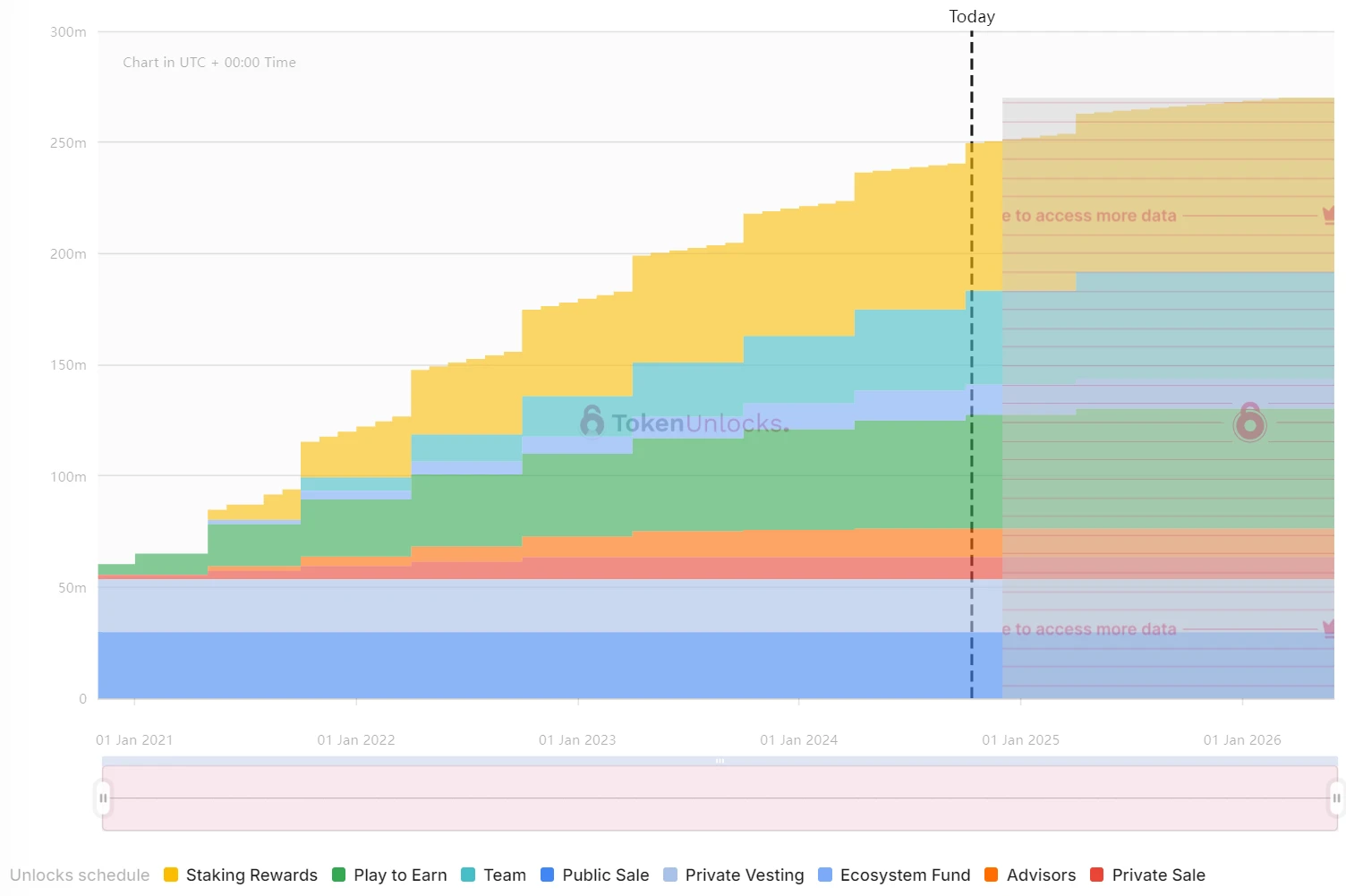
AXS 全解锁即将完成,当前流通量达到 89% ,本轮解锁分别包括团队 574 万枚(2547 万美元)、游戏奖励 270 万枚(1199 万美元)、质押 81.5 万枚(362 万美元)。

具体释放曲线如下:
一周代币解锁:TAIKO、PIXEL、AXS、EIGEN将有高比例解锁

EigenLayer

项目推特:https://x.com/eigenlayer

项目官网:https://www.eigenlayer.xyz/

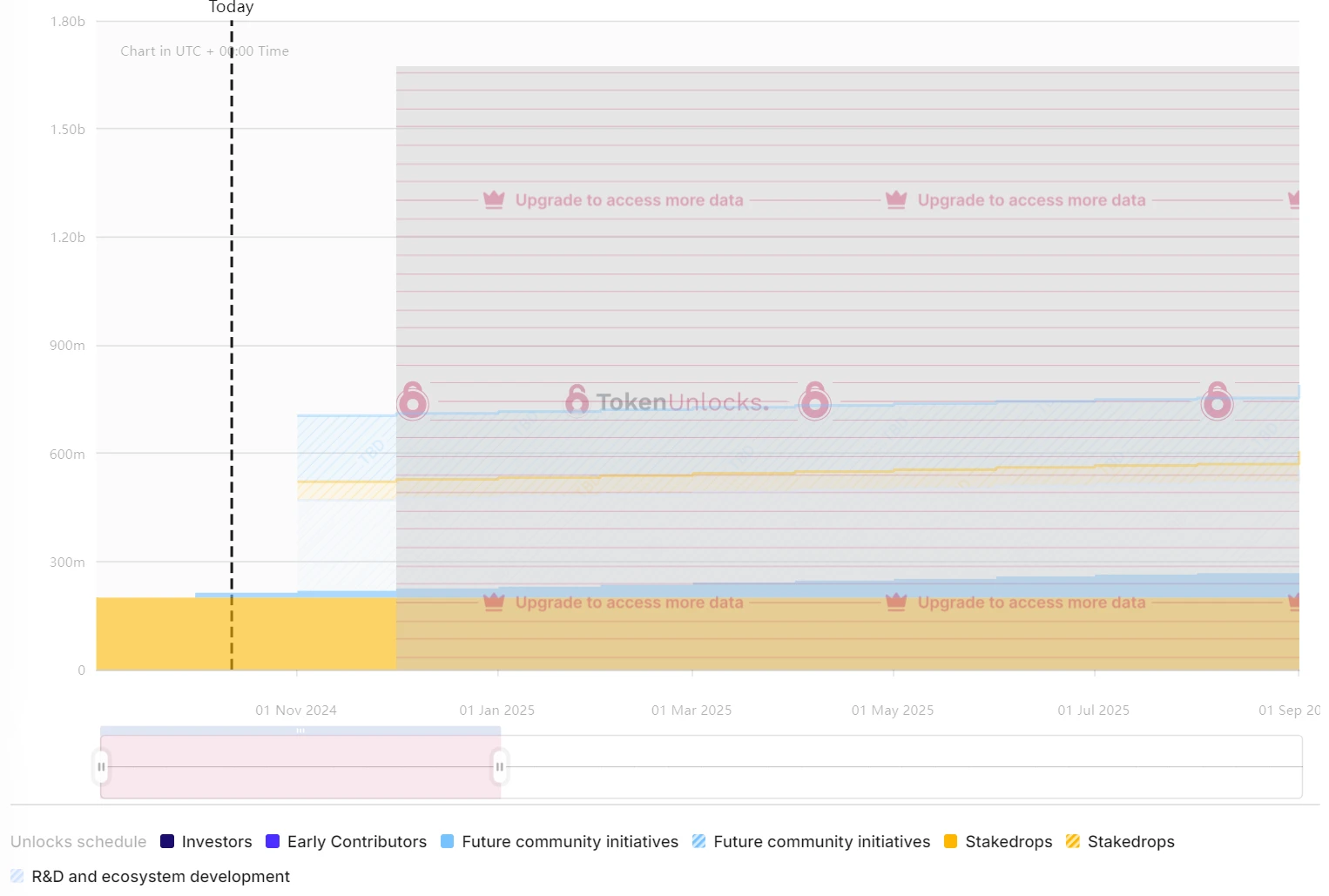
本次解锁数量: 1122 万枚

本次解锁金额:约 4319 万美元

EigenLayer 是一种建立在以太坊之上的协议,它引入了再质押概念,这是加密经济安全中的一种新原语。该原语允许在共识层上再质押 ETH。质押 ETH 的用户可以选择加入 EigenLayer 智能合约以重新质押他们的 ETH 并将加密经济安全性扩展到网络上的其他应用程序。

本轮解锁全部为“未来社区激励”,共 1122 万枚,价值 4173 万美元。

具体释放曲线如下:
一周代币解锁:TAIKO、PIXEL、AXS、EIGEN将有高比例解锁

Letture associate

Six Complaints from an Ethereum Developer

A disgruntled early Ethereum developer and token holder presents six core criticisms of the project's trajectory, contrasting it with Solana's rise. 1. **Premature Complacency**: The Ethereum Foundation shifted from a "building" to an "infrastructure" mindset too soon, adopting a passive, "retired chairman" posture before securing market dominance, reflected in ETH's ~65% decline against BTC post-Merge. 2. **Misguided Messaging**: The Merge was marketed primarily on ESG (99.95% energy reduction) rather than user benefits like speed or yield, appealing to internal ideals instead of market demands. 3. **Delayed Execution**: Proof-of-Stake, on the roadmap since 2015, took seven years to launch, ceding critical narrative and development windows. Competitors like Solana built entire ecosystems in that time. 4. **Poor Native Staking UX**: Years after the Merge, there is still no first-party, user-friendly staking application, forcing reliance on centralized services like Lido and undermining ETH's "sound money" narrative. 5. **Managed Decline**: The rollup-centric roadmap deliberately weakens the base layer's fee capture, outsourcing value and profitability to L2s like Arbitrum and Base, which issue their own tokens and fragment capital. 6. **Ideology Over Product**: Ethereum culture prioritizes philosophical purity ("credible neutrality," "public goods") over competitive product delivery that meets user demands (e.g., financialization), while Solana's ecosystem focuses on coordinated execution. The diagnosis is accumulated execution debt, not a coordination failure. Ethereum possessed a structural advantage in 2021 but spent years in governance debates, while Solana efficiently executed. The current market cap reflects these specific strategic failures, not abstract theory.

marsbit19 min fa

Six Complaints from an Ethereum Developer

marsbit19 min fa

Six Complaints from an Ethereum Developer

Six Grievances from an Ethereum Developer The author, an early investor and developer still building on Ethereum, expresses deep frustration with its trajectory and declining ETH/BTC price since the merge. The core argument is that Ethereum's current market position stems from concrete failures in execution and strategy, not abstract coordination problems. The first grievance targets a shift in the Ethereum Foundation's mentality from builders to "infrastructure," adopting a premature posture of a retired victor. Second, marketing the Merge around ESG (99.95% energy reduction) is seen as talking to its own conscience rather than the market, which prioritizes user experience and yield. Third, the seven-year delay in delivering Proof-of-Stake (PoS) ceded critical narrative and development time to competitors like Solana. Fourth, three years post-merge, there is still no user-friendly first-party staking application, forcing reliance on centralized services like Lido and undermining ETH's monetary narrative. Fifth, the rollup-centric roadmap has strategically surrendered base-layer fee capture to L2s, fragmenting value within the ecosystem while Solana demonstrates an integrated L1's value accrual. Finally, the author criticizes an institutional culture that prioritizes philosophical ideals (credible neutrality, pluralism) over competitive product delivery focused on what users actually want. The diagnosis is "accumulated execution debt." Ethereum possessed a structural advantage in 2021 but spent years in governance debates, while Solana's ecosystem coordinated efficiently to deliver and capture the next wave of value. The conclusion is that Ethereum's market cap reflects its abandonment of the fight for asset appreciation.

链捕手28 min fa

Six Complaints from an Ethereum Developer

链捕手28 min fa

Token Budget Wars: Enterprise AI Enters the 'Accounting Era'

Token Budget Wars: Enterprise AI Enters the "Accounting Era" Enterprise AI is shifting from the question of "whether to adopt" to "how to account for it." As AI inference costs evolve from experimental budgets into ongoing operational expenses, CEOs and CFOs are demanding proof of value: what tangible results does each dollar spent on tokens deliver? The core of "Token Budget Wars" is not simply about reducing AI bills, but about intelligently allocating compute resources. It involves determining which business processes warrant more computational power, which tasks can use cheaper models, which can be outsourced or handled manually, and which are merely inefficient consumption. A key insight is that AI usage (token consumption) does not equal value. While SaaS usage indicated software adoption, AI token usage only indicates the "meter is running." The same workflow can cost vastly different amounts due to factors like prompt quality, context, model choice, and retries. The critical metric for scaling is "marginal token utility"—the business value created per additional dollar of inference cost. However, this is difficult to measure due to challenges like the long tail of retries, context inflation (where costs can scale quadratically with context length), and inefficient model routing (defaulting to the most powerful model for all tasks). The competition for token allocation is intensifying because, in the AI era, influence is tied to how much intelligence one can command, not just team size. AI spending is essentially competing with labor costs, whether for replacing external BPOs, internal staff, or generating new revenue. BPO contracts provide a clearer benchmark as they are priced per completed unit. The missing layer is attribution from tokens to business outcomes. Companies need a system that connects inference spending to completed work and results, capturing the agent's decision trajectory—what it saw, retrieved, tried, and why it succeeded or failed. This recorded rationale becomes a valuable asset. Ultimately, those who master token-to-outcome attribution will control the allocation of AI resources within enterprises, deciding which workflows get more compute, which are capped, or which revert to humans. The first phase of enterprise AI proved models could do the work. The next phase will determine how much of that work is worth paying for.

marsbit54 min fa

Token Budget Wars: Enterprise AI Enters the 'Accounting Era'

marsbit54 min fa

Trading

Spot
Futures

Articoli Popolari

Come comprare TAIKO

Benvenuto in HTX.com! Abbiamo reso l'acquisto di Taiko (TAIKO) semplice e conveniente. Segui la nostra guida passo passo per intraprendere il tuo viaggio nel mondo delle criptovalute.Step 1: Crea il tuo Account HTXUsa la tua email o numero di telefono per registrarti il tuo account gratuito su HTX. Vivi un'esperienza facile e sblocca tutte le funzionalità,Crea il mio accountStep 2: Vai in Acquista crypto e seleziona il tuo metodo di pagamentoCarta di credito/debito: utilizza la tua Visa o Mastercard per acquistare immediatamente TaikoTAIKO.Bilancio: Usa i fondi dal bilancio del tuo account HTX per fare trading senza problemi.Terze parti: abbiamo aggiunto metodi di pagamento molto utilizzati come Google Pay e Apple Pay per maggiore comodità.P2P: Fai trading direttamente con altri utenti HTX.Over-the-Counter (OTC): Offriamo servizi su misura e tassi di cambio competitivi per i trader.Step 3: Conserva Taiko (TAIKO)Dopo aver acquistato Taiko (TAIKO), conserva nel tuo account HTX. In alternativa, puoi inviare tramite trasferimento blockchain o scambiare per altre criptovalute.Step 4: Scambia Taiko (TAIKO)Scambia facilmente Taiko (TAIKO) nel mercato spot di HTX. Accedi al tuo account, seleziona la tua coppia di trading, esegui le tue operazioni e monitora in tempo reale. Offriamo un'esperienza user-friendly sia per chi ha appena iniziato che per i trader più esperti.

116 Totale visualizzazioniPubblicato il 2024.12.10Aggiornato il 2025.03.21

Come comprare TAIKO

Discussioni

Benvenuto nella Community HTX. Qui puoi rimanere informato sugli ultimi sviluppi della piattaforma e accedere ad approfondimenti esperti sul mercato. Le opinioni degli utenti sul prezzo di TAIKO TAIKO sono presentate come di seguito.

活动图片













