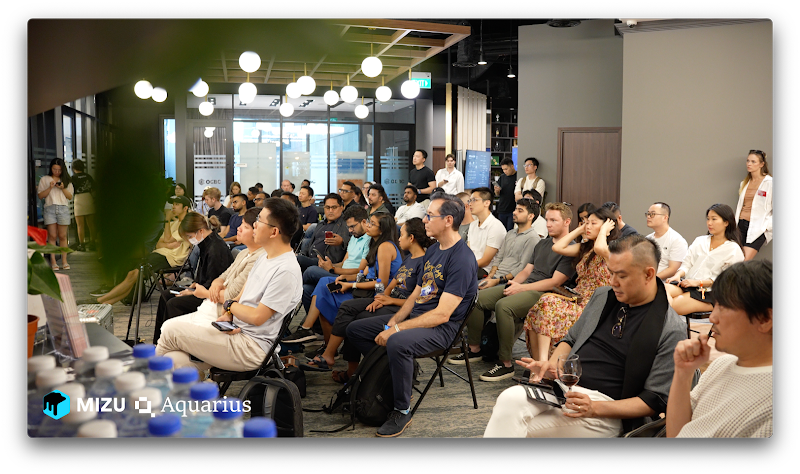
Token2049 Infra x AI Day 在新加坡汇聚 AI 和区块链创新者

链得得Published on 2024-09-30Last updated on 2024-10-06

活动亮点

  • Crypto for Open Source AI Panel:由 Sentient 的业务发展总监 Sachi Kamiya 主持,此小组讨论深入探讨了加密货币和区块链在推动开放和去中心化的 AI 生态系统中的关键作用。Polychain Capital 的首席技术官 Abhijeet Mahagaonkar 强调了去中心化融资模式在支持 AI 研究与开发中的重要性,并解释了区块链如何保障数据流动并激励全球合作。MyShell 联合创始人 Ethan Sun 分享了 MyShell 如何利用区块链技术提升透明度并简化 AI 数据处理。Sentient 联合创始人 Himanshu Tyagi 详细阐述了 Sentient 对开放 AGI(通用人工智能)经济的愿景,推动 AI 开发者通过去中心化市场进行合作和模型变现。Mizu 联合创始人 Sam Z  强调了 Mizu 去中心化 AI 数据收集平台如何革新数据的收集和共享,提供了可扩展的去中心化 AI 系统基础设施。小组成员一致认为,加密货币和区块链的结合正在推动 AI 发展民主化,增强信任并促进创新。
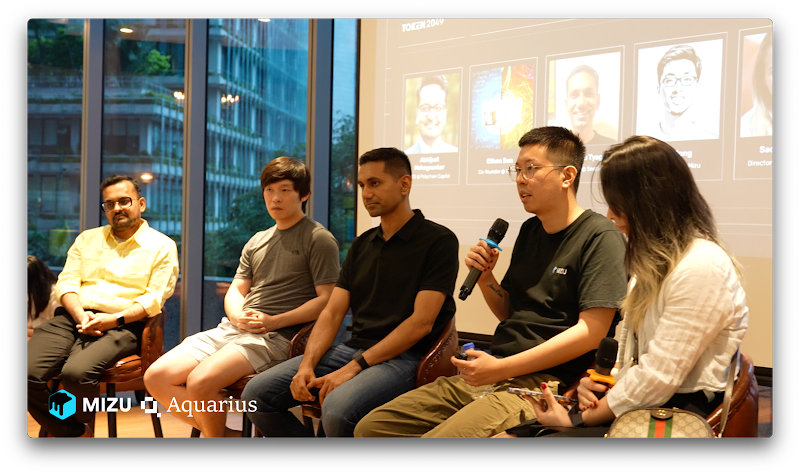
  • DePIN x AI Panel:由 Hack VC 合伙人 Chichi Hong 主持,该小组探讨了去中心化物理基础设施网络(DePIN)与人工智能(AI)之间的强大协同效应。Hyperbolic 首席执行官 Jasper Zhang 开场介绍了 Hyperbolic 如何利用 DePIN 去中心化云计算资源,使 AI 模型在分布式基础设施上更高效且具有可扩展性。Aquarius 合伙人 Lin Yang 从投资角度分析了链上资产流动性与AI与depin结合的新趋势,使用链上资产价值在安全性进行增强的新场景。Zero Gravity 首席技术官 Ming Wu 强调了 DePIN 如何让 AI 系统访问实时、分布式的数据,从而提升系统的可扩展性和安全性。NEAR 生态系统负责人 Jarrod Barnes 介绍了 NEAR 如何通过去中心化代币经济激励 DePIN 网络的参与和发展,确保 AI 在去中心化环境中茁壮成长。小组总结了 DePIN 与 AI 的结合如何颠覆传统的集中式模型,提供更公平、可扩展且安全的解决方案,涉及云计算、物联网和物流等行业。

活动主办方与合作伙伴

此次峰会由 Mizu 主办。Mizu 是一家致力于建立全球最大开放式 AI 数据收集网络的领先公司。Mizu 的去中心化基础设施允许从移动用户到 GPU 云运营商等广泛的参与者共同合作,构建一个可扩展、安全的 AI 数据解决方案。

Sentient 作为共同主办方之一,处于开放 AGI 经济发展的前沿。Sentient 正在打造平台和协议,使 AI 开发者能够通过模型和数据的变现进行合作,推动去中心化 AI 创新。

Aquarius Capital 也是此次峰会的共同主办方之一。这是一家研究驱动型的风投公司和流动性基金,管理着超过 6 亿美元的资产。Aquarius 在链上流动性管理中处于领先地位,尤其专注于质押和重质押项目,并在推动 AI 和区块链技术方面发挥着重要作用。
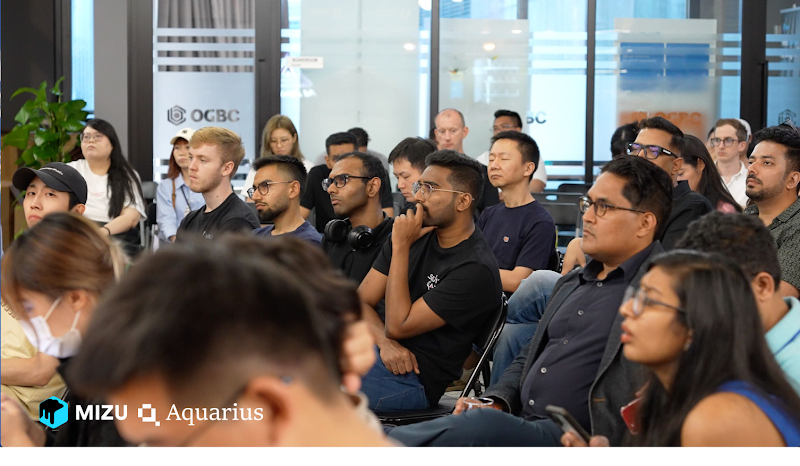
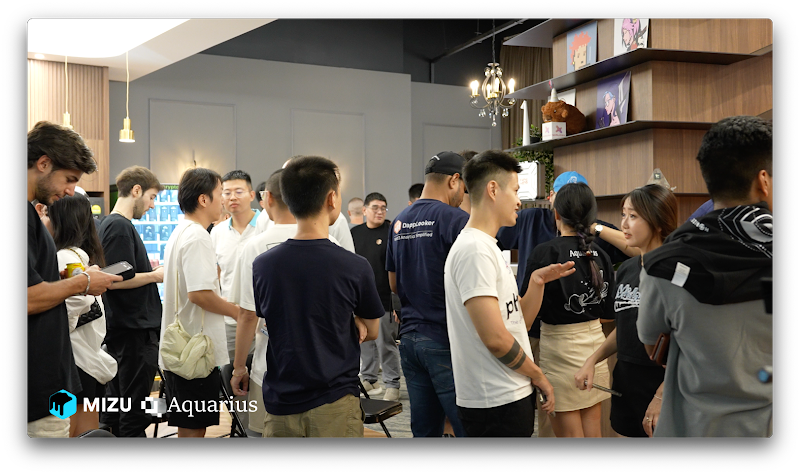
 

合作伙伴

此次峰会得到了众多创新合作伙伴的支持,包括:

  • Mind Network,首个为 AI 和权益证明(PoS)网络设计的完全同态加密(FHE)重质押层,为去中心化 AI 系统中的数据和代币经济提供安全保障。
  • EdgeAI,一个以数据为中心的区块链项目,致力于帮助 AI 开发者构建前沿的去中心化应用程序(dApps),并利用边缘数据。
  • ScalingX,一家全球 Web3 风投公司和加速器,支持 Web3 和区块链技术在新加坡、香港和旧金山的发展。
  • DEAR(去中心化实体 AI 数据库),一个致力于通过创建全球最大的 3D 训练数据存储库来民主化 3D 数据捕获和创建的项目,为 AI 开发提供支持。
  • Axlflops,一个 DePIN 网络,致力于民主化 AI 计算资源,以满足分布式计算能力日益增长的需求。
  • MagnetAI,一个允许用户创建、共享和使用 AI 驱动的自动化行动代理的平台。

媒体合作伙伴

此次峰会获得了主要媒体合作伙伴的大力支持和广泛报道,包括 ODaily、PANews、ChainCatcher、BlockBeats、MetaEra、ChainDD 和 TechFlame,确保活动得到了广泛的关注和参与。

Token2049 Infra x AI Day 展示了 AI 与区块链交汇处的切实进展,重点展示了去中心化技术的实际应用。此次活动聚焦于 DePIN 和 AI 驱动的创新,突显了这些技术在变革云计算、自动化系统和数据安全领域的迫切潜力。

链得得仅提供相关信息展示,不构成任何投资建议

Related Reads

Morning News | Coinbase Partners with Standard Chartered to Expand Multi-Currency Fiat Channels; Sharplink and Forward to be Included in Russell Indices; JPMorgan May Issue Stablecoin in the Future

Daily Crypto Recap: Key Developments Institutional adoption continues: Coinbase partners with Standard Chartered to expand multi-currency fiat rails for institutions via Coinbase Prime, supporting AUD, SGD, CAD, CHF, EUR, and GBP. Meanwhile, Sharplink and Forward Industries, companies holding significant ETH and SOL reserves respectively, are set to be included in the Russell indexes, providing indirect crypto exposure to traditional index investors. Regulatory and compliance moves are in focus. Hong Kong's monetary authority announced new measures for investment accounts of mainland Chinese investors, including retroactive document checks to January 2023. Prediction market Polymarket is considering implementing KYC requirements to address sanctions and legal risks. Major financial players signal deeper involvement. JPMorgan Chase CEO Jamie Dimon suggested the bank might issue a stablecoin in the future. Concurrently, Falcon Finance and Anchorage Digital launched fUSD, a compliant, institution-focused stablecoin. Market sentiment presents a mixed picture. Bitmine's Tom Lee predicts an incoming crypto "supercycle," driven by Wall Street tokenization and AI agents, with Ethereum as a key beneficiary. However, a prominent trader cautions that the current period of investor losses may not be long enough to confirm a bear market bottom, and TD Cowen analysts note diminished chances for U.S. crypto market structure legislation this year due to a worsening political climate. Other notable news includes a16z crypto's observation that most tokenized assets are merely "digitized" and not actively used in DeFi, South Korea's crypto trading volume falling to about 8% of KOSPI's, and the Chinese Supreme Court stating it will research judicial rules for virtual currency cases.

链捕手7m ago

Morning News | Coinbase Partners with Standard Chartered to Expand Multi-Currency Fiat Channels; Sharplink and Forward to be Included in Russell Indices; JPMorgan May Issue Stablecoin in the Future

链捕手7m ago

Sitting on a Trillion-Dollar Market, Why Hasn't Real Estate Tokenization Taken Off?

For years, real estate tokenization has been hailed as a breakthrough technology poised to democratize property investment. In theory, it promises fractional ownership of premium assets, rapid transactions, and enhanced liquidity. Yet, in practice, it has failed to gain traction, accounting for less than 0.1% of the global real estate market. The core issue is not a lack of tokens, but the absence of a robust legal, operational, and compliant framework that grants them credibility as financial instruments. The industry initially erred by prioritizing technology over investor needs, creating products with unclear ownership and unreliable liquidity. Key infrastructure remains missing: legally sound ownership structures, compliant transfer mechanisms, professional servicing, and interoperability with traditional finance. This regulatory ambiguity and operational complexity deter institutional investors, who already have access to established, well-governed investment channels. A mature model would feature low minimum investments in institutional-grade assets, transparent rental income distribution, and genuine liquidity through regulated secondary markets. While regulatory progress in regions like the UAE and growth in other tokenized asset sectors (like treasuries) are positive signs, the focus must shift from issuing tokens to building foundational systems. The investment proposition of tokenized real estate is not to create new returns, but to improve access, efficiency, and liquidity for existing income-generating properties. For mainstream adoption, the sector must demonstrate tangible economic advantages over traditional models, not just technical novelty. The next phase depends on proving scalable, compliant operations with auditable track records. The barrier is no longer technology, but infrastructure and regulation. The vision remains unfulfilled until this gap is bridged.

marsbit11m ago

Sitting on a Trillion-Dollar Market, Why Hasn't Real Estate Tokenization Taken Off?

marsbit11m ago

Large Language Models Ace All Exams, Yet Move Farther from AGI: What Does This Paper Reveal?

The article discusses the ongoing challenge of defining and achieving Artificial General Intelligence (AGI). It notes that industry leaders have set vague, often profit- or time-based benchmarks for AGI, while the concept itself lacks a consensus definition—a situation the article compares to a "Rorschach test." It highlights a recent 2025 paper by researcher Michael Timothy Bennett, who proposes a new, measurable definition. Bennett frames AGI not as mimicking human performance on tests, which current large language models (LLMs) have already mastered, but as an "artificial scientist." A true AGI, according to this view, should be able to widely and efficiently adapt to new environments and tasks within real-world constraints (like computational and energy limits), focusing on the *discovery of new knowledge* rather than the replication of existing data. The author contrasts this with the current dominant approach of "scale-maxing"—massively scaling up data, parameters, and compute. While powerful, this method leads to models that fail on out-of-distribution problems and lack core intelligent abilities: they are passive learners, cannot reason causally, and cannot actively experiment or balance exploration with exploitation. The article argues that Bennett's framework offers a crucial shift. It makes AGI a quantifiable engineering problem and proposes new evaluation "adaptation benchmarks" that test an AI's ability to actively learn in novel scenarios. The conclusion is that achieving AGI will require a fundamental reset—a fusion of multiple methodologies beyond simple scaling, moving AI from mimicking patterns to embodying the scientific spirit of inquiry and discovery.

marsbit1h ago

Large Language Models Ace All Exams, Yet Move Farther from AGI: What Does This Paper Reveal?

marsbit1h ago

Pope Issues First AI Encyclical: 40,000 Words, 10 Key Points, Clarifying AI Anxiety

Pope Leo XIV's historic encyclical "Magnifica Humanitas," released in May 2026, marks the Catholic Church's first major document addressing artificial intelligence. The 40,000-word text moves beyond theological abstraction to confront practical AI anxieties affecting society. It argues that AI is no longer a mere tool but an embedded environment influencing daily decisions in areas like employment, healthcare, justice, and information, often without users' awareness. The encyclical presents ten core concerns. It highlights that the central issue isn't just regulation, but who holds the underlying *power*—control over data, compute, and platforms—often concentrated in private entities. It warns that even developers cannot fully explain AI systems, creating accountability gaps. While AI can simulate human interaction and creativity, it cautions against treating it as a moral agent capable of bearing true responsibility or forming genuine relationships. Key risks identified include AI's role in opaque decision-making for jobs or welfare, the amplification of persuasive disinformation, and the potential for education to focus on tool use over critical thinking. The document stresses that work has value beyond efficiency, and AI should enhance human capabilities, not merely replace roles. It firmly states that irreversible decisions, especially involving life and death, must remain under human judgment. Ultimately, the encyclical frames AI's challenge as anthropological, not just technological. As AI simulates uniquely human capacities like judgment and creation, it forces a re-examination of what makes human action meaningful: our capacity for responsibility, vulnerability, and bearing real consequences. The Pope concludes that technology is never neutral; its development and deployment are shaped by human values and choices, making an inclusive, ethically grounded dialogue essential for its future.

marsbit1h ago

Pope Issues First AI Encyclical: 40,000 Words, 10 Key Points, Clarifying AI Anxiety

marsbit1h ago

Trading

Spot
Futures

Hot Articles

Discussions

Welcome to the HTX Community. Here, you can stay informed about the latest platform developments and gain access to professional market insights. Users' opinions on the price of AI (AI) are presented below.

活动图片