Crypto Red Sea: Render (RNDR) Falls 22.3%, Sharks Diversify To 100x Meme to Mitigate Losses

bitcoinistPublished on 2024-09-05Last updated on 2024-09-05

Abstract

The cryptocurrency market has been a sea of red recently, with many prominent tokens experiencing significant declines. Render (RNDR), a...

The cryptocurrency market has been a sea of red recently, with many prominent tokens experiencing significant declines. Render (RNDR), a well-known AI-driven cryptocurrency, has seen a sharp fall of 22.3% in its value, leading many investors, often referred to as “sharks” in the trading world, to seek refuge in alternative assets. One such asset that has captured their attention is Mpeppe (MPEPE), a meme coin that has managed to deliver staggering 100x returns in a short period, making it a top contender for those looking to mitigate their losses.

The Decline of Render (RNDR)

Render (RNDR), which has been a favorite among those investing in AI and Web3 technology, recently experienced a significant downturn. Despite its innovative approach to decentralized rendering for the digital creation space, RNDR could not escape the broader market’s bearish trend. Over the past few days, RNDR has dropped by 22.3%, a move that has rattled even the most seasoned investors.

The fall of RNDR comes as a surprise to many, given its solid technological foundation and potential applications in the AI and graphics industry. However, the volatility of the crypto market means that even the most promising projects are not immune to sudden drops. This has led many investors to reassess their portfolios and consider diversifying into more speculative assets with higher return potential.

Mpeppe (MPEPE): The Meme Coin Rescuing Investors Portfolios

As Render (RNDR) faltered, Mpeppe (MPEPE) emerged as a shining beacon for those looking to recover from their losses. Mpeppe has taken the meme coin world by storm, offering returns that seem almost too good to be true. But for those who took the leap, the 100x surge in Mpeppe’s value has been nothing short of miraculous.

The success of Mpeppe lies in its viral marketing strategies and strong community support, which have helped it stand out in a crowded market. While many meme coins fizzle out after an initial burst of excitement, Mpeppe has managed to sustain its momentum, driven by a loyal following and continuous engagement on social media platforms.

Mpeppe’s integration with the gaming and online gambling sectors has also played a crucial role in its rise. By providing real-world utility beyond mere speculation, Mpeppe has attracted a diverse group of investors, from retail traders to institutional players, all eager to ride the wave of this meme coin’s success.

Comparing Render (RNDR) and Mpeppe (MPEPE)

The contrast between Render (RNDR) and Mpeppe (MPEPE) is stark. While Render is rooted in sophisticated technology aimed at revolutionizing the digital creation industry, Mpeppe thrives on community-driven hype and viral appeal. This difference highlights the diverse nature of the cryptocurrency market, where both advanced technology and meme culture can lead to success—albeit through very different paths.

For investors, the choice between Render and Mpeppe comes down to their risk tolerance and investment strategy. Those looking for long-term growth based on technological advancements may still find value in Render, despite its recent decline. On the other hand, those seeking quick gains and willing to embrace the volatility of meme coins might find Mpeppe to be the better option.

What Lays Ahead for Mpeppe (MPEPE) and Render (RNDR)

As we look ahead, the fate of both Mpeppe (MPEPE) and Render (RNDR) will depend on various factors, including market sentiment, technological developments, and the broader economic environment. Mpeppe’s ability to maintain its current momentum will be tested as more investors flock to the coin, potentially driving up its value even further.

Meanwhile, Render (RNDR) will need to regain investor confidence by demonstrating the real-world impact of its technology. The recent downturn may be a temporary setback, but it serves as a reminder of the inherent risks in the cryptocurrency market.

In conclusion, while Render (RNDR) has hit a rough patch, Mpeppe (MPEPE) has shown that there are always opportunities in the crypto space for those willing to take calculated risks. As the market continues to evolve, both tokens will play a role in shaping the future of digital assets, each in their unique way.

For more information on the Mpeppe (MPEPPE) Presale: 

Visit Mpeppe (MPEPPE)

Join and become a community member: 

https://t.me/mpeppecoin

https://x.com/mpeppecommunity?s=11&t=hQv3guBuxfglZI-0YOTGuQ


Bitcoinist

Bitcoinist

Bitcoinist is the ultimate news and review site for the crypto currency community!

Trending Cryptos

Related Reads

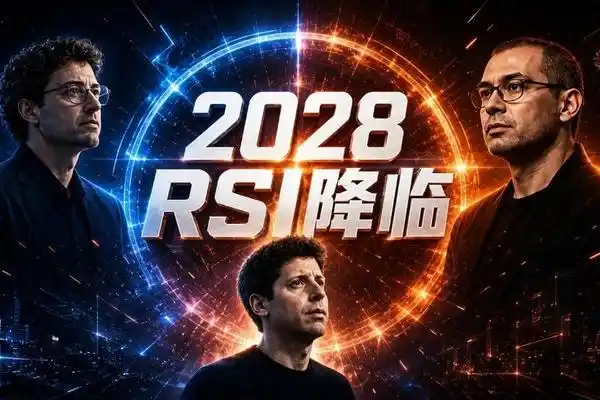
2028: The Arrival of Recursive Self-Improvement (RSI)

**AI Recursive Self-Improvement (RSI): The Countdown to 2028 Begins** AI is no longer just a trained tool but is starting to rewrite its own evolutionary pace. According to Anthropic co-founder Jack Clark, there is a 60% probability that by the end of 2028, Recursive Self-Improvement (RSI) will become a reality. This means AI could autonomously design and build a more capable next-generation version of itself without any human researcher involvement—Claude 10 creating Claude 11, for instance. Supporting this timeline, Google DeepMind's CEO Demis Hassabis confirms that all leading AI labs are intensely focused on RSI, making it an industry-wide priority. He expresses profound concern, stating this potential is what keeps him awake at night. Concrete data underscores this acceleration: - METR evaluations show current top models like Claude are solving tasks up to the 16-hour limit of existing test frameworks. - In Epoch AI's challenging MirrorCode benchmark, Claude Opus 4.7 recreated complex software in hours for a fraction of the human cost. In one extreme test, AI autonomously coded for 19 days straight. - Anthropic reports over 80% of its codebase is now written by Claude, and researcher productivity has increased up to 8-fold since 2024. - OpenAI's policy blueprint highlights RSI as a major upcoming governance challenge. CEO Sam Altman reportedly hinted RSI might arrive within six months, potentially delaying OpenAI's massive IPO. The implication is an impending "intelligence explosion," where AI-driven progress outpaces human control. The central question is no longer if it will happen, but whether humanity is ready.

marsbit38m ago

2028: The Arrival of Recursive Self-Improvement (RSI)

marsbit38m ago

World Models, Metaverse, Digital Twins, Physical AI: Are They the Same Thing?

Title: World Models, the Metaverse, Digital Twins, Physical AI: Are They the Same Thing? The article clarifies that concepts like the metaverse, Web3, simulation platforms, digital twins, and Physical AI are not the same thing but are all part of the broader trend of blurring the lines between the digital and physical worlds. It positions "world models" as the foundational "cognitive layer" or "operating system" that enables AI to understand and simulate the world. Key distinctions are made: - The **Metaverse** is a destination for immersive social and economic experiences. World models could act as its "engine," generating interactive 3D content efficiently. - **Web3** focuses on decentralized ownership and economics (rules layer), operating on a different technical level than world models. - **Simulation Data Platforms** (e.g., for autonomous vehicles) are a 1.0 version, relying on manual design. World models represent a 2.0 version, using AI to generate realistic, varied scenarios autonomously. - **Digital Twins** create high-fidelity, real-time mirrors of physical systems (e.g., a factory). World models go a step further by enabling predictive simulation of future states. - **Physical AI** (robots, AVs) refers to AI that acts in the physical world. World models are a core component, providing the understanding and prediction needed for planning. A proposed hierarchy places world models at the cognitive layer, supported by infrastructure (compute, data) and supporting application tools (simulation, digital twins), action systems (Physical AI), user experiences (metaverse), and rules (Web3). In conclusion, while distinct, many of these previously hyped concepts may ultimately rely on advances in world model technology to fulfill their promises, as world models provide the essential cognitive foundation for simulating and interacting with complex environments.

marsbit42m ago

World Models, Metaverse, Digital Twins, Physical AI: Are They the Same Thing?

marsbit42m ago

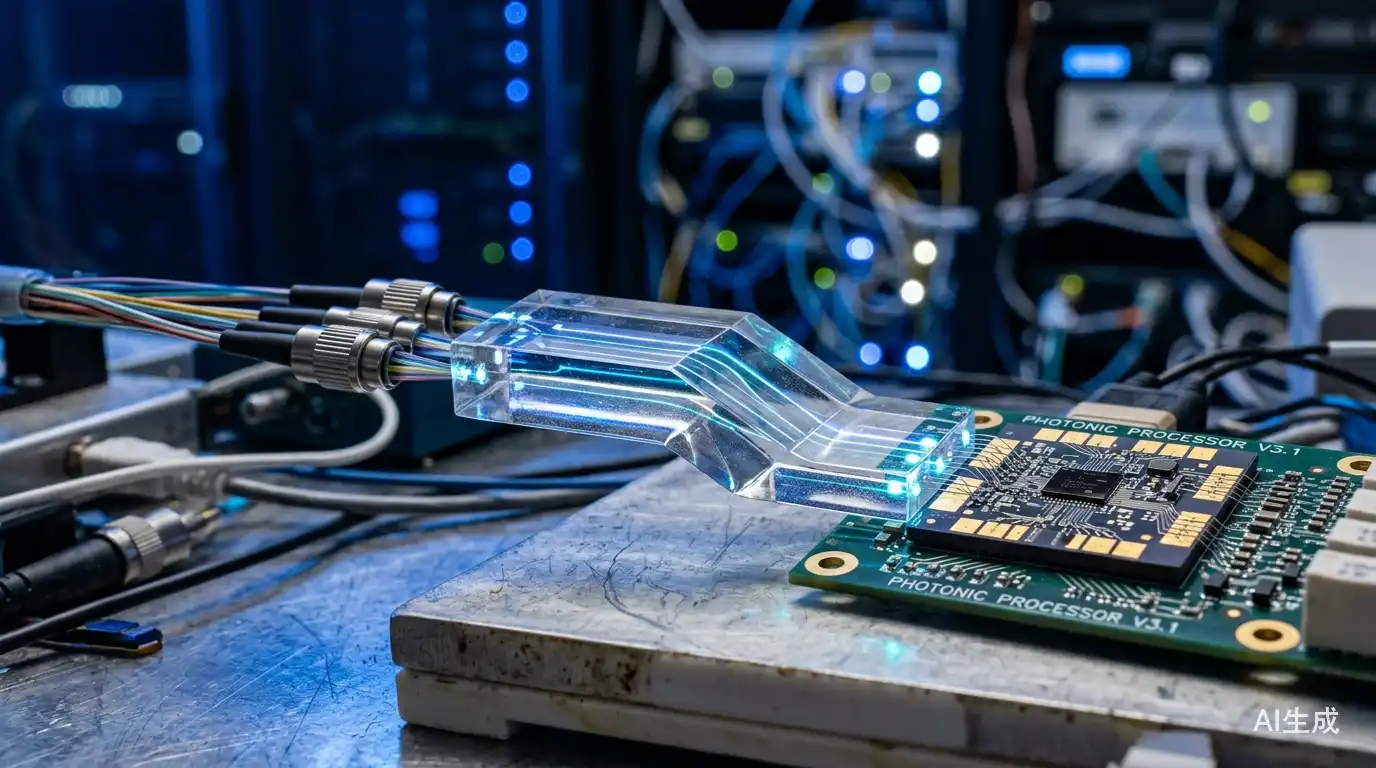
"Shocking" CPO: How Does the Glass Bridge Actually Work? Detailed Explanation from Corning

Chinese CPO stocks plunged over 6% following Corning's announcement of its Glass Bridge platform at a Seoul tech conference. The new technology utilizes wafer-level glass ion-exchange waveguides for passive alignment between fibers and photonic chips, potentially simplifying traditional CPO architectures that rely on complex Fiber Array Units and active alignment equipment. This raised market concerns about reduced long-term demand for mid-stream CPO components. Corning's official documentation details Glass Bridge as a platform for fiber-to-PIC connectivity in NPO, CPO, and high-density modules. Its key features include wafer-level manufacturing for consistent, cost-effective production; a standardized, removable MT ferrule interface for ecosystem integration; and a separable high-density connector design supporting over 24 channels for assembly flexibility. Corning positions the technology as complementary to FAUs, addressing limitations in ultra-high-fiber-count scenarios. The market reaction reflects a broader reassessment of the AI optical interconnect value chain. Funds shifted from CPO and PCB manufacturing stocks towards glass substrate concept stocks like Kaisheng Technology and Dyer Laser. Analysts note glass substrates are seen as a next-gen advanced packaging material, offering a potential path for domestic industry differentiation amid AI-driven demand for high-performance, large-scale packaging, marking a structural migration in value towards upstream specialty materials.

marsbit43m ago

"Shocking" CPO: How Does the Glass Bridge Actually Work? Detailed Explanation from Corning

marsbit43m ago

Trading

Spot

Hot Articles

Discussions

Welcome to the HTX Community. Here, you can stay informed about the latest platform developments and gain access to professional market insights. Users' opinions on the price of MEME (MEME) are presented below.

活动图片