Разработчики Stacks запустят обновление Nakamoto для «отделения» от биткоина

cryptonews.ruPublished on 2023-09-29Last updated on 2024-08-29

Команда L2-решения для биткоина под названием Stacks сообщила о старте процесса обновления Nakamoto, которое «отделяет» график производства блоков от сети первой криптовалюты.

Nakamoto Activation Window Begins 🟧

Today marks the beginning of a sequence to safely bring the Nakamoto upgrade and its fast blocks and Bitcoin finality to the Stacks layer!

Celebrate with 21 days of events, big news, collaborations, giveaways, and more. 🧡

More 🧵 1/4 pic.twitter.com/tTwJ9Glxv5

— stacks.btc (@Stacks) August 28, 2024

Предполагается, что активация увеличит скорость транзакций и добавит основу для смарт-контрактов, использующих сеть цифрового золота в качестве базового слоя. Так, время расчетов сократится с 10-30 минут и более до ~5 сек.

У операторов нод есть две недели для апгрейда перед хардфорком, который ознаменует завершение обновления.

Nakamoto вводит новый способ производства блоков, используя алгоритм консенсуса с доказательством передачи (Proof-of-Transfer). Пользователи сжигают биткоин для формирования блоков Stacks и получают вознаграждение.

Процесс стартовал в апреле, когда в проекте появились так называемые «подписанты» для подтверждения «сроков» транзакций. Под последним понимаются периоды времени, на которые майнеры назначаются для создания нескольких блоков, которые в итоге рассчитываются в сети первой криптовалюты.

Цель Stacks — внедрить смарт-контракты и другие связанные с финансами децентрализованные функции. С этой целью команда через четыре недели запустит sBTC с обеспечением к BTC в соотношении 1:1, который позволяет пользователям присоединять биткоины к экономике проекта.

Сегодня проекты из экосистемы «не дают оптимальный пользовательский опыт» в силу ограничений, присущих блокчейну первой криптовалюты. Это не позволяло разработчикам создавать сложные DeFi-продукты, говорится в блоге.
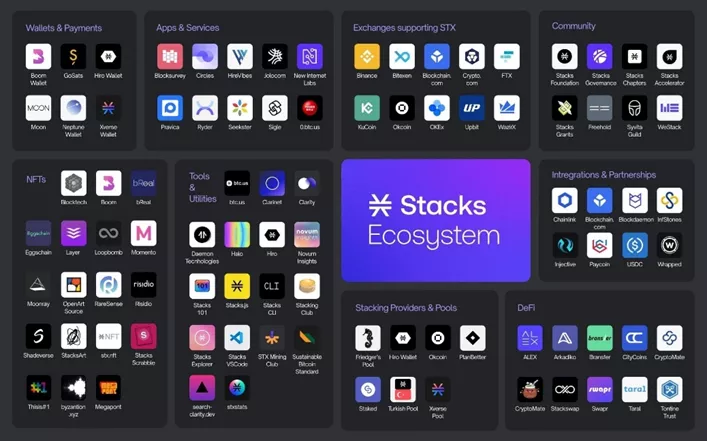
Экосистема Stacks. Данные: Stacks.

Напомним, в августе разработчики запустили в L2-сети для биткоина Mezo токен ликвидного стейкинга цифрового золота под названием stBTC.

Related Reads

In Such a Crowded Cross-border Payment Track, Where Does the Next Stop Lie in the Future?

The crowded cross-border payments industry faces a paradox: intense competition above water with financing and narratives, while beneath, price wars and shrinking margins in basic PSP services are common. The path forward lies not in simple "cross-border" solutions but in deep **localization**. Success requires mastering the fragmented and tightening regulations of fiat currencies in each market—the "last mile" of compliance, banking, and settlement. Many Chinese PSPs have succeeded by following Chinese merchants overseas but have not deeply penetrated mainstream local merchant ecosystems abroad. Their strong product capabilities need to be applied to new, complex markets. The future belongs to companies that evolve from single-channel providers to **cross-border capital network operators**. This means moving beyond competing on transaction fees to creating internal networks that optimize capital efficiency through multi-directional matching, netting, and position reuse across countries and currencies. For Web3 and stablecoins, the key is integration, not replacement. Stablecoins offer efficiency gains but cannot bypass the foundational trust, compliance, and legal frameworks of traditional finance. The realistic path is the gradual adoption and "taming" of Web3 technologies by established financial institutions. The ultimate solution is a **dual clearing infrastructure** combining deep local fiat capabilities (local accounts, compliance, banking) with lightweight stablecoin-native capabilities (on-chain settlement, wallets). The biggest opportunity lies not in oversaturated mainstream corridors but in complex, underserved regional corridors (e.g., specific CIS, Middle East-Southeast Asia, or Latin American trade pairs). The winners will be those who build hard-to-replicate, deep capabilities in these areas—acting as the essential "clearing shovels" or infrastructure providers. The future keywords are **more local, more networked, and more stablecoin-native**. High-profit opportunities remain in the non-standardized, difficult-to-replicate deep waters of the industry, requiring genuine on-the-ground presence and long-term patience.

链捕手2h ago

In Such a Crowded Cross-border Payment Track, Where Does the Next Stop Lie in the Future?

链捕手2h ago

Lightning Fast Five-Whip Combo! Strategy's Self-Rescue Plan Officially Released

Strategy, amidst the STRC de-pegging crisis, has unveiled its "Digital Credit Capital Framework" self-rescue plan. The five-part framework includes: 1) **Cash Reserves**: Management of ~$2.55B in USD reserves, dedicated solely to covering ~17.4 months of preferred stock dividends and debt interest, with a 12-month minimum coverage floor. 2) **Dividend Policy**: STRC's dividend yield rises to 12% from July 1st, with monthly reviews. Strategy clarifies de-pegging does not automatically trigger further hikes. 3) **Preferred Stock Buyback**: A $1B authorization, prioritizing STRC repurchases to support its price, reduce future dividend obligations, and signal commitment, using funds separate from dividend reserves. 4) **Common Stock Buyback**: A separate $1B authorization for MSTR stock, aimed at creating shareholder value when the stock is deemed undervalued, establishing a two-way capital management mechanism. 5) **Bitcoin Monetization**: Formal authorization to sell BTC (up to $1.25B earmarked) to build USD reserves, cover dividends/interest, or fund buybacks, marking a strategic shift where BTC becomes a managed asset rather than a strictly "hold-only" reserve. Market reaction saw MSTR and STRC shares rise pre-market, while BTC remained stable. The plan aims to restore confidence in STRC, ensure dividend sustainability, and reopen Strategy's funding channels.

Odaily星球日报3h ago

Lightning Fast Five-Whip Combo! Strategy's Self-Rescue Plan Officially Released

Odaily星球日报3h ago

Trading

Spot
活动图片