数据图回顾:坎昆升级后,以太坊发生了什么变化?

深潮Published on 2024-08-26Last updated on 2024-08-26

过去几个月中,尽管 L2 的利润大幅上升,但 ETH 的销毁率下降,导致流向 ETH 的价值减少。

撰文:ParaFi Capital

编译:1912212.eth,Foresight News

我们正在深入研究以太坊在 EIP-4844 之后的发展情况,主要关注点在于以下三个重要方向:

  1. ETH 销毁量最新进展如何?

  2. L2 网络的吸引力怎么样?

  3. L2 和以太坊之间的经济关联是什么?

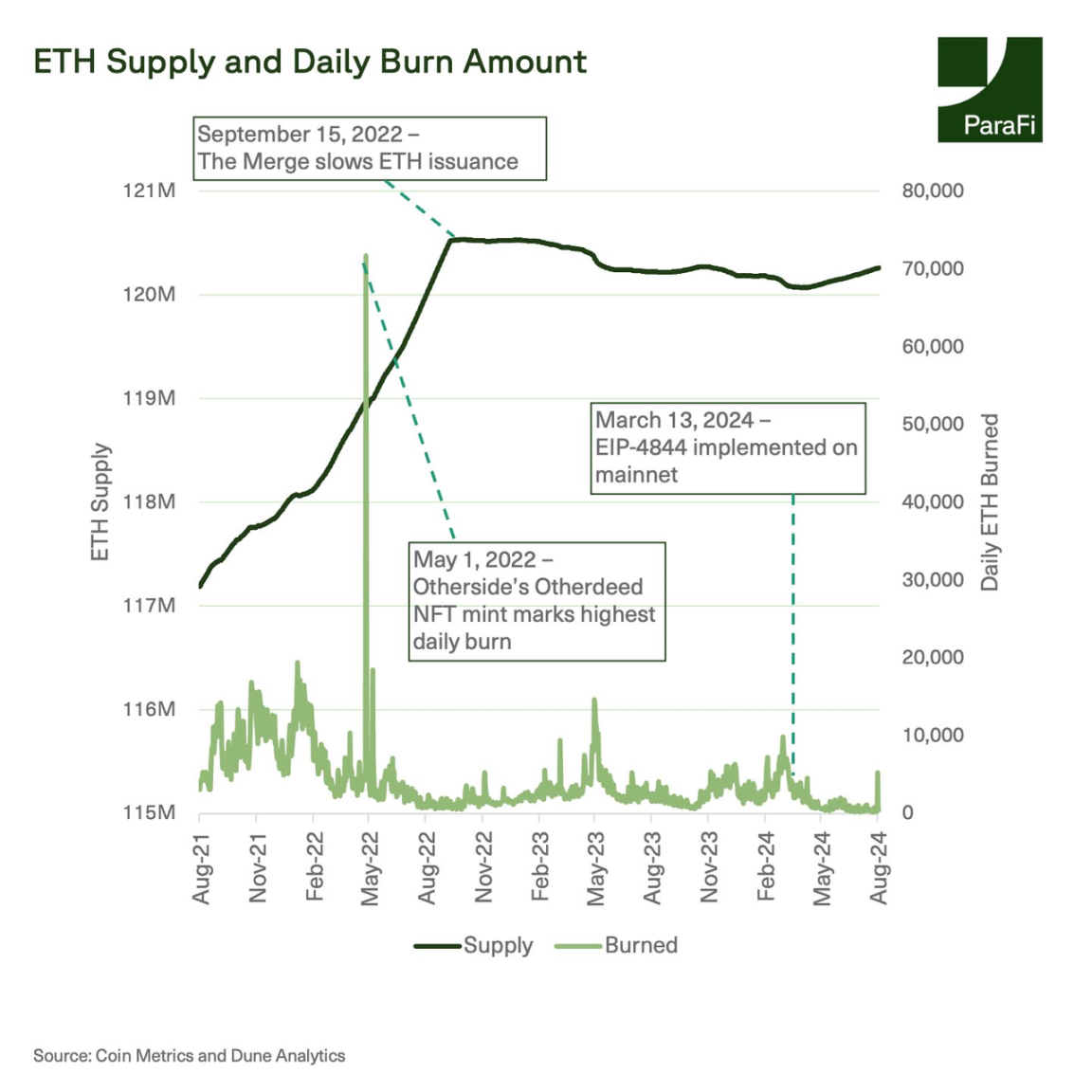
EIP-1559 与合并升级之后,人们对 ETH 作为产生现金流资产的经济性感到兴奋。在最初两次升级后,ETH 的供应量确实下降了,从 2022 年 9 月到 2024 年 4 月,下降了约 0.38%。不过从那时起,随着销毁率的放缓,ETH 供应量就开始一路攀升。
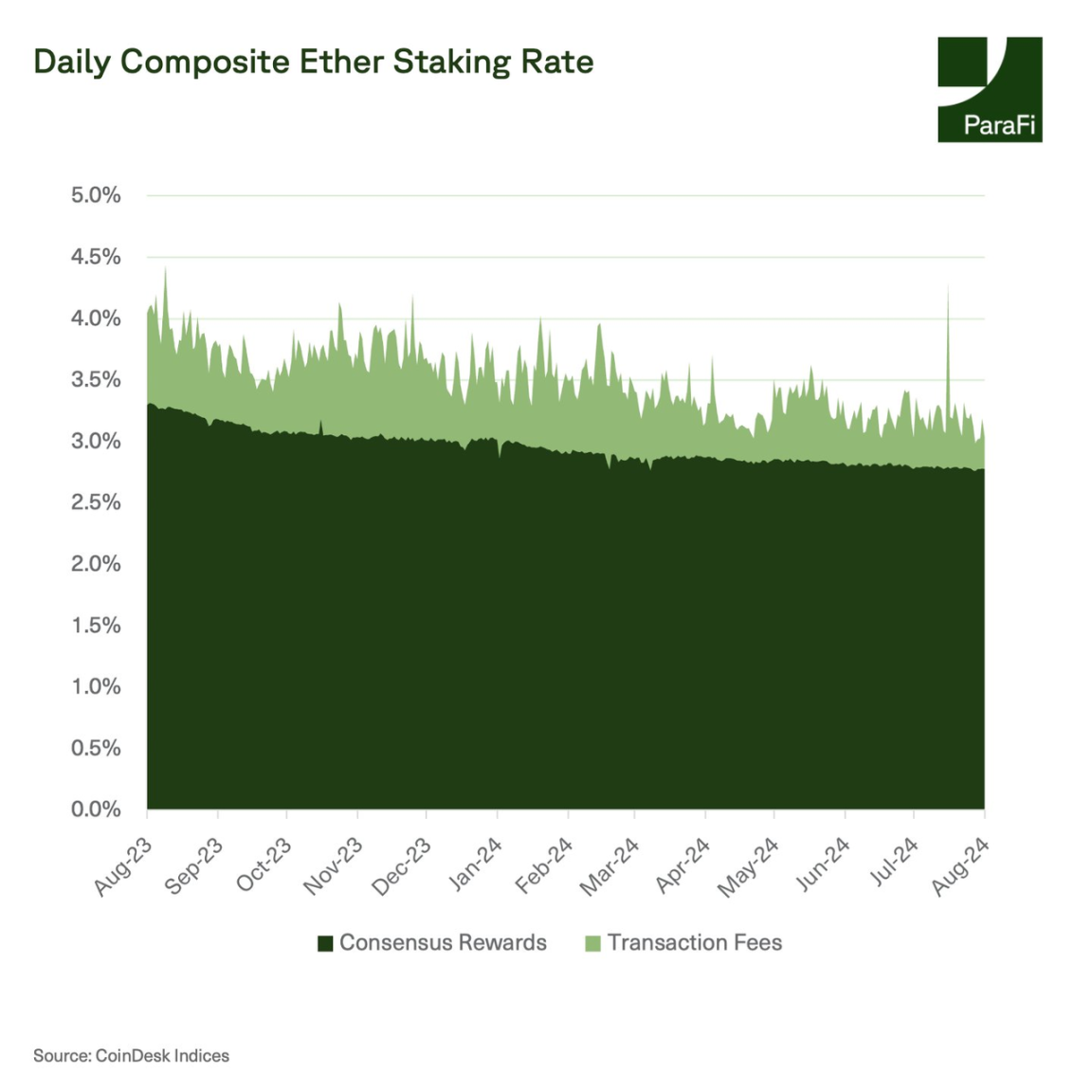
过去的 12 个月里,ETH 质押奖励率一直呈下降趋势,因为以太坊验证者的数量在过去一年中增长了 79%,而 L1 交易费用却有所下降。
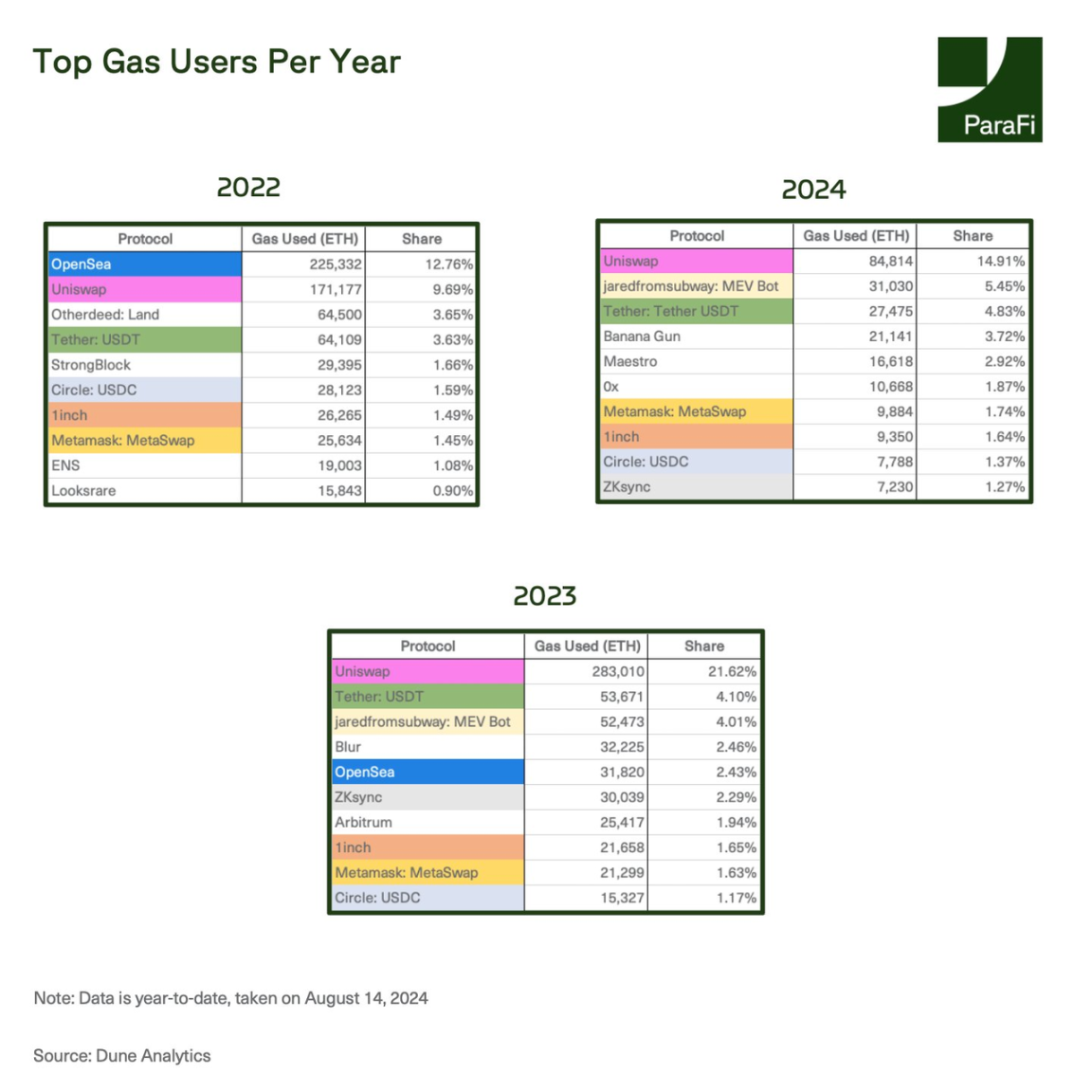
虽然销毁速度有所放缓,但 Uniswap、Tether、1inch 和 MetaMask 等应用或协议继续推动以太坊上的大部分 Gas 消耗。2023 年,Arbitrum 和 ZKsync 是主要的 Gas 消耗者,但今年其数据明显下降,这是因为 EIP-4844 提案使得 L2 可以更高效地发布数据,降低了其数据存储要求。
过去的两年半时间中,以太坊的交易笔数相对停滞,而 L2 的总交易笔数在 2024 年 8 月超过 L1 的 10 倍。
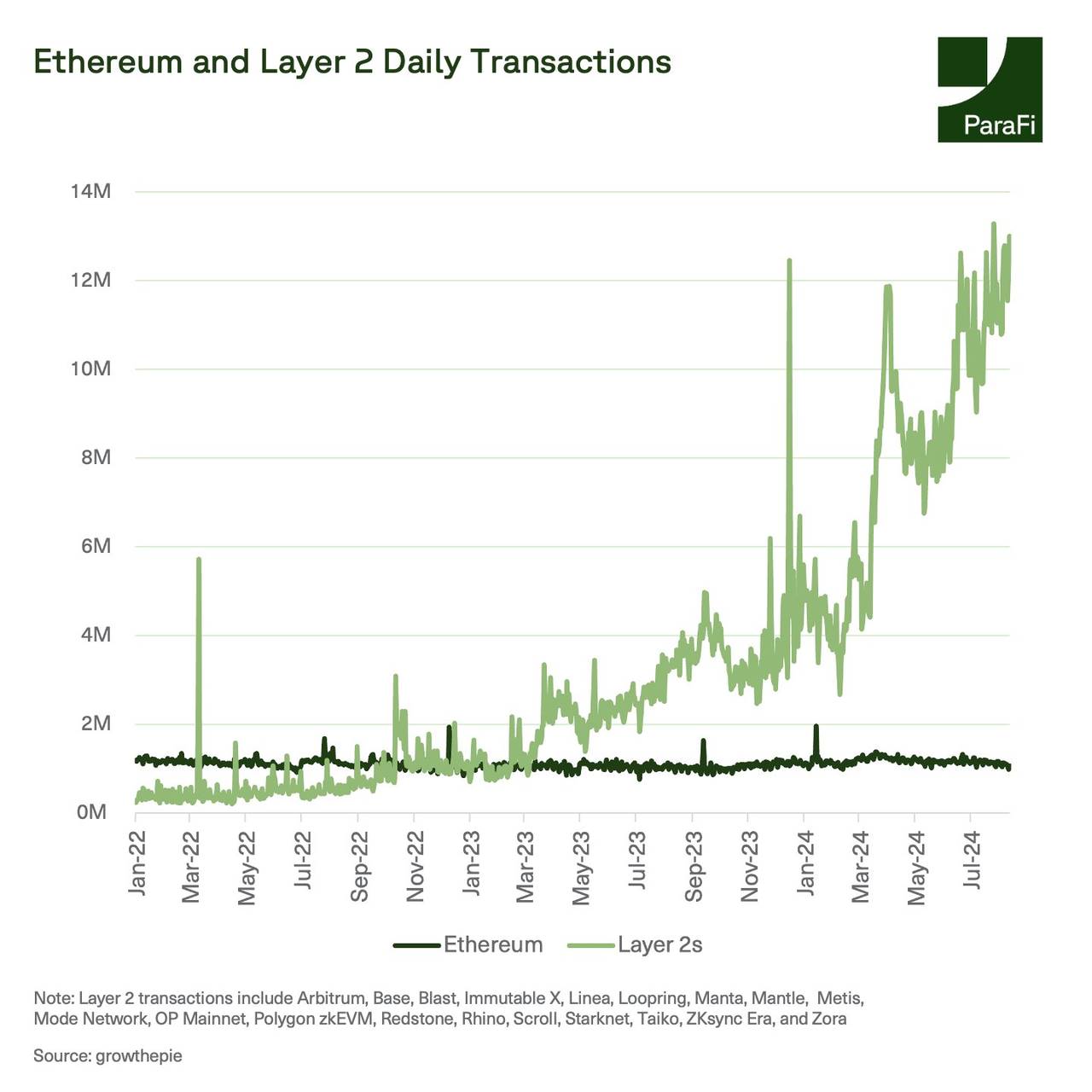
L2 活动的增长可以归因于新 L2 的推出和一些现有 L2 的爆炸式发展。3 月以来,Base 和 Arbitrum 的单日交易笔数都超过了以太坊。虽然这张图表汇总了多个 L2 的交易,但每个 L2 都在为以太坊提供替代的区块空间,突显出 L1 向 L2 转移的大趋势。

以太坊 L2 的日益增长也体现在它们从以太坊吸引了大量的 DEX 市场份额。EIP-4844 升级后,L2 已经将以太坊主网上的 DEX 市场份额压低至 60% 以下。
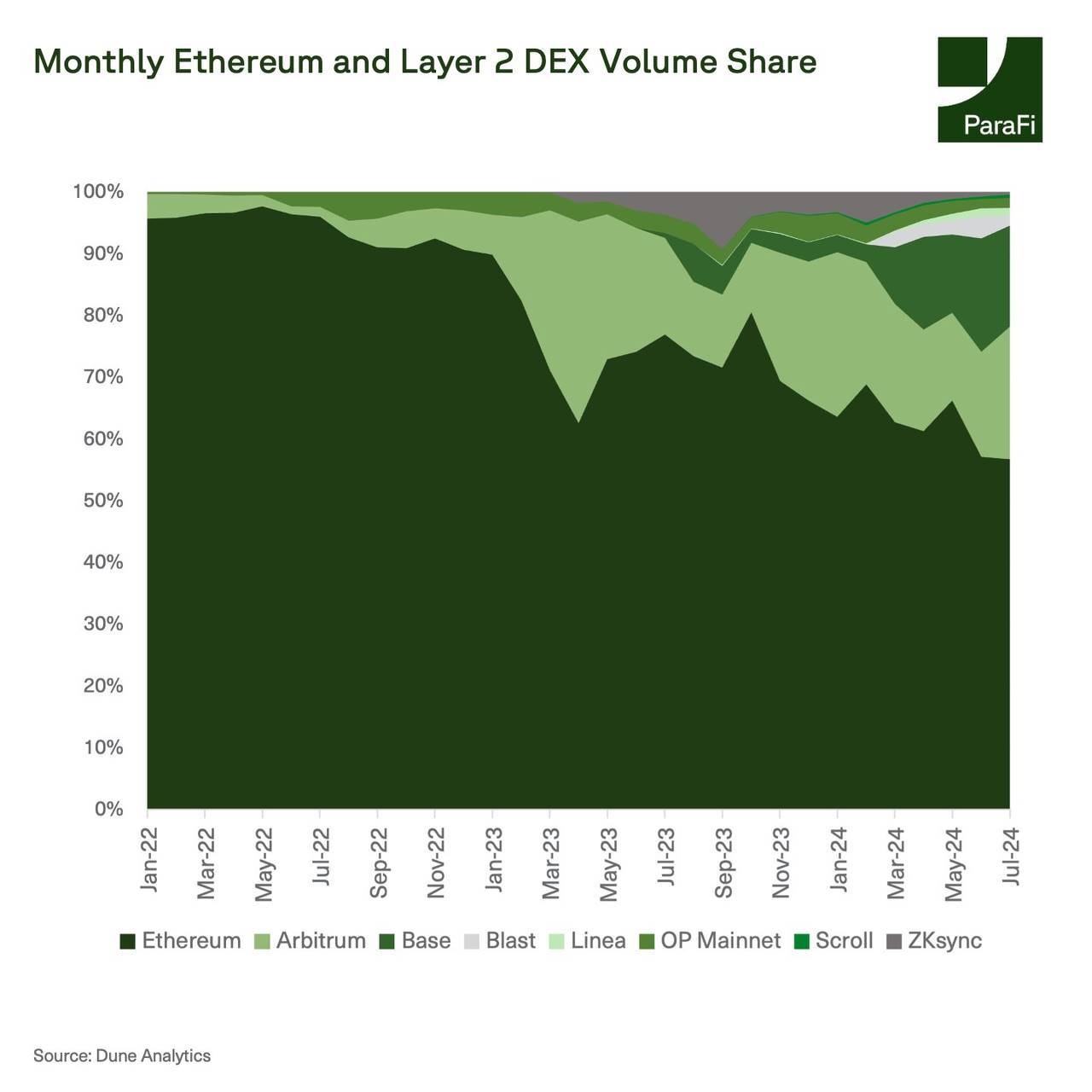
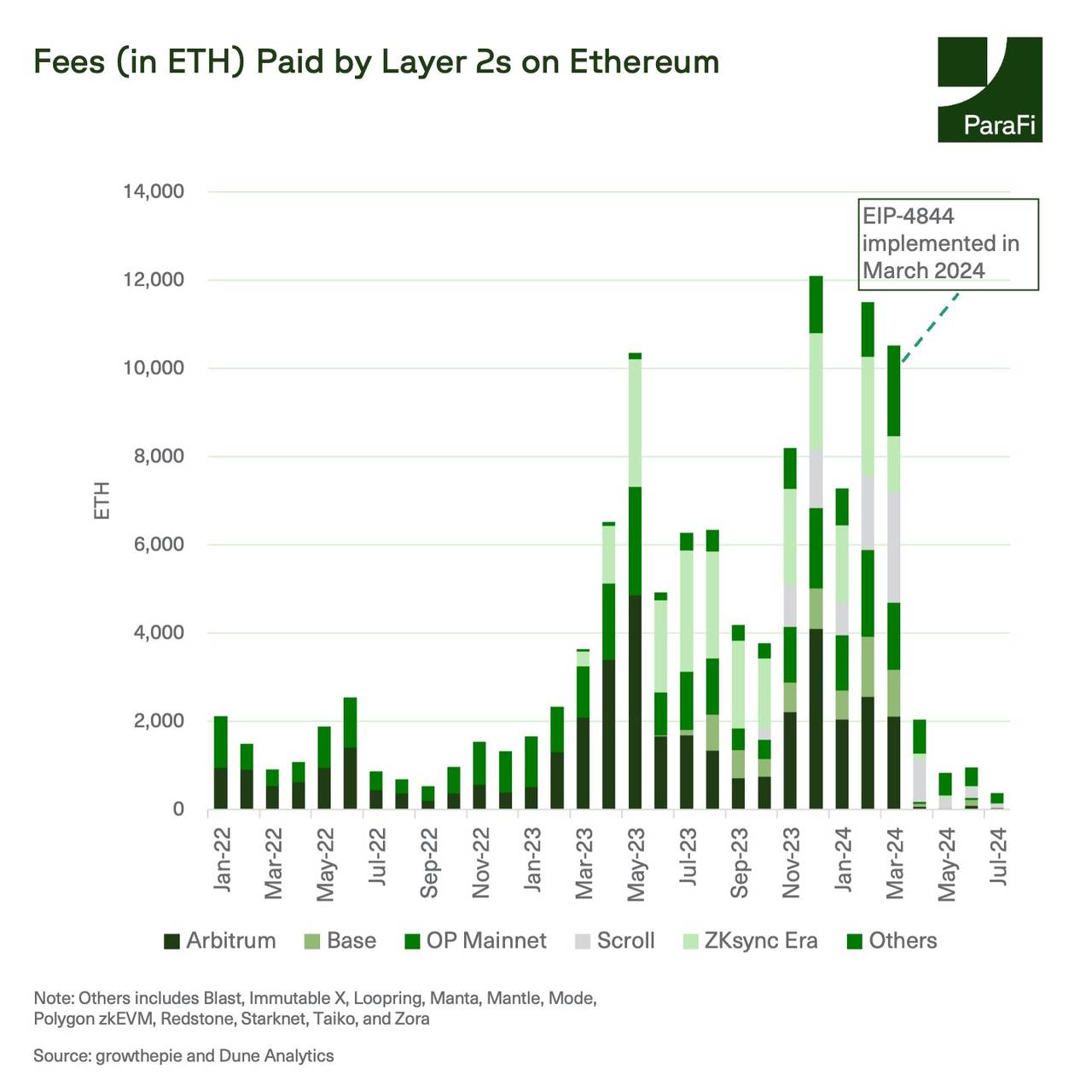
不过,这也突显了由于 Rollup 网络不断发展,而导致的流动性碎片化问题。尽管这些 L2 取得了巨大成功,但由于 EIP-4844 的升级,它们在以太坊上发布数据的花费相对较少。EIP-4844 于 2024 年 3 月实施,为以太坊引入了一种名为「blobs」的新数据存储机制,这是对之前的 Calldata 结构的更廉价替代方案。

2024 年 3 月,L2 在以太坊上支付的费用超过了 1 万枚 ETH,但在 7 月份,它们支付的费用不到 400 枚 ETH,下降了约 96%。随着成本的下降,L2 现在对 ETH 的销毁贡献更少,也降低了主网上的 Gas 费。
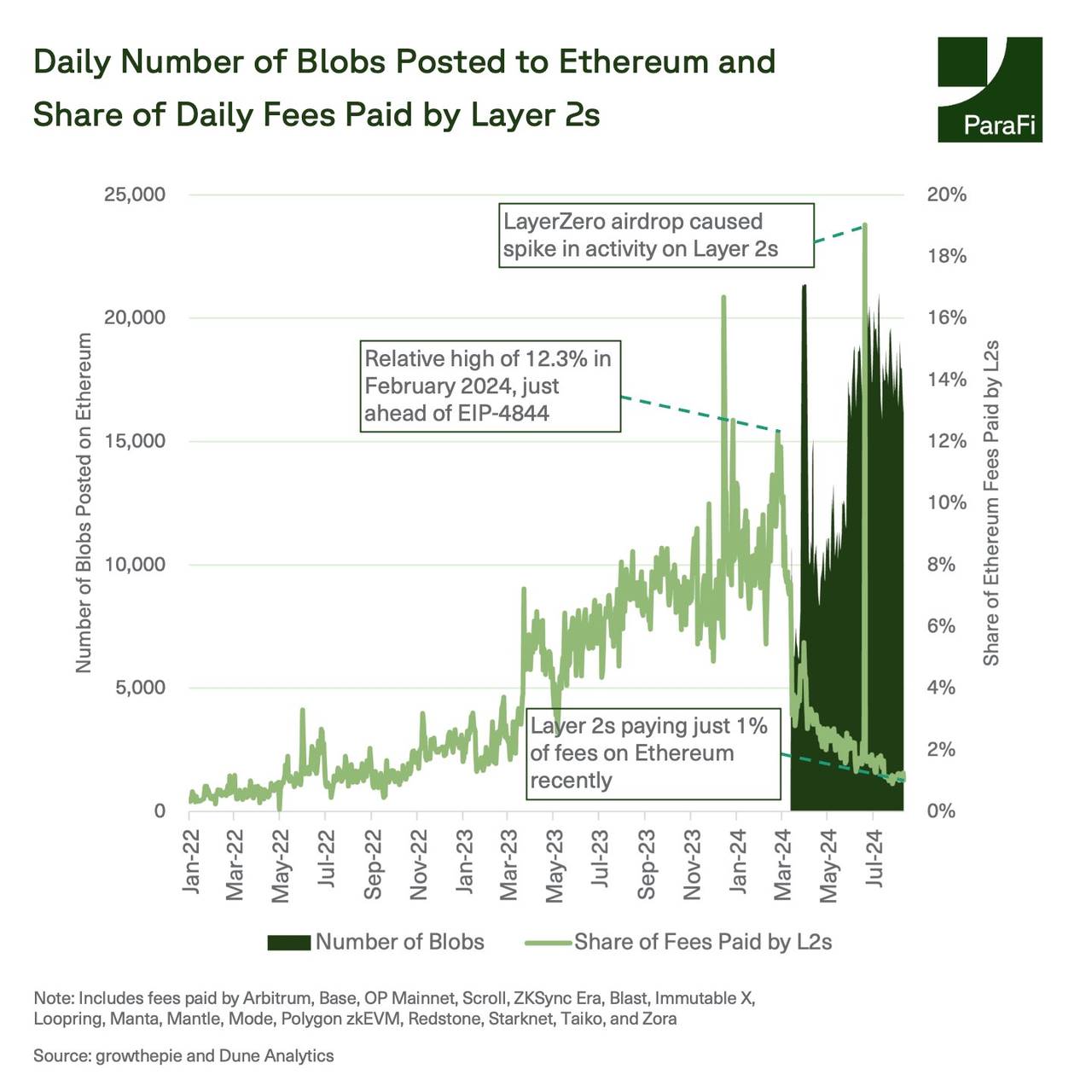
由于 L2 需要在链上发布大量的交易概要数据,它们迅速采用了 blobs。自 6 月初以来,以太坊每天至少有 1.6 万个 blobs 被发布。这导致主要 L2 所支付的总费用比例下降,从 2024 年的 12% 降至 1%。
自 EIP-4844 实施以来,L2 的运营利润率大幅提高。尽管扩展解决方案的总排序器收入(即在 L2 网络上支付的费用总和)今年以来平均下降了约 48%,但运营成本下降了约 87%,这意味着 Rollup 现在保留了大部分收入。主流 L2 现在的运营利润率都超过了 90%,即使在将大量的成本节省发送给用户之后也是如此。用户从中受益,在使用 blobs 的网络上,过去一年中费用下降了约 90%,其中中位数交易成本通常低于 0.01 美元。
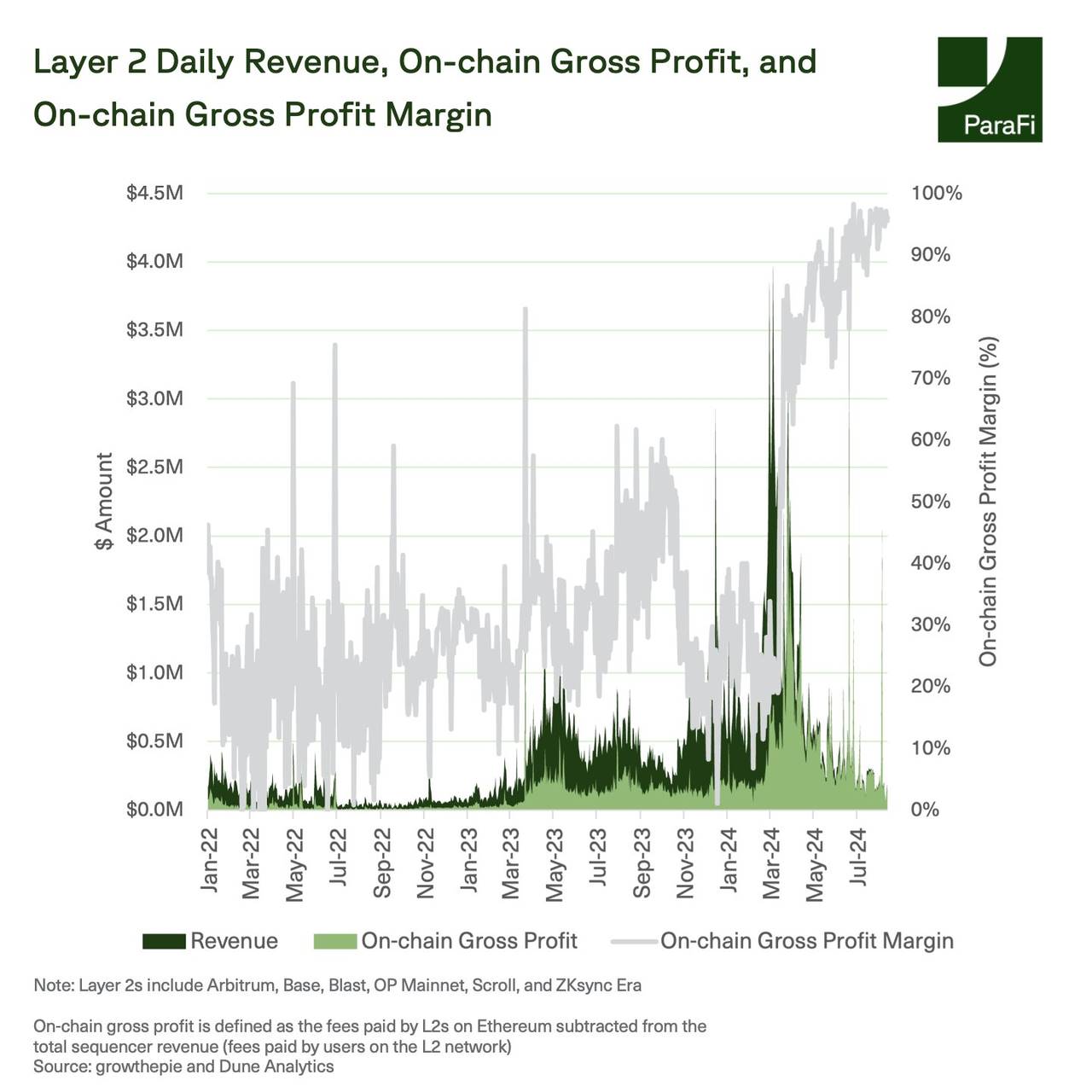
EIP-4844 对以太坊 L1 产生了明显的影响。

尽管 L2 使用量激增,但对 ETH 作为资产的直接收益尚不明确。过去几个月中,尽管 L2 的利润大幅上升,但 ETH 的销毁率下降,导致流向 ETH 的价值减少。

这给以太坊生态系统留下了很多需要思考的问题:

  • 随着 L2 使用量的持续增长,L2 代币将发挥什么作用?L2 代币与 ETH 相比,将捕获多少价值?

  • Rollup 相对于以太坊的收益是否过多?或者这种结构是否理想,以吸引更多用户和开发者进入更广泛的以太坊生态系统?

  • 随着更多 L2 的推出,用户和流动性将如何在这些不同的网络之间互操作?

  • 由于以太坊主网的费用现已处于历史地位,我们是否会看到开发者重新考虑直接在 L1 上部署,还是 L2 仍然更具吸引力?

Trending Cryptos

Related Reads

Robinhood Chain Mainnet Goes Live: Can Stocks Finally Be Moved Into Wallets?

Robinhood has officially launched its public mainnet, Robinhood Chain, along with stock-like tokens, the USDG yield product, and a DeFi lending portal. This marks a significant shift where a major online broker is integrating its user interface, regulatory compliance, self-custody wallet, and on-chain protocols into a single, streamlined experience. The goal is to simplify access to stock exposure, stablecoin yields, collateralized lending, and AMM trading for mainstream users. Eligible non-U.S. users can hold these "Stock Tokens"—structured as tokenized debt securities—in the Robinhood Wallet for 24/7 exposure to assets like U.S. stocks or ETFs. U.S. users can access an estimated ~7% APY on dollar-backed USDG through the Robinhood Earn program via self-custody wallets, with lending infrastructure powered by Morpho protocol. Built as a Layer 2 on Arbitrum, Robinhood Chain leverages existing DeFi protocols like Uniswap. The core strategy is not to reinvent DeFi but to channel Robinhood's large traditional finance user base (27.4 million funded customers as of Q1 2026) into on-chain finance, lowering the technical barriers. However, key limitations exist. The stock tokens are not direct equity ownership and are unavailable in the U.S. and some jurisdictions due to regulatory constraints. The ~7% yield is variable and carries inherent DeFi risks, not guaranteed principal protection. Furthermore, while AMMs enable trading, price discovery for major stocks will likely remain anchored in traditional markets like NASDAQ for the foreseeable future. Ultimately, Robinhood Chain is an early experiment in "on-chain brokerage." Its success will depend on real-world metrics like trading volume, sustained user migration to self-custody, stable yield performance, and regulatory feedback, rather than its launch narrative.

marsbit3m ago

Robinhood Chain Mainnet Goes Live: Can Stocks Finally Be Moved Into Wallets?

marsbit3m ago

Circle CEO Responds to OUSD Challenge: Stablecoin Market Is 'Winner-Takes-All', Consortium Model Doomed to Fail

Circle CEO Jeremy Allaire addresses market concerns following the announcement of the Open USD (OUSD) stablecoin project backed by 140 global companies. Allaire argues the stablecoin market exhibits "winner-takes-all" dynamics due to powerful network effects. He cites USDC's near-decade lead in three key areas: 1) **Application Integration & Protocol Development**: Thousands of integrated services and protocols (like CCTP) create utility and lock-in for developers and users. 2) **Liquidity Network Effects**: A deeply embedded, globally distributed liquidity infrastructure across primary and secondary markets, built over years. 3) **Regulatory Integration**: Extensive licensing and compliance groundwork ensuring USDC's acceptance in major markets like Europe and Japan. Allaire challenges OUSD's proposed advantages. He contends that promises of free redemption, while appealing, face market realities where such models can become exit routes for other stablecoins. He also questions the feasibility of fully distributing all revenue to an alliance, stating it would "starve" the critical infrastructure investments needed for scale and utility. Furthermore, he expresses skepticism about large alliance governance models, noting they often lead to slow decision-making and misaligned incentives. While welcoming OUSD to the ecosystem, Allaire reaffirms confidence in USDC's dominant position, backed by its long-term infrastructure investments and strong partnerships, including its ongoing collaboration with Coinbase.

marsbit5m ago

Circle CEO Responds to OUSD Challenge: Stablecoin Market Is 'Winner-Takes-All', Consortium Model Doomed to Fail

marsbit5m ago

Circle CEO Responds to OUSD Challenge: Alliance Model Doomed to Fail, It's a 'Winner-Takes-All' Game

Circle CEO Jeremy Allaire addresses the challenge posed by the new Open USD (OUSD) stablecoin project, backed by 140 global companies. He argues that the stablecoin market exhibits "winner-take-all" characteristics, where USDC's near-decade-long lead in application integrations, global liquidity, and regulatory compliance secures its dominant position. Allaire outlines three key network effects underpinning USDC's strength: 1) Extensive integration as an internet protocol layer, 2) Deep, globally distributed liquidity networks, and 3) Deep integration with global policy and regulatory frameworks. He cites data showing USDC facilitated 80% of on-chain USD stablecoin transaction volume in Q1 2026. He directly counters OUSD's proposed advantages: 1) "Free minting and redemption" may not be sustainable against market realities, which USDC addresses via contractual mechanisms. 2) "Sharing all revenue" risks starving the infrastructure of necessary investment for growth and reliability. 3) A "consortium model" often leads to slow innovation and poor coordination compared to focused, independent operators like Circle. Allaire reaffirms Circle's strong partnership with Coinbase and notes that Circle continues to collaborate with many OUSD founding members. He concludes by welcoming OUSD to the ecosystem while expressing confidence in USDC's entrenched network advantages and continued expansion.

Odaily星球日报8m ago

Circle CEO Responds to OUSD Challenge: Alliance Model Doomed to Fail, It's a 'Winner-Takes-All' Game

Odaily星球日报8m ago

dYdX Changes Tack and Starts Anew, This Time Partnering with Robinhood: Will It Succeed?

On July 1st, dYdX Labs, in partnership with Robinhood Crypto, launched the Beta version of Arcus, a new decentralized exchange (DEX). Deployed on the newly launched Robinhood Chain (an L2 built on Arbitrum), Arcus supports spot trading for 95 tokenized stocks and plans to introduce cross-asset perpetual contracts. This marks a separate, new product line for the dYdX team, distinct from the existing dYdX Chain. Arcus's core features promise 24/7 trading, self-custody, and institutional-grade liquidity. Initial offerings include zero-fee web-based spot trading and a perpetual contracts testnet. Future plans involve using tokenized stocks as collateral and providing access to Pre-IPO investments. The platform is not available to users in the US, Canada, the UK, and other restricted jurisdictions. This move follows dYdX's v4 upgrade, which, while achieving full decentralization, faced criticism over performance and tokenomics, leading to a loss of market share. Arcus represents a strategic pivot, leveraging Robinhood's vast user base to target the RWA (Real World Assets) sector and global 24/7 trading. The dYdX Foundation clarified that Arcus is a parallel product incubated by dYdX Labs, and the original dYdX Chain continues to operate independently. While no official token plans have been announced, market participants speculate about potential new tokens or airdrops from the Arcus project.

Foresight News15m ago

dYdX Changes Tack and Starts Anew, This Time Partnering with Robinhood: Will It Succeed?

Foresight News15m ago

Trading

Spot

Hot Articles

Discussions

Welcome to the HTX Community. Here, you can stay informed about the latest platform developments and gain access to professional market insights. Users' opinions on the price of ETH (ETH) are presented below.

活动图片