Original source: Circle Founder & CEO Jeremy Allaire
Compiled by | Odaily Planet Daily Qin Xiaofeng (@QinXiaofeng 888 )
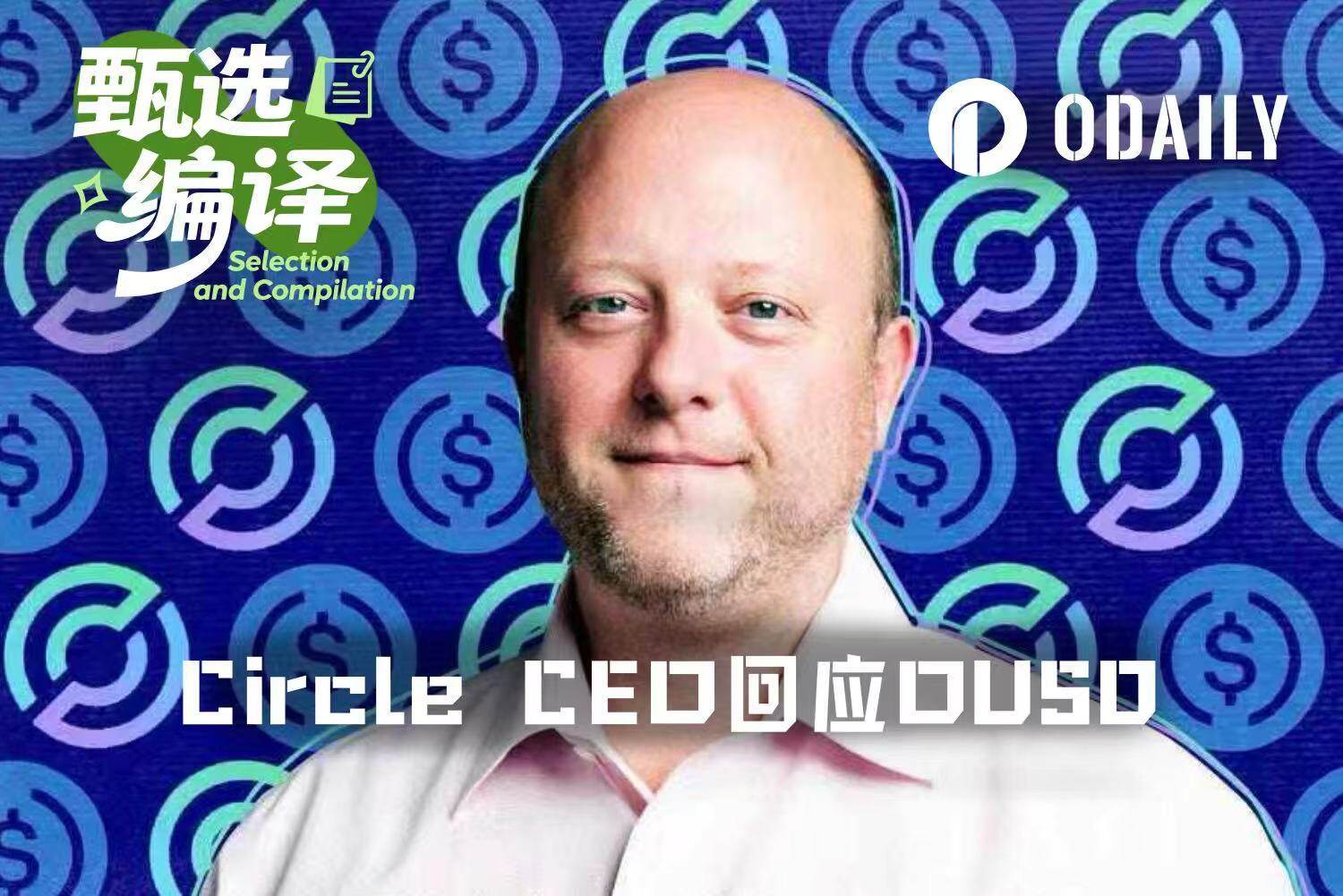
Editor's Note: On June 30th, the stablecoin project Open Standard, backed by 140 globally renowned companies, was officially announced. It plans to launch a new dollar stablecoin, Open USD (OUSD), later this year, directly challenging Circle (USDC). The stock price of Circle (NYSE: CRCL) once plummeted over 17%, sparking investor complaints. Jeremy Allaire, the Founder & CEO, couldn't stay silent and published a lengthy article to boost confidence.
He stated that the stablecoin market is "winner-takes-all," with USDC maintaining dominance due to nearly a decade of building application integrations, global liquidity, and regulatory compliance. He argued that OUSD's propositions of free redemptions, revenue sharing, and an alliance model are unrealistic and could undermine infrastructure investment and efficiency. Affected by this
The following is a compilation of two recent tweets by Jeremy Allaire, translated by Odaily Planet Daily. Enjoy~
————————
We've received many questions from our investor community seeking our perspective on OUSD, so I want to share my views directly here.
Stablecoin networks are platform businesses with network effects. This type of business requires long-term accumulation and tends towards a "winner-takes-all" market structure, similar to other internet platform-based utility markets. Many factors drive this phenomenon.
First, stablecoin networks effectively function as internet public protocols and software layers. The strength of their network depends on the number and scope of applications and services integrated into it. Each time a developer or service provider integrates, it brings more network effects, attracting more developers, adding more utility and network effects, ultimately driving demand for the digital currency itself and further strengthening these advantages through liquidity network effects.
We have achieved this at scale on the USDC network today—thousands of service integrations. This brings immense utility to each application and great convenience to all users, who benefit from existing coverage and interoperability. This further drives user and developer preference. We've spent nearly a decade building this ecosystem, and this process is now accelerating as mainstream institutions join the network, connecting their customers and users.
We further enhance and extend the network by building a software stack—protocols like CCTP and Gateway, which foster interoperability, security, and liquidity globally. This expands the reach for application builders and developers, allowing them to easily tap into existing liquidity and network effects. Now, we're seeing this software stack introduced into various chains, permissioned L2s, government-built networks, and more.
Second, liquidity network effects, which are fundamental. Liquidity begets liquidity. For a stablecoin to achieve scale and utility, it must have high liquidity—both in primary markets (e.g., having top-tier direct banking liquidity through major global financial centers) and secondary markets, i.e., accessible, tradable liquidity for retail and institutional clients across regions, connecting to various global fiat instruments. Those wanting to acquire and transfer value must be able to easily enter and exit the digital currency.
In this regard, we've spent nearly a decade building liquidity, which is now deeply embedded in exchanges, DeFi platforms, Payment Service Providers (PSPs), payment companies, regional exchanges, and many other institutions. Building these liquidity network effects also involves constructing global regulatory infrastructure to ensure the stablecoin is usable under different regimes worldwide. Today, USDC ranks among the top three most liquid digital assets globally, with a significant gap to followers. BTC, USDT, and USDC all have extremely high liquidity. The next closest USD stablecoins are roughly one-tenth the size of USDC, and their liquidity is often concentrated on a single exchange's order book. In contrast, USDC's liquidity is widely dispersed across dozens of different platforms. Building this liquidity has been our ongoing task for nearly a decade and continues.
Third, network effects come from deep integration with policy and regulatory environments. In many cases, this is the result of years of effort to obtain licenses (e.g., USDC is currently the only major global stablecoin usable throughout Europe or Japan). Moreover, an increasing number of stablecoin regulatory frameworks are being enacted—Circle ensures USDC is at the forefront of official recognition, registration, licensing, and acceptance in the world's most important markets. This also involves building a global banking, reserve management, treasury, and liquidity management system capable of operating in global markets and banking systems nearly around the clock. This global effort is a massive undertaking we have continuously invested in for years.
All these investments by Circle and our global ecosystem of thousands of partners ultimately provide the world's most trusted and accessible digital dollar infrastructure—a utility that any user, developer, or business can freely and easily plug into, and we have no intention of slowing down.
All these factors combine and are reflected in the data. According to Artemis, a third-party analytics firm tracking stablecoin adoption, in Q1 2026, USDC processed nearly $30 trillion in on-chain transaction volume, accounting for 80% of all USD stablecoin transactions on blockchains. USDT processed the remaining 20%. All other USD stablecoins combined accounted for 0% of transaction volume (i.e., less than 0.5%). While other stablecoins may have some circulation, much of it stems from promotional and incentive activities, with actual usage being extremely limited—because the liquidity and network utility of those coins are extremely limited.
The above not only describes Circle network's advantages but also the unavoidable challenges all newcomers face upon entry. Of course, I've also heard many voices suggesting that OUSD is doing many things better than USDC.
(1) Free minting and redemption. There's a view that existing stablecoins charge redemption fees, and payment companies shouldn't bear these costs (although the entire payments industry is built on charging small bps fees at various entry and exit points of their networks). Market structural realities exist—some stablecoins charge very high redemption fees and have limited redemption facilities—the impact is that stablecoins with good redemption facilities, ample liquidity, and no fees become the exit ramp for competing stablecoins. Saying "offer unlimited free redemptions" sounds easy, but market realities may force a change in behavior. Circle addresses this through contractual mechanisms rather than blanket fee waivers and has already resolved it.
(2) Win-win for all, shared revenue. This sounds wonderful, but market reality is quite different. Today, Circle shares the majority of its revenue with distribution partners and continues to aggressively expand partnerships with leading companies across sectors. However, we also retain significant revenue to invest in the large-scale market infrastructure that makes this network a powerful and valuable utility that global builders can rely on. Giving away all revenue would starve the infrastructure, leading to systemic underinvestment, which would inevitably limit the platform's breadth. (Odaily Note: In Q1 2026, Circle's revenue was $694 million, distribution costs were $407 million, accounting for 59%)
Furthermore, Circle believes the future stablecoin market could be orders of magnitude larger than today. We are actively bringing more partners into the USDC ecosystem through diverse and growing partnership models, covering exchanges, custodians, payment companies, asset issuers, etc. We are happy to continue building with a "Big tent mentality," allowing the entire ecosystem to grow in value together. (Odaily Note: "Big tent mentality" is a political and organizational strategy where a party, company, or institution encompasses diverse, even opposing views and factions to attract the broadest group, seeking common ground while reserving differences to build maximum consensus, thereby gaining more support or market share.)
(3) An alliance where everyone has a voice. Perhaps I'm a bit cynical, but the track record of alliance-based products in achieving scale, product-market fit, or even basic product agility is absolutely dismal. While there are examples of financial alliance-operated utilities, they often move slowly. Large groups of companies coordinate poorly, have misaligned incentives, slow progress, and rarely create space for truly lasting innovation and competitiveness. Moreover, they often, acting in self-interest, resource-starve the alliance itself at the operational level.
We actually tried this approach early in USDC's history, and even with few participants, we encountered countless challenges and complexities. Smaller, tighter strategic collaborations and commercial arrangements, led by product and platform builders who can move independently, almost always outperform large alliances. Often, when such alliances are formed, everyone feels the need to list their logo, take a stance, and loudly proclaim openness. However, these companies usually ultimately turn to their operational units to make the best decisions for their clients—which often means partnering with market leaders to build lasting win-win relationships.
There have also been many comments about Circle's partnership with Coinbase and what it all means. Our stablecoin partnership with Coinbase remains as strong as ever, and I believe we both see huge opportunities in expanding the USDC network.
One final point: Circle is deeply committed to supporting a wide range of products and infrastructure, even where we may compete with partner products in certain business areas. We have strong working relationships with many of the founding members of OUSD, and we expect these members will continue to be significant partners and customers of USDC. At the same time, as Circle diversifies our product and platform stack, expanding into Arc, CCTP, CPN, StableFX, Agent Stack, and many other areas, we are also expanding collaboration and cooperation with dozens of other stablecoin issuers, helping them issue based on Arc, utilize our interoperability infrastructure, gain support in our wallets, and become settlement and FX options on CPN and StableFX.
We are deeply bullish on the growth of the stablecoin ecosystem and welcome OUSD as a new member of the community!