Подсчитана реальная скорость обработки транзакций Solana и Cardano

cryptonews.ruPublished on 2023-11-19Last updated on 2024-08-19

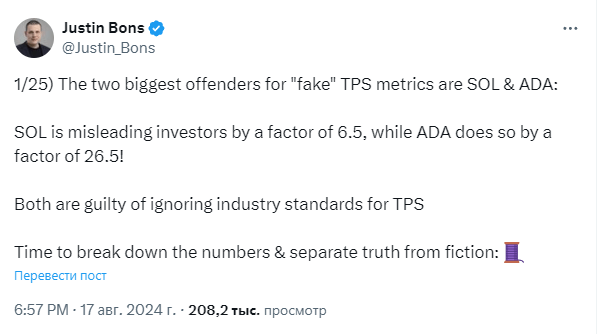
Основатель Cyber ​​Capital Джастин Бонс обвинил криптопроекты Solana (SOL) и Cardano (ADA) в том, что они вводят инвесторов в заблуждение, публикуя «поддельные» показатели транзакций в секунду (т/с). По его словам, Solana вводит общественность в заблуждение в 6,5 раза, а Cardano — в 26,5 раза.
Opera Снимок_2024-08-18_210642_x.com

Бонс обвинил Solana и Cardano в игнорировании отраслевых стандартов расчёта т/с, приведя теоретические цифры в 10 000 т/с и 18 т/с для SOL и ADA соответственно. Основатель Cyber ​​Capital считает, что реальное значение этого показателя для SOL составляет 739, а для ADA — 0,4.

В связи с этим Бонс заявил о колоссальных расхождениях с широко разрекламированными цифрами. По словам аналитика, заявления о 65 000 максимальных т/с для SOL и 477 для ADA неточные.

Бонс подкрепил свои высказываниями расчётами, которые снизили теоретическое количество т/с SOL примерно до 50 000. И здесь сыграли роль криптографические ограничения, где самым узким местом, по его мнению, является проверка EDDSA. Он также отметил и неудачные транзакции, которые ограничивают максимальное теоретическое число транзакций SOL в секунду до 10 000.

Что касается Cardano, то здесь Бонс обнаружил подсчёт нескольких выходов как отдельных транзакций, отсюда и столь высокие показатели. По словам исследователя, почти все другие сети могут объединять транзакции в пакеты без дополнительных затрат, но никто этого не делает, учитывая, что это не является ‌принятой отраслевой практикой.

Trending Cryptos

Related Reads

Earning Six Figures and Still Struggling to Rent in San Francisco

A couple in San Francisco with a combined tech income over $360,000 struggled for months to find a one-bedroom apartment under $5,000 per month. Their story highlights how the AI wealth boom, driven by upcoming IPOs from companies like OpenAI and Anthropic, is dramatically escalating the city's cost of living. Even six-figure salaries are becoming insufficient for a comfortable lifestyle. The article details the financial reality for tech workers earning around $180,000 annually. After taxes, retirement contributions, and healthcare, take-home pay is roughly $7,000 per month. With average rents exceeding $3,800 and one-bedrooms often costing $4,500-$5,200, discretionary income shrinks to $1,500-$2,500. This contrasts sharply with reported median total compensations of $640,000 at OpenAI and $420,000 at Anthropic. The AI gold rush is identified as the primary driver. The scale of potential wealth from these IPOs, far surpassing previous tech booms, is flooding the housing market. Data shows San Francisco's average rent is now the highest in the U.S., with vacancy rates in desirable neighborhoods plummeting to around 3%. The overall cost of living is 65.6% above the national average. The piece features multiple professionals, including a 25-year-old with a $250,000 salary, facing housing instability, fierce competition for rentals, and a persistent, low-grade financial anxiety despite high earnings. It concludes that the rapid concentration of AI wealth is redefining what constitutes a "high salary" in San Francisco, pushing out mid-tier tech talent and creating a stark divide between those in the AI sector and everyone else.

marsbit1h ago

Earning Six Figures and Still Struggling to Rent in San Francisco

marsbit1h ago

Rate Hikes to Save STRC, Selling Bitcoin to Preserve Credit: Strategy Picks Its Two Most Expensive Paths

Over the past six weeks, Strategy has faced a significant crisis of confidence, with its core securities MSTR and STRC experiencing sharp price declines. The situation escalated as the company utilized dollar reserves intended for dividends and interest payments to repurchase debt, and then sold a small amount of Bitcoin for the first time since 2022—an action that contradicted its "never sell" narrative and signaled potential liquidity strain. In response, Strategy introduced a Digital Credit capital framework. This formalized a series of measures to manage the pressure down its capital structure: ordinary shareholders have already borne costs through equity dilution from an $11.5 billion ATM offering; new rules enforce a hard dollar reserve covering at least 12 months of expected dividend and interest payments; the STRC dividend rate was increased from 11.5% to 12%; and, most notably, Bitcoin was officially integrated into the capital toolkit, with board authorization to sell up to $1.25 billion worth if needed to support obligations and repurchase programs. The market reacted with a mix of relief and skepticism. While the announcement triggered a sharp single-day rally in both MSTR and STRC, the preferred shares still trade at a significant discount. Supporters view the framework as pragmatic crisis management that provides a price floor and clearer rules. Critics argue that institutionalizing Bitcoin sales undermines the core investment thesis and, with Bitcoin's price below the company's average cost basis, amounts to selling assets at a loss to maintain its financial structure. The broader context shows institutional Bitcoin buying drying up, highlighting that Strategy's challenges and new framework are now a key indicator for overall market risk sentiment. Ultimately, the framework buys time, but STRC's return to par value depends on market belief in the company's ability to cover dividends without further dilution or substantial Bitcoin sales—a task that would be easier if Bitcoin's price recovers.

链捕手1h ago

Rate Hikes to Save STRC, Selling Bitcoin to Preserve Credit: Strategy Picks Its Two Most Expensive Paths

链捕手1h ago

Trading

Spot

Hot Articles

Discussions

Welcome to the HTX Community. Here, you can stay informed about the latest platform developments and gain access to professional market insights. Users' opinions on the price of ADA (ADA) are presented below.

活动图片