24 Predictions for Crypto and AI in 2026

比推Published on 2025-12-31Last updated on 2025-12-31

Abstract

The author, Benedic, founder of Meridian, presents 24 predictions for 2026 as a public commitment to test his judgment. He will delete the article if more than 6 predictions are proven wrong upon review next year. He discloses holdings in some mentioned assets and expresses interest in angel investment. Key predictions are categorized: **Mainstream Assets:** Quantum computing will challenge Bitcoin; Ethereum's relevance and price will decline; Solana will lead in synthetic assets and retain retail users; Monad will succeed as a Layer 1; Binance new coins will underperform stocks. **Application Layer:** Hyperliquid will gain market share in perpetuals, but overall growth slows; prediction markets won't expand beyond sports/politics; on-chain tokenized crypto options will hit $10B volume; Base will abandon SocialFi. **Infrastructure:** Robinhood's L2 will stagnate; Base will drop its L2 focus; privacy middleware integrated with embedded wallets will gain popularity; Coinbase or Stripe will solve fiat on-ramps for stablecoins. **Solana Ecosystem:** Protocol-integrated block building will advance; routing aggregators and DEXs/market makers will vertically integrate; tokenized stocks will scale significantly outside the US. **AI (Crypto):** AI assistants will become default in apps, a key differentiator; AI-written smart contracts will lower development barriers, spurring mechanism design innovation; ChatGPT will become more modular with a popular crypto plugin. **AI (Non-C...

Author: Benedic, Founder of Meridian

Original Title: Predictions for 2026


Preface

This is my first attempt at writing 24 predictions for 2026, aiming to hold myself accountable through public commitment. If the accuracy rate falls below 18 items (i.e., more than 6 errors) upon verification next year, I will delete this article. At that time, I will evaluate each item one by one and publish the results.

I hold positions in some of the assets and companies mentioned in this article. If you are building in these directions, I look forward to discussing the possibility of angel investment with you.

Mainstream Assets

- The quantum computing narrative will become a serious challenge for Bitcoin in 2026, as its community is too decentralized to propose credible solutions.

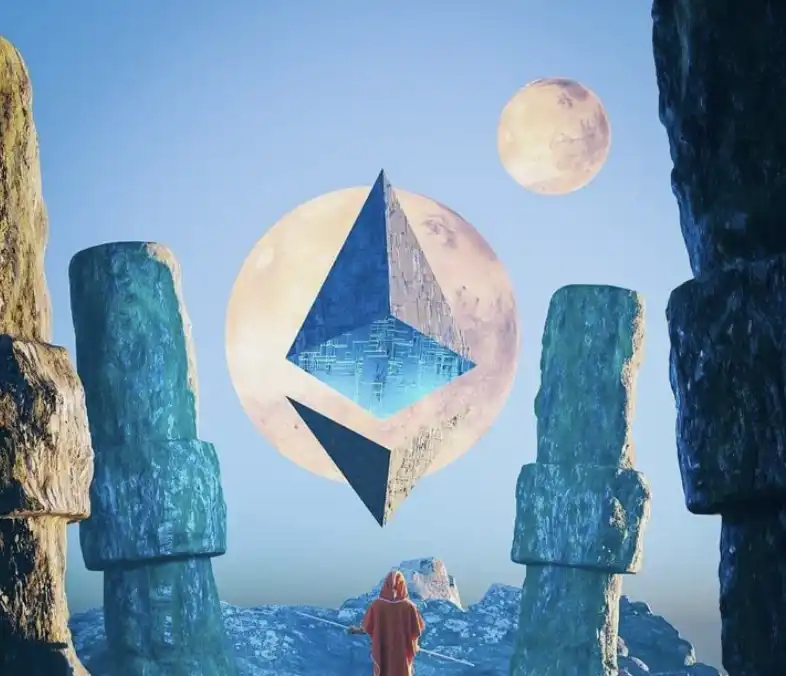
- Ethereum's market attention will continue its multi-year decline and begin to show substantial price weakness.

- Solana will shed its meme coin chain label and become the leading platform for real-world synthetic asset trading, while maintaining the largest retail user base.

- Monad will establish itself as an influential Layer 1, with its year-end price significantly higher than the Coinbase ICO price. Apart from Tempo, other execution layers launched in 2025 or early 2026 will fail to gain lasting market appeal or attention.

- The strategy of buying a basket of new Binance coins will significantly underperform the strategy of buying stocks.

Application Layer

- Hyperliquid will capture market share from centralized perpetual contract platforms, but the overall growth rate of the BTC/ETH/altcoin perpetual contract market will be relatively slow.

- Prediction markets will fail to expand significantly beyond sports and major political events, gradually fading from the mainstream view.

- Some form of on-chain tokenized crypto options product will reach a trading volume of $10 billion.

- Base will abandon SocialFi and revert to being an ordinary wallet.

Infrastructure

- Robinhood's Layer 2 will make little progress due to reduced demand for regulatory arbitrage in the current political environment.

- Base will abandon its Layer 2 positioning.

- Some privacy middleware located below the application layer and vertically integrated with embedded wallets will become quite popular.

- Coinbase or Stripe will completely solve the fiat on-ramp issue for stablecoins in third-party applications.

Solana Ecosystem

- Block building will take a significant step toward protocol integration. Jito and Harmonic will adjust their strategies and both successfully launch new business lines beyond block building.

- We will see vertical integration between routing aggregators and decentralized exchanges/professional market makers.

- Tokenized stocks will gain a foothold and achieve significant scale in markets outside the U.S.

AI (Crypto Field)

- AI assistants will significantly improve and become the default configuration in most mainstream consumer applications. By the end of the year, a key differentiator among applications will be the quality of their AI assistants.

- Multiple smart contracts almost entirely written and tested by Claude will gain massive attention. Twelve months from now, the barrier to writing smart contracts will feel 10 times lower than it does now, sparking a renaissance in mechanism design.

- ChatGPT will become more modular and agentic (via plugins), and one crypto use case within it will rapidly gain popularity.

AI (Non-Crypto Field)

- Anthropic will surpass OpenAI in revenue and become the highest-valued AI lab.

- Google will solve the post-training problem, and Gemini Flash will become the most popular model for global non-coding agent tasks.

- Nearly all AI companies selling to enterprises will realize they are competing with each other. This collapse of the imagination space will make competition exceptionally fierce.

- Meta will launch a new consumer AI product that tops the App Store download charts.

- (Low probability but I believe its value is relatively underestimated compared to consensus) A new paradigm beyond "giving LLMs detailed prompts and a series of specialized tools" will emerge and greatly shake up which startups in the field have value.


Original link:https://www.bitpush.news/articles/7599494

Trending Cryptos

Related Questions

QWhat is the author's main prediction regarding Bitcoin in 2026?

AThe author predicts that the quantum computing narrative will become a serious challenge for Bitcoin in 2026, as its community is too decentralized to propose a credible response.

QAccording to the author, which blockchain will become the dominant platform for real-world synthetic asset trading while retaining the largest retail user base?

AThe author predicts that Solana will shed its meme coin chain label and become the dominant platform for real-world synthetic asset trading, while continuing to have the largest retail user base.

QWhat significant development does the author foresee for AI assistants in consumer applications by the end of 2026?

AThe author predicts that AI assistants will be significantly improved and become the default configuration in most mainstream consumer applications, with the quality of the AI assistant becoming a key differentiator between applications by the end of the year.

QWhich company does the author predict will surpass OpenAI in revenue and become the highest-valued AI lab?

AThe author predicts that Anthropic will surpass OpenAI in revenue and become the highest-valued AI lab.

QWhat is the author's prediction about the future of Base's Layer 2 and its SocialFi focus?

AThe author predicts that Base will abandon its Layer 2 positioning and also abandon its SocialFi focus, reverting to being a regular wallet.

Related Reads

Will MicroStrategy Fall into a Death Spiral? What Will the Macro Trend Be in the Second Half of the Year?

The podcast features investor Didier discussing the recent Bitcoin downturn and the evolving strategy of MicroStrategy (MSTR). He argues the core pressure is not macro factors or ETF outflows, but the market pricing in an expectation that MSTR will engage in continuous, small-scale Bitcoin sales to fund its increasing preferred stock and debt obligations under its "bitcoin-per-share neutrality" principle. This creates a structural headwind. However, he is cautiously optimistic a "death spiral" is avoidable without new major shocks, as market support is likely to emerge at a certain price point. Didier then posits that the AI-driven bull market in US stocks (semiconductors, data centers) is fundamentally driven by AI agents and tokens becoming the "new labor force," displacing human roles and boosting corporate margins. This shift toward a machine economy is still in its early stages. He comments on crypto exchanges adding US stock trading, viewing it as a natural move toward valuable real-world assets as truly valuable crypto-native assets remain scarce. For crypto-native traders, he suggests existing strategies (e.g., meme-chasing or value investing) can translate to similar assets in US markets. The discussion notes the severe liquidity damage from the "1011 event" (likely referring to a major market crash) has essentially ended the altcoin cycle, with speculative momentum shifting to the more liquid US stock market. Regarding the macroeconomic outlook for H2 2024, Didier expresses increased caution due to potential market pressure from upcoming mega-IPOs (e.g., SpaceX) and US midterm election risks. Long-term, he remains bullish on AI's productivity gains and its convergence with blockchain/Web3, which he sees maturing into a more institutional, real-asset-focused phase.

链捕手1m ago

Will MicroStrategy Fall into a Death Spiral? What Will the Macro Trend Be in the Second Half of the Year?

链捕手1m ago

Dylan Patel: Founder of SemiAnalysis, Praised by Jensen Huang, is a 'Beekeeper' and 'Forum Enthusiast'

Dylan Patel, founder of the independent research firm SemiAnalysis, has an unconventional background. A former beekeeper from rural Georgia, he entered the semiconductor world as a self-taught "forum warrior," discussing chip technology anonymously online from a young age. He launched the SemiAnalysis blog in May 2020, which later transitioned to a paid subscription model. The firm has grown from a one-person operation to a global team of around 60, with a dedicated teardown lab. Its detailed, technically-focused analysis on semiconductor supply chains, AI infrastructure, and products has earned significant industry recognition. Notably, NVIDIA founder Jensen Huang has publicly cited their reports. In a landmark case, a critical 2024 report on AMD's MI300X GPU software stack led to a 90-minute call with AMD CEO Lisa Su, who thanked him for the constructive feedback. SemiAnalysis later acknowledged AMD's improvements. The firm's influence on markets was seen when a report on NVIDIA's Rubin memory configuration was partially shared, affecting memory stock prices. Dylan Patel emphasized the importance of context, contrasting the shared excerpt with the report's actual title. SemiAnalysis, now a multi-faceted consultancy with revenue projected to reach $100 million, is known for its deep technical insights that influence major industry players and investment decisions.

marsbit52m ago

Dylan Patel: Founder of SemiAnalysis, Praised by Jensen Huang, is a 'Beekeeper' and 'Forum Enthusiast'

marsbit52m ago

Dylan Patel: SemiAnalysis, Praised by Jensen Huang, is Founded by a 'Beekeeper and Forum Warrior'

Dylan Patel, founder of the independent research firm SemiAnalysis, has an unconventional background. Growing up in rural Georgia, he later worked as a beekeeper in Minnesota. His entry into semiconductors began as a self-taught "forum warrior," engaging anonymously in online tech communities from a young age. In May 2020, he started the SemiAnalysis blog on WordPress, later moving it to Substack as a paid subscription service. The firm has since evolved from a one-person operation into a global company with around 60 employees, featuring a dedicated chip teardown lab. Its revenue, reaching $20 million last year, is projected to surpass $100 million this year. SemiAnalysis is highly regarded in the AI and semiconductor industry for its deep technical analysis. NVIDIA founder Jensen Huang has publicly praised its reports. In a notable instance, a critical report on AMD's MI300X GPU software shortcomings prompted a 90-minute call with CEO Lisa Su, who thanked Patel for the "constructive feedback." A later report acknowledged AMD's subsequent improvements. The firm's analyses have significant market impact. For example, a June report discussing potential memory configuration changes in NVIDIA's next-generation servers was cited as a factor in pressure on memory-related stocks. Patel plans to establish a venture capital firm, having already made personal investments in about 20 startups. SemiAnalysis combines roles as a consultancy, model platform, and tech lab, focusing on the practical bottlenecks in AI infrastructure.

Odaily星球日报56m ago

Dylan Patel: SemiAnalysis, Praised by Jensen Huang, is Founded by a 'Beekeeper and Forum Warrior'

Odaily星球日报56m ago

Ethereum Q1 Report: On-chain Activity Hits Record High, Tokenized Assets Lead the Industry

Ethereum Q1 2026 Report: On-chain activity hits record high, tokenized assets lead the industry. In Q1 2026, Ethereum's network experienced a unique divergence: on-chain activity soared while USD-denominated metrics declined. Monthly active users reached 13.2 million, transactions hit 200.4 million, and TPS averaged 25.78, all setting new highs. However, total value locked (TVL) fell 11.0% to $316.2B, DEX volume dropped 24.0% to $134.5B, and ETH's fully diluted market cap fell 30.3% to $290B. A key driver was the Blob Parameter Fork (BPO#2) in January, which increased data capacity and caused a sharp 47.9% drop in layer-1 transaction fees despite higher usage. Etherean's tokenized asset market cap reached $203.4B, up 42.9% year-over-year. While stablecoins ($178.9B) saw a slight dip, tokenized funds ($19.4B, +73.1% YoY), commodities ($4.7B, +325.9% YoY), and stocks ($365.1M) grew strongly. Ethereum dominates cross-chain comparisons, holding 71% of TVL, 79.2% of active loans, 61.8% of stablecoins, and 73% of tokenized funds among top chains. The report highlights a "Jevons Paradox" scenario: network expansion reduces per-transaction costs but unleashes latent demand, driving long-term growth. Ethereum's strategy mirrors Amazon's early focus on scale over profit. Its open, neutral foundation is seen as critical for institutional adoption, as evidenced by growing activity from firms like BlackRock and JPMorgan. The roadmap targets further scalability, aiming for thousands of TPS by 2029 to solidify its role as a global financial settlement layer.

marsbit59m ago

Ethereum Q1 Report: On-chain Activity Hits Record High, Tokenized Assets Lead the Industry

marsbit59m ago

Trading

Spot
Futures

Hot Articles

Discussions

Welcome to the HTX Community. Here, you can stay informed about the latest platform developments and gain access to professional market insights. Users' opinions on the price of AI (AI) are presented below.

活动图片