Bankless:以太坊的原生协议正逃向Solana

Odaily星球日报Published on 2024-05-16Last updated on 2024-05-16

Abstract

Solana正逐渐成为以太坊开发者的「东道主」。

原文标题:《ETH‘s DeFi Scene Eyes Solana》

原文作者:Bankless

原文编译:律动小工,BlockBeats

Solana 在 FTX/Alameda 崩溃的灰烬中涅槃重生后,巩固了其作为顶级区块链的地位。在随后社区主导的复兴中,Solana 原生团队的汗水推动了进步的车轮,但随着 SOL 价格和其生态内 DeFi 指标的稳定成长,非 Solana 原生的协议也已准备好抓住这个起飞的机会。

Solana 原生协议铺平了道路

SOL 从 2022 年 12 月的 8 美元低点飙升至两个月前的 210 美元,这是本周期加密货币最引人注目的回归涨势之一,但该生态系统的财富创造并不局限于其原生代币持有者。

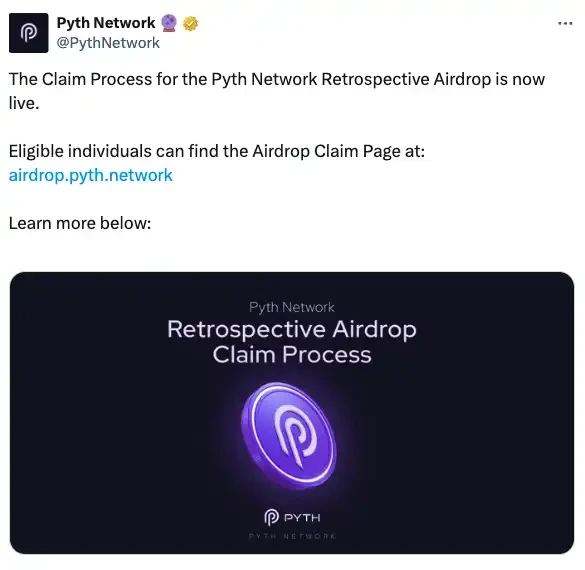
Solana 生态的开发者们不断给市场制造情绪高点,从 11 月份的 PYTH 空投开始,该空投将 Solana 上的代币分配给在 27 个网络(包括以太坊及其 L2)上与 Pyth 预言机交互的地址,并标志着一个转折点,为来自其他生态系统的用户提供了支持测试 Solana 的直接经济激励。
Bankless:以太坊的原生协议正逃向Solana

不久之后,Solana 原生流动质押协议 Jito Labs 进行了自己的空投,奖励那些通过持有 jitoSOL 存款收据的简单操作获得超过 100 积分的合格钱包,并分配至少五位数的代币。Jito 用户收到的令人眼花缭乱的分配将 Solana 变成了空投狩猎的首要目的地,并通过自己生态内羽翼未丰的协议促进了基于积分的激励系统的大规模采用,这些协议已被证明在吸引用户及其资金方面非常成功。

逐渐改变的格局

虽然原生协议为 Solana 主流加密货币的接受奠定了基础,但 Solana 正逐渐成为以太坊开发者的「东道主」。

这种转变可能会以龟速进行,但毫无疑问,随着越来越多的项目开始意识到 Solana 生态内的大量链上活动,并急切地希望利用这一机会,从以太坊到 Solana 的迁移必然会发生。

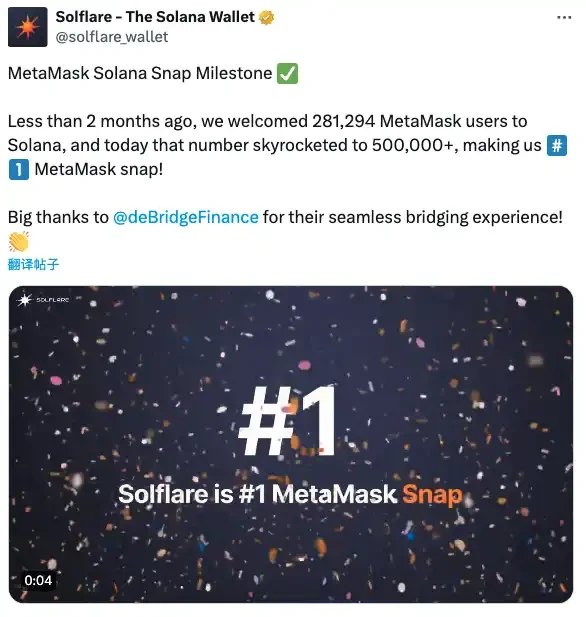
去中心化计算共享网络 Render 很早就全力支持 Solana 愿景,并于 11 月选择将其代币迁移到 SPL 标准。而尽管 MetaMask 在改善用户体验方面通常被认为是落后者,但该项目是首批引入 Solana 兼容性的以太坊原生应用程序之一,去年 9 月推出了「Snaps」,使用户能够直接从 MetaMask 选择进入 Solana 生态的应用程序。迄今为止,Solana 原生钱包 Solflare 的 Snaps 集成已吸引了超过 50 万用户。
Bankless:以太坊的原生协议正逃向Solana

另外,在 Solana 上有很多原生借贷市场,但没有一个具有与以太坊蓝筹借贷目 Aave 相同水平,且经过时间考验的安全性。为了利用其品牌作为 Solana 的竞争优势,Aave DAO 以 83% 的通过率批准了 1 月份的温度检查,通过 Neon EVM 部署其 V3 隔离货币市场的最低可行版本,Neon EVM 是一个完全兼容的以太坊开发环境 Solana 区块链。

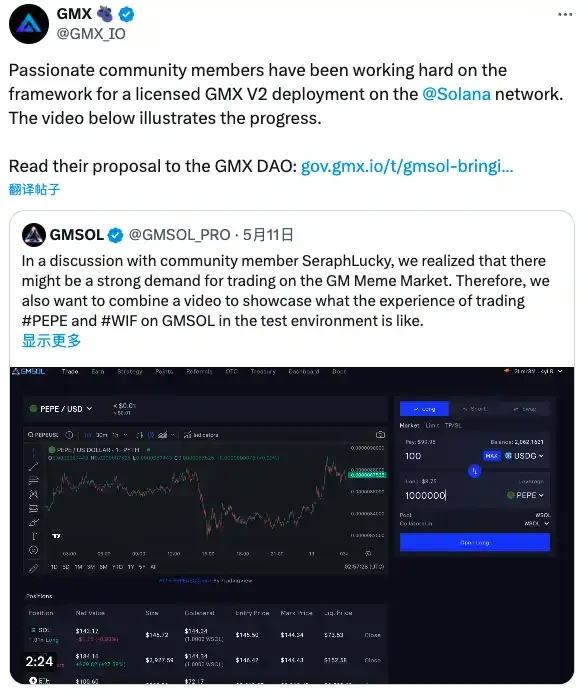
上周三,EVM 生态的永续合约交易平台 GMX 的治理论坛上出现一个社区主导的提案,寻求在 Solana 上建立一个名为 GMSOL 的独立交易所部署。GMSOL 将专门利用 GMX 代币进行所有价值衡量和存储,同时实施 GMX 回购机制,并将很大一部分费用分配回 GMX 金库以建立 GMSOL 金库。

为了换取这一新的 Solana 原生部署的红利,GMX DAO 预计将承担与协议审核相关的所有费用,并授予复制和使用其前端代码的许可证。
Bankless:以太坊的原生协议正逃向Solana

除此之外,市场普遍猜测 Ethena 和 Pendle 这两个龙头以太坊项目将在不久的将来部署到 Solana 生态,这两个项目近几个月来得益于加密市场利率环境的提高而蓬勃发展。

长期趋势

应用服务于用户,而不是区块链,尽管在考虑新部署时,许多蓝筹协议应该有一个很高的标准,但如果它们不涌向用户和活动存在的环境,那就太愚蠢了。在缺乏协议的网络上,用户将不可避免地寻找替代品,从而使现有应用程序的市场份额主导地位面临风险——尤其是当他们的链开始将其市场份额让给竞争对手时。

以太坊和 Solana 采用了截然不同的扩展方法,前者选择网络分片以使所有人都可以操作验证器,而后者则倾向于将使用单片的统一状态。虽然验证者层面更大程度的去中心化有助于维护以太坊网络的完整性,但它肯定也存在一些缺点,使得 Solana 的替代愿景在某些方面极具吸引力。

目前,加密行业仍处于实验阶段,这意味着我们确实不知道它在 10 年后会是什么样子,但正如投资者可以进行审慎的投资组合多元化以降低风险一样,应用程序也可以多元化他们的区块链部署来维护自己的市场份额。

追求最大成功的开发者必须承认,未来的金融没有必然的中心,他们应该相应地部署他们的应用程序,无论是以太坊、Solana,甚至是 EVM+SVM 的 Monad 和银行运营的监管结算网络。加密行业必须跨越巨大的不确定性鸿沟,才能从婴儿期进入最终状态,实现真正的采用,并让数万亿美元的传统资产进入链上。

在那之前,盲目屈服于链忠诚度的应用程序开发者将会失去牌桌上的金钱和市场份额。

原文链接

Trending Cryptos

Related Reads

a16z: In the AI Era, Company Competition for Talent Starts with Job Title Naming

The article discusses how companies in the AI era are competing for talent through strategic "title arbitrage," or the renaming of key roles to reflect and attract new, high-value capabilities. It uses Palantir's creation of the "Forward-Deployed Engineer" (FDE) as a prime example. This title reframed client-facing technical work from a peripheral "implementation" role into a core, high-status engineering function. The move was strategic, allowing Palantir to attract talent that blended technical skill with business acumen and to dominate the market's perception of this capability. The piece argues that job titles are an organizational language that signals the value and authority of certain work. Effective new titles, like "Data Scientist" or "Site Reliability Engineer," emerge when a role's strategic importance genuinely outgrows its old name. Conversely, mere title inflation without substantive change is ineffective. For AI companies, particularly in B2B, this is a crucial strategy. AI transformation creates new high-leverage roles (e.g., "Legal Engineer," "GTM Engineer") that combine domain expertise with technical automation. By naming these roles, a company can help clients internally legitimize these change-makers. This, in turn, builds market mindshare, associating the company with the new capability. In conclusion, as AI blurs the lines between product and service, the ability to accurately name and organize the critical, client-adjacent work that defines product learning will be a key competitive advantage. The first to define this new organizational language plants a flag in the market's mind.

marsbit39m ago

a16z: In the AI Era, Company Competition for Talent Starts with Job Title Naming

marsbit39m ago

Interview with Strategy CEO: Can STRC Recover After Selling Bitcoin?

Interview with Strategy CEO Phong Le on the recent sale of 32 Bitcoin and its impact. He clarifies the move was a small, strategic action to demonstrate liquidity to debt holders, test internal processes, and prove operational discipline—not a response to fears of a "death spiral" from DeFi protocols leveraging STRC (Strategy's preferred stock product), which he notes holds less than 10% of STRC. Le emphasizes Strategy’s long-term focus as the largest corporate Bitcoin holder, using the adage that markets are a "voting machine" short-term but a "weighing machine" long-term. Decision-making is data-driven, involving the board, complex modeling, and multiple stakeholder considerations, moving beyond a founder-centric model. He outlines various capital options but stresses the strategic importance of "doing nothing" as a valid choice, citing resilience built during the 2022 bear market. Le expresses unwavering belief in Bitcoin's foundational value for global sovereignty and its future role in an AI-driven economy with trillions of autonomous agents. Addressing STRC's current price below its $100 face value, Le explains recent pressure was due to using dollar reserves for bond buybacks. He expects STRC to return to par as reserves are replenished and its semi-monthly dividend payments begin, noting the product is heavily over-collateralized. Finally, Le confirms the company sold Bitcoin the week prior to May 31st, as disclosed in an 8-K filing, leaving prediction market interpretations to others. The overarching philosophy remains "Spread Bitcoin with love," embracing all methods of gaining Bitcoin exposure.

marsbit1h ago

Interview with Strategy CEO: Can STRC Recover After Selling Bitcoin?

marsbit1h ago

IOSG Founder: Ethereum Doesn't Need Another Leap of Technical Faith, It Needs a Musk-style Compromise

Jocy, founder of IOSG Ventures, argues that Ethereum does not need renewed technological faith but a "Musk-like compromise." The recent formation of ETHLabs—funded by major ETH holders like BitMine and Lubin—highlights a market-driven move to fill a gap left by the Ethereum Foundation (EF), signaling a loss of confidence in its decentralized, hands-off approach. The core critique contrasts Vitalik Buterin's (V) idealistic, technology-first vision with Elon Musk's pragmatic, business-driven execution. The author asserts Ethereum's current shortage is not another technical roadmap but a clear, real-world application narrative and a leader willing to engage directly with commercial realities—like Musk. Internal issues are emphasized, citing EF's management problems and talent drain. While the new decentralized model with independent nodes like ETHLabs addresses the single foundation's limitations, it risks fragmentation without cohesive direction. True cohesion, the author suggests, must come from a shared, compelling narrative around ETH's value, not just from aligned financial interests. Independence claims for new entities are seen as aspirational, needing years of transparency to build trust. The ultimate threat is not competitors like Solana, but the broader shift of attention and talent toward AI. Ethereum has a limited window—12 to 18 months—to recapture focus by delivering tangible, real-world applications. The conclusion urges V to shift from abstract ideals to grounded, pragmatic leadership. The time for this crucial pivot is running out.

marsbit2h ago

IOSG Founder: Ethereum Doesn't Need Another Leap of Technical Faith, It Needs a Musk-style Compromise

marsbit2h ago

Trading

Spot
Futures

Hot Articles

Discussions

Welcome to the HTX Community. Here, you can stay informed about the latest platform developments and gain access to professional market insights. Users' opinions on the price of ETH (ETH) are presented below.

活动图片