1confirmation: 5 Consumer Crypto Sectors Worth Revisiting

marsbitPublished on 2026-08-13Last updated on 2026-08-13

Abstract

In the article "1confirmation: 5 Consumer Crypto Sectors Worth Revisiting," the author argues that the next breakthrough consumer crypto application may emerge from ideas that previously failed but are now ripe due to better infrastructure and timing. The five revisited sectors are: 1. **Internet-Native Assets**: Instead of tokenizing real-world assets (RWA), the bigger opportunity lies in creating unique crypto-native assets that don’t exist offline, moving beyond memecoins and NFTs to capture cultural moments or attention meaningfully. 2. **X-to-Earn**: Projects like STEPN and Axie Infinity introduced earning crypto without an initial purchase. The lesson is not that earning models are flawed, but that unsustainable token emissions failed. Future models need a compelling reason for users to earn and hold the assets. 3. **The Metaverse**: Past attempts focused on digitally replicating the real world (e.g., Decentraland). The core mistake was assuming virtual worlds must resemble physical ones. The real opportunity is reimagining next-generation online social experiences. 4. **DAOs**: While still existing, DAOs fell short of their potential by overemphasizing governance. The simpler, powerful use case demonstrated by ConstitutionDAO is collective funding for shared goals (e.g., buying artifacts, funding projects) by internet communities. 5. **People as Markets**: Past SocialFi/creator economy projects (Friend.tech, BitClout) tried to build markets around individuals but ofte...

Author: 1confirmation

Compiled by: Jiahuan, ChainCatcher

Companies fail for many reasons, but one of the most common is timing.

The most successful companies today are often not the first ones to try a particular idea. Infrastructure gradually matures, consumer behavior shifts, and eventually, the right moment arrives.

The crypto industry has now experienced over a decade of consumer application experiments, leaving behind a vast graveyard of projects from which we can learn.

Here are some ideas that failed in the past but could now give rise to breakout consumer applications.

1. Internet-Native Assets

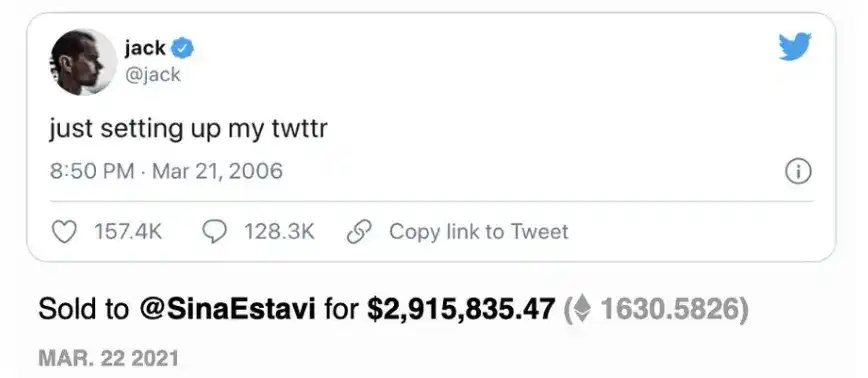
During the 2021 NFT craze, Cent created a marketplace for tokenizing tweets. On March 22, 2021, Jack Dorsey's first tweet sold for $2,915,835.47, or 1,630 ETH.

NBA Top Shot also attempted to put culturally significant classic moments on-chain, but ultimately, it packaged them into something that looked and felt very much like digital trading cards.

To this day, we still haven't found a truly good way to meaningfully capture attention or cultural moments on the internet.

Many think of memecoins, but memecoins are more seen as proxies for attention rather than assets that truly embody the cultural moments themselves.

Everyone is now talking about RWA, moving assets like stocks, US Treasuries, real estate, and trading cards onto the chain.

But the reverse direction might be an even bigger opportunity: Are there entirely new crypto-native assets that simply don't exist in the real world?
2. X-to-Earn

Projects like STEPN and Axie Infinity were once wildly popular, in part because they didn't require users to first buy cryptocurrency; instead, they offered a way to earn it.

We shouldn't conclude that "doing something to earn crypto" is inherently a foolish idea.

The real lesson to learn is that endlessly issuing freely tradable tokens to users is not a sustainable economic model.

In the future, most people may get their first cryptocurrency not through purchase, but through earning.

The question is, what exactly are they earning? And why would they want to continue holding it?

3. The Metaverse

Considering how poorly the last wave of the metaverse turned out, even uttering the word "metaverse" now seems almost unbelievable.

Decentraland, The Sandbox, and many others were essentially trying to recreate the physical world online, with land, buildings, and digital real estate. When Facebook renamed itself Meta, it was a company worth $900 billion.

The hottest trend now is emphasizing "building for the real world," or "build for IRL."

But if everyone is moving towards IRL, then perhaps the opposite direction is worth reconsidering: What should the next generation of "people hanging out together online" experiences actually look like?

The true mistake of the metaverse might not have been believing people were willing to spend time in digital worlds.

The problem may have simply been that we thought those digital worlds had to look like the physical world.

4. DAOs

DAOs cannot be considered a complete failure because many still exist today, but they clearly haven't reached their initially envisioned potential.

ConstitutionDAO was one of the more interesting experiments because what it did was actually much simpler.

A group of strangers on the internet raised about $47 million in a matter of days in an attempt to buy an original copy of the US Constitution.

Buying a sports team, funding a movie, supporting an athlete, purchasing a historical artifact, saving a local business, funding research, acquiring land, or collectively accomplishing anything a single person simply could not do alone.

Perhaps DAOs later became too focused on governance and overlooked a much simpler consumer behavior: a group of people on the internet pooling money to do something together.

5. People as Markets

This is the most obvious direction on this list.

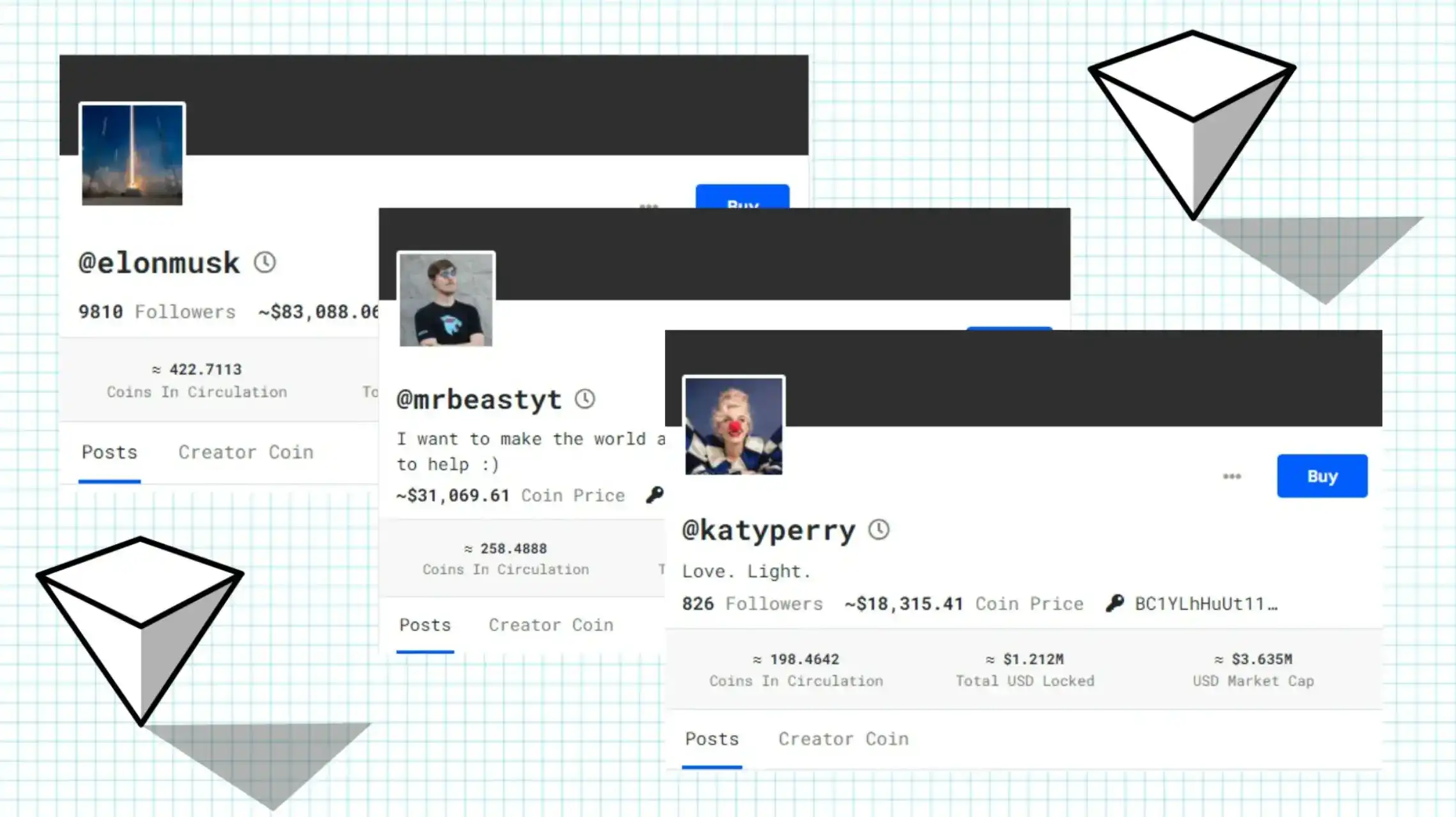
Friend.tech, Rally, Roll, BitClout, and many other projects. The creator economy and SocialFi era have left a graveyard of failures.

The fundamental idea behind these products has always been some form of "creating a market for every person."

Sometimes it was creator tokens, sometimes access passes, sometimes bonding curves, but none of these models ultimately proved truly sustainable.

People trade memecoins related to an individual, bet on what a political figure will do next, buy sports cards based on athlete performance, and to some extent trade a company's stock because of its founder.

So, the idea of "people as markets" itself might not be wrong; perhaps the past implementations were just flawed.

Traders and fans might indeed want to build a market around a person, but does the creator themselves want to become a market?

If they don't, is there a way to build a market around a person without making that person themselves the product being traded?
The next truly breakout consumer crypto application will not come from what everyone is doing today.

It's likely an idea that failed five years ago, but today, the infrastructure and timing are finally right.

Related Questions

QAccording to the article, what are the 5 consumer crypto categories that have previously failed but are worth revisiting?

AThe five categories are: 1. Internet-native assets, 2. X-to-Earn, 3. The Metaverse, 4. DAOs, and 5. Person-as-a-Market.

QWhat does the article suggest is the common key lesson from the failure of past X-to-Earn models?

AThe key lesson is that endlessly issuing freely tradable tokens to users is not a sustainable economic model. The real question is what value users earn and why they would continue to hold it.

QHow does the article suggest the past approach to the 'Metaverse' might have been flawed?

AThe article suggests the flaw wasn't the belief that people want to spend time in digital worlds, but rather the assumption that these digital worlds must look and function like the real world, with land and buildings.

QBased on the analysis of ConstitutionDAO, what simpler consumer behavior might DAOs have overlooked?

ADAOs may have become overly focused on complex governance, overlooking the simpler consumer behavior of a group of people on the internet pooling money to collectively do something (e.g., buy an artifact, fund a project) that an individual couldn't do alone.

QWhat critical question does the article raise about the 'Person-as-a-Market' concept after its past failures?

AIt questions whether creators themselves want to be the product being traded in a market. It asks if there is a way to build a market *around* a person without forcing that person to become the traded commodity.

Related Reads

Crypto.com and Trump Media "Break Up": $6.42 Billion Vault Plan Fails, CRO Loses Its Largest Backstop Buyer

Crypto.com, Trump Media (DJT), and Yorkville Acquisition Corp. have officially terminated their planned $64.2 billion merger to create the "Trump Media Group CRO Strategy," a publicly-listed CRO treasury company. Announced in August 2025 during the peak of Digital Asset Treasury (DAT) hype, the deal was promoted as a massive vote of confidence, with Crypto.com's CEO Kris Marszalek once stating the entity would "forever" buy CRO. The termination, citing changing market conditions and business priorities, also ends related plans for ETF services and integrating a prediction market into Truth Social. Following the news, CRO's price fell below $0.05, hitting its lowest point since October 2023. The token is down approximately 95% from its 2021 all-time high. The collapse of this high-profile deal raises critical questions about the DAT model, suggesting it creates artificial, unsustainable demand rather than being driven by genuine token utility or adoption. This sentiment is reinforced by recent reports that Strategy, the largest Bitcoin treasury company, has been selling BTC, breaking its "never sell" narrative. For CRO holders, the failed merger adds to existing concerns, including recent reductions in Crypto.com card benefits and executive departures, forcing a broader reassessment of the exchange's fundamentals beyond a single abandoned transaction.

marsbit5m ago

Crypto.com and Trump Media "Break Up": $6.42 Billion Vault Plan Fails, CRO Loses Its Largest Backstop Buyer

marsbit5m ago

Hash Global Research Report: Bitcoin Hasn't Risen Yet, Why Are We Starting to Think the Bear Market Might Be Over?

Hash Global Research Report: Why We Think the Bear Market Might Be Ending Even Before Bitcoin Rises Over the past six months, AI has dominated market attention, causing a significant shakeout in crypto. Bitcoin has tested the $58-60K support three times since February, with volatility hitting multi-year lows. Despite stagnant prices, key underlying dynamics are shifting. The forces that drove the market down are weakening: macro tightening fears are easing as US inflation and jobs data cool, the perceived systemic risk from large holders like MicroStrategy selling is diminishing as they shore up finances, and institutional outflows have stopped. Simultaneously, on-chain data shows a rare concentration of over 240,000 BTC (approx. 12% of supply) accumulated in the $61-65K range, forming a new, consolidated base reminiscent of historical bottoms. Meanwhile, the AI trade is cooling, potentially redirecting capital towards undervalued crypto assets, as seen in July's relative outperformance. The current phase, where AI money hesitates and crypto veterans await a final dip, creates a "no-man's-land" investment opportunity—a potential entry point before a new consensus forms. While a definitive upturn isn't guaranteed, the confluence of weakening bearish pressures, improved on-chain structure, and a possible capital rotation suggests the window for positioning for the next cycle is opening.

marsbit15m ago

Hash Global Research Report: Bitcoin Hasn't Risen Yet, Why Are We Starting to Think the Bear Market Might Be Over?

marsbit15m ago

Explosion in Deep Sea Robots, the Hardest Series A Round Emerges

Deep-sea robotics startup Deepsea Zhiren has secured over 5 billion yuan in its Series A funding, a landmark deal backed by prominent investors including GGV Capital, Dachen Capital, Genesis Capital, Everbright Capital, China Life Insurance Investment, CETC Investment, and the energy tech fund managed by Cathay Capital with TotalEnergies as the cornerstone LP. Existing investors also participated significantly. The company, founded by industry veteran Ma Yiming, specializes in developing heavy-duty work-class ROVs for extreme deep-sea environments up to 6,000 meters, used in oil and gas, offshore wind, and subsea cable operations. Its product line includes models like "Taurus" (1,000m), "Phoenix 600" (3,000m), and "Singularity" (6,000m). A key achievement is securing multi-million dollar orders from UAE's telecom giant Etisalat, marking a breakthrough for Chinese-made deep-sea robotics in the international market. Deepsea Zhiren differentiates itself through full-stack in-house R&D—from pressure-resistant structures to control systems and AI—and a modular hardware approach. It has built a comprehensive internal standard system aligned with top global offshore specifications. The company is now advancing its "Deep Matrix" initiative, an unmanned, AI-powered, multi-robot cluster system designed for permanent seabed operations. This system aims to drastically reduce reliance on support vessels and human operators, potentially cutting costs in offshore oil field operations by billions over their lifecycle. The funding round signals strong market confidence in the deep-sea tech sector, recently highlighted in China's national policy. With the global subsea services market valued at around 1.5 trillion yuan and growing over 20% annually, Deepsea Zhiren aims to redefine deep-sea development through integrated hardware and embodied AI systems, positioning itself as a global pioneer in ocean robotics.

marsbit43m ago

Explosion in Deep Sea Robots, the Hardest Series A Round Emerges

marsbit43m ago

Trading

Spot
活动图片