Author: Coinstack
Compiled by: Deep Tide TechFlow
Deep Tide TechFlow Commentary: This week, the crypto market executed a textbook "U-turn": within 48 hours, U.S. spot Bitcoin ETFs saw a weekly inflow of $19.2 billion, setting the largest weekly inflow record for 2026. Meanwhile, the Treasury unexpectedly announced it would double long-term bond repurchase size from $2 billion to $4 billion. Combined with the White House crypto summit and the SEC's first formal crypto rule proposal, these three major macro catalysts jointly triggered a $2.74 billion short squeeze. However, Saturday's XRP flash crash of 37% and a $1.71 billion liquidation across the market in 6 minutes laid bare the leveraged nature of this rebound. For the next two weeks, the market will closely watch Warsh's stance at the Jackson Hole meeting and whether the CLARITY Act can pass the hurdle on September 15th.
Weekly Snapshot
- Bitcoin closed at $77,712 on Sunday, up 20.57% for the week, marking its best weekly performance since October 2025.
- Spot BTC ETFs net inflow this week (as of August 21) reached $19.2 billion, the largest single-week inflow in 2026.
- Trump met with crypto CEOs at the White House on August 19, urging the passage of the CLARITY Act.
- Treasury doubled long-term bond repurchase size to $4 billion, triggering $2.74 billion in short covering.
- SEC proposed the "Regulation Crypto Assets" rule, its first formal crypto legislation.
- XRP flash crashed 37% on Saturday, with $1.71 billion in positions liquidated within 24 hours.
- This Week's Focus: Jackson Hole Economic Symposium (August 27–29), Warsh to deliver keynote on August 28.
1. This Week's Opening Insight
August's risk-off tone reversed within 48 hours. Bessent's decision on August 19 to double long-term bond repurchases from $2 billion to $4 billion pushed the 30-year yield down 9-10 basis points from its 2019 high. The Fed stood pat, but this repurchase move coincided perfectly with the White House summit and the SEC's first formal crypto rules.
Bitcoin broke through $70,000, spot ETFs recorded their best week since October 2025, while Saturday's XRP flash crash exposed the fragility of leverage.
Here is what crypto investors need to understand for the week ahead...
2. Weekly Market Dashboard
Top-Performing Large-Cap: XRP (up 47.1%)
XRP touched $1.69 before settling around $1.52, weathering Saturday's flash crash.
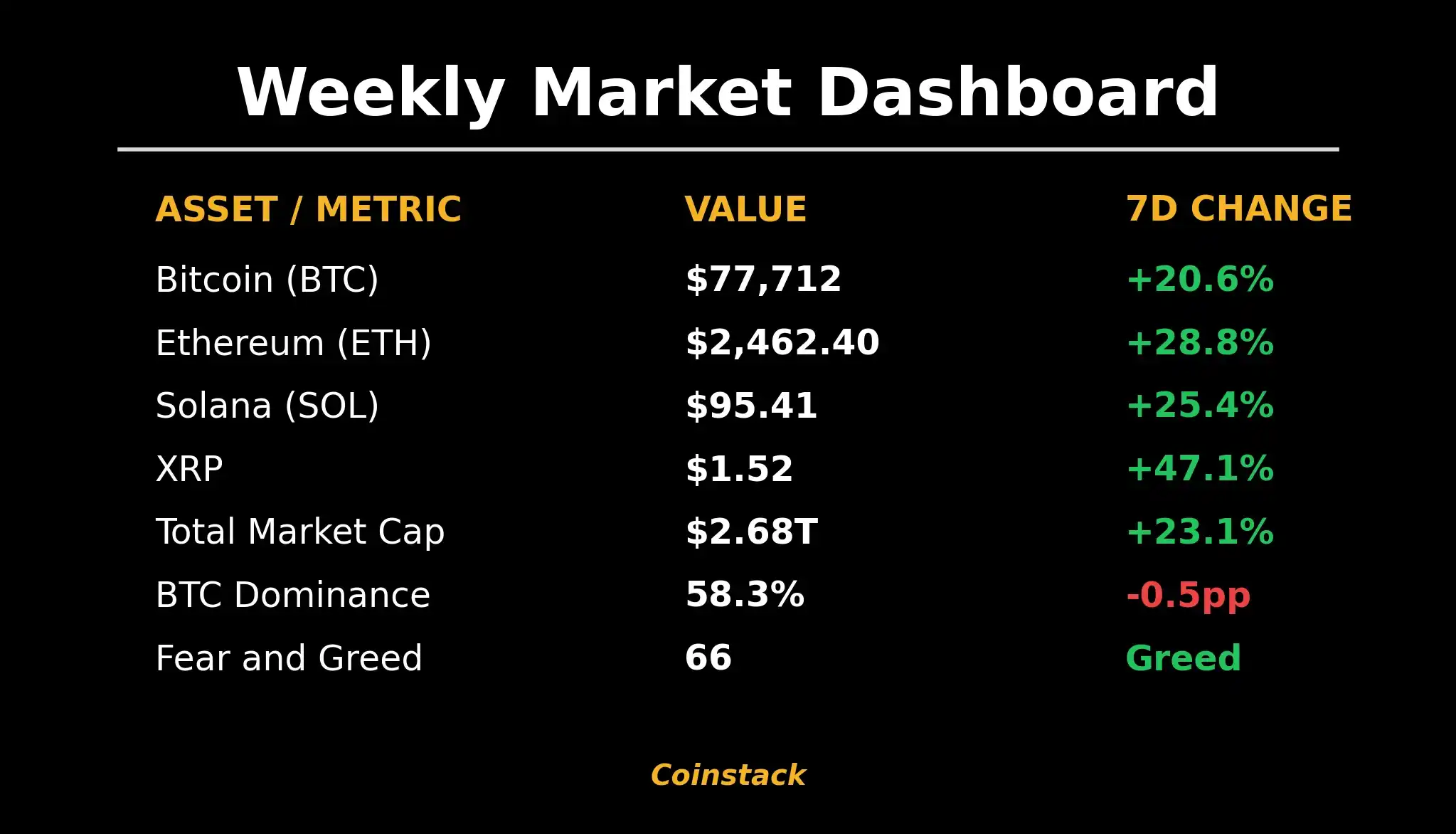
Chart: Weekly Market Overview | As of August 23, 2026 (Sunday) | Source: CoinGecko, SoSoValue, Alternative.me
Worst-Performing Large-Cap: Bitcoin (up 20.6%)
BTC closed at $77,712, its best week since October 2025, but still underperformed the beta of altcoins.
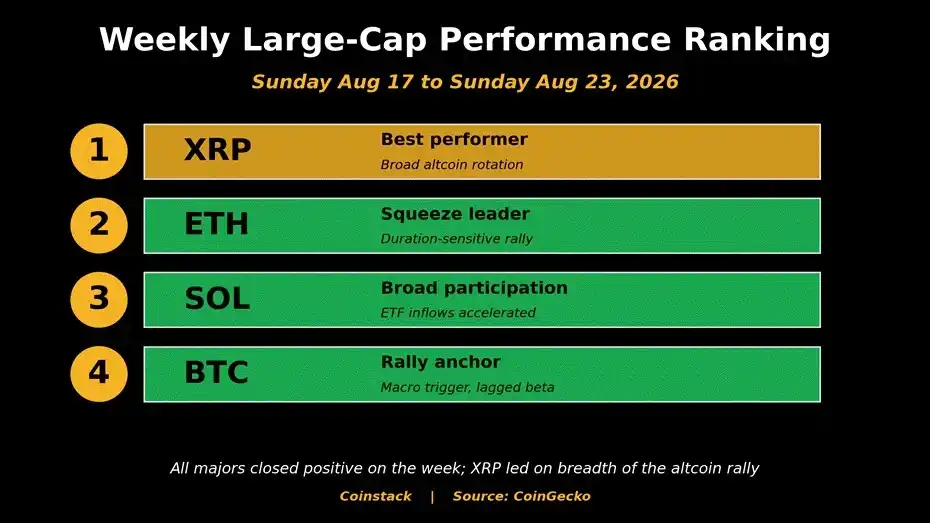
Chart: Weekly Large-Cap Performance Ranking | August 17 (Sun) to August 23 (Sun), 2026 | Source: CoinGecko
This Week's Market Driver: The Treasury's expanded bond repurchases and Trump's White House summit ignited $2.74 billion in short covering. ETF net inflows confirmed the return of institutional buying.
Bitcoin Price Action: August 17 to August 23, 2026
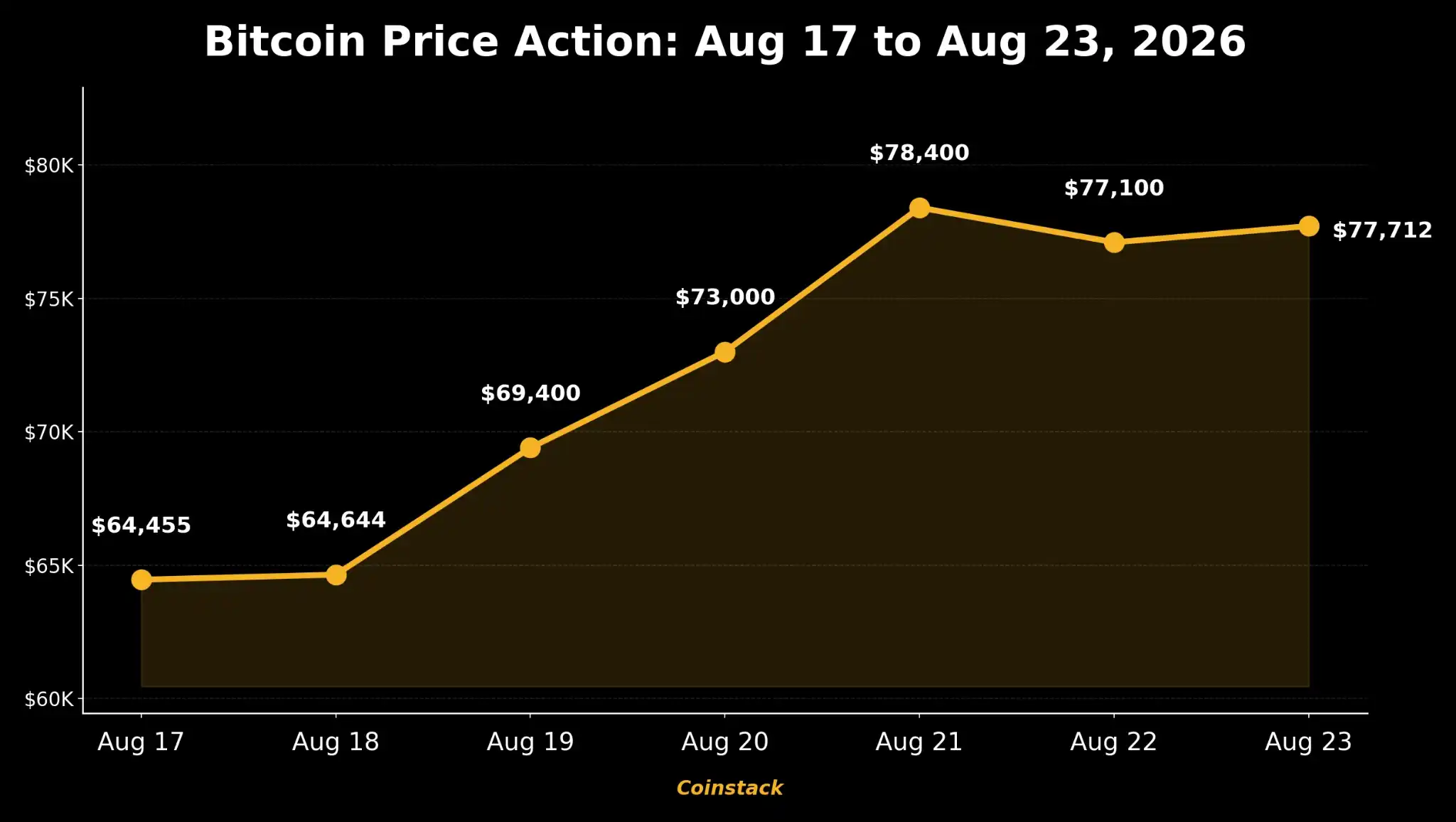
Chart: Bitcoin Price Action | August 17 to August 23, 2026 | Source: CoinGecko
4. Major Event of the Week: Bitcoin ETFs See Largest Weekly Inflow of 2026, Broad-Based Crypto Rally
What Happened?
According to SoSoValue data, from August 17 to 21, U.S. spot Bitcoin ETFs collectively attracted $19.2 billion, the largest weekly total since October 2025. Ethereum ETFs added $697 million during the same period. Combined inflows for both products reached $2.617 billion, triple last week's amount, reversing a previous net outflow of $392 million.
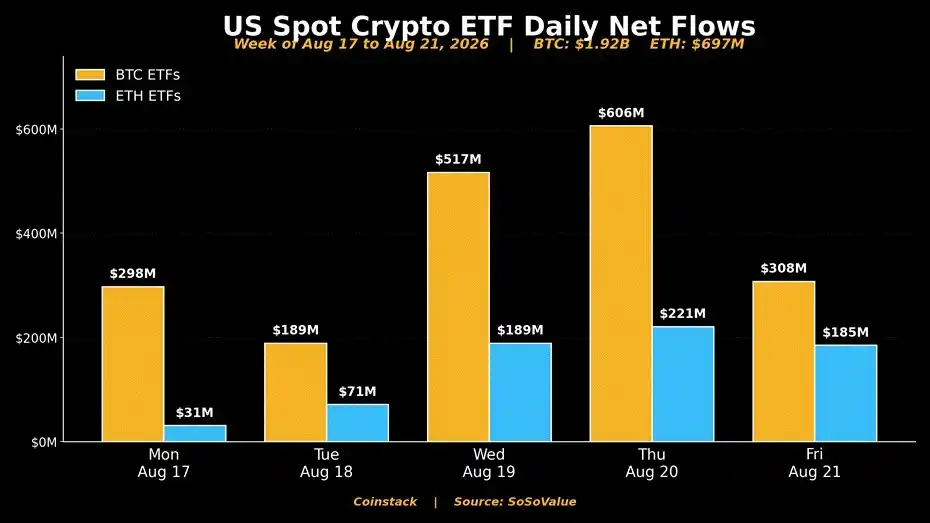
Chart: Daily Net Inflow of U.S. Spot Crypto ETFs | August 17 to August 21, 2026 | Source: SoSoValue (Data is approximate)
Why It Matters?
The trigger was macro. Bessent's expanded repurchases pushed the 30-year yield down from 5.34% to 5.18%. The summit and SEC legislation amplified market sentiment further. On Wednesday alone, nearly $2.74 billion in shorts were liquidated; on August 21, BlackRock's IBIT captured about 77% of the day's BTC ETF net inflow ($239 million).
Implications for Investors: Watch whether Warsh confirms accommodative conditions at Jackson Hole. If he signals restraint, repricing for the September FOMC will absorb some of the ETF buying pressure.
5. Key Market Developments
5.1 Treasury Doubles Long-Term Bond Repurchases
What Happened?
On August 19, the Treasury announced it would at least double the size of liquidity-support repurchases for 10- to 30-year securities from $2 billion to $4 billion per operation, effective from September 9 to November 4. The 30-year yield fell 9 basis points that day.
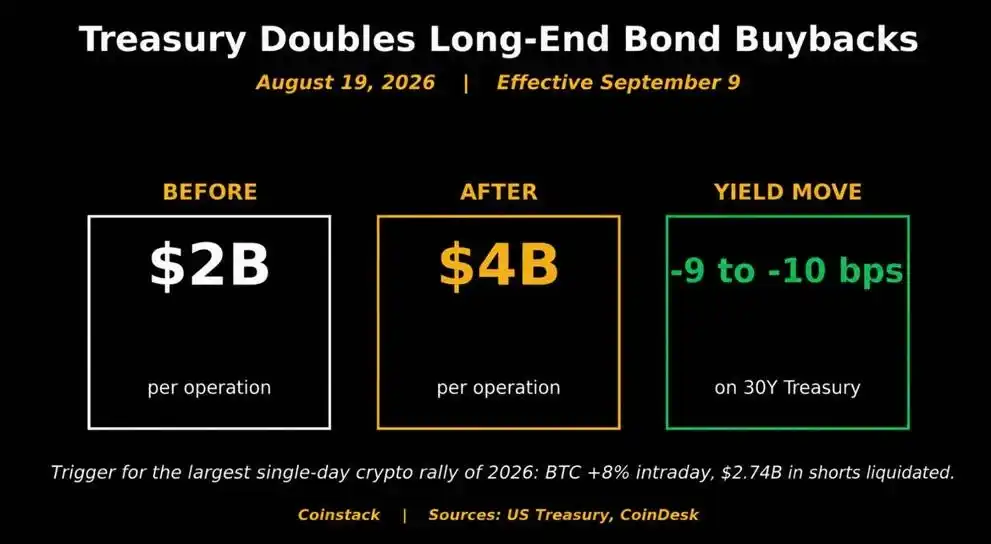
Chart: Treasury Doubles Long-Term Bond Repurchases | August 19, 2026 | Source: U.S. Treasury Department
Bull Case: Lower long-term yields ease financial conditions, prompting discretionary funds to flow into duration-alternative assets like Bitcoin.
Bear Case: Repurchases are refinancing operations, not reserve creation. The program ends on November 4; the fade in yield decline will give back some gains.
5.2 SEC Proposes "Regulation Crypto Assets"
What Happened?
The SEC proposed "Regulation Crypto Assets" on August 18. It includes a $5 million startup exemption, a $75 million annual exemption, and a safe harbor clause upon cessation of managerial efforts.
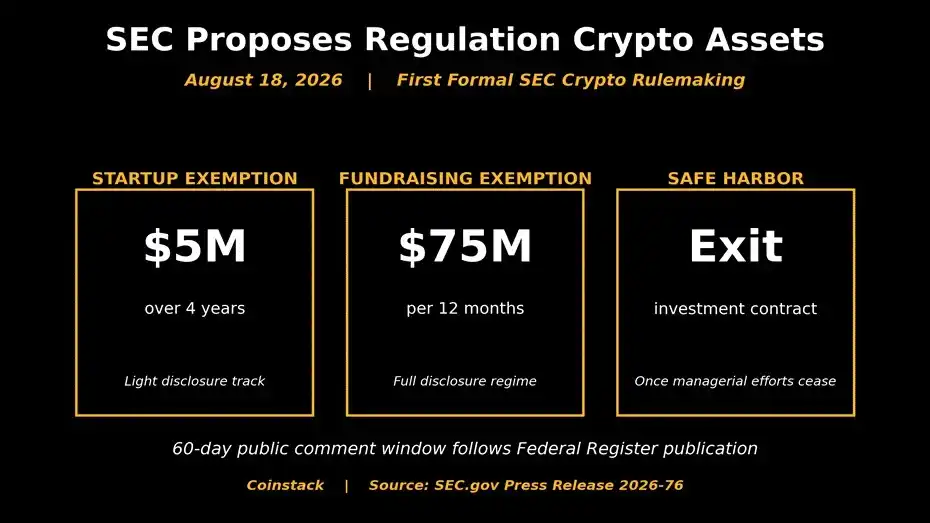
Chart: SEC "Regulation Crypto Assets" Framework | August 18, 2026 | Source: SEC.gov
Bull Case: Issuers gain an onshore funding path, and state law preemption could bring token offerings back to the U.S.
Bear Case: The 60-day comment period is just the beginning. The probability of the CLARITY Act passing in 2026 on Polymarket is only about 23%.
5.3 Trump Meets Crypto CEOs at White House
What Happened?
On August 19, Trump convened CEOs from Coinbase, Ripple, Kraken, Robinhood, and Gemini, along with SEC Chair Atkins and CFTC Chair Selig, urging passage of a fair CLARITY Act.

Bull Case: Unified executive branch stance provides the strongest push yet for the September 15 cloture vote.
Bear Case: Gestures without votes. Ethics rules regarding officials' crypto interests remain a sticking point, and about 7 Democratic votes are still needed.
6. On-Chain Insights: $1.71 Billion Liquidated in 6 Minutes
Data: According to CoinGlass, on Saturday (August 22), the total crypto market cap dropped from $2.68 trillion to $2.55 trillion in 6 minutes. Approximately 281,846 traders were liquidated, totaling about $1.71 billion.
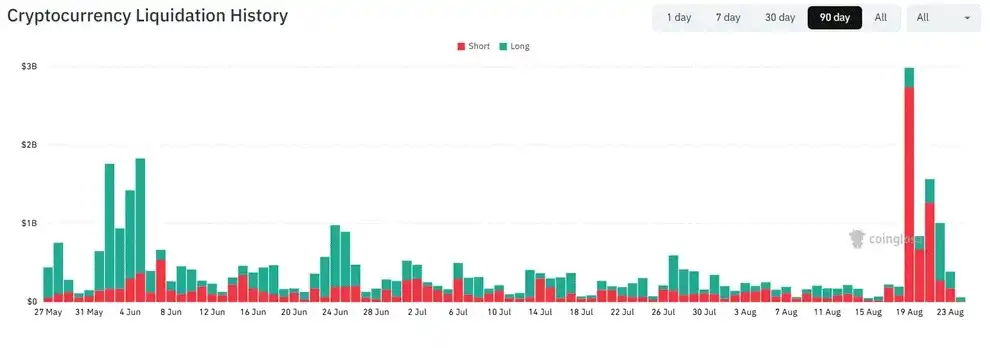
Chart: Source: CoinGlass
Potential Signal: Positioning outpaced allocation. XRP led the decline, flash crashing 37% after a 60% weekly surge to $1.69. Most gains before Saturday came from leverage, not spot buying.
7. Narrative Watch: Jackson Hole — Warsh's Blank Slate
Why It Matters?
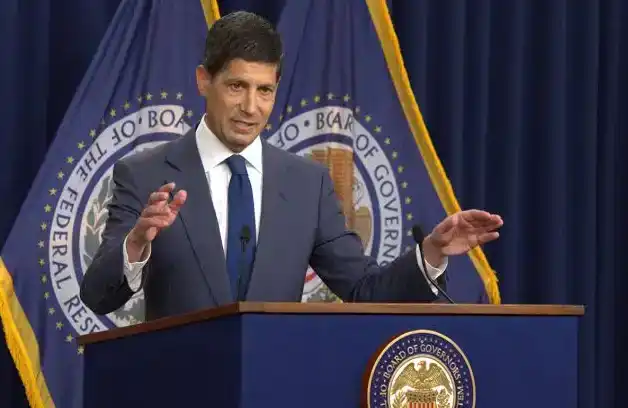
Chair Warsh will deliver his first Jackson Hole keynote speech on August 28. He has abandoned forward guidance since June, calling this speech a "blank slate."
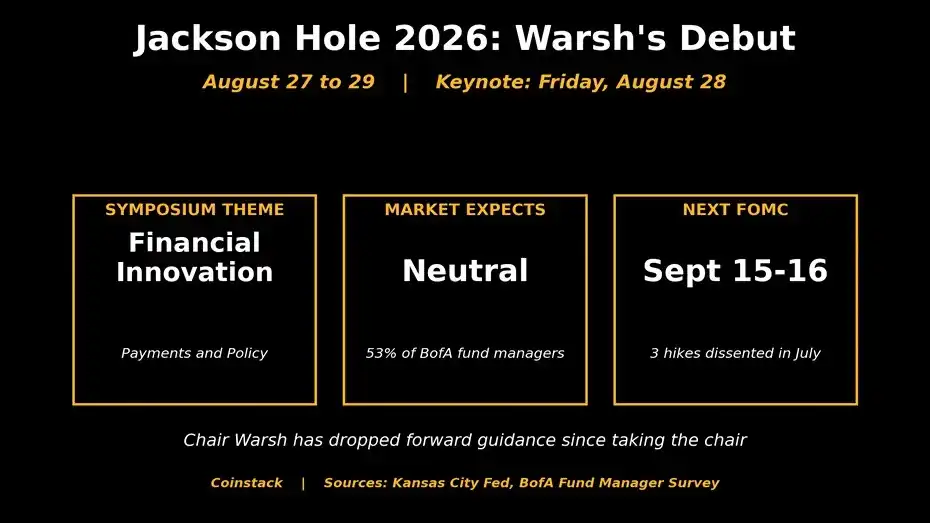
Chart: Jackson Hole 2026 Preview | August 27–29 | Source: Kansas City Fed
Why It Could Heat Up?
The rally has priced in a neutral outlook. A BofA survey shows 53% of fund managers expect a neutral tone, so any hint of a September rate cut would be interpreted as dovish.
Why It Could Cool Down?
Three FOMC members still publicly advocate for rate hikes. Warsh's play is "say less"; a truly blank slate speech would disappoint a market ready for direction.
8. Weekly Investment Theme: Ethereum Regains Beta Leadership
Thesis: Spot ETH ETFs attracted $697 million this week (as of August 21), their best week since launch, with BlackRock's ETHA leading on Friday with $151 million.

Catalyst: Cumulative ETH ETF inflows are nearing $12.15 billion. A dovish Jackson Hole interpretation and the September 15–16 FOMC will extend this duration trade.
Risk: If BTC stalls at the $80,000 resistance, ETH often gives up beta gains faster than it accumulates them. A hawkish Jackson Hole interpretation would also extinguish the squeeze.
9. Crypto Mini-Knowledge: When a Repo Isn't QE
Treasury repurchases swap old, illiquid long-term bonds for newly issued short-term bills. They change the debt structure, not the money supply. This is precisely why some of Wednesday's Bitcoin gains might be given back: no new reserves were created, just a duration reshuffle to ease long-end yields.
Implication: Watch if the September 9 operation can hold the 30-year yield below 5.20%. If yields climb back above 5.30%, this "repo trade" is no longer a free lunch.
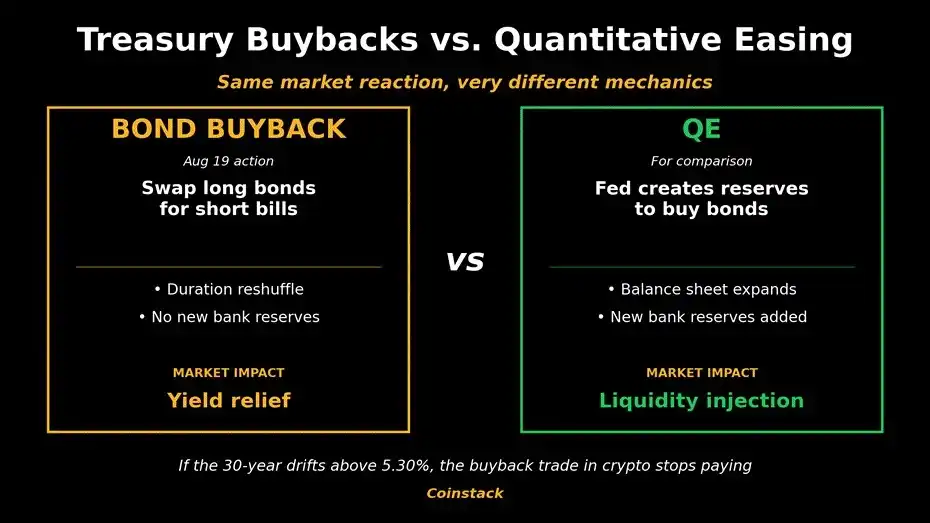
Chart: Treasury Repo vs. Quantitative Easing | Source: U.S. Treasury, Federal Reserve
10. Quick Takes This Week
- Strategy raised $2 billion via MSTR stock, did not buy Bitcoin, and established a new dollar cash pool.
- Metaplanet announced an investment of 2,100 BTC and $2.5 million cash into Nasdaq-listed Super League Enterprise.
- SOL holding addresses exceeded 176.5 million, a new network high.
- XRP up over 47% in 7 days, its strongest week since late 2024.
- July 28–29 FOMC minutes confirmed 3 members favored immediate rate hikes, making September risks two-sided.
11. Final Macro Thoughts
August delivered the reflexive bounce that July's weak data couldn't trigger: an unexpected liquidity signal, a friendly White House, and a new SEC framework—all within 48 hours. Saturday's flash crash was the signal. This rally is heavily leveraged, and Warsh must now provide justification for this repricing.
The next two weeks will test whether ETF buying can hold when Fed clarity arrives, and if CLARITY can clear the September 15 hurdle.
Coinstack publishes every Tuesday. This newsletter does not constitute any financial or investment advice. All information is from public data; please verify independently.