BTC“一夜牛回”的背后:贝莱德ETF进一步推进,灰度诉SEC案锁定胜局

PanewsPublished on 2023-10-24Last updated on 2023-10-24

Abstract

由于比特币现货ETF 一夜间出现多项进展,加密市场情绪迅速升温。昨日晚间,比特币迎来极为罕见的大幅上涨。

原创 | Odaily星球日报
作者 | Loopy
比特币:“大暴涨,你无法想象”
由于比特币现货ETF 一夜间出现多项进展,加密市场情绪迅速升温。昨日晚间,比特币迎来极为罕见的大幅上涨。
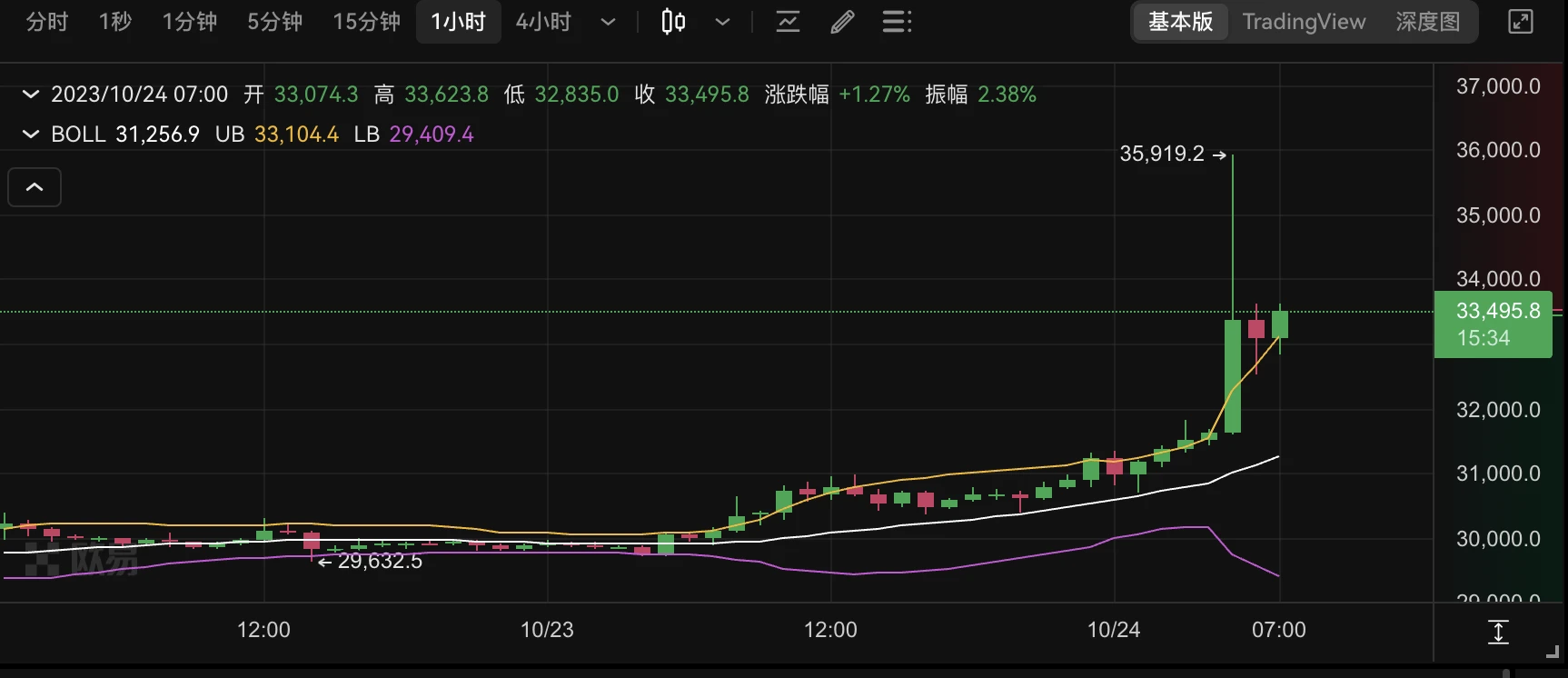
欧易OKX行情显示,BTC短时突破35000 USDT,最高插针至35919 USDT,日内最大涨幅20%。主流币出现如此巨大的日内涨幅,极为罕见。即使是以当前价格计算,仍然创下了 11.38% 的 24 小时涨幅。

BTC“一夜牛回”的背后:贝莱德ETF进一步推进,灰度诉SEC案锁定胜局


强劲的涨幅,已经将小时级K线抹平成了一条直线。而在“大饼”的带动下,沉寂许久的“二饼”也略微跟上了本次上涨,ETH价格曾短时突破1800美元,目前仍在接近1800美元位置徘徊,24小时涨幅“仅”为6.41%。
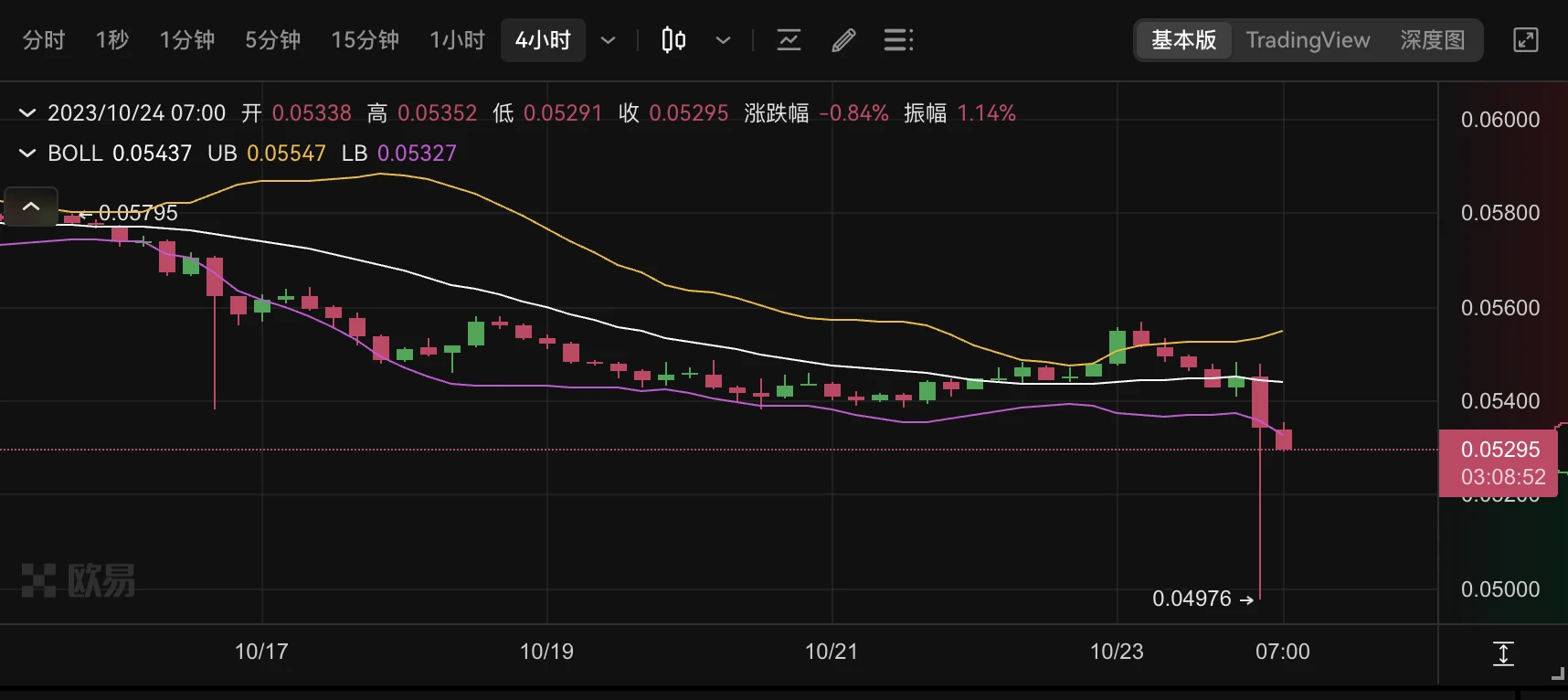
ETH/BTC汇率则仍处于下降之中,尚未出现反弹趋势。

BTC“一夜牛回”的背后:贝莱德ETF进一步推进,灰度诉SEC案锁定胜局


今日市值前十的代币中,无一币种24小时涨幅跑赢BTC。仅 SOL(Solana) 与DOGE(DogeCoin)的涨幅与BTC接近,分别为10.8%与10.4%。
当然,局部小币种的异军突起也有所发生,以比特币生态尤为瞩目。RIF(RSK Infrastructure FrameworkRIF)现报价0.14美元,24小时涨幅21%;STX(Stacks)现报价0.74美元,24小时涨幅16.3%;ORDI现报价5.4美元,24小时涨幅33%。
受整体行情上行影响,加密货币总市值也迅猛增长。Coingecko数据显示,目前加密总市值突破1.29万亿美元,24小时上涨 9.8% 。加密用户交易热情明显上升,今日恐慌与贪婪指数已达66,等级为贪婪。昨日这一数据尚为 53。
衍生品交易方面,根据Coinglass数据,过去24小时全网爆仓 3.52 亿美元,其中空单爆仓2.75亿美元。从币种来看,其中BTC爆仓1.94亿美元,ETH爆仓0.47亿美元。
贝莱德ETF:进展明确
本轮行情上涨,主要受比特币现货ETF 批准预期刺激。
昨日晚间,贝莱德提交的S-1修正案后显示,贝莱德已获得为比特币现货ETF发布准备的CUSIP号。
CUSIP即Committee on Uniform Securities Identification Procedures,该号码也被作为美国证券统一辨识码。
文件还显示,贝莱德正在为比特币现货ETF准备Seed Capital(种子资金)。Seed Capital系新ETF推出之时发行公司自行购买的标的资产,用以满足未来对该产品的需求。
尽管CUSIP号码与ETF的通过并不具备必然性的导向,但这一消息仍被市场视为ETF的重大进展。Seed Capital亦然如此。
目前,贝莱德的准备工作充分且迅速。尽管ETF是否会获得通过仍不可知,但市场普遍解读为贝莱德自身对其ETF的通过颇具信心。
而在今日早间,一则更为重磅的新闻横空出世。贝莱德iSharesBitcoinTrust已在DTCC列出,代码为IBTC。
DTCC(Depository Trust & Clearing Corporation)即美国证券存托清算公司,是一家成立于1999年的美国金融服务公司,该公司由五个清算公司和一个存托机构组成,为金融市场提供清算和结算服务。
假设ETF获得最终通过、投资者将从纳斯达克这一ETF,则IBTC将被作为投资者进行操作的股票代码。这也给市场注入了强大的信心,比特价格冲高至今日最高点,一度接近36000美元。
彭博ETF分析师Eric Balchunas表示:“贝莱德或是已获得绿灯信号,要么只是预测并做好了一切准备。我们仍然认为多支ETF会一同推出,而不是贝莱德独自先行获批。”
更多ETF仍在路上
除贝莱德之外,其它申请中的加密ETF也为市场带来了更多的好消息。
美国华盛顿特区巡回上诉法院正式对灰度Grayscale与SEC的诉讼案做出裁决,SEC需要重新考虑将灰度GBTC转换为比特币现货ETF的申请。
SEC现在可以选择批准Grayscale的申请或者以其他理由拒绝。Grayscale发言人Jennifer Rosenthal周一结案后发表声明称:“Grayscale团队期待继续与SEC进行建设性合作,将GBTC转换为ETF。GBTC在运营方面已做好准备,计划代表投资者尽快采取行动。”
灰度的以太坊ETF同样迎来了自己的里程碑时刻,取得了重大进展。
The ETF Store总裁Nate Geraci 在X平台发文表示,美国证券交易委员会(SEC)已承认灰度(Grayscale)的现货以太坊 ETF 备案,这将是将ETHE转换为ETF的过程。而现货 ETF 的问世,也将给市场带来更多增量资金,推动比特币价格攀升。
但需要注意的是,这一承认仅代表SEC接受其申请,并即将进入正式审核流程。距离最终的批准仍有相当一段距离。
新加坡加密金融服务公司Matrixport在一份报告中表示,如果贝莱德的现货比特币 ETF 获得美国证券交易委员会的批准,比特币的价格可能会上涨至 42, 000 美元至 56, 000 美元之间。此外,Matrixport 通过对 15, 000 名美国注册投资顾问的分析,预计价值约 120 亿至 240 亿美元的资金可能会流入此类 ETF。
如今ETF 通过的市场预期愈发强烈,本轮上涨,又将持续多久呢,是短期的反弹还是新周期的开端?
Odaily星球日报在此提醒大家,投资有风险,更需谨慎对待。

Related Reads

Near Returns to the AI Stage: Transformation into a Public Chain Due to 'Payroll Difficulties,' Agent and Privacy Emerge as New Growth Narratives

NEAR Returns to AI Origins: From Payroll Struggles to Blockchain, Now Focusing on AI Agents and Privacy NEAR Protocol's journey began not with grand blockchain ambitions, but from a practical hurdle: its AI startup founders, including Transformer paper co-author Illia Polosukhin, couldn't efficiently pay international developers in 2017. This led them to pivot and build a high-performance, scalable blockchain. After years navigating various crypto narratives like sharding and cross-chain interoperability, NEAR is now leveraging its AI roots to re-enter the AI arena. A key driver is its "NEAR Intents" layer, which abstracts complex cross-chain transactions. Users simply state their goal (e.g., swap BTC for ETH), and a solver network finds the optimal route. This system has processed over $20B in cross-chain volume, generating significant fee revenue. A major growth area is private transactions via "Confidential Intents/Swaps," which hide trade details until settlement to protect against MEV and front-running. Remarkably, private swaps recently accounted for over 40% of NEAR's transaction volume, highlighting strong demand but also potential regulatory scrutiny. With its AI-founder pedigree, NEAR is positioning itself at the intersection of blockchain, AI agents, and privacy, aiming to become infrastructure for the emerging agent economy while navigating the challenges of its rapid adoption.

marsbit2h ago

Near Returns to the AI Stage: Transformation into a Public Chain Due to 'Payroll Difficulties,' Agent and Privacy Emerge as New Growth Narratives

marsbit2h ago

From Ethereum to AI's 'CROPS': What Exactly is This Set of 'Slow Variables' That Vitalik Repeatedly Emphasizes?

In recent discussions, Vitalik Buterin has frequently emphasized the concept of "CROPS," a framework defining core values for Ethereum's development. CROPS stands for Censorship Resistance, Capture Resistance, Open Source, Privacy, and Security. Initially outlined in the Ethereum Foundation's "EF Mandate," it represents a commitment to user sovereignty, ensuring that the network resists external control, remains open, protects privacy, and prioritizes security. The relevance of CROPS extends beyond Ethereum's foundational principles, becoming crucial in the context of AI integration. As AI agents begin handling wallet operations and automated transactions, the risk increases that users may cede control over their digital assets, privacy, and intentions to centralized AI service providers. A "CROPS AI" would therefore emphasize local execution where possible, privacy-preserving remote model calls (e.g., using zero-knowledge proofs), and transparent, verifiable processes to maintain user agency. Vitalik highlights a significant convergence between "CROPS Ethereum access layer" and "CROPS AI." Both address the same fundamental challenge: how users can access powerful services—be it blockchain data via RPCs or AI models—without exposing sensitive information or relinquishing ultimate control. This intersection points toward a future digital entry point that is more private, secure, and user-controlled. Ultimately, CROPS is not merely an abstract ideal but a practical guidepost. It steers development—from protocol resilience and wallet design to AI agent safety—towards a future where users retain self-sovereignty even as digital systems grow more complex and powerful. In an era of accelerating AI adoption, these "slow variables" of censorship resistance, openness, privacy, and security may define Ethereum's enduring value.

marsbit2h ago

From Ethereum to AI's 'CROPS': What Exactly is This Set of 'Slow Variables' That Vitalik Repeatedly Emphasizes?

marsbit2h ago

Silicon Valley 'Startup Guru' Steve Hoffman: Web3 + AI Could Be a Trap

Silicon Valley investor and "Godfather of Startups" Steve Hoffman warns that combining Web3 with AI is likely a trap, not a promising venture. In an interview, Hoffman argues that while AI is a foundational technology touching all industries, Web3 adds complexity, friction, and regulatory risk without solving mainstream consumer or business needs. He advises founders to focus on deep, specialized applications where startups can out-iterate giants, rather than on generic features easily replicated by large tech companies. Hoffman observes that Silicon Valley will lead foundational AI research, while China excels at rapid, large-scale application and commercialization, particularly in robotics. He stresses that AI-driven autonomous agents capable of collaborative, multi-step tasks are 2-4 years away, which will cause significant job displacement. The solution is not to slow AI but to redesign business models around human-AI collaboration and reform social systems like education and retraining. For startups, Hoffman recommends focusing on vertical, expertise-heavy domains to build defensibility. He sees major opportunities in AI fraud detection and cybersecurity. Key founder mindsets include systemic thinking over feature-focus, relentless customer centricity, building adaptive teams, and deeply understanding AI's capabilities and limits. Hoffman is also leading a non-profit initiative to establish university centers aimed at training future leaders in responsible, human-value-aligned AI innovation.

marsbit4h ago

Silicon Valley 'Startup Guru' Steve Hoffman: Web3 + AI Could Be a Trap

marsbit4h ago

Token Inefficient, Economy Tokenless

The article "Tokens Aren't Economical, Economics Aren't Tokenized" analyzes a pivotal shift in the AI industry from a technology-driven narrative to one dominated by capital efficiency. It highlights two concurrent trends: a severe capital shortage due to the exorbitant and recurring costs of compute (e.g., OpenAI's high burn rate) and a wave of corporate spin-offs where major tech companies are separating their AI units (like Kuaishou's Kling and Baidu's Kunlunxin). The core argument is that AI's "anti-internet" business model, where user growth increases costs rather than profits, has created a disconnect between high valuations and actual cash flow. Spin-offs address this by allowing AI assets to be valued independently. Within a parent company, they are seen as cost centers, but as standalone entities, they are priced based on their growth potential and scarcity in the primary market, leading to massive valuation premiums (e.g., Kling's estimated value tripling post-spin-off). The industry is at an inflection point, moving from "model worship" to "value realization." The competition is evolving from a pure compute (GPU) race to a broader focus on systemic efficiency and full-stack engineering (involving CPUs and orchestration) to achieve viable commercialization. The year 2026 is framed as a critical moment where the industry must definitively answer how to economically translate AI capability into tangible business value, reshaping the sector's future power structure.

marsbit4h ago

Token Inefficient, Economy Tokenless

marsbit4h ago

Trading

Spot
Futures

Hot Articles

What is $BITCOIN

DIGITAL GOLD ($BITCOIN): A Comprehensive Analysis Introduction to DIGITAL GOLD ($BITCOIN) DIGITAL GOLD ($BITCOIN) is a blockchain-based project operating on the Solana network, which aims to combine the characteristics of traditional precious metals with the innovation of decentralized technologies. While it shares a name with Bitcoin, often referred to as “digital gold” due to its perception as a store of value, DIGITAL GOLD is a separate token designed to create a unique ecosystem within the Web3 landscape. Its goal is to position itself as a viable alternative digital asset, although specifics regarding its applications and functionalities are still developing. What is DIGITAL GOLD ($BITCOIN)? DIGITAL GOLD ($BITCOIN) is a cryptocurrency token explicitly designed for use on the Solana blockchain. In contrast to Bitcoin, which provides a widely recognized value storage role, this token appears to focus on broader applications and characteristics. Notable aspects include: Blockchain Infrastructure: The token is built on the Solana blockchain, known for its capacity to handle high-speed and low-cost transactions. Supply Dynamics: DIGITAL GOLD has a maximum supply capped at 100 quadrillion tokens (100P $BITCOIN), although details regarding its circulating supply are currently undisclosed. Utility: While precise functionalities are not explicitly outlined, there are indications that the token could be utilized for various applications, potentially involving decentralized applications (dApps) or asset tokenization strategies. Who is the Creator of DIGITAL GOLD ($BITCOIN)? At present, the identity of the creators and development team behind DIGITAL GOLD ($BITCOIN) remains unknown. This situation is typical among many innovative projects within the blockchain space, particularly those aligning with decentralized finance and meme coin phenomena. While such anonymity may foster a community-driven culture, it intensifies concerns about governance and accountability. Who are the Investors of DIGITAL GOLD ($BITCOIN)? The available information indicates that DIGITAL GOLD ($BITCOIN) does not have any known institutional backers or prominent venture capital investments. The project seems to operate on a peer-to-peer model focused on community support and adoption rather than traditional funding routes. Its activity and liquidity are primarily situated on decentralized exchanges (DEXs), such as PumpSwap, rather than established centralized trading platforms, further highlighting its grassroots approach. How DIGITAL GOLD ($BITCOIN) Works The operational mechanics of DIGITAL GOLD ($BITCOIN) can be elaborated on based on its blockchain design and network attributes: Consensus Mechanism: By leveraging Solana’s unique proof-of-history (PoH) combined with a proof-of-stake (PoS) model, the project ensures efficient transaction validation contributing to the network's high performance. Tokenomics: While specific deflationary mechanisms have not been extensively detailed, the vast maximum token supply implies that it may cater to microtransactions or niche use cases that are still to be defined. Interoperability: There exists the potential for integration with Solana’s broader ecosystem, including various decentralized finance (DeFi) platforms. However, the details regarding specific integrations remain unspecified. Timeline of Key Events Here is a timeline that highlights significant milestones concerning DIGITAL GOLD ($BITCOIN): 2023: The initial deployment of the token occurs on the Solana blockchain, marked by its contract address. 2024: DIGITAL GOLD gains visibility as it becomes available for trading on decentralized exchanges like PumpSwap, allowing users to trade it against SOL. 2025: The project witnesses sporadic trading activity and potential interest in community-led engagements, although no noteworthy partnerships or technical advancements have been documented as of yet. Critical Analysis Strengths Scalability: The underlying Solana infrastructure supports high transaction volumes, which could enhance the utility of $BITCOIN in various transaction scenarios. Accessibility: The potential low trading price per token could attract retail investors, facilitating wider participation due to fractional ownership opportunities. Risks Lack of Transparency: The absence of publicly known backers, developers, or an audit process may yield skepticism regarding the project's sustainability and trustworthiness. Market Volatility: The trading activity is heavily reliant on speculative behavior, which can result in significant price volatility and uncertainty for investors. Conclusion DIGITAL GOLD ($BITCOIN) emerges as an intriguing yet ambiguous project within the rapidly evolving Solana ecosystem. While it attempts to leverage the “digital gold” narrative, its departure from Bitcoin's established role as a store of value underscores the need for a clearer differentiation of its intended utility and governance structure. Future acceptance and adoption will likely depend on addressing the current opacity and defining its operational and economic strategies more explicitly. Note: This report encompasses synthesised information available as of October 2023, and developments may have transpired beyond the research period.

363 Total ViewsPublished 2025.05.13Updated 2025.05.13

What is $BITCOIN

Discussions

Welcome to the HTX Community. Here, you can stay informed about the latest platform developments and gain access to professional market insights. Users' opinions on the price of BTC (BTC) are presented below.

活动图片