【研报精选】速览 DeFi 衍生品新锐 Gains Network:CeFi 危机的大赢家?

Foresight News2023-02-19 tarihinde yayınlandı2023-02-19 tarihinde güncellendi

Özet

FTX 爆雷引发的 CEX 信任危机将用户视野引向去中心化衍生品交易平台。今天要介绍的是由衍生品协议 Gains Network 推出的去中心化杠杆交易平台 gTrade。

FTX 爆雷引发的 CEX 信任危机将用户视野引向去中心化衍生品交易平台。今天要介绍的是由衍生品协议 Gains Network 推出的去中心化杠杆交易平台 gTrade。

gTrade 是什么?有何特点?

Gains Network 由其匿名创始人 Seb 推出,官方文档列出了 10 位团队成员。Gains Network 最初为 Gains Farm,其产品 gTrade 当前是一个基于 Polygon 的、针对加密货币、外汇和股票的去中心化合成杠杆交易协议。

Gains Network 代币 GNS 开始时作为以太坊上的 GFARM2 代币启动,GFARM2 没有预售或 ICO,最大供应量为 10 万枚,其中有超 3.5 万枚分布在两个池子中,当时在 ETH 池和 Uniswap GFARM2/ETH LP 池中公平分发,ETH 池作为启动池仅持续了 5 天,共分发了 5357 枚 GFARM2,GFARM2/ETH LP 池中共分发 3 万枚,每周分发的代币逐周减少来应对通货膨胀。

2021 年 10 月份,正式更名为 Gains Network,同时将代币 GFARM2 以 1:1000 的比例在 Polygon 上分割为 GNS,也就是说, GNS 的上限当前为 1 亿枚。

gTrade 中不需要事先存款或者注册,交易在链上执行,具有杠杆倍数高、操作简单、支持止盈止损等特点或功能,具体为:

gTrade 目前支持 70 个市场的杠杆交易,包括 BTC、ETH 等 38 个加密资产杠杆交易,USD/CAD、USD/CHF、EUR/GBP 等 10 个外汇交易对,以及谷歌等 22 支股票;

仅支持 DAI 为抵押资产;

针对 BTC 和 ETH 等加密货币的杠杆最大可开 150 倍,外汇杠杆倍数最高为 1000 倍,股票最高可开 100 倍;

加密货币交易头寸规模最低限制为 1500 DAI,外汇交易头寸最低限制为 15000 DAI。

gTrade 如何处理用户交易?

那 gTrade 是如何处理用户交易的?多数杠杆平台使用 Chainlink 喂价作为参考现货价格,以便通过查看现货价格与自己平台上期货合约价格之间的差异来计算资金费率,相比之下,gTrade 构建了一个混合架构,使用自定义实时 Chainlink 节点运营商网络(DON)为每笔交易获取中位数值。
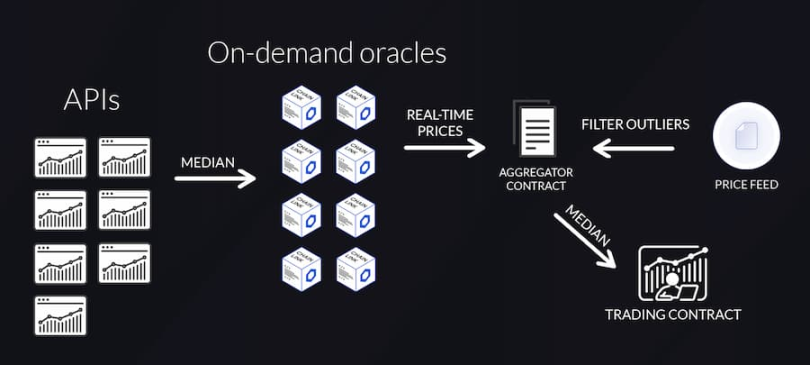
gTrade 仅支持用 DAI 作为抵押品去开设仓位,杠杆是合成的,且由 DAI Vault、GNS/DAI 流动性和 GNS 代币作为支撑。

其中,DAI Vault 主要用来确保系统的稳定性,任何人都能在其中质押 DAI 来赚取平台收入费用,同时也充当所有杠杆交易员的交易对手。如果交易员亏损平仓,亏损的那部分 DAI 会进入 DAI Vault,若被清算,全部抵押资产都将归 DAI Vault 所有。交易员亏损后流入 DAI Vault 的 DAI 将用来支付给其他平仓时收益为正的交易员,以及从 GNS/DAI 池中购买和销毁 GNS。

值得一提的是,除了 GNS 代币外,Gains Network 此前也发布了五种不同等级的 NFT 系列,NFT 持有者可以减少价差(spread)和提升奖励,设置 NFT bot 之后还可执行限价订单和清算,并能从其中获得奖励。

此外,根据 Gains Network,DAI Vault 将始终保持超额抵押,如果 DAI Vault 抵押率超过 130%,多余部分则用来从 GNS/DAI 池中购买和销毁 GNS。这也是对 GNS 通缩机制的解释。截止撰文时 DAI Vault TVL 为 1989 万美元,抵押率为 110.5%。

除了 DAI Vault,gTrade 还有 GNS 质押池和 GNS/DAI 两个池,其中,GNS 质押允许用户质押 GNS 来赚取平台费用(DAI),即,40%的市价单费用和 15% 的限价订单费用,由于 gTrade 中有 70%的交易是市价单,所以平均会有 32.5% 的市订单费用会奖励给 GNS 质押池。

费用方面,gTrade 对加密货币杠杆交易开仓和平仓各收取仓位 0.08% 的费用,对外汇交易收取 0.008% 的费用,针对股票交易的费用按波动性分为三个等级,最高为仓位的 0.32%。除此之外,gTrade 还设有隔夜费用(Rollover Fee )和资金费用(Funding Fee),其中,隔夜费用在每个区块结束时收取费用,仅针对抵押资产,用来帮助平台降低杠杆。

gTrade 收取的开仓费用中会分配给 Project Fund、Dev Fund、Limit orders: NFT Bots、做市单边质押等,平仓费用会在 GNS 单边质押池、DAI Vault、GNS/DAI LP、NFT Bots(止损止盈触发)、做市单边质押之间分配。关于 gTrade 的详细费用规则可戳此链接了解。

综上,Gains Network 在抵押率超过 130% 之后会将充当交易对手的 DAI Vault 中的多出部分用来在 GNS/DAI 池中回购和销毁 GNS,当抵押率过高时能确实能达到代币通缩目的。不过,虽然 Gains Network 为 DAI Vault 设置了每 24 小时最多只能提取某一次最大质押量 1/4 的规则,不过,若有质押用户提取大量 DAI,或者系统整体杠杆倍数过高,也可能会出现抵押不足的情况。


İlgili Okumalar

Both Suffer Massive Losses Exceeding $90 Billion, Which Is in Greater Peril: Strategy or Bitmine?

Facing massive paper losses exceeding $90 billion each amidst a sharp market downturn, "Digital Asset Treasury" (DAT) giants Strategy and Bitmine find themselves in a precarious position, but with different underlying risks. Strategy, heavily invested in Bitcoin (BTC), faces significant financial strain. Its strategy relies heavily on debt, including convertible notes and preferred stock (STRC) requiring substantial dividend payments. With its cash reserves dwindling and BTC offering no staking yield for cash flow, Strategy's high leverage makes it vulnerable. A continued price decline could force asset sales to meet obligations, potentially creating a negative feedback loop. Its market value has already fallen sharply. In contrast, Bitmine, an Ethereum (ETH) holder, appears on firmer financial ground. It primarily funds its purchases through equity offerings (like ATM programs), avoiding debt pressure. It also generates income by staking a large portion of its ETH holdings. While not immune to market drops and shareholder dilution concerns, Bitmine maintains more flexibility, recently announcing a new preferred share offering to raise further capital. The core divergence lies in their financing: Bitmine uses equity (investor money), while Strategy uses debt (borrowed money). Consequently, Bitmine currently faces less immediate liquidity pressure than Strategy, which must navigate the dual challenge of servicing debt/dividends and a declining core asset (BTC) price.

marsbit4 dk önce

Both Suffer Massive Losses Exceeding $90 Billion, Which Is in Greater Peril: Strategy or Bitmine?

marsbit4 dk önce

Where the AI Bubble Really Is: Which Layer of Players Are Naked

AI Bubble: Where It Really Is and Who's Swimming Naked This analysis dissects the AI industry not as a single entity but as a five-layer pyramid, arguing that bubbles are concentrated in specific tiers, not uniformly distributed. **Key Distinction from the 2000 Dot-com Bubble:** Unlike 2000, where companies had stock prices before revenue, today's leading AI players have massive, contract-backed revenue driving their valuations. Core infrastructure demand is real, with every GPU running at full capacity for paying customers. **The Five-Layer Pyramid & Bubble Assessment:** * **L0 (Fab/Manufacturing) & Top L4 (Leading AI Apps): NO BUBBLE.** Companies like TSMC, NVIDIA, major cloud providers (Microsoft, Google, Meta, Amazon), and top AI labs have real revenues and orders. Supply is tightly constrained by TSMC's disciplined capacity control and physical limits like power/land for data centers, preventing a supply glut. * **L1 (Memory): BATTLEGROUND.** Sky-high HBM margins could signal a new structural cycle or a classic "boom before bust." The oligopoly of three major players may enforce supply discipline, making this a high-stakes bet. * **L2 (Interconnect/Optical Modules): BUBBLE TERRITORY.** Companies like Lumentum and AAOI have seen stock surges (4-10x) far outpacing revenue growth. This hardware segment has lower physical barriers to expansion than fabs, allowing speculation. It mirrors the 2000 bubble's epicenter—optics. * **L3 (Infrastructure/"GPU Landlords"): VULNERABLE.** GPU leasing companies profit from the current compute shortage but own no long-term moat. Their business model relies on a temporary bottleneck that will ease as big tech expands and new tech (e.g., potential space-based data centers) emerges. * **L4 Long Tail (VC-backed Startups): STRONG BUBBLE SIGNALS.** VC funding concentration in AI is twice that of the 1999 peak. Many startups with little revenue use the valuation logic of successful giants to justify their own, creating high risk of a "valuation crunch" when funding dries up. **Critical Risks to Monitor:** 1. **GPU Depreciation & Accounting:** Companies extending the assumed useful life of GPUs artificially boost profits. The true economic life depends on future generational leaps from NVIDIA. 2. **"GPU Credit" & Off-Balance-Sheet Leverage:** Emerging structures where shell companies borrow to buy GPUs and lease them out (with chipmakers sometimes investing) move debt off major balance sheets. This echoes the "vendor financing" of 2000 and the securitization risks of 2008, though currently small-scale. 3. **TSMC Abandoning Caution:** If the primary supply bottleneck (TSMC's conservative capacity planning) breaks, runaway supply could trigger a bust. 4. **Algorithmic Efficiency Breakthrough:** A major leap in software efficiency could drastically reduce the need for raw compute hardware, undermining the investment thesis. **Conclusion:** The AI boom is expensive and has frothy areas, but its core is underpinned by real demand and physical supply constraints. The bubble risk is layered: most present in optical components, GPU leasing, and the long-tail startup ecosystem, while the foundational chip manufacturing and leading application layers remain relatively solid—for now.

marsbit16 dk önce

Where the AI Bubble Really Is: Which Layer of Players Are Naked

marsbit16 dk önce

Standing in the Light: A Comprehensive Guide to the Optical Module and CPO Supply Chain

"Standing in the Light: Understanding the Optical Module and CPO Industry Chain" This article analyzes the critical role of optical communication technology, specifically optical modules and Co-Packaged Optics (CPO), as the "nervous system" for modern AI data centers. With exponential growth in AI computational demands (e.g., NVIDIA's Vera Rubin architecture), traditional electrical interconnects using copper cables face severe bottlenecks in bandwidth, power consumption, and signal integrity over distance. The core function of an optical module is to act as a "translator," converting electrical signals from chips into optical signals for transmission over fiber (and vice-versa). Key internal components include lasers, modulators, photodetectors, drivers, and DSP chips. The industry is currently transitioning from 800G to 1.6T modules. However, the future lies in CPO. This next-generation technology integrates the optical engine directly with the switch ASIC/XPU on the same package substrate, drastically reducing power consumption (by ~3.5x according to NVIDIA), overcoming bandwidth density limits, and minimizing signal attenuation compared to traditional pluggable modules. Key challenges for CPO include advanced packaging capacity (dominated by TSMC), thermal management, repairability, and standardization. The article details the broader technology landscape, including Near-Packaged Optics (NPO, a pragmatic intermediate step), Linear-drive Pluggable Optics (LPO), Optical I/O (OIO for chip-level integration), and Optical Circuit Switches (OCS). A comprehensive CPO industry chain is mapped, highlighting shifting power dynamics: * **Architecture Definers:** NVIDIA, Broadcom, and Marvell now hold greater influence. * **Advanced Packaging & Manufacturing:** TSMC is central; Fabrinet is a key EMS player. * **Lasers ("The Heart"):** A strategic bottleneck. EML lasers are led by Lumentum and Coherent (both receiving major NVIDIA investments). CW lasers, favored for CPO/silicon photonics, see strong Chinese players like Source Photonics and Sicoya. * **Silicon Photonics Chips:** The mainstream path for CPO engines, with key players like Broadcom, Intel, Marvell, and China's Accelink. * **Fiber Connectivity Components:** A major new, high-growth market created by CPO, including Fiber Array Units (FAU), Polarization-Maintaining Fiber (PMF), and MPO connectors. Companies like Tianfu Communication and US Conec are leaders. * **Fiber & Cable:** Experiencing a super-cycle (e.g., Corning, Yangtze Optical Fiber). * **PCB/Substrates:** Requiring advanced materials (e.g., Shengyi Tech). * **DSP & SerDes:** Functions are integrated into switch ASICs in the CPO era (e.g., Broadcom, Astera Labs). * **Optical Module Makers:** Transitioning from standalone module suppliers to providers of optical engines and NPO/LPO solutions while riding the current pluggable boom (e.g., Zhongji Innolight, Eoptolink). The investment timeline is segmented: Short-term (2026-2027) features the "last feast" for pluggable modules and CPO's initial rollout. Medium-term (2027-2029) will see CPO expand and NPO peak. Long-term (2029-2032+) involves CPO/OIO penetration into intra-rack scaling. In conclusion, optical interconnects are fundamental to AI infrastructure. The competitive landscape sees US firms leading in architecture and high-end chips, TSMC in advanced packaging, and Chinese firms holding strong positions in modules, connectivity components, CW lasers, and fiber/cable. The future belongs to companies that can navigate the technological shift from "selling shovels" (modules) to "building highways" (CPO/OIO infrastructure).

marsbit26 dk önce

Standing in the Light: A Comprehensive Guide to the Optical Module and CPO Supply Chain

marsbit26 dk önce

İşlemler

Spot
Futures
活动图片



