突发,OpenAI总裁当庭「认罪」,自曝零元购300亿,马斯克这回真要赢了?

marsbitPublished on 2026-05-05Last updated on 2026-05-05

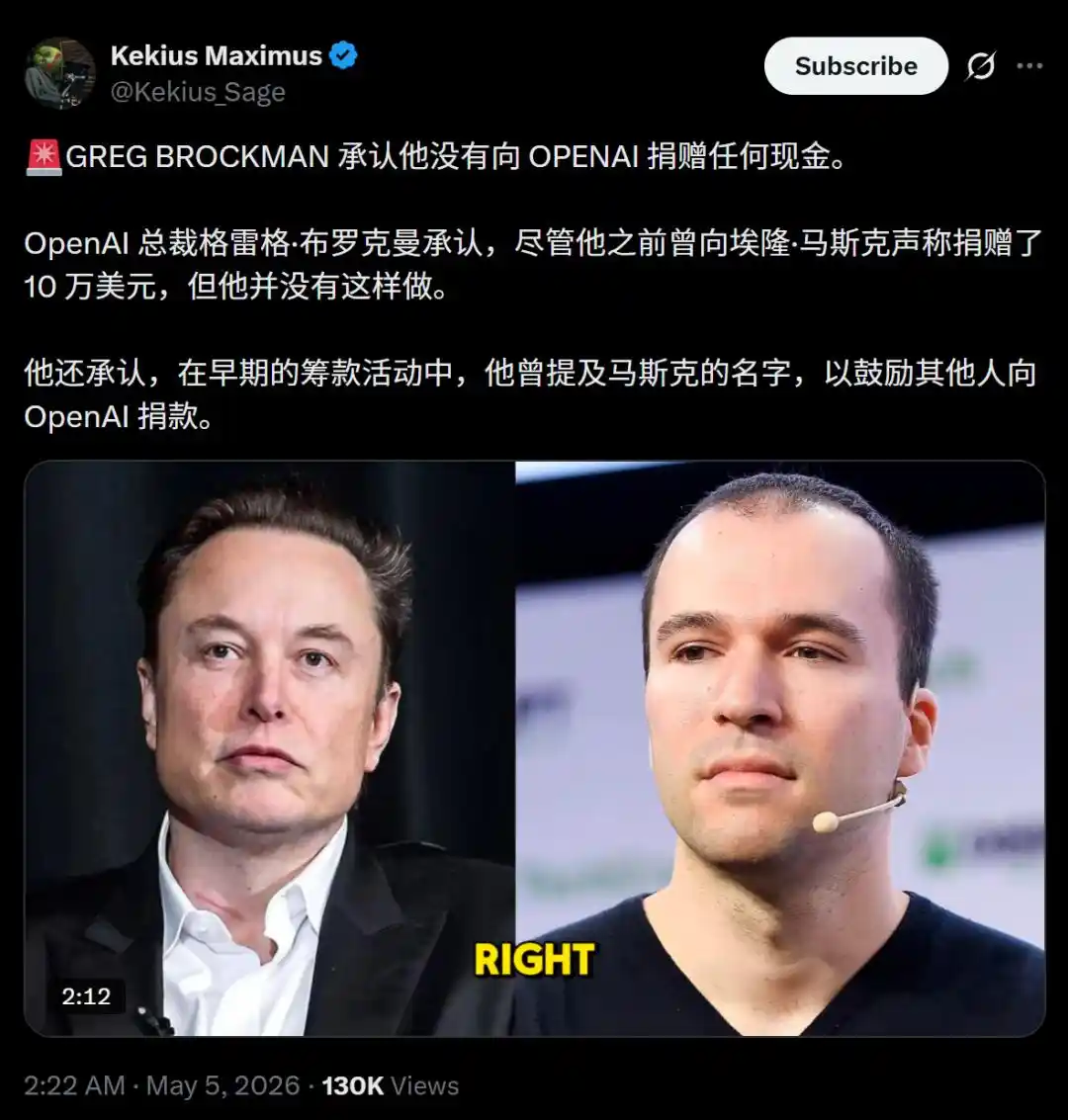
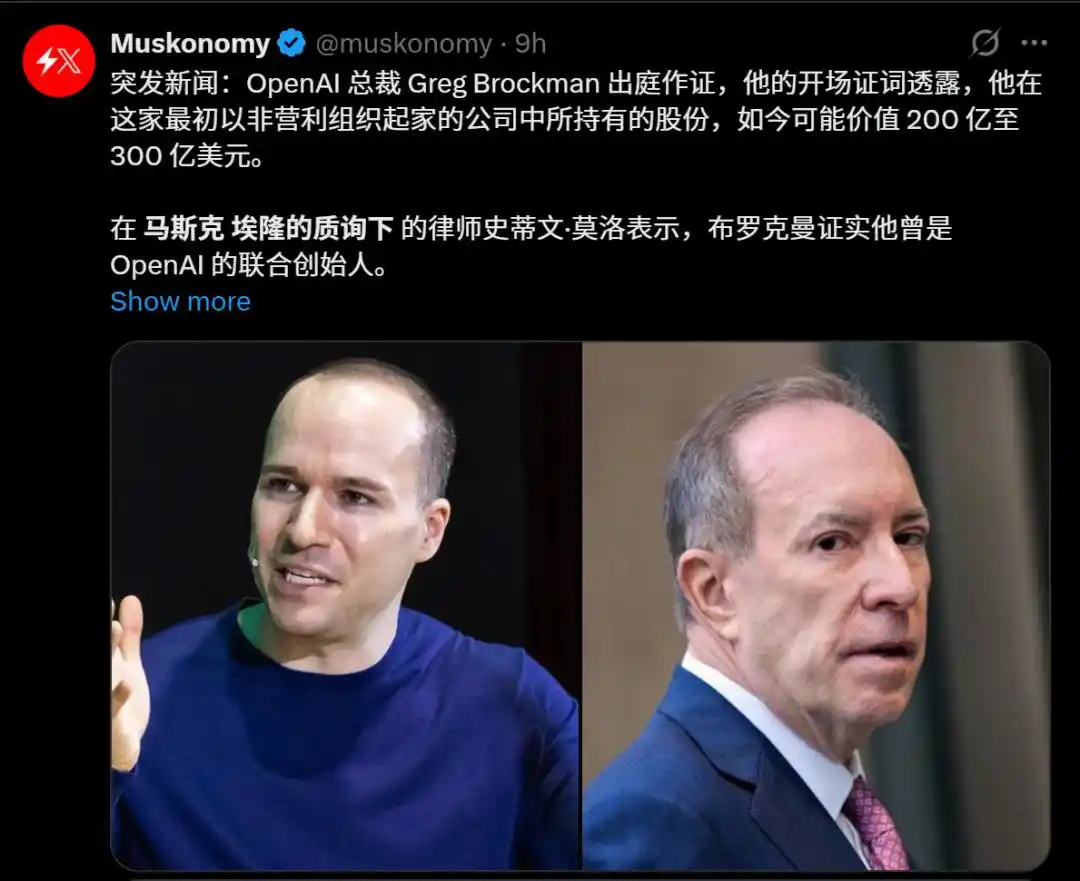
就在刚刚,OpenAI总裁Greg Brockman「认罪」了?

他当庭承认,自己从未投入一分钱,却套出了价值300亿美元的股权。

这个消息,不仅惊呆了法庭上所有人,也让所有网友震惊。

听到这个劲爆消息,纽约大学学者马库斯判断:我认为马斯克第一次真的有机会赢了。

硅谷世纪审判,

OpenAI总裁「认罪」

2026年5月的奥克兰联邦法院,空气中弥漫着焦灼感。

在这个法庭里,坐着当今世界最聪明的几颗大脑,也坐着人类历史上最激烈的利益纠纷。

一边是世界首富、致力于将人类送往火星的马斯克;另一边则是目前全球AI皇冠上的明珠——OpenAI的执掌者们:奥特曼和Greg Brockman。

现在,这场审判已经演变成了一场关乎数百亿美元、充满了背叛、权谋、秘密协议与利益输送的商业谍战大片。

庭审现场,马斯克的代理律师神情自若,他拿着Brockman自己的日记和邮件,优雅地进行着一场「现场活剐」。

最令全场震惊的一幕发生了。

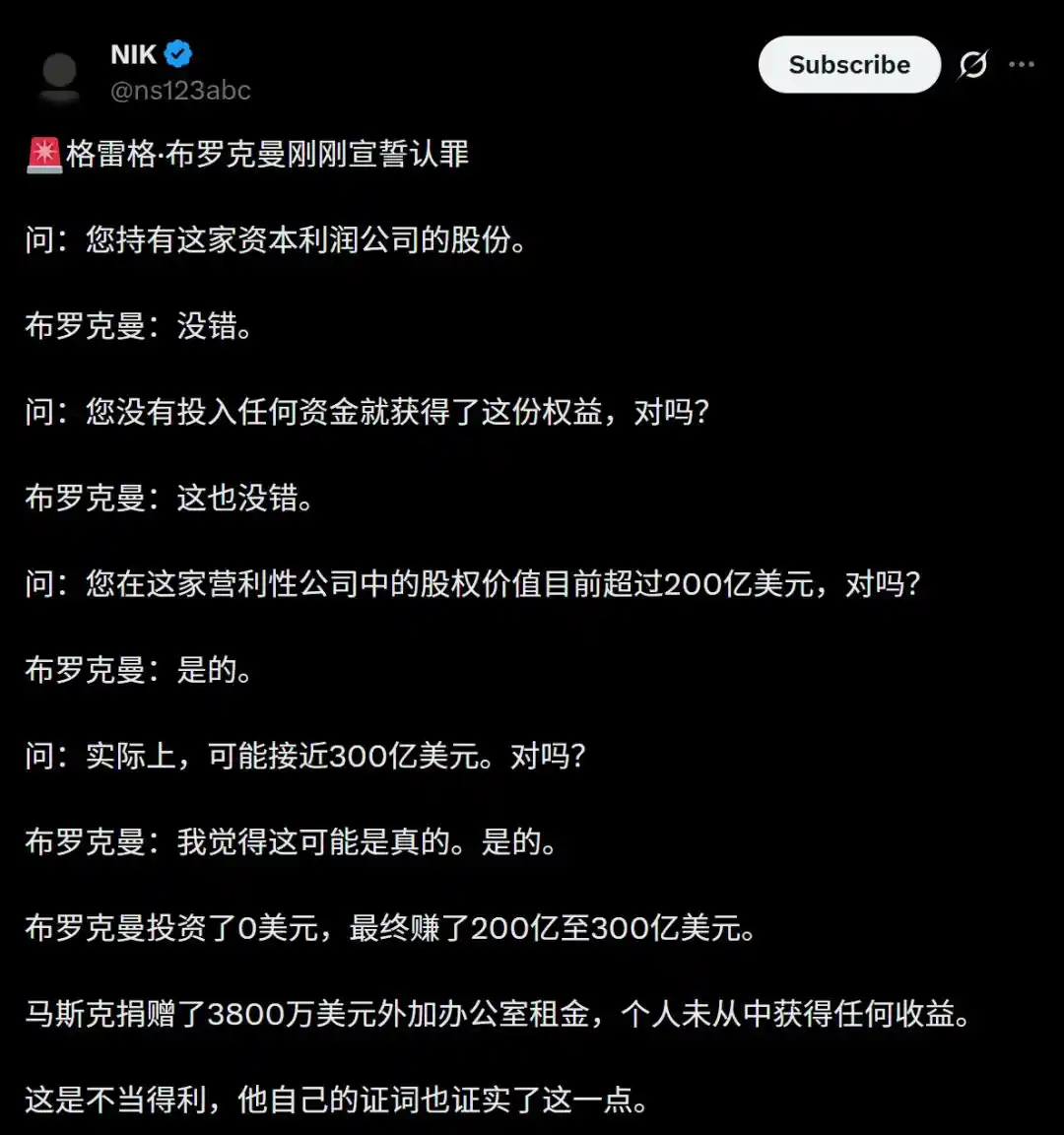
当律师问及Brockman在OpenAI营利性实体的持股时,对话如下。

问:「你在这一营利性公司中拥有所有权权益,对吗?」

Brockman: 「是的,准确。」

问:「而为了获得这些权益,你投入的现金是0美元。对吗?」

Brockman(迟疑后): 「也是准确的。」

问: 「你在这家营利性实体的股权,以今天的估值计算,超过了200亿美元,对吗?」

Brockman:「是的。」

问: 「事实上,它可能更接近300亿美元。对吗?」 Brockman: 「我想这可能是真的。是的。」
这个数字在法庭内回荡时,旁听席上响起了一阵细微的骚动。

要知道,马斯克作为OpenAI最早的资助者,先后捐赠了超过3800万美元现金,提供了早期的办公场所,甚至亲手挖来了顶尖人才。

但在今天的OpenAI里,马斯克的个人占股是零。

不仅如此,Brockman还不得不承认了一个尴尬的事实:他曾在早期筹款中利用马斯克的名字来背书,甚至曾口头承诺捐款10万美元,但实际上,这笔钱他从未兑现。

这正是马斯克指控的核心:不当得利。

按照加利福尼亚州的慈善信托法,非营利组织的受托人应该领取薪水,而不是瓜分慈善资产。

马斯克的逻辑很简单:我捐款是为了做一个造福人类的公器,结果你们把公器偷偷拆了,把里面的零件装进了自己的口袋,还给自己贴上了300亿美元的标签。
Cerebras:一笔200亿的自我交易

如果说300亿股份是这场庭审的第一颗炸弹,Cerebras就是第二颗。庭审中披露的关于Cerebras公司的关联交易,直接触及了法律红线。

马斯克的律师翻出了一份陈年旧账。

2017年,Brockman在担任OpenAI受托人期间,私下购买了AI芯片初创公司Cerebras的股份。与此同时,奥特曼也对该公司进行了个人投资。

然而,在接下来的时间里,Brockman开始疯狂在OpenAI内部游说,促使OpenAI与Cerebras达成交易。
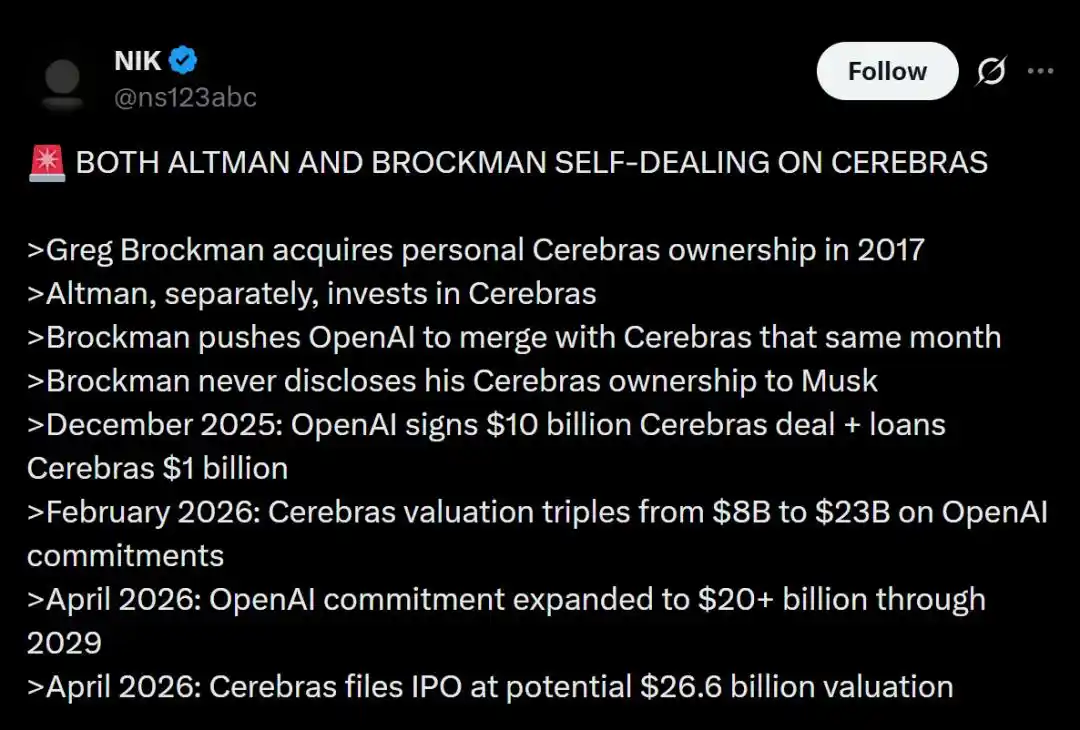
具体时间线如下。

2025年12月: OpenAI签署了一份向Cerebras支付100亿美元的订单,并额外提供了10亿美元的贷款。

2026年2月: 凭借OpenAI的巨额订单,Cerebras的估值从80亿美元飙升至230亿美元,翻了近三倍。

2026年4月: OpenAI将订单追加到了200亿美元。

现在: Cerebras正式提交IPO申请,估值冲向266亿美元。

法庭上的对话如下。

问:当你在讨论OpenAI和Cerebras之间的金融交易时,你实际上是Cerebras的股东,对吗?

Brockman:「讨论期间和作为Cerebras投资者之间存在一些重叠。是的。」

问:你能指出一封告知马斯克你持有Cerebras股份的邮件吗?在你推动OpenAI和Cerebras做交易的同时?

Brockman:「我不认为存在这样的邮件。」

问:聊天记录呢?Brockman:「没有。」问:短信呢?

Brockman:「没有。」

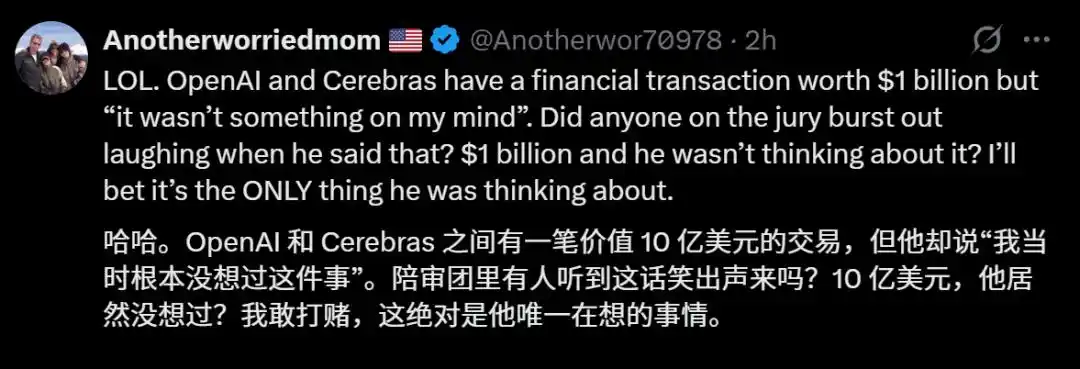
问:然而如果OpenAI和Cerebras之间有交易,你个人会从中获利

Brockman:「我想是的,但这不是我当时考虑的事情。」

加州慈善信托法对此有个专门的名字:自我交易。这种自我交易在法律上是极其致命的。
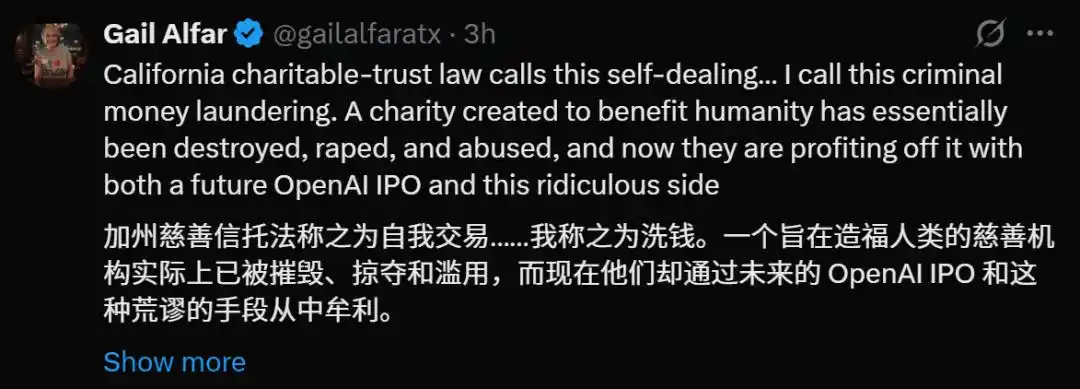
作为非营利组织的负责人,他们利用慈善资金去扶持自己个人投资的公司,从而实现个人财富的指数级增长。

这已经不仅仅是「背离初衷」的问题,而是涉嫌严重的职业道德违规和利益冲突。

「美国最恨之人」

OpenAI方面显然不打算坐以待毙。

为了反击马斯克的「贪婪说」,他们的律师在法庭上披露了一组充满火药味的短信!
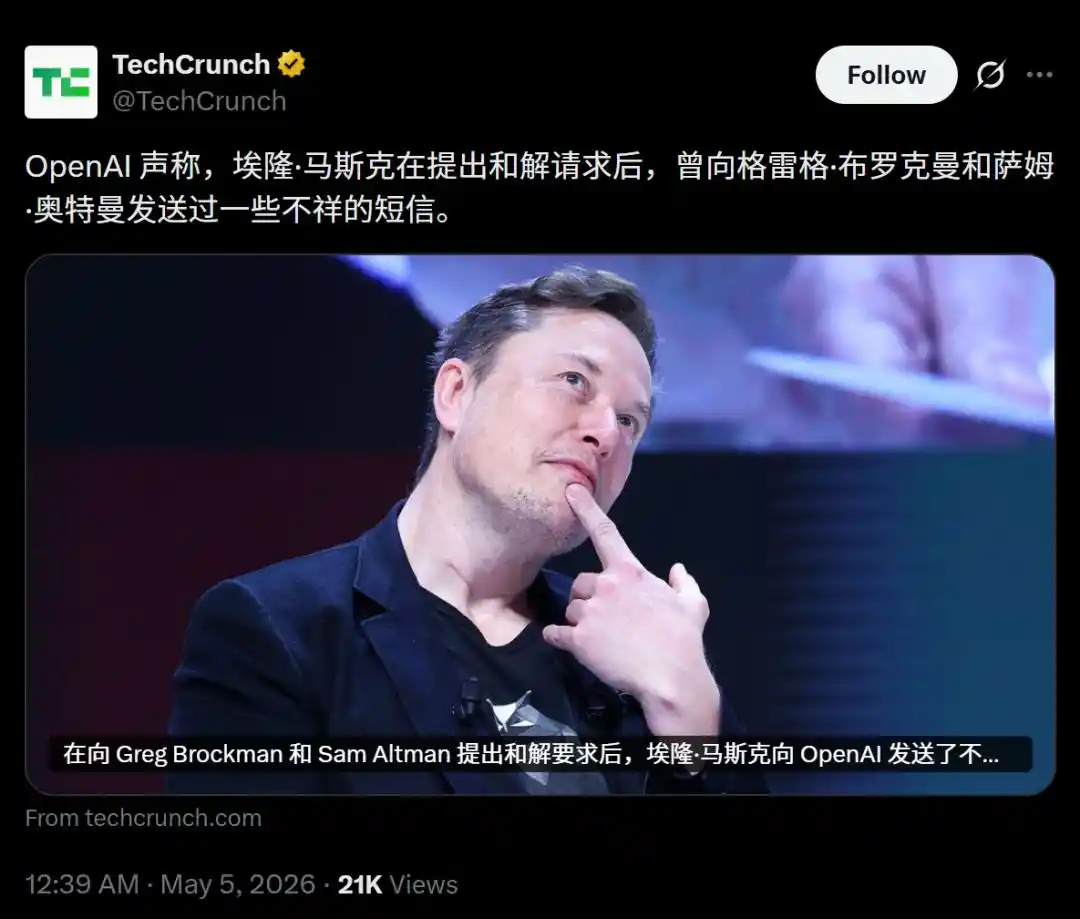
根据OpenAI的说法,在开庭前两天,马斯克曾主动联系Brockman提出和解。Brockman礼貌地回应说,不如双方都撤诉。

随后,对话既然竟然脱轨了。

马斯克似乎瞬间「狂暴化」,他回复道:「到本周末,你和Sam将成为全美国最令人痛恨的人。如果你坚持(不和解),那就这样吧。

这条被称为「不祥预兆(Ominous)」的短信,被OpenAI解读为马斯克的恐吓与威胁。
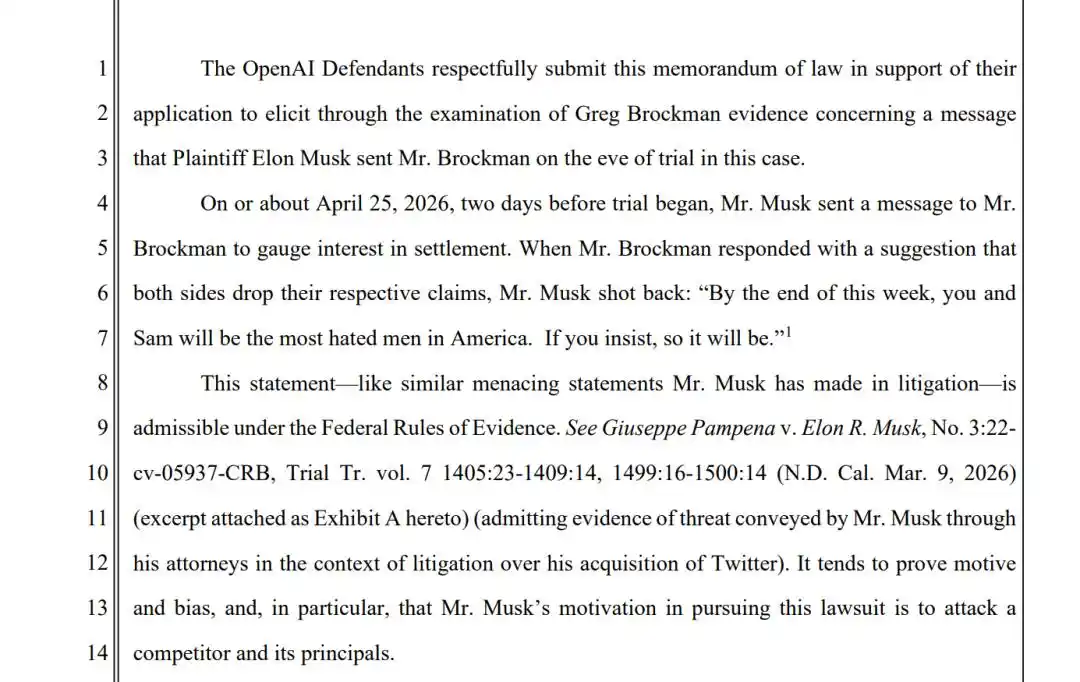
庭审文件:https://storage.courtlistener.com/recap/gov.uscourts.cand.433688/gov.uscourts.cand.433688.522.0.pdf

OpenAI的律师试图证明,马斯克起诉并不是为了什么「人类安全」或「非营利梦想」,而是因为他嫉妒OpenAI的成功,想向老搭档索要分手费。

然而,法官Yvonne Gonzalez Rogers并没有被这些花边八卦带偏,她当庭裁定这些短信内容不可作为证据。

法官的关注点依然清晰:OpenAI是否违反了其创立时的合同义务?其从非营利向营利性的转型是否合法?

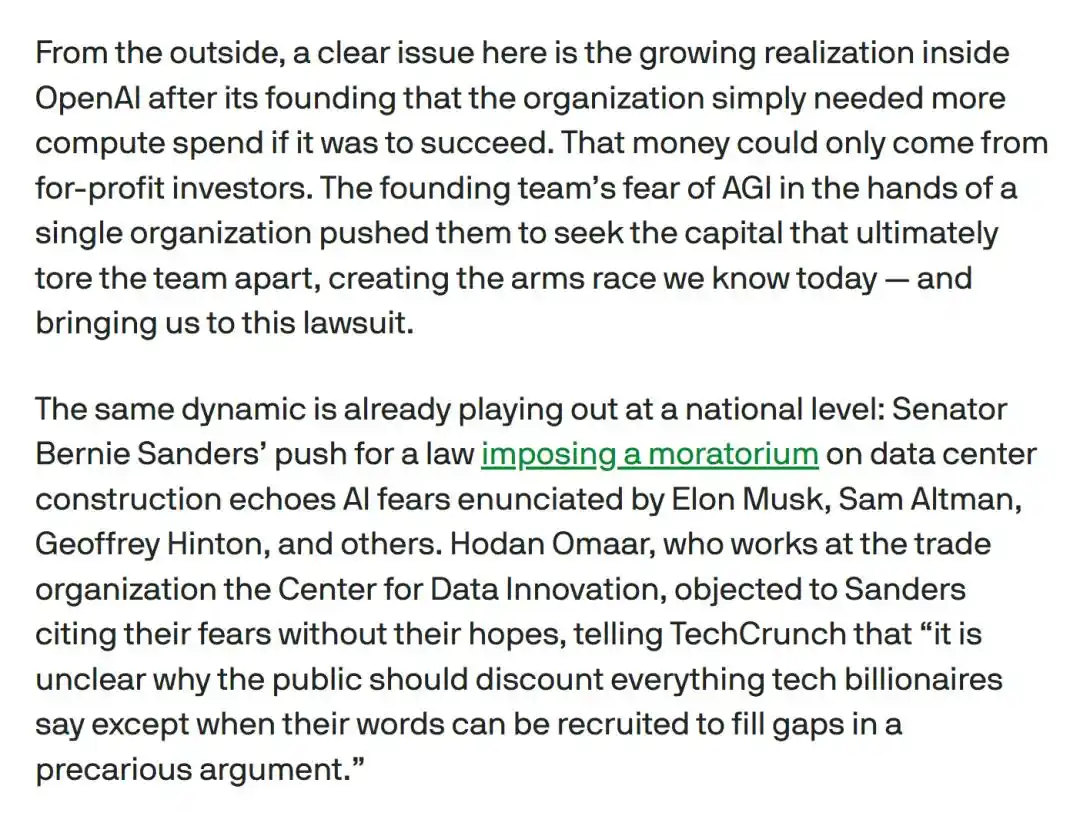
专家的忧虑:AGI军备竞赛下的「世界末日」

在这场审判中,唯一能让人想起「人类命运」这个宏大课题的,是马斯克请出的专家证人——加州大学伯克利分校的计算机教授Stuart Russell。
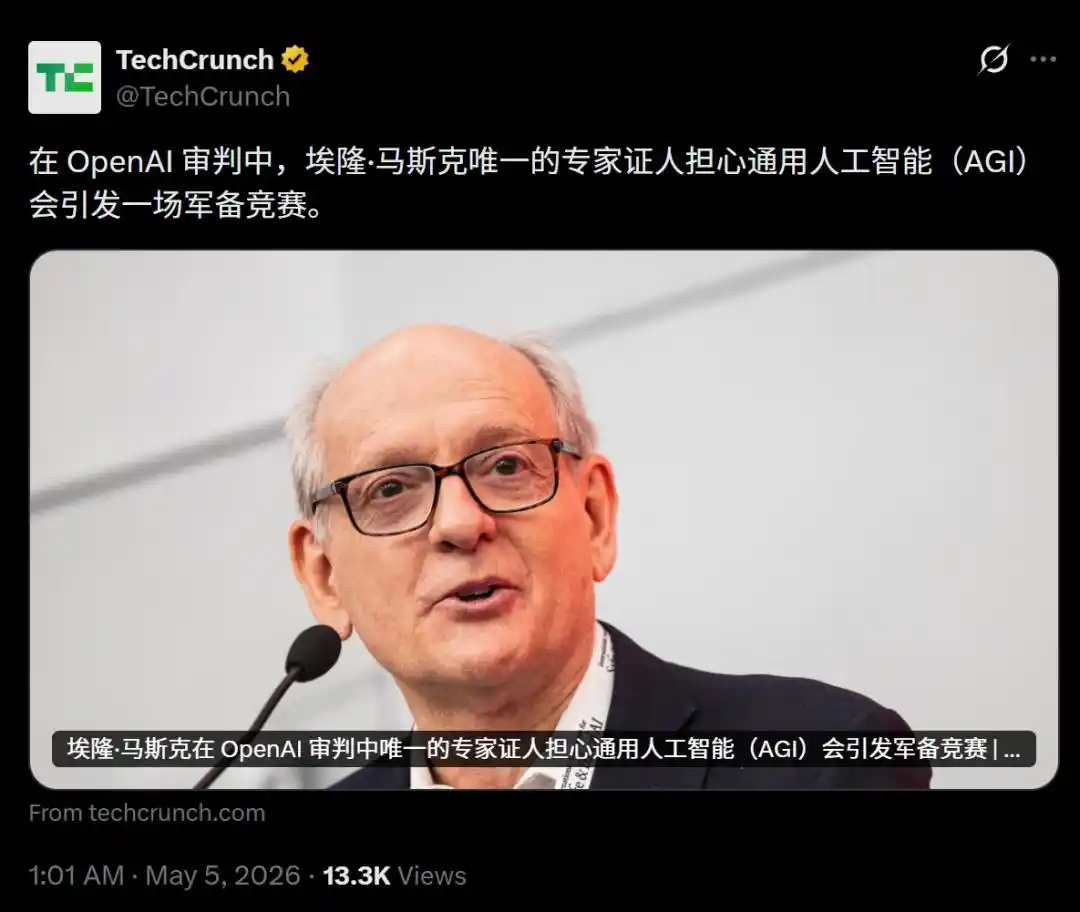
作为AI界的泰斗,罗素教授的证词让现场气氛瞬间沉重。他警告称,当前的AGI竞赛已经演变成了一场失控的「军备竞赛」。

「追求AGI与安全之间存在着天然的张力,」罗素对陪审团说。

他指出,OpenAI为了赢得竞争,正在牺牲安全性。这种「胜者通吃」的心理,会让开发者忽略对AI对齐的严苛要求。

最讽刺的细节在于,马斯克虽然起诉OpenAI追求利润,但他自己旗下的xAI同样是一家营利性公司,且同样在疯狂购买显卡、扩充算力。

所以,这到底是两个理想主义者在争夺人类的未来,还是两个亿万富翁在争夺通往上帝权力的门票?

罗素教授甚至表达了一种担忧:如果这场诉讼导致OpenAI被迫公开其核心技术细节,可能会刺激全球范围内的AI军事化风险。
OpenAI:这是「必要的恶」

面对「背信弃义」的指责,OpenAI的逻辑也自成一派。

Brockman在证词中反复强调,OpenAI之所以转型,是因为他们发现,想要实现AGI,所需的算力是天文数字。如果仅仅依靠慈善捐款,OpenAI早就死在了Google DeepMind的阴影之下。

「为了吸引顶尖人才,为了购买数以万计的H100显卡,我们必须引入营利性结构,」OpenAI的辩护律师坚称,这是一种「必要的恶」。

但马斯克方反驳道:如果你需要钱,你可以重新融资,但你不能把之前大家基于「非营利」前提投入的资产和声誉,直接打包带走,转化成私人的股份。

要知道,在早期的一封邮件中,Brockman曾亲口说过,如果OpenAI转向营利性,那将是「道德上的破产」。

如今,他坐在300亿美元的股权堆上,不知道是否还记得自己当年的那句话。

硅谷的价值观大撕裂

这场审判,本质上是两种硅谷价值观的终极对撞。

一种是马斯克代表的「旧约理想主义」: 承诺就是承诺,契约不可违背。

一种是奥特曼代表的「实用扩张主义」: 技术迭代太快,生存才是第一位。为了实现AGI,任何法律结构的微调和利益分配的改变都是合理的。

而加州法律可能更倾向于前者。

在加州,慈善资产受严格保护。如果你建立了一个慈善机构,然后决定把它变成私人公司,你必须经过极其复杂的评估,并将资产价值全额回馈给公众。

如果马斯克赢了,会发生什么?

首先,OpenAI可能被迫开源——这是马斯克一直以来的诉求。

第二,微软的投资可能面临风险。马斯克要求撤销与微软的独家授权协议。如果法庭支持这一请求,OpenAI的估值将瞬间坍塌。

第三,OpenAI营利性部门的利润可能被强行划拨回非营利母体,Brockman那300亿美元的「零成本股权」可能化为泡影。

最后,这一判决将成为判例,警告所有AI初创公司:你不能打着慈善的幌子融资,再打着商业的幌子收割。

但如果OpenAI赢了,那意味着硅谷的「野蛮生长」逻辑再次获得全胜——

只要你能做出改变世界的技术,那所有最初的诺言,都可以在成功的金光下被掩盖。

参考资料:

https://x.com/TechCrunch/status/2051340893299593439

https://x.com/TechCrunch/status/2051346525142634618

https://x.com/ns123abc/status/2051346265963721125

https://x.com/GaryMarcus/status/2051367230949232730

本文来自微信公众号“新智元”,作者:新智元

Related Reads

QCP Capital Analysts Explained Why Bitcoin Stalled at $63,000

QCP Capital's latest report explains that Bitcoin has stalled around $63,000, testing the lower boundary of its recent trading range ($62,500–$64,000). The retreat wasn't due to a single catalyst but stems from several cross-market pressures: heightened geopolitical risks, rising oil prices, uncertainty around global liquidity, and a muted reaction to positive U.S. macroeconomic data. While U.S. inflation and jobs data softened, reducing expectations of imminent Fed tightening, Bitcoin's price response has been subdued. This highlights the importance of other factors like trader positioning, liquidity conditions, and overall risk appetite. The regulatory landscape is progressing on two tracks: congressional legislation (like the CLARITY Act) is delayed, but SEC rulemaking continues. Corporate treasury activity, exemplified by Strategy's new Bitcoin monetization program, now creates a potential two-way flow, adding complexity to supply dynamics. Geopolitical tensions around the Strait of Hormuz keep oil prices elevated, impacting crypto indirectly through inflation expectations and financial conditions. Historical seasonality shows August and September are typically weak for Bitcoin, but this is descriptive, not predictive, in today's ETF-driven market. In conclusion, Bitcoin has shown resilience by absorbing multiple negative forces without a decisive breakdown. However, it has failed to convert improving macro fundamentals into sustained upward momentum. The market awaits key events like the U.S. PCE data, the Jackson Hole symposium, and the September FOMC meeting for a potential catalyst to break the current range.

cryptonews.ru2m ago

QCP Capital Analysts Explained Why Bitcoin Stalled at $63,000

cryptonews.ru2m ago

Did DeepSeek Intentionally Make an Unfriendly Agent?

DeepSeek is shifting its strategy from being a low-cost model provider to building a foundational ecosystem for AI agents. This pivot is marked by two recent moves: increasing the price of its flagship V4 Pro model and launching the DeepSeek Harness agent framework. Previously, DeepSeek's success was built on creating powerful, affordable models and open-sourcing them to drive adoption. Now, the focus is moving "beyond the model" to the runtime environment where agents operate. Harness is key to this new approach. Unlike integrated agent products from competitors, Harness deconstructs the agent stack—separating the model, tools, skills, workflows, and UI into modular, replaceable components. Its core innovation is the Cordis kernel, which enables dynamic loading, unloading, and management of plugins, allowing agents to modify their own capabilities during execution. Significantly, Harness does not lock users into DeepSeek's models; it allows integration with third-party models. This suggests DeepSeek's ambition is not to control the model layer but to establish the standard runtime environment for future agents—akin to an operating system for the agent era. The V4 Pro price increase aligns with this shift: the model transitions from a loss-leading acquisition tool to a core revenue engine within a broader ecosystem. Harness is currently complex and developer-focused, prioritizing ecosystem builders over end-users. Its success will be measured not by immediate user numbers, but by the plugins, agents, and platforms built upon it. DeepSeek's long-term bet is that controlling the agent runtime will be more valuable than merely providing the underlying models, potentially redefining how AI agents are created and evolved.

marsbit38m ago

Did DeepSeek Intentionally Make an Unfriendly Agent?

marsbit38m ago

Metrics Ventures Market Observation: Talk is Cheap

This monthly market analysis extends its timeline to incorporate critical July comments from the Fed Chair, noting that bond markets have already priced in perceived policy shortcomings. The report observes a growing divergence: equity markets, after some deleveraging, continue a "trust-based" rally, while bond and currency markets signal persistent distrust. Precious metals bottoming suggests a central bank consensus that the era of "competitive currency devaluation" is ending, with verbal interventions losing power. Looking forward to Q3-Q4, the analysis remains bullish on supply-constrained global resources like copper and power, as well as gold, which prices ongoing monetary失信. It argues that digital assets are unlikely to see major outperformance until excess liquidity is released and AI growth rates are fully priced. Key market views include: 1. Commodities like gold remain primary liquidity absorbers over Bitcoin, with recent consolidation seen as healthy. 2. The bull trend for RMB-denominated assets (e.g., STAR 50 Index) is firmly established. 3. Key resource country indices and currencies are near inflection points, with spot copper already at new highs. The report suggests resource equities, particularly in China's market, are at the end of their consolidation phase, offering attractive valuations with embedded optionality on rising metal prices. It highlights the predictive significance of recent US-Japan FX interventions and Treasury-Fed dynamics, suggesting a shift towards less communication and data management to maintain stability. A long position in resource assets is presented as a positive expected-value strategy over a multi-year horizon.

marsbit2h ago

Metrics Ventures Market Observation: Talk is Cheap

marsbit2h ago

The Value, Growth, and Risks of Prediction Markets

The article discusses the explosive growth and complex nature of prediction markets in the United States, focusing on their value, risks, and regulatory challenges. Key drivers include sports betting, which fueled a 1795% year-over-year trading volume increase in Q2 2026, with platforms like Kalshi and Polymarket dominating. These markets offer significant potential as superior hedging tools for businesses and more efficient price discovery mechanisms than traditional polls or derivatives for events like Fed rate decisions, elections, or GPU prices. They also serve as customer acquisition channels for platforms like Robinhood. However, major challenges persist. A central conflict exists between federal regulators (CFTC), which classify event contracts as derivatives under its jurisdiction, and state authorities, which view sports-related contracts as illegal gambling, leading to numerous lawsuits. There is significant consumer protection risk: data shows most retail users lose money to professional traders, platforms market high-risk products like parlays, and protections (e.g., age limits, addiction help) are weaker than in state-regulated sports betting. The "self-certification" process allows rapid contract launches but creates regulatory uncertainty. The author argues prediction markets are fundamentally "better markets" but currently fail to provide adequate consumer safeguards. Proposals include integrating protection mechanisms (cooling-off periods, position limits), aligning risk warnings with product risks, creating paths from speculation to long-term investing, and applying specific consumer protections and taxes to sports contracts. The piece concludes by urging stakeholders to address these issues before a potential regulatory backlash undermines the markets' legitimate utility.

marsbit2h ago

The Value, Growth, and Risks of Prediction Markets

marsbit2h ago

Trading

Spot
活动图片