Li Shanyou: The World Is Getting More Competitive, But We Can Choose to Be Slower, Go Deeper, and Turn Inward

marsbitXuất bản vào 2026-07-17Cập nhật gần nhất vào 2026-07-17

Tóm tắt

**Title:** Li Shanyou: The World Is Moving Faster and More Chaotically; We Can Choose to Be Slower, Deeper, and More Inward **Summary:** In an era where AI evolves weekly and past experiences often fail, the article argues for returning to First Principles. It shifts focus from "cognition" (knowledge/content), which AI has disrupted, to "consciousness" or "the capacity to know"—the foundational ability that enables cognition and determines its scope and depth. The piece uses Zhang Yiming (founder of ByteDance) as a case study for the "second-order consciousness" of the mobile internet era: success through rational logic, modeling, and deduction, which allowed him to surpass earlier "first-order" entrepreneurs reliant on copying experiences. However, the author suggests that the AI era demands a further leap to "third-order consciousness"—operating from a place of inner inspiration, vision, or "ideas," beyond pure rationality. Figures like Elon Musk and Steve Jobs are cited as examples, with DeepSeek's Liang Wenfeng presented as a potential representative of this new, AI-native wave of entrepreneurs driven by curiosity and innovation rather than just commercial logic. For the majority who may not become such visionary leaders, the author proposes an alternative path: the "Path of Quality" or "Work as Art." This involves turning inward, focusing on the immediate task at hand, and imbuing one's work with care and dedication—creating a "quality" product not as a means to an e...

The "one" behind civilization is not a cognitive revolution, but a leap in 'capacity to know'.

As AI updates weekly and past experience frequently fails, we must emphasize: return to first principles.

At Hundun, we pursue inquiries with first-principles thinking.

In the past, when we talked about cognition, we referred to the known—knowledge, content. We believed knowledge is power. But now cognition has been pierced by AI. We must lower the foundation of first principles to 'capacity to know'.

In the 2026 Shan You Grand Lecture, the professor said: For the first decade of Hundun, our core keyword was always "cognition"; starting from this lecture, I quietly upgrade this term to "capacity to know".

Knowledge itself has no power; the capacity to know has power. Capacity to know is not the content of cognition, but the capability that makes cognition possible. It is "what you can perceive and to what degree"—an a priori stipulation, this is called capacity to know.

Applying this framework to entrepreneurship makes the issue acute.

Mentioning entrepreneurship, the representative entrepreneurs a decade ago were Ma Yun and Ma Huateng; today it's Zhang Yiming.

"Zhang Yiming" has become synonymous with entrepreneurship today, especially in the internet field. Thus, we can't help but ask:

How will entrepreneurs evolve in the AI era?

Will this era produce a new "Zhang Yiming"?

Or will it continue to be led by today's already dominant entrepreneurs?

Zhang Yiming's Cognitive Leap: From Experience to Logical Modeling

To clarify the future, let's trace the past.

There are three keywords associated with Zhang Yiming:

In 2017, Wang Xing said he thought Yiming's characteristic was rationality.

In 2016, Zhang Yiming himself mentioned a keyword: cognition.

He said, "Actually, cognition about things is most critical. Theoretically, all other production factors can be built—how much money to raise, whose money to take, what kind of people to recruit, where these people are, how the right people should collaborate. Ultimately, the more profound your cognition about the matter, the more competitive you are."

Furthermore, Zhang Yiming's way of doing things is modeling.

I asked a founder of a company he acquired, "Why did you sell your company to Zhang Yiming?" He said, "I talked with him for two hours and realized I wasn't on his level. Beyond his existing world, he could see two layers further. Zhang Yiming insists that anything can be modeled. If you can't model it, it's actually because your computational power is insufficient."

So, why could Zhang Yiming emerge in the mobile internet era? Toutiao changed content distribution, Douyin e-commerce strongly impacted traditional e-commerce, TikTok became a globally influential short-video platform, and in the AI large model arena, ByteDance has produced Doubao...... My guess, or hypothesis, is: behind this lies a difference in the level of capacity to know.
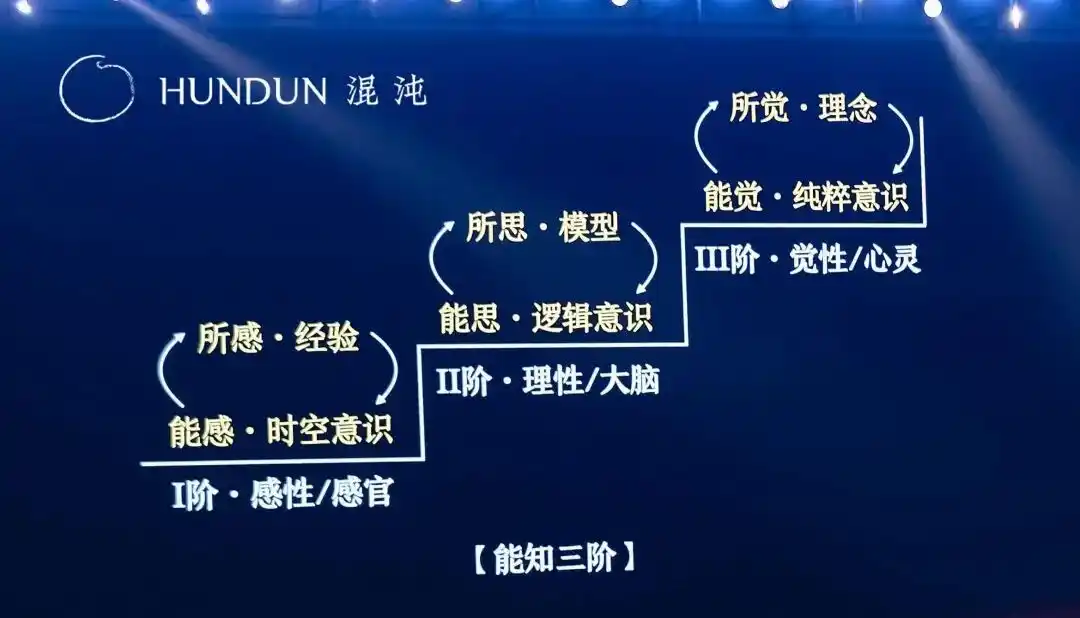
China's PC internet generation of entrepreneurs were heroes, but essentially most of them operated at the first-order capacity to know.

Because the keyword for this generation was "Copy to China," replicating successful experiences from one time and space to another. This is inductive reasoning, innovation living in experience—action innovation, execution innovation, not essential model innovation.

In contrast, the generation of entrepreneurs born in the 1980s, especially Huang Zheng and Zhang Yiming. You'll find this is a generation that completely believes in logic. Their success rests on the second-order capacity to know.

This can also explain why ByteDance and Pinduoduo could internationalize, achieving genuine overseas success. Because the mainstream of today's world is industrial civilization, at the second order. And ByteDance stands at the second order, so it can look the world in the eye and flow over.

Of course, you might say entrepreneurial success has many factors—resources, technology, opportunity, investment... But if we look for the core "one" factor, it's capacity to know. Ten years ago, Zhang Yiming made a leap in capacity to know, triumphing over the PC internet.

So Zhang Yiming's power is not just diligence, focus, correct strategy, nor merely seizing the mobile internet dividend. What he truly represents is the victory of second-order capacity to know: viewing the world with models, compressing information with logic, using modeling ability to form a dimensional reduction attack on experience-based entrepreneurs.

Zhang Yiming once said: "Anything that is logically possible will eventually happen." I think this aptly illustrates that he belongs to the second-order capacity to know.

But, what one succeeds by, one is also constrained by. ByteDance's boundary is rationality. If your capacity to know is built on rationality, you might not ascend further. For ByteDance as a whole, the concrete word embodying rationality is algorithm.

Zhang Yiming's belief in algorithms reached the point of training himself like an algorithm. But do you think this algorithm is pure and sincere?

So back to the initial question, will there be a new "Zhang Yiming" in the AI era? I think there definitely will be. Each era's discontinuity is not a single entrepreneur defeating a giant, but new entrepreneurs gathering within a new era's value network. The new value network grows, becoming the new giant.

DeepSeek's Liang Wenfeng: The Absolute Confidence of an Ideal-Driven Entrepreneur

If our footing remains on thinking capacity, on logic, we cannot surpass AI, nor can we surpass Zhang Yiming. Because AI lives directly in the rational world of logic, almost infinitely close to the peak of rationality.

Therefore, the very few who wish to become the new era's "Zhang Yiming" must leap, just as Zhang Yiming and Ma Yun did a decade ago, to the third-order capacity to know. Your way of viewing the world is no longer rational models, but a deep-seated idea within the heart. It is neither inductive nor deductive reasoning; it might be flow state, inspiration, the feeling of resonating with the great Way.

If I must give an example, I think it's DeepSeek's Liang Wenfeng. You'll find he is different from Zhang Yiming. I'm not saying he will definitely be the new era's "Zhang Yiming," but I think he carries some shadow, representing a certain zeitgeist we're discussing.

Liang Wenfeng said in a previous interview: "In the past 30 years, we've been more focused on making money than on innovation. But innovation isn't solely driven by business; it requires curiosity and creative ambition. We've been constrained by past habits, but this is just a phase." You can sense a kind of noble spirit, expressed in a humble yet powerful way. I believe he's not speaking just for himself, but representing a tide of the era. We truly need to sense a certain change.

He also said something I think is remarkable. "All established patterns are products of the previous generation; they may not hold in the future. Using the commercial logic of the internet era to discuss AI's future profit models is likely like marking the boat to find the sword."

Today we think OpenAI's ChatGPT is correct, but it might just be AI-enhanced innovation from the internet era. Perhaps DeepSeek's technical large model is a native innovation! How likely is that possibility? I think slightly more than zero, and that's the difference between innovation and entrepreneurship.

Entrepreneurship requires a high probability of success before you act, but innovation is doing something originally unlikely to succeed. I think this is the underlying color of Hundun; we are not cheering for entrepreneurial success, but for the courage to innovate.

Today's native AI-era entrepreneurs, if they can undergo a new leap in consciousness, might become the new figure of the AI era. This is also why the word "consciousness" isn't just philosophy; it has very concrete entrepreneurial significance. Musk and Jobs are references on this path.

Musk's business success is a byproduct of his pursuit of ideals. Many of SpaceX's decisions aren't based on commerce, but are inspired by the scene of "one day reaching Mars" to motivate all current decisions.

Jobs set enlightenment as his Y-axis, with tools, especially tools of thought, as the X-axis to achieve that enlightenment. He said he spent his life seeking self-enlightenment and hoped to enlighten more people through tools.

But this path is extremely difficult. I call it the path of ideals. It is glorious, but indeed it is a path only a few can walk, standing precisely on the point of the era's tide.

But what about the majority?

Crafting Your Work: The Ordinary Person's Path is to Do the Work at Hand Wholeheartedly

Not everyone has the chance to stand on the peak of the era's tide; many don't have such grand ideals or great vows. Now I want to talk about a second path, which is also the path I've chosen—the path of Quality, or the path of the Work.

I believe many students here feel this way: wanting to compete fiercely but unable to; wanting to give up but unable to rest easy, unwilling to settle. Does life lose meaning if you can't enter the tide? Many don't hold grand ideals; are personal small sentiments, small tastes, meaningless?

Not everyone can become a "Zhang Yiming." However, I can become a better version of myself.

I suspect that raising the frequency of consciousness doesn't necessarily require great endeavors; even in small matters, doing them with full attention can achieve incremental evolution of consciousness.

We often reify the things we do—for money, for a high salary. When you reify what you do, you are actually reifying your own heart. This reflects back; how you treat your work is how the world treats you. When you unify with what you do, the doing itself becomes the purpose; it is not a result or a means. At that point, what you do becomes a Work.

So the second path is not about comparison, not about competition, not about proving oneself, but turning inward. From the perspective of first principles, from the foundational color of consciousness, create a beautiful Work that belongs to me, express my heart through a Work. When person and work are unified, it's less about me polishing the work and more about me polishing my own heart.

This path originates from "Zen and the Art of Motorcycle Maintenance," which mentions a word called "Quality." I'll share my favorite passage: "One must listen to the guidance of Quality, follow it quietly, single-mindedly, so that the work in hand becomes an art."

I suspect Quality is also a word about essence. While it doesn't possess the extremely high consciousness frequency of "Ideas," it refers to finding the feeling of quality in whatever you do. The work in your hands having Quality gives those who use it a different feeling. Those who feel it might find it good and continue to spread it to others. Quality, like frequency, can ripple outward. I feel this is how the world becomes beautiful.

This path is backed by the faint light of ordinary people. You do the work at hand well, do it with heart, that's all. This era's frequency holders aren't necessarily the wealthy or famous. No matter how small your task, if your frequency is high enough, it will ripple outward, becoming a frequency holder of this era. So when the world gets more competitive and faster, perhaps we can make the opposite choice: be a little slower, go a little deeper, turn a little more inward.

Frankly, entrepreneurship is already difficult today. When the era lacks a great tide, we return to ourselves. People don't serve tasks; tasks serve people. People are the subject. Whether big or small, tasks are techniques, tools, carriers—all to cultivate my heart. This is returning to first principles.

This article is from WeChat public account "Hundun University" (ID: hundun-university), author: Hundun Academy


Tiền kỹ thuật số thịnh hành

Câu hỏi Liên quan

QWhat is the fundamental shift in perspective proposed by the author regarding knowledge and power?

AThe author proposes a shift from 'cognition' (suo zhi, or acquired knowledge) to 'capability of knowing' (neng zhi, or the innate capacity to perceive and understand). The key argument is that knowledge itself is not power; the true power lies in the underlying ability and framework that allows one to acquire and process knowledge.

QAccording to the article, what was Zhang Yiming's key advantage over previous generations of entrepreneurs?

AZhang Yiming's key advantage was operating from a 'second-order neng zhi' (capability of knowing). Unlike the experience-based, 'copy to China' approach of the PC internet generation, he viewed the world through logical models, enabling a more abstract and fundamental understanding that allowed for modeling, predicting, and executing complex projects, giving him a dimensional advantage over experience-driven entrepreneurs.

QWhy does the author suggest that some entrepreneurs must leap to a 'third-order neng zhi' in the AI era?

AThe author argues that because AI excels in and even dominates the realm of logic and rational modeling (second-order neng zhi), human entrepreneurs seeking to lead in the AI era must transcend it. They must leap to a 'third-order neng zhi' based on ideas, insights, vision, and a deeper connection to fundamental principles, which is less about pure logic and more about inspiration, consciousness, and alignment with a greater purpose.

QWhat path does the article suggest for most people who are not at the forefront of major innovation?

AThe article suggests the path of 'Quality' or 'Work as Art.' This involves turning inward and focusing on infusing the tasks at hand—no matter how small—with care, integrity, and a sense of craftsmanship. It emphasizes creating 'works' that are expressions of one's heart, aiming for personal growth and consciousness elevation through the dedication to quality in daily endeavors, rather than competition or proving oneself on a grand scale.

QWhat is the ultimate message of the article regarding how individuals should respond to a rapidly accelerating and competitive world?

AThe ultimate message is to adopt a counter-intuitive approach: to go slower, deeper, and more inward. Instead of succumbing to external pressure ('juan'), individuals should focus on refining their inner being through their work, treating tasks as vehicles for personal cultivation. The goal is to become a 'frequency holder' by elevating one's own consciousness and the quality of one's actions, thereby contributing to a better world in a more sustainable and meaningful way.

Nội dung Liên quan

Ngân hàng Ý không nhìn thấy lợi thế hệ thống của stablecoin trong chuyển tiền

Một nghiên cứu của Ngân hàng Ý kết luận rằng stablecoin không mang lại lợi thế hệ thống bền vững về chi phí và tốc độ trong chuyển tiền quốc tế so với các dịch vụ tiêu chuẩn. Các ưu điểm tiềm năng bị mất đi bởi phí chuyển đổi sang/và từ tiền pháp định và hiệu quả của cơ sở hạ tầng thanh toán địa phương. Nghiên cứu so sánh việc chuyển 200 USDC qua 10 hành lang giữa Ý và các nước như Brazil, Argentina, Nhật Bản, UAE và Nam Phi. Tổng chi phí chuyển stablecoin dao động từ 0,3% đến gần 9%, tùy tuyến. Thời gian giải quyết giao dịch dưới 20 phút ở những nơi có hệ thống thanh toán tức thời, nhưng có thể kéo dài 1-2 ngày làm việc ở khu vực không có. Chi phí và độ trễ chủ yếu đến từ việc trao đổi, chuyển đổi tiền tệ và chất lượng hạ tầng địa phương, không phải từ phí blockchain. Dù stablecoin rẻ hơn mức trung bình toàn cầu là 6,65%, chúng chỉ rẻ hơn dịch vụ Wise ở 3/7 tuyến so sánh được. Các tác giả cho rằng lợi ích sẽ rõ ràng hơn nếu stablecoin có thể được chi tiêu trực tiếp mà không cần đổi sang tiền địa phương. Họ cũng lưu ý rằng các quy định cấm đoán không làm giảm nhu cầu với stablecoin, trong khi quy định quá chặt chẽ lại gây khó khăn cho người dùng phổ thông.

cryptonews.ru25 phút trước

Ngân hàng Ý không nhìn thấy lợi thế hệ thống của stablecoin trong chuyển tiền

cryptonews.ru25 phút trước

Cơn sốt Bitcoin đang bùng nổ: Tuyên bố mới của Saylor gây nên những đồn đoán về việc mua vào

Giám đốc điều hành của Strategy Inc. (Nasdaq: MSTR), Michael Saylor, một lần nữa khơi dậy những đồn đoán về việc công ty sẽ thông báo mua Bitcoin mới vào thứ Hai, sau khi đăng thông điệp "Bitcoin Drive engaged" vào ngày 2 tháng 8. Thông báo này đi kèm với biểu đồ mua hàng quen thuộc của công ty, phù hợp với thói quen báo hiệu thay đổi kho bạc trước các báo cáo hàng tuần của Saylor. Báo cáo kèm theo cho thấy dự trữ Bitcoin của Strategy là 843.775 BTC, trị giá khoảng 53,25 tỷ USD. Giá mua trung bình được ghi nhận là 75.653 USD/BTC, với lỗ chưa thực hiện là 10,58 tỷ USD (-16,58%). Một tín hiệu tương tự vào Chủ nhật tuần trước đã dẫn đến thông báo vào ngày 27/7 về việc công ty gia tăng dự trữ tiền mặt. Sổ cái thời gian thực của Strategy hiển thị 116 giao dịch đã đăng ký với tổng số 843.775 BTC được mua, đồng thời ghi nhận hai đợt bán Bitcoin gần đây tổng cộng 3.588 BTC (giảm từ 847.363 BTC), nhằm mục đích tài trợ cho cổ tức ưu đãi và bổ sung dự trữ USD. Công ty được báo cáo là đã không mua BTC trong tuần kết thúc ngày 26/7, đồng thời tăng dự trữ USD lên khoảng 3,75 tỷ USD. Bối cảnh tài chính đầy thách thức khi Strategy báo lỗ hoạt động 8,33 tỷ USD trong quý II/2026, chủ yếu do lỗ chưa thực hiện trên tài sản kỹ thuật số. Ban lãnh đạo có thể bán thêm tới 1,25 tỷ USD Bitcoin để củng cố dự trữ USD. Thông báo cập nhật dự kiến vào thứ Hai sẽ cho thấy liệu "Bitcoin Drive" có đánh dấu việc tái tích lũy hay không, khi Strategy cân bằng giữa kho dự trữ Bitcoin khổng lồ và các nghĩa vụ tiền mặt ngày càng tăng.

cryptonews.ru27 phút trước

Cơn sốt Bitcoin đang bùng nổ: Tuyên bố mới của Saylor gây nên những đồn đoán về việc mua vào

cryptonews.ru27 phút trước

Cổ phiếu các công ty trí tuệ nhân tạo được giao dịch như 'meme coin', trong khi Bitcoin hầu như không thay đổi giá - Tổng quan tuần

**Tóm tắt:** Bài viết phân tích các diễn biến chính trên thị trường tài chính và tiền điện tử trong tuần, với trọng tâm là sự biến động mạnh ở lĩnh vực AI và sự trầm lặng tương đối của Bitcoin. **Thị trường chứng khoán & AI:** * Cổ phiếu AI được giao dịch như "meme coin" với biến động cực đoan. Thị trường Hàn Quốc lao dốc 8% trong một phiên, chịu ảnh hưởng từ đợt bán tháo chip toàn cầu. * Quỹ "Situational Awareness" của Leopold Aschenbrenner bị thua lỗ nặng, dẫn đến thanh lý tài sản lớn, góp phần gây ra biến động. Citadel được cho là đã mua lại phần lớn danh mục của quỹ này. * Các chuyên gia như Ram Ahluwalia và Flood khuyên nên kiên nhẫn, trong khi Jim Bianco lưu ý thị trường thường tìm đáy sau khi một sự kiện lớn (như sự sụp đổ của một quỹ) xảy ra. **Macro & Tiền tệ:** * Các phát biểu của Chủ tịch Fed Kevin Warsh được cho là đã góp phần gây ra biến động, với một số ý kiến cho rằng ông thiếu năng lực. * Bộ Tài chính Nhật Bản can thiệp để hỗ trợ đồng Yên, nhưng hiệu quả hạn chế. * Có dấu hiệu về việc giảm thanh khoản toàn cầu và đà tăng trưởng sản xuất Mỹ chậm hơn kỳ vọng. **Thị trường Tiền điện tử:** * Bitcoin ít biến động, dao động quanh mức 64,000 USD, trong khi sự chú ý đổ dồn sang thị trường truyền thống. * Nhiều công ty tiền điện tử gặp khó khăn: BitMart và Storj Labs tuyên bố đóng cửa/phá sản; Coinbase (COIN) lao dốc sau báo cáo tài chính yếu; Uphold và các sàn khác cắt giảm nhân sự. * MicroStrategy tiếp tục tích lũy Bitcoin và mua lại cổ phiếu của chính mình, một chiến lược bị chỉ trích là "vòng xoáy Ponzi". * Cảnh báo bảo mật nghiêm trọng về lỗ hổng trên ví phần cứng Coldcard có thể làm lộ khóa riêng tư, đòi hỏi người dùng hành động ngay. **Các chủ đề khác:** * **DeFi/Blockchain:** Trade.xyz trên Hyperliquid và Pump.fun trên Solana cực kỳ thành công, đặt ra câu hỏi liệu họ có tự khởi chạy blockchain riêng hay không. Nghi ngờ giao dịch nội gián trên Hyperliquid. * **AI & Crypto:** Jason Calacanis và Barry Silbert nhiệt tình ủng hộ dự án Bittensor (TAO), coi đó là mô hình AI phi tập trung. Tác giả cảnh báo nên thận trọng trước sự cổ xúy của các nhà đầu tư mạo hiểm. * Các tranh cãi trong ngành: Kyle Samani chỉ trích Multicoin Capital; Charles Hoskinson khó chịu vì câu hỏi về quá khứ đồng sáng lập Ethereum. **Thông điệp chính:** Thị trường đang trải qua giai đoạn biến động mạnh, đặc biệt ở mảng AI, trong khi tiền điện tử chịu áp lực. Tính kỷ luật, sự kiên nhẫn và cảnh giác cao độ (đặc biệt về bảo mật) là cần thiết trong bối cảnh hiện tại.

cryptonews.ru38 phút trước

Cổ phiếu các công ty trí tuệ nhân tạo được giao dịch như 'meme coin', trong khi Bitcoin hầu như không thay đổi giá - Tổng quan tuần

cryptonews.ru38 phút trước

Coinkite bị chỉ trích vì lưu trữ email khách hàng sau vụ hack Coldcard trị giá 88 triệu USD

Coinkite một lần nữa đối mặt với làn sóng chỉ trích từ khách hàng sau khi lỗi trong quá trình tạo cụm từ seed ngẫu nhiên cho ví phần cứng Coldcard dẫn đến việc hơn 1.000 BTC (trị giá hơn 88 triệu USD tính đến thời điểm đó) bị đánh cắp trong hai ngày. Để cảnh báo phần lớn khách hàng có thể bị ảnh hưởng, công ty đã gửi email thông báo đến các địa chỉ email liên quan đến giao dịch mua hàng từ năm 2019. Hành động này vấp phải chỉ trích khi khách hàng chất vấn việc công ty lưu trữ dữ liệu email lâu dài. Coinkite phản hồi bằng cách viện dẫn chính sách công khai, nói rằng email được lưu để khách hàng có thể đăng nhập và xác nhận các thông tin khác đã bị xóa, nhưng không nêu rõ thời hạn xóa các địa chỉ email này. Trong một tuyên bố dường như mâu thuẫn, CEO Rodolfo Novak nhấn mạnh rằng công ty không lưu trữ thông tin khách hàng và không có cách nào liên lạc trực tiếp với những người bị ảnh hưởng, đồng thời kêu gọi sự hỗ trợ để tiếp cận tất cả người dùng có nguy cơ. Ông cũng khẳng định Coinkite cung cấp tùy chọn mua hàng ẩn danh và xóa dữ liệu khách hàng sau 90 ngày, đồng thời nhấn mạnh công ty rất coi trọng vấn đề bảo mật.

cryptonews.ru39 phút trước

Coinkite bị chỉ trích vì lưu trữ email khách hàng sau vụ hack Coldcard trị giá 88 triệu USD

cryptonews.ru39 phút trước

Giao dịch

Giao ngay

Bài viết Nổi bật

Làm thế nào để Mua CAP

Chào mừng bạn đến với HTX.com! Chúng tôi đã làm cho mua Cap (CAP) trở nên đơn giản và thuận tiện. Làm theo hướng dẫn từng bước của chúng tôi để bắt đầu hành trình tiền kỹ thuật số của bạn.Bước 1: Tạo Tài khoản HTX của BạnSử dụng email hoặc số điện thoại của bạn để đăng ký tài khoản miễn phí trên HTX. Trải nghiệm hành trình đăng ký không rắc rối và mở khóa tất cả tính năng. Nhận Tài khoản của tôiBước 2: Truy cập Mua Crypto và Chọn Phương thức Thanh toán của BạnThẻ Tín dụng/Ghi nợ: Sử dụng Visa hoặc Mastercard của bạn để mua Cap (CAP) ngay lập tức.Số dư: Sử dụng tiền từ số dư tài khoản HTX của bạn để giao dịch liền mạch.Bên thứ ba: Chúng tôi đã thêm những phương thức thanh toán phổ biến như Google Pay và Apple Pay để nâng cao sự tiện lợi.P2P: Giao dịch trực tiếp với người dùng khác trên HTX.Thị trường mua bán phi tập trung (OTC): Chúng tôi cung cấp những dịch vụ được thiết kế riêng và tỷ giá hối đoái cạnh tranh cho nhà giao dịch.Bước 3: Lưu trữ Cap (CAP) của BạnSau khi mua Cap (CAP), lưu trữ trong tài khoản HTX của bạn. Ngoài ra, bạn có thể gửi đi nơi khác qua chuyển khoản blockchain hoặc sử dụng để giao dịch những tiền kỹ thuật số khác.Bước 4: Giao dịch Cap (CAP)Giao dịch Cap (CAP) dễ dàng trên thị trường giao ngay của HTX. Chỉ cần truy cập vào tài khoản của bạn, chọn cặp giao dịch, thực hiện giao dịch và theo dõi trong thời gian thực. Chúng tôi cung cấp trải nghiệm thân thiện với người dùng cho cả người mới bắt đầu và người giao dịch dày dạn kinh nghiệm.

Tổng lượt xem 468Xuất bản vào 2026.06.26Cập nhật vào 2026.06.26

Làm thế nào để Mua CAP

Thảo luận

Chào mừng đến với Cộng đồng HTX. Tại đây, bạn có thể được thông báo về những phát triển nền tảng mới nhất và có quyền truy cập vào thông tin chuyên sâu về thị trường. Ý kiến ​​của người dùng về giá của CAP (CAP) được trình bày dưới đây.

活动图片












