# AI Related Articles

HTX News Center provides the latest articles and in-depth analysis on "AI", covering market trends, project updates, tech developments, and regulatory policies in the crypto industry.

Coinbase Q1 Earnings Report: Nearly $4 Billion Loss, Trading Volume Halved. Can AI + RWA Turn Things Around?

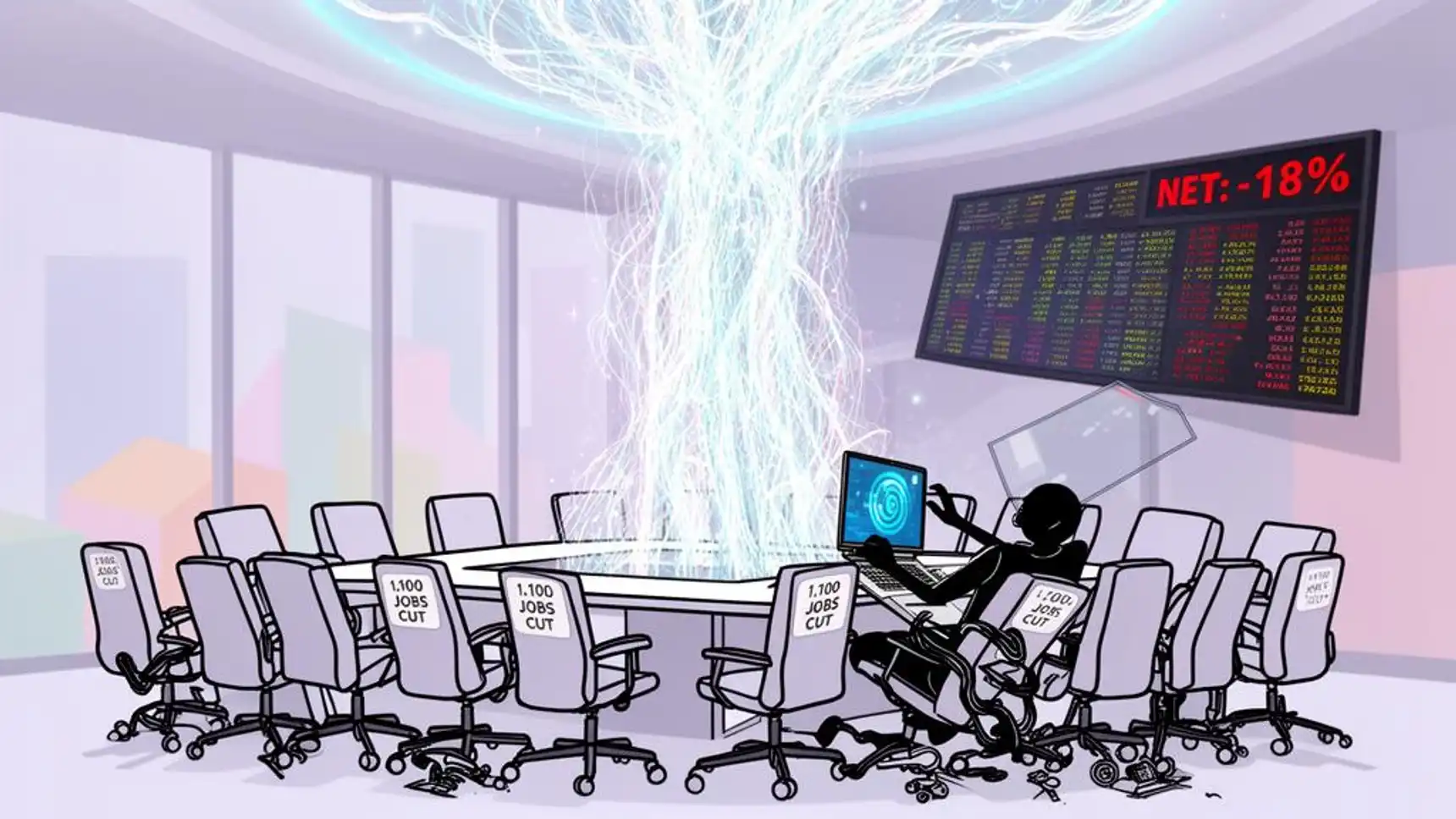
Coinbase's Q1 2026 earnings report revealed a net loss of $394 million, largely driven by $482 million in unrealized losses on its crypto asset holdings. Total revenue fell 31% year-over-year to $1.41 billion. Transaction revenue declined 40% to $756 million, reflecting a market-wide slump in crypto trading volumes. Consumer trading was particularly weak, down 48%, though Coinbase's global spot market share rose to a record 8.6%. Key bright spots included institutional trading revenue, which grew 37%, and a surge in derivatives activity following the Deribit acquisition. Subscription and services revenue of $584 million was more resilient, with stablecoin revenue up 11% to $305 million. Adjusted EBITDA remained positive at $303 million. Ahead of earnings, Coinbase announced a 14% workforce reduction (~700 employees) to accelerate its transition to an "AI-native" organizational model. Strategically, the company is pursuing its "Everything Exchange" vision, expanding into derivatives and predictive markets. Its partnership with Circle on USDC remains a core revenue moat, with over 25% of the stablecoin's $80 billion supply held on its platform. The company is actively engaged in shaping stablecoin legislation like the CLARITY Act. Despite significant losses and cyclical pressures, Coinbase is positioning itself as a broader on-chain financial infrastructure provider.

链捕手4h ago

Coinbase Q1 Earnings Report: Nearly $4 Billion Loss, Trading Volume Halved. Can AI + RWA Turn Things Around?

链捕手4h ago

Eight-Year Industry Retrospective: The Crypto Revolution Has Already Occurred, Just Not as Envisioned

Eight Years in Crypto: A Different Revolution Unfolds After eight years across four crypto companies, my initial vision of decentralized apps and currencies replacing traditional systems largely failed to materialize. Instead, the industry has forged a distinct, perhaps more significant, path centered on rebuilding the global financial system from the ground up. My journey began in the 2017 ICO frenzy, a bubble reminiscent of the dot-com era, where fundraising outpaced usable technology. The subsequent crash led to a quiet rebuilding phase focused on financial primitives. From the ashes emerged stablecoins and DeFi, which gained explosive traction during the 2020 pandemic and the "DeFi Summer" of yield farming and speculative games. This was followed by the 2021 NFT mania, another cycle of exuberance. The 2022 crash was crypto's "Lehman Moment," triggered by the collapse of Terra's UST, hedge funds like Three Arrows Capital, and ultimately FTX, which misused customer funds. The aftermath saw aggressive U.S. regulatory actions under the SEC, which paradoxically fueled the rise of "legal-safe" memecoins, turning parts of the ecosystem into a massive casino by 2024-2025. A pivotal shift occurred with the 2024 U.S. election. A perceived pro-crypto administration led to key legislation like the GENIUS Act, clear stablecoin rules, and institutional adoption. Stablecoins, now a strategic U.S. priority, process trillions in transaction volume, and asset tokenization is gaining Wall Street traction. Today's reality isn't the cypherpunk dream of replacing fiat but a pragmatic revolution: upgrading the dollar system for the internet age and creating a globally accessible, 24/7 financial infrastructure. The next convergence is with AI, where crypto wallets and stablecoins will enable autonomous AI agents to transact in the global economy. The industry's future lies not in颠覆ing traditional finance but in integrating with it, replacing outdated backend systems with blockchain while maintaining familiar frontends. The goal is a seamless, borderless financial system. While my predictions may prove as flawed as my 2017 article, I remain committed to building within this ongoing transformation.

marsbit6h ago

Eight-Year Industry Retrospective: The Crypto Revolution Has Already Occurred, Just Not as Envisioned

marsbit6h ago

55 Billion Dollars: Musk's 'Chip Factory' Becomes a Reality

Elon Musk's "Terafab" Chip Factory Vision Begins with a $55 Billion Bet SpaceX has formally proposed investing $55 billion to initiate construction of a "Terafab" chip manufacturing facility in Grimes County, Texas, with the total cost potentially reaching $119 billion in later phases. This massive project, a joint initiative by SpaceX and Tesla, marks a pivotal step in Elon Musk's strategy of vertical integration for his company ecosystem. The core logic is that Musk's ventures—SpaceX, Tesla, xAI, and future projects like the Optimus robot—consume enormous amounts of AI computing power. Terafab is envisioned not merely as a factory but as a "full-stack AI infrastructure strategy," aiming to bring chip production, energy sourcing, and compute deployment under one umbrella to secure a self-sufficient supply of this critical resource. Analysts describe this as a bold "15-year strategy" with significant execution risks. Building a leading-edge semiconductor fab requires 3-5 years, specialized equipment like ASML's EUV lithography machines, and a skilled workforce, with the earliest chip output not expected until mid-2028 at best. It mirrors a broader industry trend where giants like Microsoft and Google are also pouring billions into custom AI chips, driven by the belief that in the AI era, controlling computing power means controlling the future. Timed alongside SpaceX's impending IPO, the Terafab announcement also serves as a powerful narrative, linking Tesla to SpaceX's and AI's growth story. Whether the vision translates into a functioning foundry remains uncertain, but Musk's move to have a rocket company build chips is redefining industry boundaries once again.

marsbit7h ago

55 Billion Dollars: Musk's 'Chip Factory' Becomes a Reality

marsbit7h ago

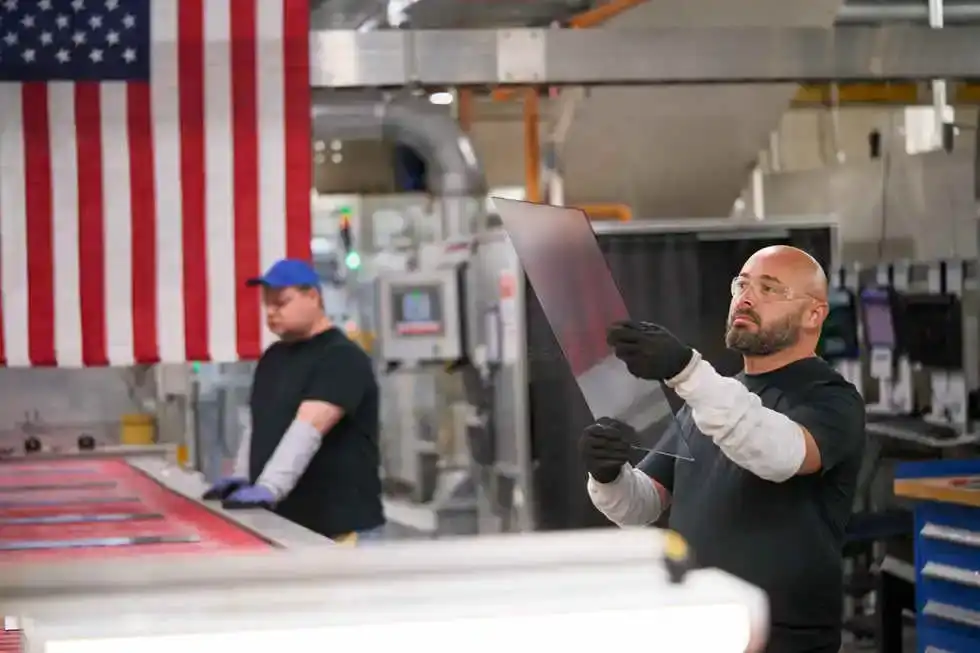
The Company That Makes Glass for iPhones Sees Its Stock Price Soar 500% Because of AI

The iPhone screen glass supplier Corning, known for Gorilla Glass, is experiencing a meteoric rise driven by the AI boom, with its stock price increasing fivefold over two years. The catalyst is a dramatic shift in its core business. While historically reliant on telecom and display glass, its optical communications division—inventor of low-loss fiber optics—has become the growth engine, fueled by massive AI data center demand. AI training requires vastly denser "east-west" data traffic between thousands of GPUs, making traditional copper cables inadequate and creating an urgent need for high-bandwidth, low-latency fiber optics. Corning has secured at least four multi-year contracts worth tens of billions of dollars in recent months, including deals with Meta and two unnamed companies. Its optical communications revenue surged 35% in 2025. A key factor is Corning's "Springboard" plan, which boosted profits faster than sales through premium pricing, product upgrades for AI clusters, and utilizing idle capacity. Its innovations, like rollable ribbon fiber that triples capacity within existing conduits and cuts installation time, command a significant premium as they save critical months in AI factory construction. NVIDIA's recent $5 billion investment in Corning (with an option to increase to $32 billion), including nearly free shares, signals a strategic partnership. This is part of NVIDIA's broader move beyond chips to becoming an "AI factory" systems integrator, securing a trusted, high-capacity fiber optics supplier for its blueprint. Corning, once seen as a mature manufacturer, is now central to building the AI infrastructure's nervous system.

marsbit8h ago

The Company That Makes Glass for iPhones Sees Its Stock Price Soar 500% Because of AI

marsbit8h ago

TechFlow Intelligence Agency: Anthropic Seeks $50 Billion Funding at $900 Billion Valuation, Zcash Surges 70% in a Week

TechFlow Intelligence Briefing: Key developments in AI, crypto, hardware, and global markets. **AI:** Anthropic is reportedly seeking $50B in funding at a ~$900B valuation, positioning it as a major rival to OpenAI. It also published research on making AI "thinking" interpretable. Google DeepMind released AlphaEvolve, a Gemini-powered programming agent for scientific research. **Crypto/Web3:** Zcash surged 70% in a week, reigniting interest in privacy coins. Geopolitical tensions in the Strait of Hormuz spiked oil prices and market volatility. **Chip/Hardware:** SK Hynix awarded massive bonuses due to AI-driven demand, while Samsung faces potential strikes. TSMC's April revenue grew 17.5% year-on-year. Nvidia-backed CoreWeave faces valuation scrutiny ahead of its earnings. **Tech Companies:** Cloudflare announced a ~20% workforce reduction. Sony PS5 sales dropped amid a memory chip crisis and price hikes. Apple is nearing production of camera-equipped AirPods for AI features. **Markets:** Kodiak AI raised $100M at a steep discount, causing its stock to plunge 37%. US stocks fell amid Middle East tensions. **New Trends:** China unveiled the "Hanyuan 2," a low-power dual-core neutral atom quantum computer. Russia announced the Rassvet satellite network to compete with Starlink. **The Undercurrent:** Today's news highlights a central tension: capital is flooding into perceived certainties like AGI while retreating from uncertainties, seen in layoffs and geopolitical risks, asking where sustainable growth lies.

marsbit9h ago

TechFlow Intelligence Agency: Anthropic Seeks $50 Billion Funding at $900 Billion Valuation, Zcash Surges 70% in a Week

marsbit9h ago

活动图片