KuCoin Blocked In UAE As Authorities Mandate Immediate Service Stop

bitcoinistPublished on 2026-03-07Last updated on 2026-03-07

Abstract

KuCoin has been ordered to halt operations in Dubai by the Virtual Assets Regulatory Authority (VARA) for operating without the required license. The regulator stated that all of KuCoin's virtual asset-related activities in the emirate are in violation of local regulations. VARA warned that engaging with unlicensed platforms could expose users to financial harm and potential legal consequences. This action in the UAE coincides with increased regulatory scrutiny KuCoin faces in other regions, including recent restrictions on its European operations. However, the exchange has also secured a MiCA permit to operate across the European Union. A market expert cautioned that this serves as a warning to users holding assets on exchanges without proper local licensing.

Seychelles-based cryptocurrency exchange KuCoin has been ordered to halt its operations in Dubai after regulators determined the platform was operating without the required authorization.

The action was announced Thursday by Dubai’s Virtual Assets Regulatory Authority (VARA), which stated that KuCoin does not hold a license to provide virtual asset services in or from the emirate.

Dubai Bars KuCoin From Offering Services To Residents

In its public alert, VARA said that any virtual asset-related activities conducted or promoted by the exchange in Dubai are in violation of the authority’s regulations.

The regulator emphasized that under Dubai Law No. (4) of 2022 and UAE Cabinet Resolution No. 111/2022, all virtual asset service providers must obtain proper licensing to legally operate in the jurisdiction.

According to Dubai’s Virtual Assets Regulatory Authority, KuCoin does not meet those legal requirements and is not authorized to offer any virtual asset services to residents of Dubai.

The regulator also warned that engaging with companies that fail to comply with VARA regulations, associated rulebooks, and broader UAE legislation could expose users to significant financial harm, as well as potential legal consequences tied to regulatory or even criminal violations.

VARA further clarified that any promotion, marketing, or solicitation connected to KuCoin has not been approved by the authority. As a result, the exchange is not permitted to advertise, promote, or offer virtual asset products or services within Dubai or to its residents.

Regulatory Scrutiny Intensifies

The warning from Dubai comes amid broader regulatory scrutiny facing KuCoin in other regions. In Europe, Austria’s financial regulator recently restricted the exchange’s European arm from conducting new business and onboarding additional customers.

That decision was reportedly based on concerns that the platform lacked sufficient compliance staff to meet regulatory standards, raising questions about its operational readiness and supervisory structure in the region.

European authorities have been tightening oversight of digital asset platforms as the European Union rolls out its Markets in Crypto-Assets (MiCA) framework, which is designed to standardize crypto regulation across member states.

Despite the recent setback involving restrictions on new business, KuCoin has also secured regulatory progress in Europe. Earlier this year, Austria’s Financial Market Authority (FMA) granted the exchange a MiCA permit, authorizing it to operate across the European Union under the bloc’s unified digital asset regime.

In a social media post on X (formerly Twitter), market expert Shanaka Anslem weighed in on the legal challenges faced by the cryptocurrency exchange, stating:

If you hold assets on any exchange that lacks explicit licensing in your jurisdiction, the VARA action is your early warning system. The next cease-and-desist might freeze withdrawals before you can act. The era of “move fast and ignore regulators” is over. The only exchanges that survive the next two years are the ones that already have the paperwork.

The daily chart shows the total crypto market cap’s drop to $2.31 trillion on Friday. Source: TOTAL on TradingView.com

Featured image from DALL-E, chart from TradingView.com

Related Questions

QWhy was KuCoin ordered to halt its operations in Dubai?

AKuCoin was ordered to halt its operations in Dubai because the Dubai Virtual Assets Regulatory Authority (VARA) determined that the exchange was operating without the required authorization and does not hold a license to provide virtual asset services in or from the emirate.

QWhich regulatory body in Dubai issued the public alert against KuCoin and what laws did it cite?

AThe Dubai Virtual Assets Regulatory Authority (VARA) issued the public alert. It cited Dubai Law No. (4) of 2022 and UAE Cabinet Resolution No. (111/2022), which mandate that all virtual asset service providers must obtain proper licensing to operate legally.

QWhat are the potential risks for users who engage with unlicensed virtual asset service providers like KuCoin in Dubai, according to VARA?

AAccording to VARA, users who engage with unlicensed providers risk significant financial harm and potential legal consequences tied to regulatory or criminal violations.

QBesides Dubai, in which other region is KuCoin facing recent regulatory scrutiny and what was the specific action taken there?

AKuCoin is also facing regulatory scrutiny in Europe. Austria's financial regulator restricted the exchange's European arm from conducting new business and onboarding additional customers due to concerns about insufficient compliance staff.

QDespite recent restrictions, what significant regulatory approval did KuCoin secure in Europe earlier this year?

AEarlier this year, Austria's Financial Market Authority (FMA) granted KuCoin a MiCA (Markets in Crypto-Assets) permit, authorizing it to operate across the European Union under the bloc's unified digital asset regime.

Related Reads

Polymarket's "2028 Presidential Election" Volume King Is... LeBron James???

An article from Odaily Planet Daily, authored by Azuma, discusses a peculiar phenomenon observed on the prediction market platform Polymarket regarding the "2028 US Presidential Election" event. Despite having a real-time probability of less than 1%, unlikely candidates such as NBA star LeBron James (with $48.41 million in trading volume), celebrity Kim Kardashian ($33.84 million), and even ineligible figures like Elon Musk ($23.14 million) and New York City Mayor Zohran Mamdani ($18.39 million) account for approximately 70% of the total trading volume. In contrast, high-probability candidates like Vice President JD Vance ($10.58 million), California Governor Gavin Newsom ($15.71 million), and Secretary of State Marco Rubio ($9.32 million) have significantly lower trading activity. The article explains that this counterintuitive trend is not driven by irrational speculation but by rational strategies. Polymarket offers a 4% annualized holding reward for certain markets, including the 2028 election, to maintain long-term pricing accuracy. This yield exceeds the current 5-year US Treasury rate (3.98%), attracting large investors ("whales") to hold "NO" shares on low-probability candidates for risk-free returns. Additionally, some users utilize a platform feature that allows converting a set of "NO" shares into corresponding "YES" shares for better liquidity or pricing efficiency, rather than directly buying "YES" shares for their preferred candidates. Thus, the seemingly absurd trading activity is strategically motivated.

marsbit47m ago

Polymarket's "2028 Presidential Election" Volume King Is... LeBron James???

marsbit47m ago

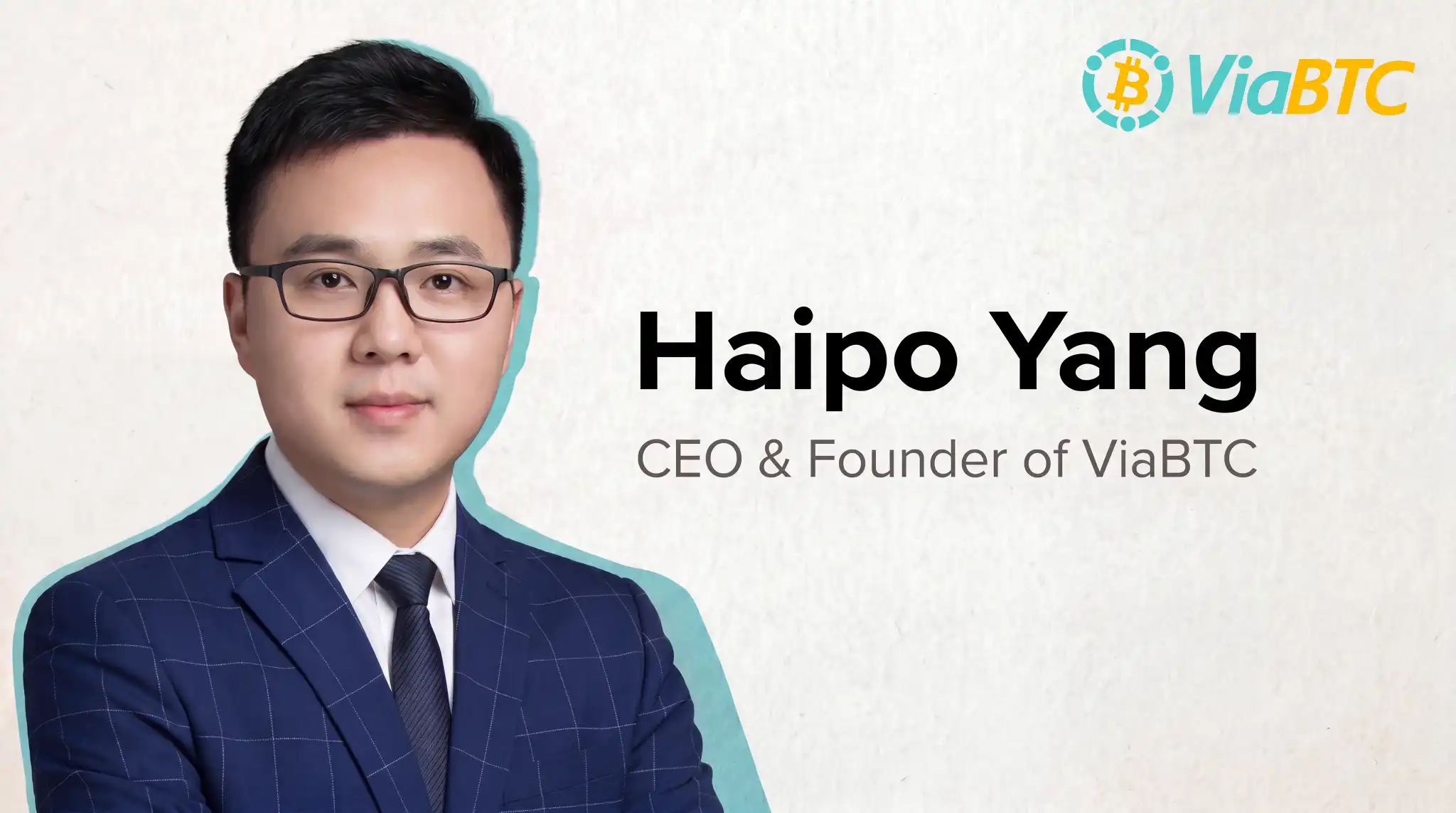
Dialogue with ViaBTC CEO Yang Haipo: Is the Essence of Blockchain a Libertarian Experiment?

"ViaBTC CEO Yang Haipo: Blockchain as a Hardcore Libertarian Experiment" In a deep-dive interview, ViaBTC CEO Yang Haipo reframes the essence of blockchain, arguing it is not merely a new technology or infrastructure but a hardcore libertarian experiment. This experiment, born from the 2008 financial crisis and decades of cypherpunk ideology, tests a fundamental question: to what extent can freedom and self-organization exist without centralized trust? The discussion highlights the experiment's verified outcomes. On one hand, it has proven its core value of censorship resistance, providing critical financial lifelines for entities like WikiLeaks and individuals in hyperinflationary or sanctioned countries via tools like stablecoins. However, Yang points out a key paradox: the most successful product, USDT, is itself a centralized compromise, showing users prioritize a less-controlled pipeline over pure decentralization. On the other hand, the experiment has exposed the severe costs of this freedom—a "dark forest" without safeguards. Events like the collapses of LUNA, Celsius, and FTX, resulting in massive wealth destruction and prison sentences for founders, underscore the system's fragility and the inherent risks of an unregulated environment. Yang observes that despite decentralized protocols, human nature inevitably recreates centralized power structures, speculative frenzies, and narrative-driven cycles (from ICOs to Meme coins), where emotion and belonging often trump technological substance. Looking forward, he believes blockchain's future is significant but niche. Its real value lies in serving specific, real-world needs for financial sovereignty and bypassing traditional controls, not as a universal infrastructure replacing all centralized systems. For the average participant, Yang's crucial advice is to cultivate independent judgment. True freedom is not holding a crypto wallet, but possessing a mind resilient to groupthink and narrative hype in a high-risk, often irrational market.

marsbit1h ago

Dialogue with ViaBTC CEO Yang Haipo: Is the Essence of Blockchain a Libertarian Experiment?

marsbit1h ago

Trading

Spot
Futures
活动图片