# Starship Articoli collegati

Il Centro Notizie HTX fornisce gli articoli più recenti e le analisi più approfondite su "Starship", coprendo tendenze di mercato, aggiornamenti sui progetti, sviluppi tecnologici e politiche normative nel settore crypto.

How a Fake SpaceX Engineer Stirred Up the Trillion-Dollar Commercial Space Market?

A self-proclaimed SpaceX engineer recently admitted to fabricating and disseminating false information about the company's launch vehicle strategy, which was subsequently reported by major media outlets and stirred significant discussion in the commercial space market. The individual, Yatharth Mann, claimed to have contacted several prominent news organizations, including Bloomberg, posing as an internal SpaceX engineer. In these communications, Mann fabricated details suggesting SpaceX would phase out its Falcon 9 rocket, refuse commercial launch orders post-2028, and accelerate a transition to its Starship vehicle to focus on deep space exploration. To bolster credibility, Mann's emails included criticisms of Elon Musk and Donald Trump, aligning with perceived internal employee sentiments. These fabricated claims were published as reports citing anonymous "insider" sources, prompting analysts to debate the potential market implications. Some argued a strategic shift could create opportunities for competitors like Rocket Lab. However, Mann later revealed the hoax, even pointing out factual errors in the reporting, such as incorrectly stating SpaceX would reduce production of the expendable second stage rather than the reusable first stage of the Falcon 9. While the involved media outlets have not publicly confirmed or responded to Mann's claims, the incident highlights the potential impact of unverified anonymous sources and the ease with which misinformation can enter mainstream financial and industry discourse.

Odaily星球日报Ieri 12:04

How a Fake SpaceX Engineer Stirred Up the Trillion-Dollar Commercial Space Market?

Odaily星球日报Ieri 12:04

SpaceX Shares Predicted to Recover No Earlier Than Early 2027

Analysts predict that a significant recovery in SpaceX's share price is unlikely before early 2027, when the current insider lock-up period is scheduled to end. Recently, shares have traded in a narrow range around $118-$124, still 48% below their 52-week high of $225.64. The short-term outlook depends heavily on potential insider selling, especially with the 52-week low of $110.85 acting as a floor. SpaceX's market capitalization stands at $1.56 trillion, but the company is not yet profitable, as evidenced by a $4.9 billion net loss in 2025 and an additional $4.28 billion loss in Q1 2026, attributed to heavy investments in Starship and AI infrastructure. The stock is currently trading at over 84 times trailing revenue, a valuation analysts say depends on a substantial future increase in Starlink's cash flow. The unlocking of 911.5 million shares worth ~$116 billion on August 6, 2026, followed by a phased release schedule, adds significant uncertainty. Quarterly results on August 4, 2026, could provide a short-term catalyst if Starlink performs strongly or Starship milestones are met. Wall Street analyst consensus for a 12-month price target is around $240, but individual forecasts vary widely from $63 to $800, reflecting deep divisions over the company's recovery prospects and future valuation. Key ratings include Morgan Stanley's $300 target and Oppenheimer's more modest $190 target.

cryptonews.ruIeri 11:04

SpaceX Shares Predicted to Recover No Earlier Than Early 2027

cryptonews.ruIeri 11:04

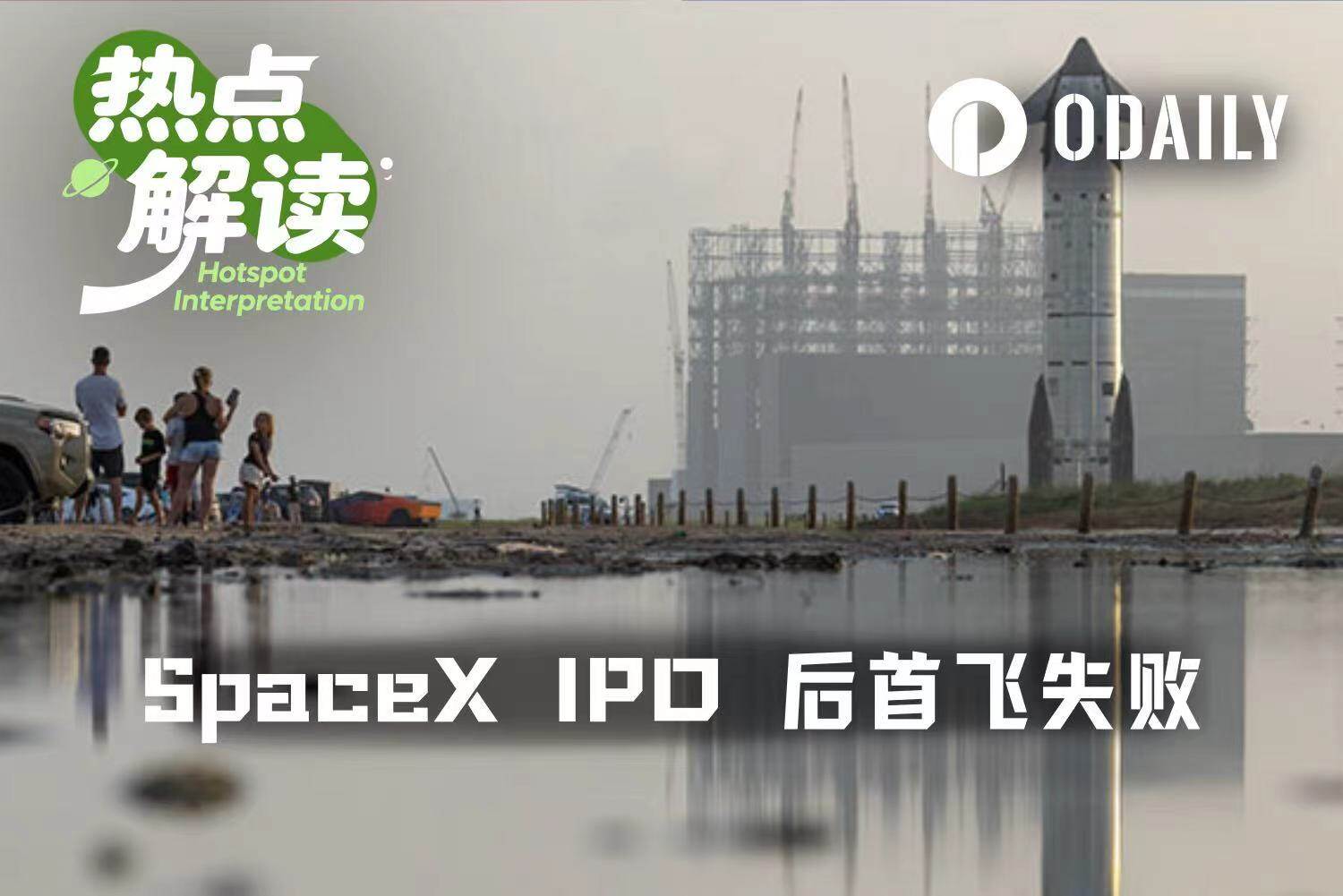
Stock Price Falls Below IPO Price, First Launch After IPO Hits a Snag, Where Will SpaceX Go From Here?

SpaceX Faces Post-IPO Pressure as Starship Launch Aborted, Stock Slumps SpaceX's highly anticipated 13th test flight of its Starship rocket was aborted during the final ignition sequence on July 17th due to issues with some Raptor engines failing to start as expected. CEO Elon Musk stated the company will replace two engines and aims for another launch attempt early next week. This setback comes at a critical time for SpaceX. Following its historic IPO last month, the company's stock (SPCX) has recently fallen below its offering price, down nearly 40% from its peak. The market had hoped a successful test would bolster the declining share price, but the abort triggered further after-hours selling. The article highlights a shift in investor perspective post-IPO. While previous Starship test failures were often viewed within SpaceX's "fail fast, iterate" Silicon Valley engineering culture as valuable data points, public market investors are now more focused on timelines, commercialization prospects, and their impact on valuation and future cash flows. Each delay or issue is now quickly factored into the stock price. While public listing provides crucial capital for ambitious projects like Starlink and Starship, it also brings increased scrutiny and pressure for predictable progress. The upcoming launch attempt is now seen as more than a technical milestone; its success or failure is likely to significantly influence market sentiment and the stock's near-term trajectory as SpaceX navigates the new realities of being a publicly traded company.

Odaily星球日报07/17 03:03

Stock Price Falls Below IPO Price, First Launch After IPO Hits a Snag, Where Will SpaceX Go From Here?

Odaily星球日报07/17 03:03

Why Does SpaceX Have Such a High Valuation Ceiling? The Answer Lies in Musk's Business Blueprint

SpaceX achieved a record-breaking IPO on June 12, 2026, with its market cap surging past $2.1 trillion. This valuation reflects its central role within Elon Musk's expansive, interconnected technological ecosystem. The article details how four core components form a synergistic closed-loop system: 1) **The "Brain" (xAI & Orbital Compute):** xAI provides AI models and massive ground/space-based supercomputing for simulation and decision-making across the system. 2) **The "Neural Logistics Core" (Starlink & Starship):** Starlink's low-latency satellite network enables global data transmission, while Starship's low-cost, reusable launch capacity aims to make large-scale space deployment economically viable. 3) **The "Physical Body" (Tesla & Optimus):** Tesla's manufacturing prowess and energy products support hardware production and power, pivoting toward mass-producing the Optimus humanoid robot for terrestrial and potential space-based labor. 4) **The "Human Interface" (Neuralink & X):** Neuralink seeks direct brain-computer communication, and the X platform provides real-time societal data. Together, these elements create three reinforcing "flywheels": manufacturing/logistics, data-driven iteration, and energy/compute/network synergy. This integrated approach promises lower costs, faster innovation cycles, and potential infrastructure-as-a-service offerings. However, it also concentrates technical, regulatory, and corporate governance risks. Ultimately, SpaceX's high valuation stems from its position as the indispensable infrastructural backbone—handling space transport, global communications, and future orbital computing—tying together Musk's entire vision for a self-reinforcing technological empire.

marsbit06/22 04:24

Why Does SpaceX Have Such a High Valuation Ceiling? The Answer Lies in Musk's Business Blueprint

marsbit06/22 04:24

Behind SpaceX's $2 Trillion Market Cap: Why Does Musk Always Have the Next Move Planned?

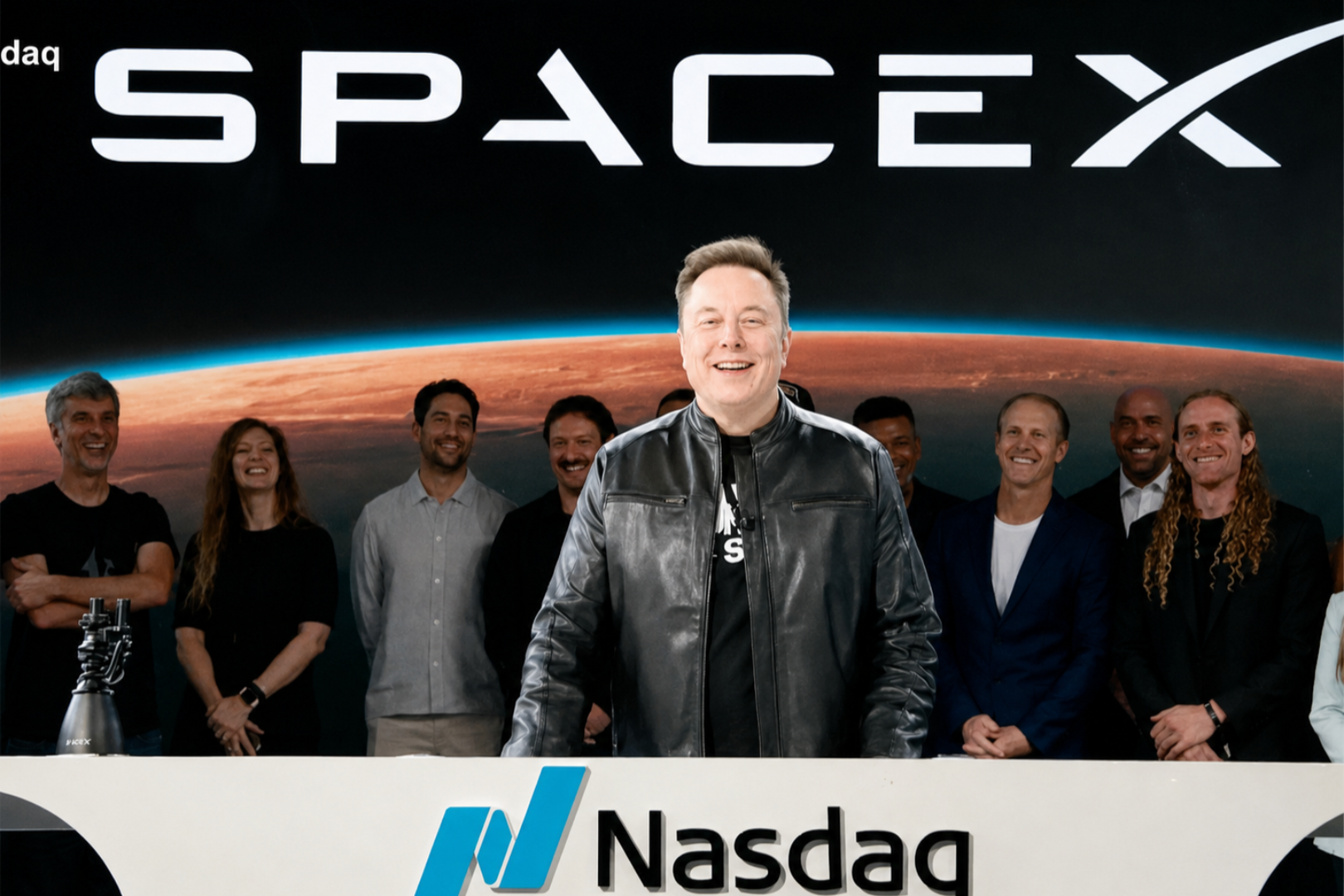
On June 12th, SpaceX debuted on the Nasdaq, reaching a valuation that briefly touched $2 trillion. This marked the culmination of a 24-year journey from its founding in 2002, driven by Elon Musk's frustration at the high cost of buying rockets. The company's path was defined by early failures, with its first three Falcon 1 launches ending in explosions before a successful 2008 flight opened the era of commercial spaceflight. Key to its model was a fixed-price NASA contract, incentivizing cost reduction. SpaceX mastered rocket reusability, first achieving a Falcon 9 landing in 2015, which drastically cut launch costs. This enabled its profitable Starlink satellite internet constellation, envisioned years before reusability was proven, to create an internal market for frequent launches. Similarly, the next-generation Starship rocket was in development long before its first flight, with its business case evolving from Mars colonization to supporting the emerging concept of in-orbit data centers for AI—a story now central to its valuation. The company's recent IPO, a reversal of its long-standing "no IPO" stance, is funding this ambitious "space-based compute" vision. While major tech players like Google, Blue Origin, and others are investing heavily, significant technical and cost hurdles remain. Ultimately, SpaceX's history is one of creating its own demand: first with Starlink and now with space-based AI compute, betting that its next rocket will enable its next giant market.

marsbit06/17 04:45

Behind SpaceX's $2 Trillion Market Cap: Why Does Musk Always Have the Next Move Planned?

marsbit06/17 04:45

The Foundation of SpaceX's Trillion-Dollar Valuation: Who is Dividing Up Musk's Annual Tens of Billions in Capital Expenditure?

SpaceX's trillion-dollar valuation is built on its three core businesses: Starlink (profitable, 60% of revenue), rockets (driving down launch costs), and AI (a major investment area). This creates a financial cycle: Starlink funds rocket development, which enables low-cost launches for AI hardware, generating future revenue. This cycle fuels annual capital expenditures of tens of billions, flowing to a vast supply chain. Suppliers are categorized by their replaceability. The first group includes irreplaceable players like NVIDIA (GPU/CUDA ecosystem), Eutelsat (critical radio spectrum), Filtronic (specialized amplifiers), Materion (strategic beryllium), and STMicroelectronics (antenna chips). The second group consists of hard-to-replace suppliers due to high switching costs, such as Honeywell (flight control), Carpenter Technology (specialty alloys), Hexcel (carbon fiber), Broadcom (data exchange), and Linde (industrial gases). The third group comprises high-volume, cost-critical suppliers for mass-produced items like Starlink terminals. Key names include Wistron NeWeb (primary manufacturer) and several A-share companies like Shenzhen Sunway (connectors), Pies New Materials (forgings), Western Superconducting (alloys), and Yingliu (castings). Other niche players include Trimble (timing), Astronics (power distribution), and CTS (thermal management). The article argues that investing in these suppliers, rather than SpaceX stock directly, offers an alternative opportunity. The rationale is threefold: procurement is just beginning to scale, SpaceX's IPO brings new transparency to its supply chain, and the situation mirrors early stages of past "super terminal" ecosystems like Apple or Tesla. While risks exist (commodity cycles, geopolitical factors, technology shifts), the core thesis is that SpaceX's massive, ongoing procurement will translate into reliable revenue for its key suppliers, regardless of its own stock price volatility.

marsbit06/16 04:05

The Foundation of SpaceX's Trillion-Dollar Valuation: Who is Dividing Up Musk's Annual Tens of Billions in Capital Expenditure?

marsbit06/16 04:05

Missed Out on SpaceX's IPO? Take a Look at SpaceX's Complete Supply Chain

SpaceX is now public, but its high valuation and losses may deter some investors. However, the real opportunity, as seen with Apple, Tesla, and Nvidia, may lie in its extensive supply chain. SpaceX, funded primarily by its profitable Starlink service, spends hundreds of billions annually on components for its rockets, satellites, and planned orbital AI data centers, creating significant revenue streams for suppliers. Key suppliers are categorized by their indispensability. The first group includes irreplaceable players like **NVIDIA** (GPUs for AI supercomputers), **Eutelsat (SATS)** (spectrum rights), **Filtronic** (millimeter-wave amplifiers), **Materion (MTRN)** (beryllium alloys), and **STMicroelectronics (STM)** (phased array chips). The second category comprises suppliers costly to replace due to long certification cycles or deep integration, such as **Honeywell (HON)** (flight controls), **Carpenter Technology (CRS)** (specialty steel), **Hexcel (HXL)** (carbon fiber), **Broadcom (AVGO)** (data switching), and **Linde** (industrial gases). The third group involves high-volume, cost-critical manufacturers for mass-produced items like Starlink terminals. Major players here include Taiwanese contract manufacturer **Wistron NeWeb (6285)** and several Chinese-listed firms: **Sunway Communication (300136)**, **Parker Advanced Materials (605123)**, **Western Superconducting (002149)**, and **Yingliu Co., Ltd. (603308)**. Other niche providers include **Tianyin Electromechanical**, **Tongyu Communication**, **Trimble (TRMB)**, **Astronics (ATRO)**, and **CTSH**. The timing is now relevant because: 1) SpaceX's procurement is accelerating with plans for 100 launches in 2026, 30 million Starlink terminals, and orbital data centers. 2) Its IPO has brought unprecedented transparency to its supply chain. 3) This phase mirrors early days of the Tesla supply chain boom. The investment thesis shifts from betting on SpaceX's stock to betting on the steady, order-book-driven revenues of its essential suppliers. Risks remain, such as commodity cycles, geopolitical factors, and technological shifts, but the supply chain offers a potentially less speculative path to participate in SpaceX's growth.

marsbit06/16 03:36
Missed Out on SpaceX's IPO? Take a Look at SpaceX's Complete Supply Chain

marsbit06/16 03:36

活动图片