# Manufacturing Articoli collegati

Il Centro Notizie HTX fornisce gli articoli più recenti e le analisi più approfondite su "Manufacturing", coprendo tendenze di mercato, aggiornamenti sui progetti, sviluppi tecnologici e politiche normative nel settore crypto.

The Semiconductor Industry's Most Obscure Chokepoint Material: It Has Multiplied in Price Unnoticed, and China Just Banned Its Export

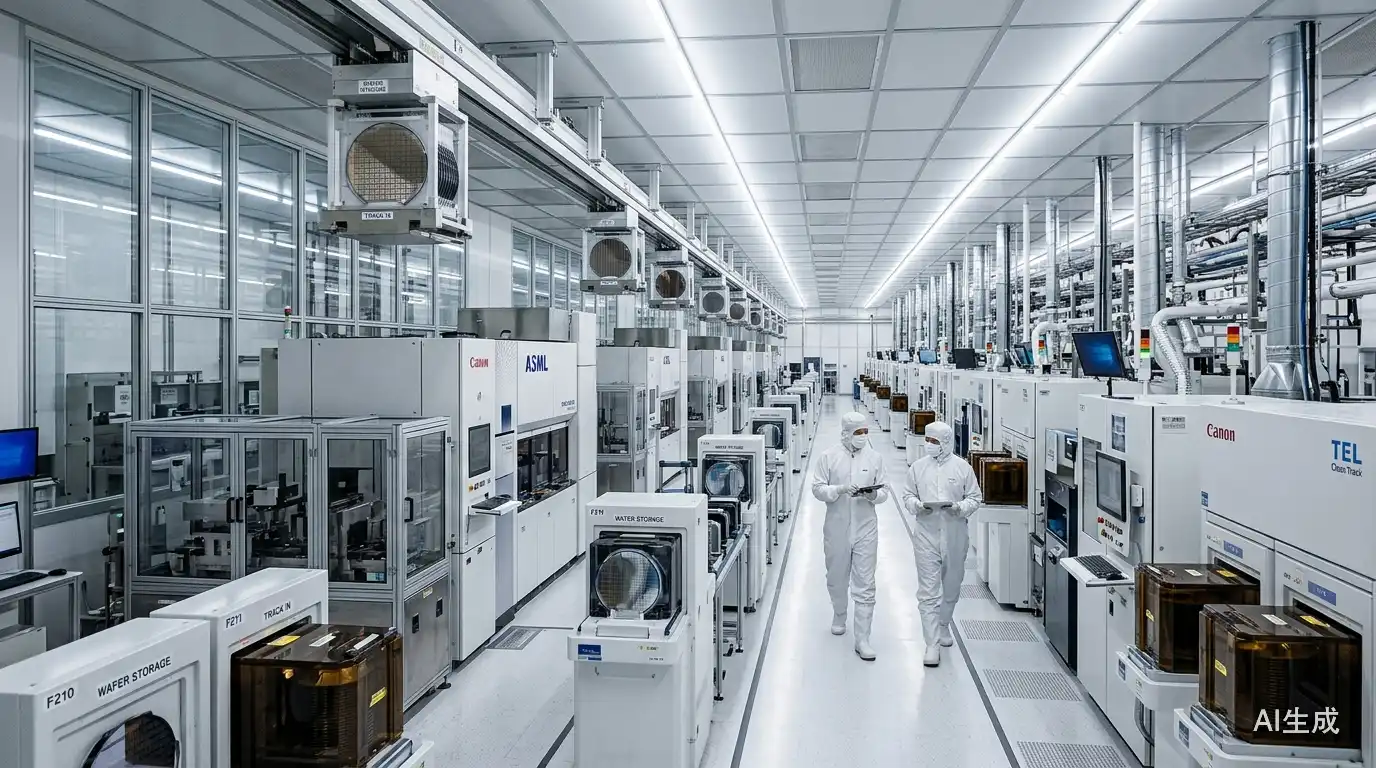
"Helium: The Silent Choke Point in Semiconductors" Helium, despite being the universe's second most abundant element, is critically scarce on Earth. It cannot be synthesized artificially and escapes Earth's gravity once released, making it a non-renewable resource. Yet, it is indispensable for advanced semiconductor manufacturing, requiring ultra-high purity (99.9999%) for processes like wafer etching, leak detection, and thermal management in lithography tools, with no viable substitutes. This low-profile resource, whose price has doubled unnoticed, suddenly gained attention when China imposed an export ban on July 10th. The ban is a response to a severe global shortage triggered months earlier. In March, missile attacks damaged the world's largest helium production hub in Qatar's Ras Laffan, halting a third of global supply with repairs expected to take 3-5 years. Concurrently, Russia tightened export controls, and the US sold off its federal helium reserve. Approximately 200 specialized transport containers, each worth ~$1 million, were stranded with perishable cargo. Global spot prices skyrocketed, and chipmakers like TSMC warned of potential impacts. China, which imports over 84% of its helium (primarily from Qatar and Russia), faces a severe squeeze. Despite being helium-poor, China has developed domestic extraction technology over five years, processing byproduct gases from LNG plants to produce ultra-pure helium. Domestic output, while still only covering less than 20% of demand, enabled the recent export ban aimed at securing domestic supply for its own expanding chip industry. The industry now faces "Helium Shortage 5.0." With key global sources constrained for years, this invisible gas—once wasted on party balloons—has become a critical, geopolitically charged bottleneck for chips, healthcare (MRI machines), and beyond, forcing the world to finally treat it as the finite strategic resource it is.

marsbit29 min fa

The Semiconductor Industry's Most Obscure Chokepoint Material: It Has Multiplied in Price Unnoticed, and China Just Banned Its Export

marsbit29 min fa

Behind the 67,000 Semiconductor Talent Shortage: U.S. Industrial Policy Game and Implications for China

The U.S. push to reshore semiconductor manufacturing faces a core challenge: a significant talent shortage. While over $770 billion in investments are planned across 160 projects, a key hurdle is finding enough people to run the new fabs. According to industry projections, the U.S. could face a shortage of approximately 67,000 technicians, engineers, and computer scientists by 2030. This shortage is multi-faceted. It includes not only high-level chip design engineers requiring advanced degrees but also a substantial need for technicians to operate and maintain fab equipment. Technician roles, while often requiring less formal education, are hard to fill due to factors like shift work, factory locations, and local community infrastructure. Conversely, for high-end engineers, the issue is less about salary—which is already competitive—and more about intense competition for specialized skills from other tech sectors and the long lead time to develop such expertise. The geographic dispersion of new investments complicates recruitment, as fabs need large numbers of local, stable employees. In response, U.S. policy emphasizes building workforce development as critical infrastructure. Strategies include expanding community college programs for technician training, fostering industry-education partnerships, and pursuing immigration reforms for high-skilled talent, aiming to balance immediate needs with long-term domestic pipeline development. For China, the key takeaway is the need to integrate talent supply planning with factory construction from the outset. This involves requiring companies to submit workforce plans, strengthening vocational education aligned with industry needs, and building supportive local ecosystems to retain talent. Ultimately, a sustainable semiconductor industry depends not just on building fabs, but on cultivating a continuous, local talent pipeline capable of keeping them running and advancing.

marsbit3 h fa

Behind the 67,000 Semiconductor Talent Shortage: U.S. Industrial Policy Game and Implications for China

marsbit3 h fa

How Has Beijing Become a 'Global High Ground'?

How did Beijing become a "global highland"? In the first half of the year, Beijing's GDP grew by 5.4%, with growth in Q1 reaching 5.9%. Key drivers were not consumption or real estate, but hardcore sectors like chips, robotics, computing power, and large AI models. Investment concentrated sharply in tech, with high-tech manufacturing investment up 36% and technology services investment up 87.2%. Nearly 90% of venture capital flowed into hard tech. Output figures were strong: integrated circuit production rose 17.8%, industrial robots 75.5%, and service robots surged 230%. Companies like Qianxun AI and Galaxy General Robotics are deploying robots in real-world logistics and manufacturing, moving beyond demonstrations. The services sector is also being reshaped by tech, with software, IT, and finance growing faster than the sector average. Beijing leads in AI and embodied intelligence. Galaxy General Robotics secured significant funding, including from state-backed funds. The city released foundational AI models and its independent AI ecosystem, FlagOS, is expanding. Companies like Jiuzhang Yunjie provide neutral computing power and base models, supporting the broader ecosystem. Infrastructure is expanding, with Beijing aiming to add over 70,000 Petaflops of intelligent computing power annually. A "Beijing R&D, surrounding training" model is emerging, with computing resources being allocated to regions like Hebei and Tianjin. Efforts to deepen integration within the Beijing-Tianjin-Hebei region include industrial relocation and improved transport links. To bridge the gap between lab and market, Beijing is establishing pilot-scale production platforms. The underlying trend is the convergence of computing power, capital, talent, and real-world applications. While challenges remain in commercialization and regional integration, Beijing's focus on strengthening these interconnected elements is building the foundation for its claim as a global innovation hub.

marsbitIeri 10:22

How Has Beijing Become a 'Global High Ground'?

marsbitIeri 10:22

Zhongji Innolight Leads Investment in a Tsinghua '90s Postgraduate

Shihe Robotics, a Chinese intelligent high-altitude robotics company, has completed a Series C financing round worth hundreds of millions of RMB. The round was jointly led by Qianggang Capital and Zhongji InnoLight, with participation from Guangxi Investment Capital, Guohai Securities, Junton Capital, and existing investor Fosun RuiZheng. Founded around 2015 by Xu Huayang, a Tsinghua University Ph.D. graduate, the company has spent nearly a decade focusing on robotics for high-risk, high-altitude maintenance work. Starting from a specific application in ship hull derusting, which has achieved a dominant market share in China, Shihe has expanded into a wider product matrix serving scenarios in petrochemical storage tank maintenance, energy facility inspection, bridge infrastructure, and building façade cleaning. CEO Xu Huayang emphasizes a hardware-first, commercialization-focused philosophy for the robotics industry. The company's strategy revolves around "one machine, multiple uses; complete process closure," aiming to deliver reliable value in real industrial settings rather than pursuing demos. It has served major domestic clients like COSCO, China State Shipbuilding Corporation, Sinopec, and Saudi Aramco. Shihe is building its technological edge by leveraging vast, high-fidelity industrial data collected during operations. It is developing a vertical "Industrial World Model" in collaboration with top university labs. This model is tailored for complex, hazardous industrial environments, enabling robots to progress towards greater autonomy in perception, decision-making, and task execution. In the context of the booming "embodied AI" field, Shihe positions its path as starting from structured, specialized industrial scenarios before moving to more complex environments. Concurrently, the company is accelerating its global expansion, with overseas revenue growing tenfold over two years. Xu aims for international markets to contribute half of the company's revenue within five years. The latest funding will support further technological development, product matrix expansion, and global market penetration.

marsbit07/21 02:42

Zhongji Innolight Leads Investment in a Tsinghua '90s Postgraduate

marsbit07/21 02:42

Meituan Leads Investment, New Unicorn in Dexterous Hands Born

Xynova, a full-stack provider of dexterous hand solutions for embodied intelligence, has officially become a unicorn after securing a 500 million yuan Series A+ round led by Meituan. This marks the company's third major funding in 2024, bringing the total raised in four months to approximately 1.5 billion yuan. The investment lineup features a prominent group of industrial and internet giants, including repeat investors like Xiaomi and new backers such as NIO Capital and China Merchants Capital. With total market capitalization of its industrial shareholders exceeding 5 trillion yuan, the backing represents a strategic positioning across the new energy manufacturing, smart logistics, and last-mile delivery sectors. Founded in 2024 by CEO Xia Yuxuan, Xynova focuses on the critical "last centimeter" of robot interaction—the dexterous hand. Moving beyond traditional technical debates, the company adopts a full-stack, self-developed approach, integrating hardware and algorithms. Its flagship product, the Flex 2, is a hybrid tendon-and-direct-drive hand with 23 degrees of freedom, weighing under 400 grams and boasting a key component lifespan of over 1.5 million cycles. The industry narrative is shifting from robot mobility to practical utility, making reliable, mass-producible components crucial. Xynova has established a 5,400-square-meter factory in Hangzhou, with annual capacity expected to reach 10,000 units by year-end. The company believes embodied robots will see large-scale real-world adoption within three years, potentially as soon as 18 months.

marsbit07/17 03:50

Meituan Leads Investment, New Unicorn in Dexterous Hands Born

marsbit07/17 03:50

Jensen Huang Turns Japan into NVIDIA's "Physical AI" Pivot Point: A Life-Saving Favor 30 Years Ago, a Full-Stack Bind 30 Years Later

NVIDIA CEO Jensen Huang’s recent visit to Japan signals a strategic push to make the country a core hub for its global “physical AI” ecosystem. During his trip, NVIDIA announced partnerships with Japanese robotics giants Fanuc and Yaskawa Electric, and expanded its collaboration with Toyota across autonomous driving, factory simulation, and smart city applications. Huang emphasized that AI-driven robotics will become intelligent, adaptable, and accessible. The visit also highlighted a historic reunion with former SEGA president Shoichiro Irimajiri, who helped save NVIDIA from bankruptcy in the 1990s with a critical investment. Now, SEGA plans to support NVIDIA’s RTX Spark platform for future game releases. Behind the scenes, Huang hosted a dinner with key Japanese semiconductor and electronics supply chain leaders, including Kioxia, Shin-Etsu Chemical, Tokyo Electron, and Ajinomoto, underscoring Japan’s role in NVIDIA’s hardware roadmap. Beyond robotics and automotive, NVIDIA is deepening ties across Japanese industries. In healthcare, companies like Eisai and Fujifilm are using NVIDIA’s BioNeMo and Blackwell platforms for AI-driven drug discovery and medical imaging. In finance, Mizuho Bank and SMFG are building AI factories powered by NVIDIA systems. In quantum computing, RIKEN’s supercomputers, equipped with Blackwell GPUs, are advancing research. Market speculation also points to a potential partnership with Japan’s state-backed “physical AI” consortium, Noetra. Huang dismissed concerns about an AI bubble, stating demand remains strong and a decade of infrastructure building is needed. He framed Japan’s manufacturing expertise and automation needs as a natural fit for the physical AI era.

marsbit07/16 11:42

Jensen Huang Turns Japan into NVIDIA's "Physical AI" Pivot Point: A Life-Saving Favor 30 Years Ago, a Full-Stack Bind 30 Years Later

marsbit07/16 11:42

Raising $400 Million in Funding, Shenzhen's Embodied AI Unicorn is Heading for an IPO

LimX Dynamics, a leading Chinese humanoid robotics company based in Shenzhen, has raised nearly $4 billion in total funding following a $2 billion Pre-IPO round. This latest round, backed by prominent global investors including IDG Capital, Lens Technology, GGG Group, and Redstone VC, values the company at approximately 150 billion yuan. Founded in 2022 by Southern University of Science and Technology professor Zhang Wei, the company has developed a full-stack, self-developed "brain system" for humanoid robots. Its three-layer technical architecture (System 0 for locomotion, System 1 for specific skills, and System 2 for cognitive reasoning) powers a diverse product matrix, including the LimX Luna for commercial service and the LimX Oli R&D platform. Often compared to its American counterpart Figure, LimX Dynamics differentiates itself by focusing on "serving people, not processes" and prioritizing commercial service scenarios over factory applications first. The company has secured thousands of pre-orders, with over half coming from overseas markets, and has begun initial deliveries. With a distinctly global investor base and strategy, LimX Dynamics aims to leverage China's manufacturing advantages for worldwide competition. Having completed its shareholding reform in March 2026, the company is now steadily advancing its IPO plans, positioning itself as a key contender in the intensifying race to go public within the humanoid robotics sector.

marsbit07/14 01:44

Raising $400 Million in Funding, Shenzhen's Embodied AI Unicorn is Heading for an IPO

marsbit07/14 01:44

Qingyan Jingzhun Raises Hundreds of Millions in Funding, with Investment from National Equipment Manufacturing Giants

Qingyan Precision, a provider of physical AI infrastructure, has secured billions of RMB in Series B financing. The investment round, led by prominent automotive industry funds and notably featuring the state-owned China National Machinery Industry Corp. (Sinomach) fund, underscores a strategic shift in the capital market towards companies with proven industrial application capabilities. The company positions itself as the "engineering foundation for physical AI," specializing in enabling embodied intelligence (like humanoid robots) to operate in complex, real-world industrial environments. Its core offering is the "TsingLoop" multi-modal data engineering pipeline, which captures and standardizes data from physical workspaces (like visual, force, and process parameters) to create reusable data assets. This system supports a "Robot-in-the-Loop" testing framework that validates robotic performance in digital twin simulations and real-world conditions before deployment. Qingyan Precision leverages over eight years of experience and a network of 2000+ industrial sensor nodes across sectors like automotive and mining. This provides a crucial "training ground" for embodied AI models. The founding team combines academic pedigree from Tsinghua University and Stanford with deep industry experience from leading robotics firms. The company's vision is to build "one foundation, one brain, and hundreds of vertical applications," using its data platform and industrial world model to deploy scalable physical intelligence across various industrial tasks.

marsbit07/13 04:30

Qingyan Jingzhun Raises Hundreds of Millions in Funding, with Investment from National Equipment Manufacturing Giants

marsbit07/13 04:30

StarDynamics Secures 2.5 Billion in Two Months, State-Owned Capital Consortium Joins In

Star Era Raises 25 Billion Yuan in Two Months with State Capital Leading the Charge. Chinese humanoid robotics leader Star Era has secured a new 10-billion-yuan funding round led by state-owned capital, including funds like Chengtong Fund under the SASAC, marking 25 billion yuan raised within two months. The company, a spin-off from Tsinghua University, has built a comprehensive capital matrix combining state guidance, top-tier financial backers, and industrial partners. Founded in 2023 by Dr. Chen Jianyu, one of Tsinghua's youngest doctoral supervisors, Star Era stands out for its early and pioneering work on "world models" for embodied AI, notably releasing its PAD world action model ahead of major global players. The company follows an AI-native, full-stack R&D strategy from data and AI brain to control, dexterous hands (XHAND series), and robot bodies (bipedal L7, wheeled Q5). A core innovation is its fully direct-drive dexterous hands, which act as high-fidelity data collectors for training its AI models like the ERA-42 and VLAW, creating a virtuous cycle of data and intelligence. Star Era claims to possess one of the world's largest real-world dexterous hand datasets. Commercially, Star Era has achieved product-market fit, most notably in logistics, with robots operating 24/7 in distribution centers for partners like SF Express and China Post, handling over 1,200 parcels per hour. It is also expanding into high-end manufacturing (Samsung, Geely) and commercial services. Its hardware components are used by nine of the global top ten tech firms and leading research institutions. The article positions 2026 as an inflection point where success shifts from model capabilities to proven, scalable commercial deployment. Star Era's rapid funding and industrial traction highlight its position in this competitive race.

marsbit07/06 01:35

StarDynamics Secures 2.5 Billion in Two Months, State-Owned Capital Consortium Joins In

marsbit07/06 01:35

活动图片