Beijing's GDP growth in the first half of the year was 5.4%. In the first quarter, it surged to 5.9%, then fell by 0.5 percentage points in the first half. The official description is "starting high and stabilizing."
These four words may sound like standard phrasing, but if we break down the data, it's quite specific what has supported Beijing's economy these past six months—not a rebound in consumption, nor real estate, but a bunch of things that sound very hardcore: chips, robots, computing power, and large models.
Incidentally, the dip in the second quarter was explained by officials as due to policies being front-loaded at the beginning of the period, coupled with the inherent growing pains of transitioning between old and new growth drivers—a normal fluctuation.
It's difficult to verify the accuracy of this assessment based solely on statistical caliber, but general public budget revenue grew by 6% in the first half, with the tax revenue share reaching 89.3%, placing it at a relatively solid level nationally.
To truly see what is supporting this growth curve, we need to look at what exactly has been achieved in these hard-tech sectors below.
Groundbreaking and Foundational
Let's start with a figure that isn't exactly niche but is easily overlooked: 58 achievements from the Beijing region won the 2025 National Science and Technology Awards, ranking first in the country.
There's a quite concrete example within this—the Peking University team, relying on the "Light-Element Quantum Materials Cross Platform" at Huairou Science City, won the first prize of the National Natural Science Award.
This award itself doesn't directly generate GDP, but behind it lies the flow of capital. In the first half, investment in Beijing's high-tech manufacturing increased by 36%, and investment in scientific and technological services rose by 87.2%. Viewed against the backdrop of overall fixed-asset investment growth of just 3%, this disparity is quite noticeable, indicating that money is being heavily concentrated in the direction of scientific and technological innovation.
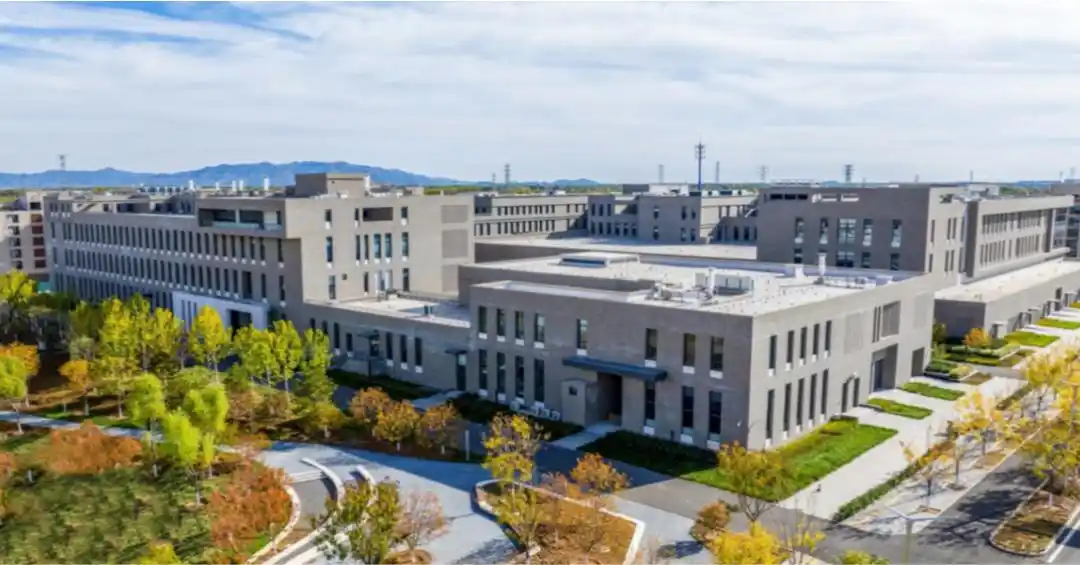
Source: Develop Beijing
There's also a reaction in the capital market.
Beijing added 15 newly listed companies in the first half, and the Beijing Stock Exchange added 36. Venture capital investment amount increased by 2 times year-on-year, with nearly 90% of it directed towards hard-tech fields.
Translating that: Over the past six months, investors looking at Beijing-based companies have primarily been targeting sectors like chips, robotics, and AI, with other tracks relatively quieter. This kind of "tech market trend" isn't built on hype; it's built with the real money from IPO fundraising and venture capital—whether a company can get funding and how much, the market's preference over the past six months is already quite clear.
The phrase "groundbreaking and foundational," when translated into concrete policies, essentially means "strategic scientific and technological strength" and "technology finance" walking together on two legs.
At the top, you have top-tier research platforms like national laboratories and Tsinghua and Peking universities tackling key challenges, while at the bottom, venture capital funds follow up with real money. In the first half, Haidian District was also selected as one of the first national capital market technology finance pilot sample regions, adding another piece to this chain—good technology not lacking funding, good projects not struggling to land. At least based on the data, things have been moving in this direction over the past six months.
Technology Reshaping, Industry Upgrading
If investment data shows "where the money is flowing," then production data shows "if things are being made."
In the first half, Beijing's integrated circuit output increased by 17.8%, industrial robot output by 75.5%, and service robot output directly by 2.3 times. These numbers together sketch a picture where Beijing is not just writing code and publishing papers, but is also actually manufacturing equipment.
To give a more specific scenario: Qianxun Intelligence, working on embodied intelligence, saw its Mozi robots enter JD.com's smart retail scenarios to work this year, and also entered CATL's production lines. The company says it relies on over 200,000 hours of accumulated real-world data. Tasks that sound simple, like robots folding clothes or moving items, are actually achieved through continuous trial and error in real scenarios, not a one-time demo in an exhibition hall.
As such scenarios proliferate, the figure "industrial robot output up 75.5%" starts to take on some flesh and blood.
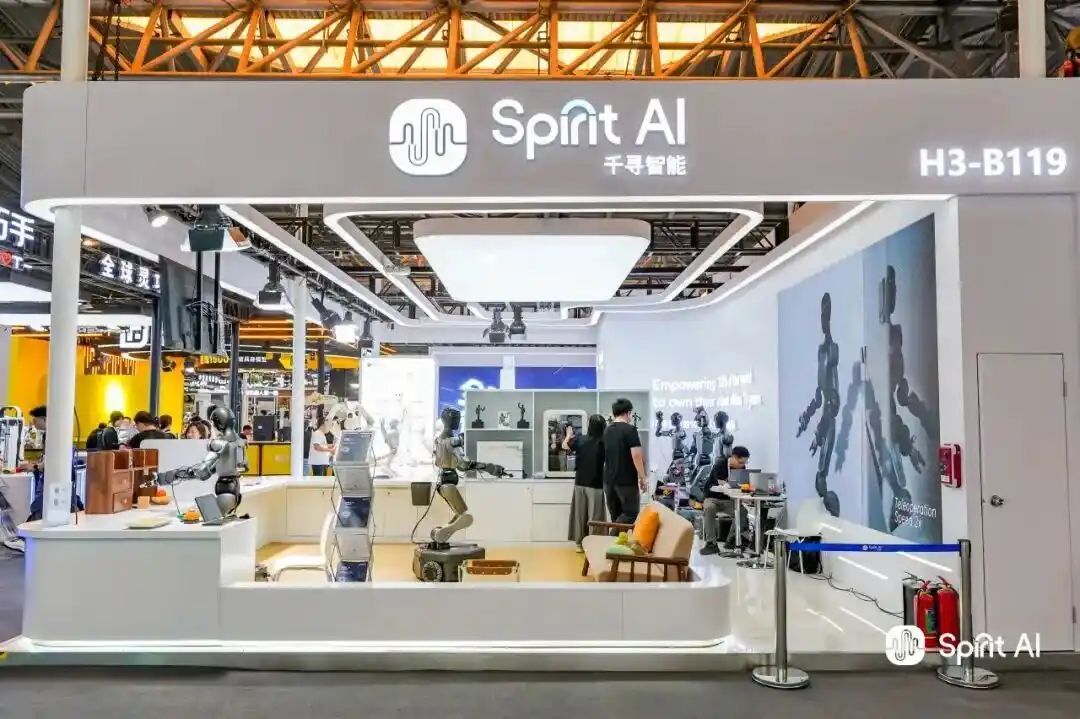
Source: Qianxun Intelligence Spirit AI
The service sector is also moving closer to technology. The added value of the service industry increased by 6.1% in the first half. Breaking it down, software and information services rose by 9.4%, finance by 10.2%, and scientific and technological services by 5.2%. The traditionally "heavy" finance and "light" software/information sectors both grew faster than the overall service industry this half-year, indicating that the service industry itself is being reshaped by technology, not entirely the old picture.
On the digital economy front, added value increased by 7.8% in the first half. Green economy revenue this half-year is expected to grow by about 5.5%. The number of new energy vehicles in use exceeded 1.4 million, with 140,000 new ones added in the first half.
The terms "intelligent" and "green" are no longer just slogans; they are genuinely seeping into the industrial structure. The policy side has also been matched with concrete actions. For example, the medical AI pilot base has already produced intelligent agents for things like "systemic chronic disease, early screening of the ocular fundus," and the manufacturing AI pilot base is working on intelligent full-lifecycle automotive R&D and design. The directions are relatively grounded, not stuck at the conceptual stage.
The AI Race
Earlier, it was mentioned that nearly 90% of venture capital went to hard tech. Most of that money was aimed at Zhongguancun.
This first half, the embodied intelligence track was particularly lively, with rounds of financing one after another, often at the billions of RMB level. Galaxy General in March secured a new round of financing worth 25 billion RMB. Co-investors included "national team" and industrial capital like the National Artificial Intelligence Industry Investment Fund, Sinopec, and CITIC Group Investment Holdings. Cumulative financing is reportedly over 50 billion RMB. That capital is willing to pour money in like this somewhat indicates market confidence in this track. Of course, whether embodied intelligence commercialization can support this valuation is still too early to tell.
Galaxy General's landing actions are very pragmatic. To achieve the goal of robots "really being able to work, work well, and work at scale," Galaxy General independently developed the Galaxy Brain (AstraBrain) end-to-end embodied large model and built the Galaxy Data (AstraData) foundational data system, continuously improving the robot's autonomous learning and generalization capabilities. Recently, Galaxy General also released the WAM-TTT original technology, which will help continuously reduce robot training and deployment costs, enabling robots to quickly adapt to different scenarios and achieve scaled deployment.
Currently, Galbot has achieved 7×24 continuous, normalized operations at CATL and is gradually entering core production links like logistics handling, material sorting, and quality inspection in automotive manufacturing enterprises, helping them improve production efficiency and promote manufacturing upgrading towards intelligence and high-end. In the consumer service field, Galaxy General's humanoid robots have also been applied in scenarios like smart pharmacies and Galaxy Space Capsules, enriching consumption supply and improving service efficiency through round-the-clock autonomous operations, creating new consumption scenarios.
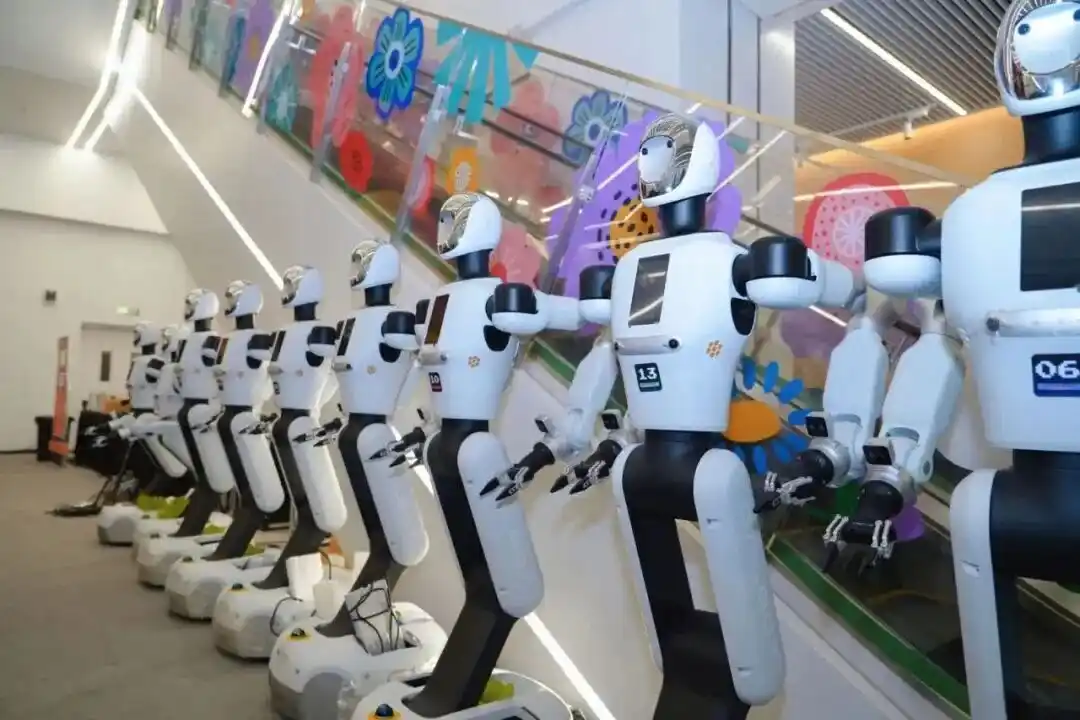
Source: Galaxy General Galbot
Regarding large models, Beijing released the world's first universal world foundation model and the first self-evolving 5D world model in the first half. The independent AI ecosystem "FlagOS" has over 80 ecosystem members, with global downloads exceeding 375,000. These numbers may sound abstract, but for specific companies, it means a batch of neutral computing power and model service providers are "laying the foundation" for the entire ecosystem.
For example, Jiuzhang Yunjin, which provides AI computing cloud services, doesn't build its own large models. Instead, it specifically provides computing power and ready-made foundation models to small and medium-sized AI teams, allowing them not to be locked into a particular cloud platform or model, and to switch technical routes freely. This "shovel seller" role, to some extent, determines whether Zhongguancun's AI magnet can truly attract and retain people and teams.
There's also movement on the rules front, not just throwing money and chasing benchmark scores. Qianxun Intelligence is a member unit of the MIIT Technical Committee for Standardization of Humanoid Robots and Embodied Intelligence, participating in preliminary research on standards like robot joint performance testing methods. This represents another less visible but important line within the Zhongguancun ecosystem besides competing on technology and products: whoever sets the standards first gains a bit more say.
Extending the Game Board
Regarding computing power, Beijing added 22,000 Petaflops of intelligent computing power in the first half. The target for the second half is to add over 70,000 Petaflops for the full year, pushing towards a "ten-thousand Petaflop" supercomputing scale. This sounds like a pure technical indicator, but its implementation involves specific scheduling issues—computing power can't all be piled up within Beijing city limits; some must be relocated outward.
Jiuzhang Yunjin's approach is to elastically schedule computing power demand to surrounding nodes like Hebei and Tianjin, trying the path of "R&D in Beijing, training in surrounding areas," while also digging into scenarios like smart manufacturing in Tianjin and industrial internet in Hebei.
This aligns with the direction of Beijing-Tianjin-Hebei coordinated development promoted by Beijing in the second half. In the first half, Beijing already relocated 77 general manufacturing enterprises. Beijing Tongzhou Station began operation, the first circular high-speed rail line opened within the Beijing-Tianjin-Hebei region, the main structures of 20 stations on the Rail Transit Line 22 (from Pinggu to Hongmiao) were completed, and projects like the Xiong'an campuses of Beijing University of Science and Technology and Peking University People's Hospital are advancing.
Once the rail transit network connects, Zhongguancun's innovation resources theoretically gain a physical channel for outward radiation. But this is currently more in the "channel just opened" stage. For traditional industries in Hebei and Tianjin to truly feel the "spark" landing, we'll need to wait and see.
Besides computing power moving outward, Beijing is also filling in a missing piece close to home—pilot-scale platforms. In the first half, Beijing announced the first batch of 29 municipal-level pilot platform cultivation lists, covering new-generation information technology, medicine and health, future industries, and other directions. In simple terms, it's providing an intermediate station for laboratory achievements to be mass-produced and tested, otherwise, no matter how great the technology, it's useless if stuck at the step "from prototype to product."
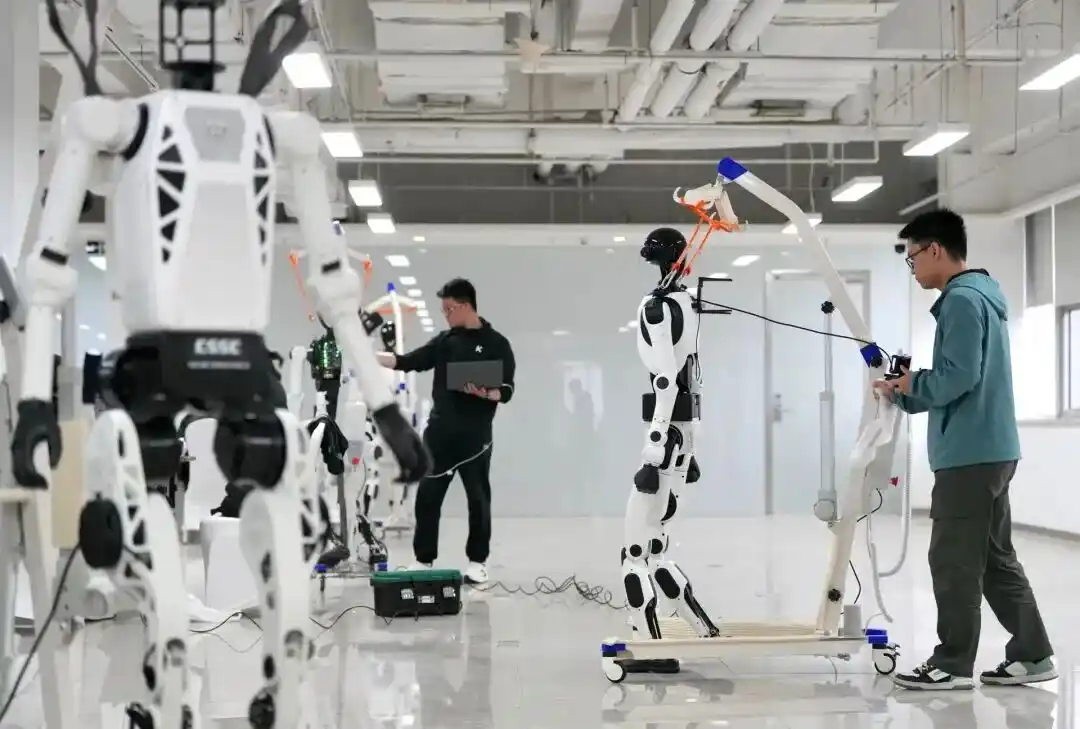
Source: Beijing Daily
A second batch is to be promoted in the second half. Coupled with scenario cultivation policies that have already outlined key areas like expanding domestic demand and urban governance, the logic is to find scenarios for technology and markets for scenarios. This is essentially different facets of the same thing that the aforementioned companies are each doing.
Ultimately, Beijing's economic data from the past six months isn't reliant on any single blockbuster policy. It's because each link—computing power, models, scenarios, capital—has taken a small step forward, and together they've created the notion of a "sci-tech innovation market."
The goals for the second half are written quite directly: push the intelligent computing scale another 70,000 Petaflops, promote the second batch of pilot platforms, continue expanding scenario applications outward—whether these can be realized ultimately depends on whether companies like Jiuzhang Yunjin, Qianxun Intelligence, and Galaxy General can truly turn technology into orders, not just leave it in financing news.
The term "China's Silicon Valley" is something Beijing has been called for years. But what makes Silicon Valley Silicon Valley has never been one or two star projects; it's whether computing power, talent, capital, and scenarios can mesh together long-term and roll forward on their own.
What Beijing has done these past six months is essentially filling the gaps in that direction—computing power overflowing to Beijing-Tianjin-Hebei, standards seeping into industries, pilot platforms connecting the break between labs and markets. None of these actions alone seem particularly dazzling, but linked together, they constitute the real homework behind the phrase "global high ground," and are the aspects worth continuing to watch closely in the coming quarters.
This article is from WeChat public account "Node Finance," author: Cui Dabao