# KOSPI Articoli collegati

Il Centro Notizie HTX fornisce gli articoli più recenti e le analisi più approfondite su "KOSPI", coprendo tendenze di mercato, aggiornamenti sui progetti, sviluppi tecnologici e politiche normative nel settore crypto.

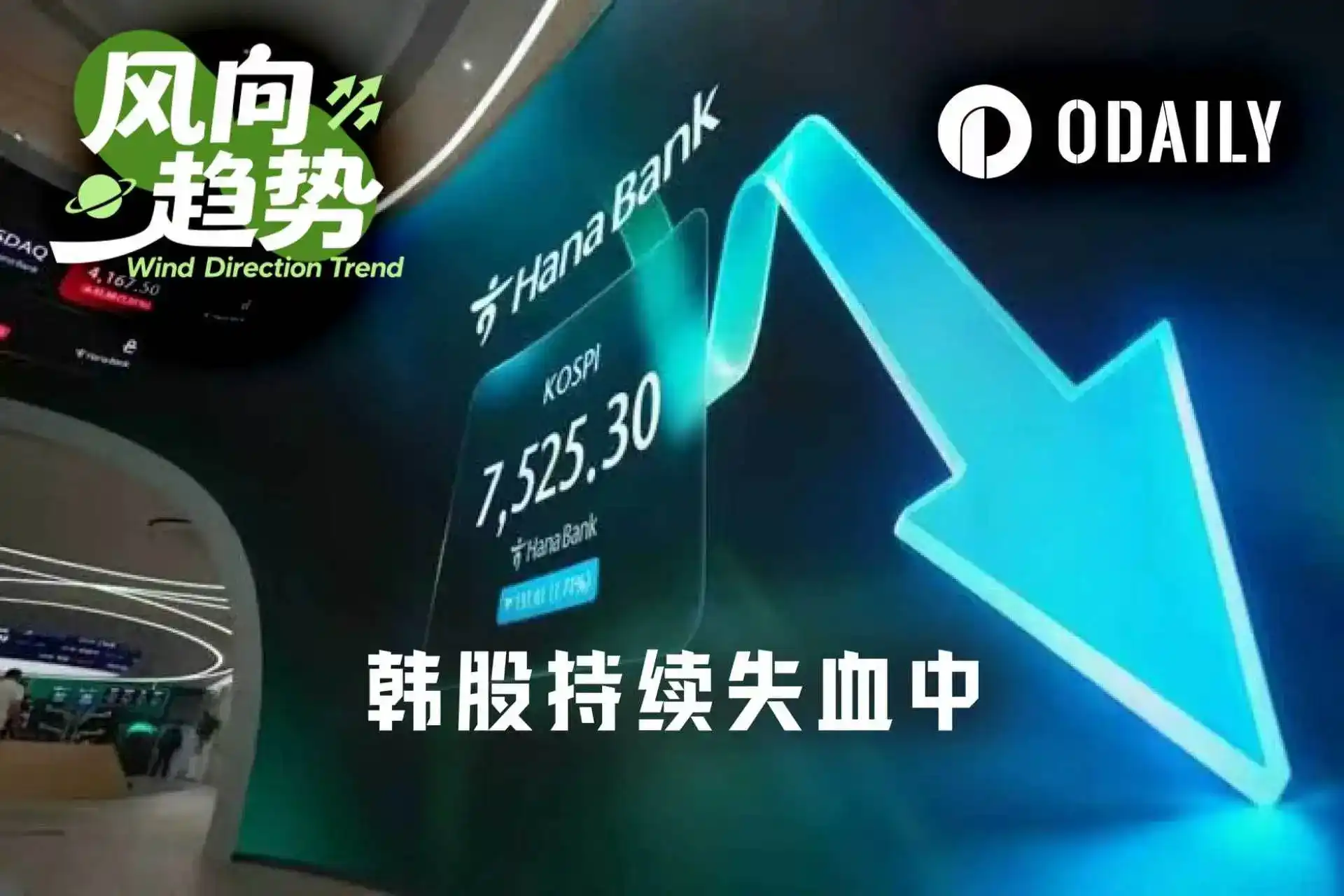
Soaring 20% Then Dropping 5%: When Will the Bottom of the Korean Stock Market Be?

"South Korean stocks face a turbulent period as the KOSPI index, after a 20% surge, fell 5% to 6257 points. The market is grappling with severe issues: over 500,000 leveraged retail accounts have been liquidated, and more than 24 trillion won has flowed from stocks into bank deposits for safety. This reflects a significant loss of market liquidity and shaken investor confidence. In response, Korean financial regulators are taking action. They have tripled the minimum保证金 (margin) requirement for single-stock leveraged ETF trades to 30 million won and are considering granting themselves "emergency intervention" powers. These could include capping leverage ratios and setting investment limits on these ETFs, seen by many as amplifying market volatility. Initial results show a 75% drop in these products' trading volume post-regulation. The market downturn has political repercussions, pushing President Yoon Suk-yeol's approval rating to a new low. Meanwhile, foreign investors made a record net purchase of 7.18 trillion won during a recent rebound, while domestic retail investors sold off massively. Morgan Stanley has upgraded South Korean stocks to "overweight," citing the ongoing "leverage unwinding" and potential for a 36% upside, with giants like Samsung Electronics and SK Hynix providing valuation support. However, analysts caution that the market's structure remains vulnerable to foreign capital flows, and the current low may not be the bottom."

marsbitIeri 09:51

Soaring 20% Then Dropping 5%: When Will the Bottom of the Korean Stock Market Be?

marsbitIeri 09:51

Daily 7.2 Trillion KRW: Foreign Capital's Record Net Buying on Friday! Wall Street Says Headwinds for Korean Stock Fund Flows Have Subsided

South Korean stock market sees a dramatic shift in fund flows. On July 31, foreign investors made a record net purchase of approximately KRW 7.2 trillion in KOSPI stocks, marking a fundamental reversal from the persistent large-scale net outflows seen in previous months. This contributed to a significant narrowing of foreign net selling in July to KRW 9.8 trillion, down sharply from KRW 48.4 trillion in June and KRW 44.5 trillion in May. Simultaneously, domestic institutional pressure eased. South Korean pension funds and asset managers turned to a net buying position in July, purchasing KRW 1.0 trillion worth of KOSPI shares, contrasting with net sales in May and June. Market volatility is expected to be dampened by new financial regulations. Effective July 31, the Financial Services Commission tightened access for retail investors to single-stock leveraged ETFs by raising the minimum cash deposit requirement. Trading volumes for these products subsequently dropped to about 50% of their monthly average. Citigroup Research maintains its year-end KOSPI target of 10,000 points. The firm cites several supportive factors: the substantial easing of headwinds from capital outflows, a robust fundamental outlook for the semiconductor sector, historically low market valuations, strong economic fundamentals, and the potential for policy support from financial authorities if needed.

marsbit2 giorni fa 02:51

Daily 7.2 Trillion KRW: Foreign Capital's Record Net Buying on Friday! Wall Street Says Headwinds for Korean Stock Fund Flows Have Subsided

marsbit2 giorni fa 02:51

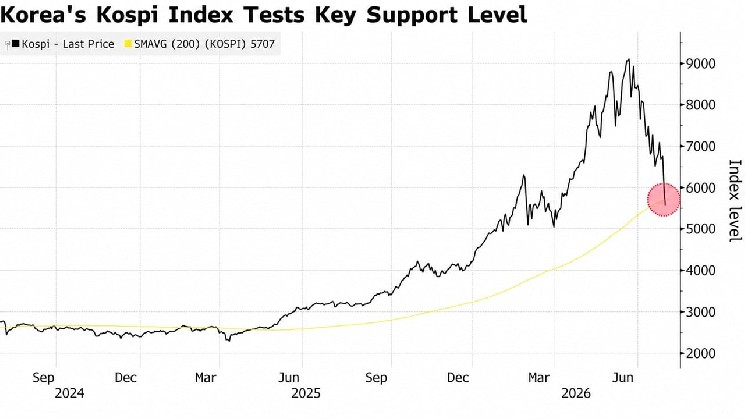
Kospi Index Drops Below 5,600 Mark Amid Record-Breaking Double Trigger of Circuit Breaker, While Bitcoin Price Surpasses $64,000

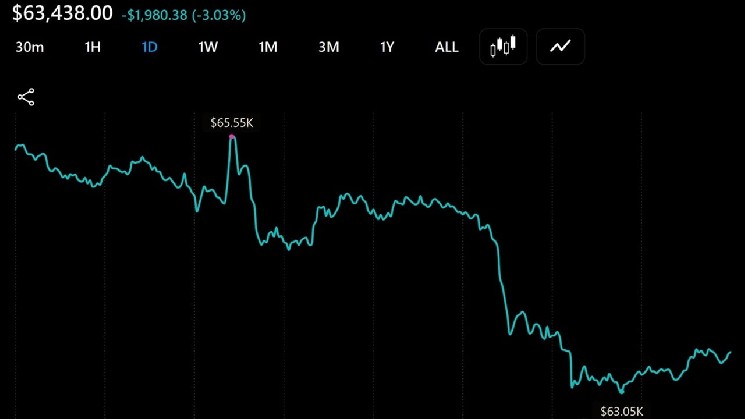
South Korea's stock market experienced unprecedented volatility as both the Kospi and Kosdaq indices triggered circuit breakers for two consecutive days. The Kospi plunged over 8% on Wednesday, falling below 5,600 points, following an over 8% drop the previous day. This historic dual halt was primarily driven by massive sell-offs in heavyweight semiconductor stocks like Samsung Electronics and SK Hynix. The selling pressure persisted despite SK Hynix reporting a 557% surge in quarterly profit, as the results failed to meet inflated market expectations fueled by AI-driven demand, highlighting a disconnect between stock valuations and fundamentals. In contrast, Bitcoin diverged from the equity market downturn. After initially dipping to around $63,000 amid the Kospi's fall and broader macroeconomic concerns, it rebounded to surpass $64,400 within 24 hours, even as South Korea's second circuit breaker was triggered. This marks a second instance in a week where Bitcoin held ground during an AI-related stock sell-off, suggesting its previously tight correlation with semiconductor and tech stocks may be weakening. Analysts note the relationship is complex and driven by shared investor bases rather than direct causality. The ongoing pressure on chip stocks, which dominate the Kospi index, raises the risk of further market halts before stability can return.

cryptonews.ru07/29 10:41

Kospi Index Drops Below 5,600 Mark Amid Record-Breaking Double Trigger of Circuit Breaker, While Bitcoin Price Surpasses $64,000

cryptonews.ru07/29 10:41

活动图片