# Iran War Articoli collegati

Il Centro Notizie HTX fornisce gli articoli più recenti e le analisi più approfondite su "Iran War", coprendo tendenze di mercato, aggiornamenti sui progetti, sviluppi tecnologici e politiche normative nel settore crypto.

Wintermute Market Weekly: Iran War Ends, Inflation Meets Expectations, BTC Rebounds to Lower 60ks But Don’t Rush to Buy the Dip

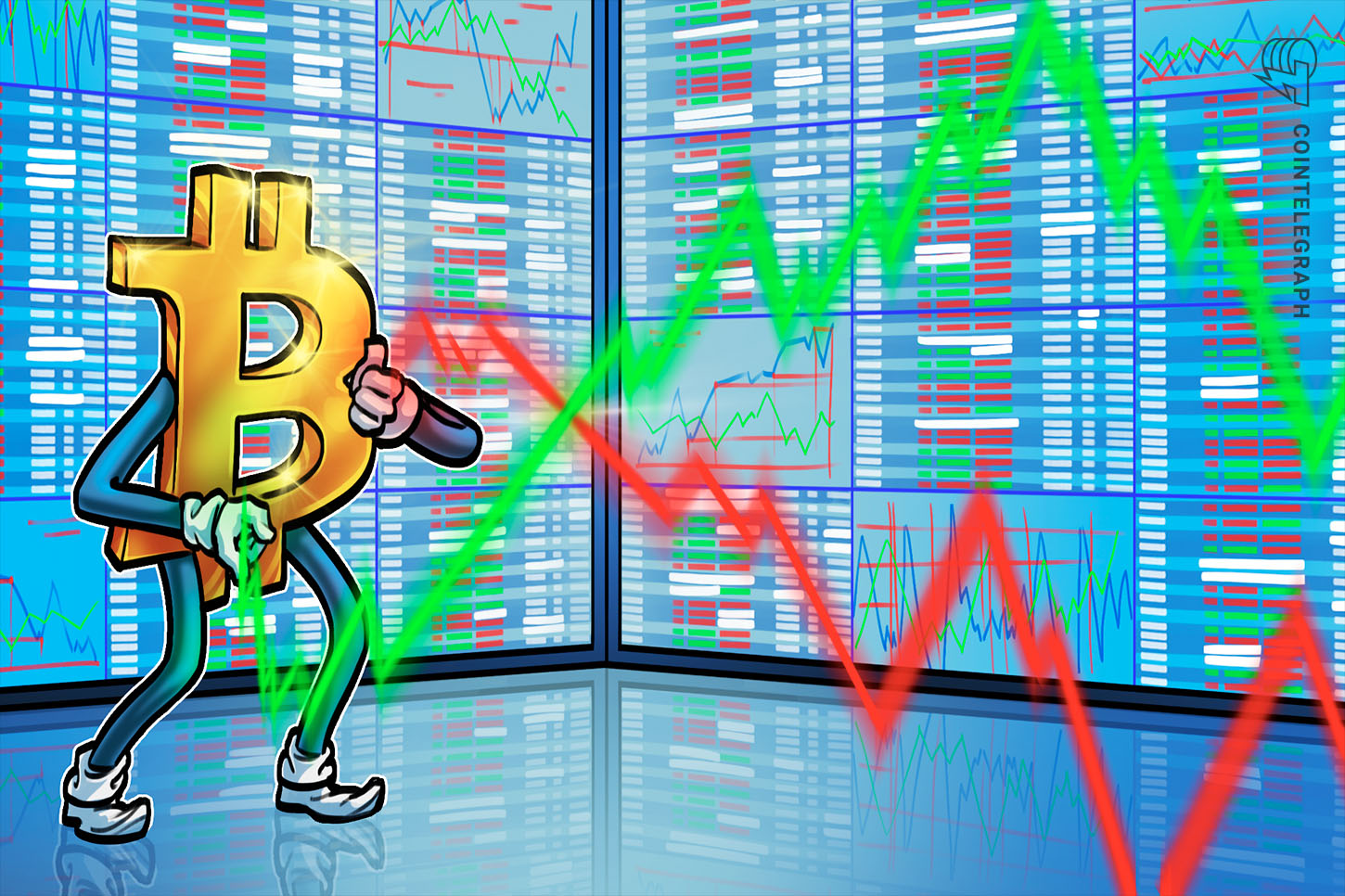
**Wintermute Market Weekly: BTC Rebounds to $60K Lows, But Caution Advised** This week saw a broad market rebound, primarily driven by two converging factors: a US CPI inflation reading that met expectations (4.2% YoY) and former President Trump's announcement of a deal to end the Iran conflict. The latter triggered a sharp drop in oil prices, reducing geopolitical risk premiums and easing inflation fears. Consequently, risk assets like equities and cryptocurrencies rallied, with Bitcoin recovering from lows around $60,000 to close the week up 1.9%, while altcoins gained 3.1%. Despite the price bounce, the underlying liquidity picture for crypto remains weak. Key funding channels—stablecoin flows, ETF inflows, and Digital Asset Treasury (DAT) activity—show no signs of structural improvement. ETF outflows recently hit a record streak, and DAT assets have declined significantly. The rally from $60K to $83K earlier is now viewed as a bear-market rally that has failed. The current environment is characterized by low directional conviction and choppy, range-bound trading, likely persisting into summer. The report advises caution against aggressively buying the dip. While the $60K area offers attractive long-term risk/reward, a sustained bull run requires a visible turnaround in capital inflows, which hasn't materialized. The upcoming FOMC meeting and Powell's commentary, alongside the formal Iran deal signing, are noted as near-term catalysts. The core takeaway is to watch fund flows rather than price action and avoid being whipsawed by volatility before clear signs of institutional or retail capital returning emerge.

marsbit06/17 04:00
Wintermute Market Weekly: Iran War Ends, Inflation Meets Expectations, BTC Rebounds to Lower 60ks But Don’t Rush to Buy the Dip

marsbit06/17 04:00

The Rise of Prediction Markets: Why Is This Trillion-Dollar Industry Making U.S. Regulators 'Sit on Pins and Needles'?

The article, "The Rise of Prediction Markets: Why Is the Trillion-Dollar Trend Making US Regulators Uneasy?", explores the rapid growth of prediction markets and the regulatory pushback they face. It argues that platforms like Polymarket and Kalshi, where users trade contracts on real-world outcomes, create highly efficient information aggregates. Their monthly trading volume has surpassed $24 billion, with projections pointing toward a trillion-dollar annual market by 2030. A core example is the 2026 Iran conflict, where prediction market signals accurately foreshadowed the disruption of the Strait of Hormuz and an oil price spike hours before official announcements, outperforming traditional analysts. The piece contends US regulators' primary motivation is not public protection but self-preservation and control. It cites a court ruling against the CFTC, which found the agency's concerns over market manipulation "speculative" and lacking concrete evidence. At the state level, the driving force is framed as lost tax revenue from traditional gambling, not documented social harm. Citing economist Friedrich Hayek, the article concludes that prediction markets excel by crowdsourcing decentralized, "local knowledge" into a dynamic, continuous price signal, offering a real-time reality check against official narratives and static forecasts.

marsbit06/15 08:56

The Rise of Prediction Markets: Why Is This Trillion-Dollar Industry Making U.S. Regulators 'Sit on Pins and Needles'?

marsbit06/15 08:56

Seeking Alpha's Hot Article: Why Might the U.S. Stock Market Crash in June?

In a recent Seeking Alpha article, financial professor and analyst Damir Tokic argues that the US stock market may be poised for a significant crash in June 2026. The core thesis centers on a "mega-bubble" in equities, particularly within the technology sector, which has driven the S&P 500 to near-record valuations, with a Shiller P/E ratio exceeding 40—a level comparable to the 2000 dot-com bubble. Tokic identifies two primary catalysts for a potential collapse. First, he points to unsustainable market exuberance fueled by what he terms the "Trump Stimulus"—massive AI capital expenditure by tech giants, which he believes is politically driven and cannot last. Second, and more urgently, he highlights the escalating Iran war as a critical threat. The ongoing closure of the Strait of Hormuz has created a severe global energy supply crunch. Strategic petroleum reserves are projected to hit critically low operational levels by June, potentially causing oil prices to spike above $200 per barrel and triggering a severe, supply-driven inflationary shock. This scenario, Tokic warns, would force the Federal Reserve's hand. Despite currently maintaining a dovish bias, the Fed would likely be compelled to officially pivot to a hawkish stance at its June FOMC meeting to combat soaring inflation and bond yields. He contends that such a shift—or even a failure to act, which would destroy Fed credibility—could be the trigger that punctures the market bubble. The resulting downturn, he concludes, could rival the bear markets of 2000 and 2008, advising investors to prepare for a major correction.

marsbit06/04 07:24

Seeking Alpha's Hot Article: Why Might the U.S. Stock Market Crash in June?

marsbit06/04 07:24

Predicting 'When Will Trump End the War'? Here Are the Five Key Points

Based on a Barclays Capital analysis, the article outlines five key factors that will determine the end of the Iran war and its critical impact on global energy markets. Since the conflict began on February 26, 2026, oil prices have surged, with Brent crude up 44%. The war's duration will dictate if oil prices return to a base case of $85/barrel or surpass $110. The five catalysts are: 1. **Military Objectives:** The US aims to destroy Iran's missile capabilities and secure the Strait of Hormuz. The timeline remains uncertain as Iran retains some offensive capacity. 2. **Congressional Funding:** The War Powers Act sets a hard deadline of May 31, 2026, for ending hostilities without congressional authorization, which is unlikely to be granted. 3. **US Casualties:** Rising casualties could further erode the war's already fragile public support, currently at a 41% approval rating. 4. **Gasoline Prices:** The key political threshold is the national average of $5/gallon, a peak seen under President Biden. Exceeding it would increase pressure to end the war. 5. **Trump's Personal Decision:** The President could unilaterally declare victory and end the conflict, but this timing is highly unpredictable. Barclays concludes that the risk to oil prices is skewed to the upside, as current market reactions are less panicked than in previous crises, and the situation reflects a genuine physical supply disruption.

marsbit03/27 07:45

Predicting 'When Will Trump End the War'? Here Are the Five Key Points

marsbit03/27 07:45

活动图片