# Humanity Articoli collegati

Il Centro Notizie HTX fornisce gli articoli più recenti e le analisi più approfondite su "Humanity", coprendo tendenze di mercato, aggiornamenti sui progetti, sviluppi tecnologici e politiche normative nel settore crypto.

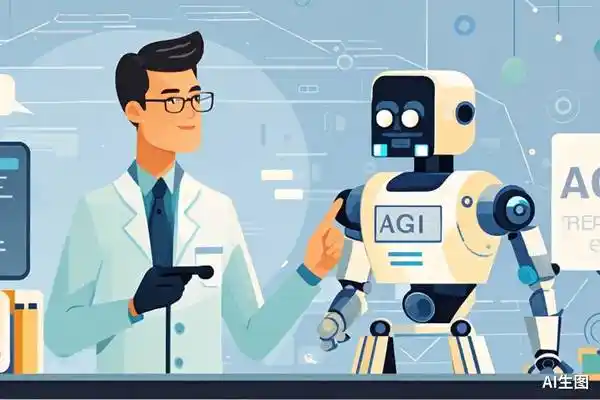
Nobel Laureate Hassabis Shocks with Statement: AGI Impact Will Be 10 Times That of the Industrial Revolution

Nobel laureate and DeepMind CEO Demis Hassabis declares that Artificial General Intelligence (AGI), matching human cognitive abilities, is likely just a few years away. He states its impact could be ten times greater than the Industrial Revolution and unfold ten times faster, heralding an age of unprecedented abundance where resource scarcity may end. AGI promises transformative benefits, accelerating breakthroughs in medicine, clean energy, and advanced materials. However, its rapid development, driven by intense commercial and geopolitical competition, outpaces our understanding and increases risks in cybersecurity, bio-threats, and controlling autonomous, self-improving systems. To manage this, Hassabis proposes a U.S.-led framework: a new "Frontier AI Standards Body," modeled after organizations like FINRA. It would define "frontier-class" models through dynamic benchmarks. Labs creating such models would voluntarily submit them for a 30-day pre-release review, later formalized into mandatory assessments. This body would conduct rigorous evaluations on security and safety, update tests regularly, and, if necessary, coordinate a global slowdown in development. While technical challenges are surmountable, Hassabis emphasizes that profound economic and philosophical questions about post-scarcity societies, human values, and purpose remain. He concludes that responsibly navigating AGI's arrival is our defining task, offering a chance to shape a future of immense scientific progress and human flourishing.

marsbit07/15 03:33

Nobel Laureate Hassabis Shocks with Statement: AGI Impact Will Be 10 Times That of the Industrial Revolution

marsbit07/15 03:33

AGI Countdown: OpenAI's Chief Research Officer Makes Major Statement — The Window for Humanity is 'Very Small'

The countdown to AGI has begun, according to OpenAI's Chief Scientist Mark Chen, who states the window for human-centric progress is "very small." Chen argues that AI is reaching a point where models can perform "self-sustaining research," autonomously driving innovation in fields from mathematics to programming. He points to the proliferation of AI's "superhuman" insights—akin to AlphaGo's legendary "Move 37"—across disciplines as evidence of this shift. Chen firmly dismisses claims that scaling laws are plateauing or that pre-training is dead, asserting the field remains on an exponential curve. He cites OpenAI's successful bet on reasoning models like o1 as proof that fundamental breakthroughs are still possible. The future of research, he suggests, lies with "Vibe Researchers"—humans who provide high-level direction and "taste" while AI handles execution and orchestration of complex, long-horizon tasks. However, significant hurdles remain. Chen highlights a "benchmarking crisis," where models can overfit to existing tests without gaining true generalization. He also notes the "jagged frontier" of AI capabilities, where systems excel at advanced reasoning but struggle with contextual, continual learning from everyday experiences. Despite these challenges, he expresses confidence that these gaps will be closed. In a personal reflection, Chen shares that post-AGI, his wish is to open a noodle shop—a metaphor emphasizing that when AI masters knowledge and innovation, uniquely human experiences, warmth, and storytelling will become the ultimate form of value.

marsbit06/30 08:37

AGI Countdown: OpenAI's Chief Research Officer Makes Major Statement — The Window for Humanity is 'Very Small'

marsbit06/30 08:37

OpenAI's 'Blueprint for the Future': Making AI Beneficial for Every Person on the Planet

A new transformative technology emerges every few generations. OpenAI draws a parallel with the advent of electricity in the 1920s, which initially brought convenience but ultimately enabled unprecedented progress in medicine, engineering, and living standards by empowering people to create new possibilities. AI is poised to recreate this phenomenon. Its true significance lies not in the technology itself, but in what people can achieve with it—from understanding a medical bill or starting a business to aiding scientific discovery. OpenAI believes AI should be universally accessible, allowing everyone to use it according to their own needs. This future, however, is not guaranteed. While transformative tech can centralize power, OpenAI's philosophy is that AI must serve humanity, augmenting human capabilities and broadly distributing its benefits. The company's first commitment is to build AI for human service, aiming to empower the many rather than concentrate power in a few. Safety, alignment with human intent, and oversight are paramount. OpenAI is optimistic about AI's potential to expand human welfare but remains clear-eyed about risks. The goal is to help people achieve more, not to replace them. Full automation is not the desired future; human judgment, values, and direction will become even more critical. OpenAI outlines three core goals: 1. Build automated AI researchers to accelerate and increasingly automate the research process itself, maintaining close human collaboration. The internal projection is that by March 2028, a significant portion of their research will be conducted by AI systems working alongside human researchers. 2. Accelerate economic development by advancing science, boosting productivity, and fostering growth, while ensuring the fruits are widely shared. 3. Provide a personal AGI for everyone on Earth, allowing individuals to benefit from this transformative technology in their own way. The company is entering its third phase, moving from foundational AGI research (Phase 1) to product deployment and learning from real-world use (Phase 2). The current challenge is making advanced AI abundant, affordable, safe, practical, and usable for all individuals and organizations. OpenAI concludes that a widely distributed power structure leads to a more resilient, adaptable, and free society. A positive AI future should not be controlled by a handful of entities but built, benefited from, and owned by many. If realized correctly, AI can become a cornerstone for enhancing global productivity, creativity, scientific advancement, and economic opportunity, fulfilling the mission to ensure AGI benefits all of humanity.

marsbit06/09 11:09

OpenAI's 'Blueprint for the Future': Making AI Beneficial for Every Person on the Planet

marsbit06/09 11:09

Who Cannot Be Distilled into a Skill?

"This article explores the concerning trend of AI systems distilling human workers into replaceable 'skills,' using the viral 'Colleague.skill' phenomenon as a key example. It argues that the most diligent employees—those who meticulously document their work, write detailed analyses, and transparently share decision-making logic—are paradoxically the most vulnerable to being replaced. Their high-quality 'context' (communication records, documents, and decision trails) becomes the perfect fuel for AI agents, extracted from corporate platforms like Feishu and DingTalk. The piece warns of a deeper ethical crisis: the reduction of human relationships to functional APIs, as seen in derivatives like 'Ex.skill' or 'Boss.skill,' which reduce complex individuals to mere utilities. This reflects a shift from Martin Buber's 'I-Thou' relationship (seeing others as whole beings) to an 'I-It' dynamic (seeing them as tools). While AI can capture explicit knowledge (written documents, replies), it fails to capture tacit knowledge—the intuition, experience, and unspoken insights that define human expertise. However, a greater danger emerges when AI-generated content, based on distilled human data, is used to train future models, leading to 'model collapse' and homogenized, mediocre outputs—a process likened to 'electronic patina' degrading information over time. The article concludes by noting a small but symbolic resistance, such as the 'anti-distill' tool that generates meaningless text to protect valuable knowledge. Ultimately, it suggests that while AI can capture a static snapshot of a person, humans remain 'fluid algorithms' capable of continuous growth and adaptation, leaving their AI shadows behind."

marsbit04/05 03:42

Who Cannot Be Distilled into a Skill?

marsbit04/05 03:42

活动图片