Helium is a strange thing.
It is the second most abundant element in the universe, making up a quarter of the sun. Yet on Earth, it is extremely scarce, cannot be synthesized artificially, and can only be extracted bit by bit from natural gas, with most natural gas containing only a few parts per million of helium. Even more bizarre is that once released, it floats upwards, passes through the atmosphere, and escapes into space. Earth's gravity cannot hold it; once used up, it's gone for good.
It is precisely this gas that slips away when released that is an irreplaceable raw material in today's most advanced semiconductor manufacturing processes. The purity requirement is six nines, 99.9999%, not one nine less. Without it, wafer fabs' etching stops, leak detection stops, and the temperature of the photolithography machine's stage cannot be controlled. There is no substitute.
But it is perhaps the lowest-profile element in the entire semiconductor supply chain, so low that most people don't know chips need it, so low that its price doubling never once made headlines.
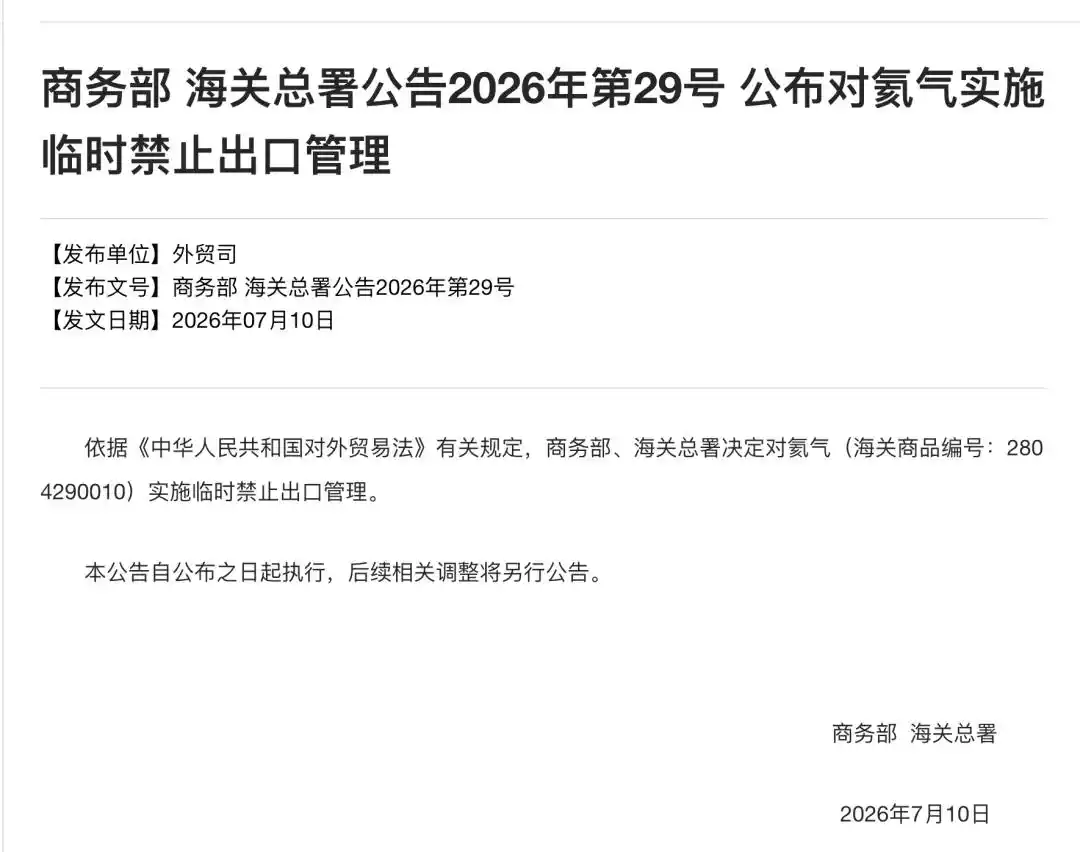
On July 10th, China suddenly banned its export.
This news barely caused a ripple in the public discourse.
But if you look behind this unremarkable gas, what has been happening over the past six months is far more dramatic than most semiconductor headlines: the world's largest helium production hub was hit by a missile three months ago, requiring three to five years to repair; domestic special gas factories are running at full capacity on double shifts, yet supply still falls short of demand. War, supply chain breakdown, industrial breakthroughs, and great power competition are all converging on this tiny, escaping gas.
01: Why Chip Factories Can't Do Without This 'Breath'
Helium is a contradictory element. In terms of cosmic abundance, it's the second most common thing; but on Earth, it's desperately scarce. Making it artificially is basically a dead end; nuclear reactions can produce a tiny amount, but that cost isn't production—it's performance art.
Earth's helium can only be extracted as a byproduct from natural gas, and once released into the air, it's nearly impossible to recapture, just like letting go of a helium balloon outside a mall as a kid—it floats skyward without looking back. It's too light, floating upwards until it eventually escapes the atmosphere. Every bit used is a bit less.
For many, helium's entire impression is party balloons and a funny voice after inhaling it. This impression is worlds apart from its actual value. Yet, this elusive thing is needed everywhere in a wafer fab.
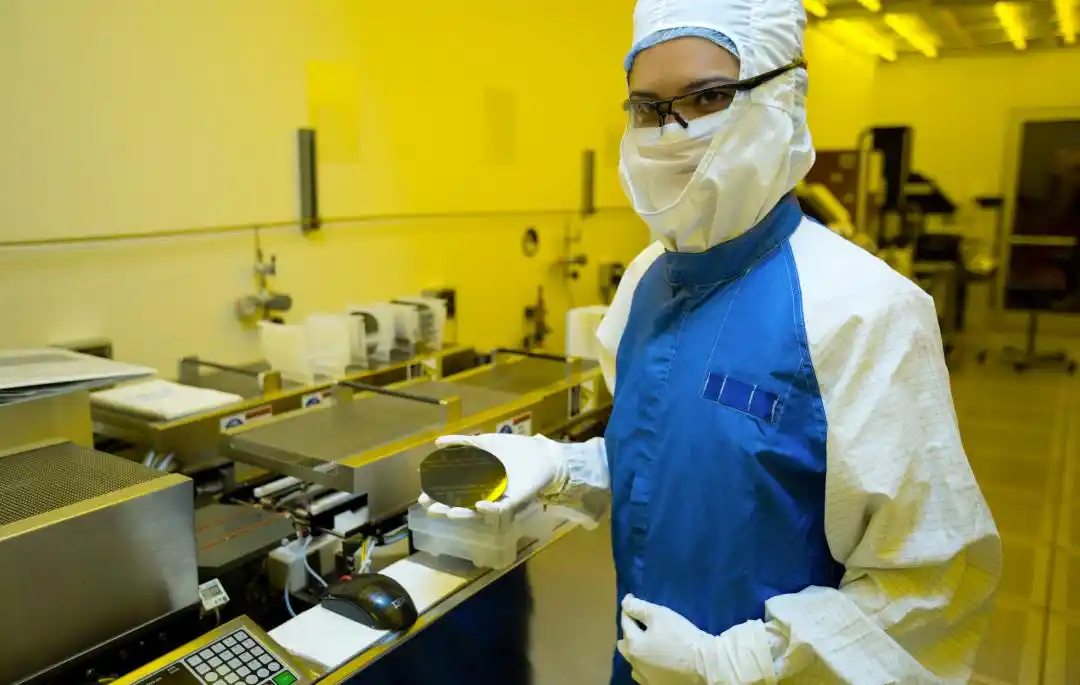
Once a silicon wafer enters the factory, it travels between dozens of large pieces of equipment.
One crucial step is plasma etching. Simply put, it uses a swarm of high-speed charged particles to carve nanometer-scale circuits on the wafer surface.
The problem is, as it etches, the wafer heats up.
If an ordinary iron plate heats unevenly, at worst, the pork belly in the middle gets a bit charred and the enoki mushrooms on the side stay a bit raw. But the circuits on a wafer are only nanometers wide. Slight temperature unevenness can cause deviations in the etched structures, potentially tanking the yield of the entire wafer.
So, engineers introduce helium gas between the wafer's backside and the chuck.
This layer of helium is somewhat like thermal paste between a computer's CPU and heatsink, except it's gaseous. Its job is to transfer heat quickly and evenly away, preventing the wafer from developing a localized 'fever' while undergoing nanoscale surgery.
Hydrogen gas actually has better thermal conductivity, but hydrogen... well, let's just say engineers wouldn't dare go to work.
Wafer fabs obviously don't want to add an explosive surprise to the etcher just for cooling. Helium conducts heat, is non-flammable, and rarely reacts chemically, making it hard to simply replace in many validated processes.
Helium has another job: leak detection.
Wafer fabs have numerous vacuum chambers and gas lines. To check these, engineers spray helium on the outside of the lines. If detectors inside 'smell' helium, it indicates a leak somewhere.
Helium atoms are small enough, and their background level in air is low, making the effect like giving the entire vacuum system a drug-sniffing dog trained for only one scent.
Additionally, helium is used for purging, protection, and thermal management in some precision equipment.
About 20% of global helium is consumed by the semiconductor industry, according to Deutsche Bank research.
Electronics-grade helium for advanced processes has insane purity requirements, up to 6N grade, 99.9999%, with impurities controlled at parts-per-million levels. For nanometer-scale circuits, every bit of impurity is a yield killer. The price of this helium is dozens of times that of ordinary industrial helium.
Can't we just not use helium?
Strictly speaking, there are alternative routes for some specific steps. The problem is, a wafer fab isn't your kitchen at home—today's light soy sauce is out, so just use dark soy sauce instead. Changing a particular process gas can alter equipment parameters, temperature profiles, contamination control, and final yield. Production lines often need complete requalification. The time and money involved are astronomical; no one can afford the switch. Some leading factories have installed helium recovery systems. For example, a Samsung production line saves about 4.7 tons per year. But recycling only conserves usage; it can't create new gas.
So the relationship between the chip industry and helium has always been quiet. Its share in chip costs isn't huge, and its profile is far lower than lithography machines, but it's indispensable.
Nobody mentioned it because it was always available—until this year, when the shelves emptied.
02: How Did the World Suddenly Run Short of Helium?
Helium isn't something you can just decide to produce; it depends on natural gas fields, and providence has given helium-rich fields to only a few players.
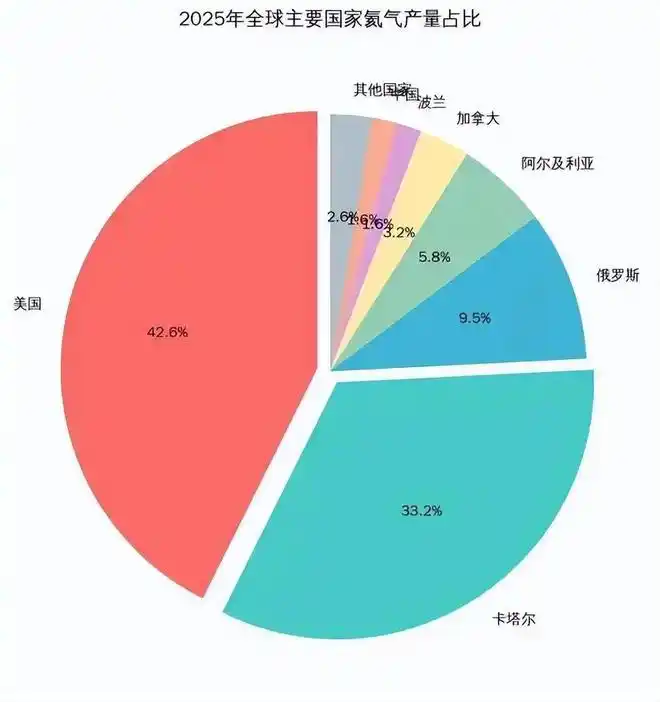
Consequently, about 85% of the world's helium is held by three countries: the United States, Qatar, and Russia.
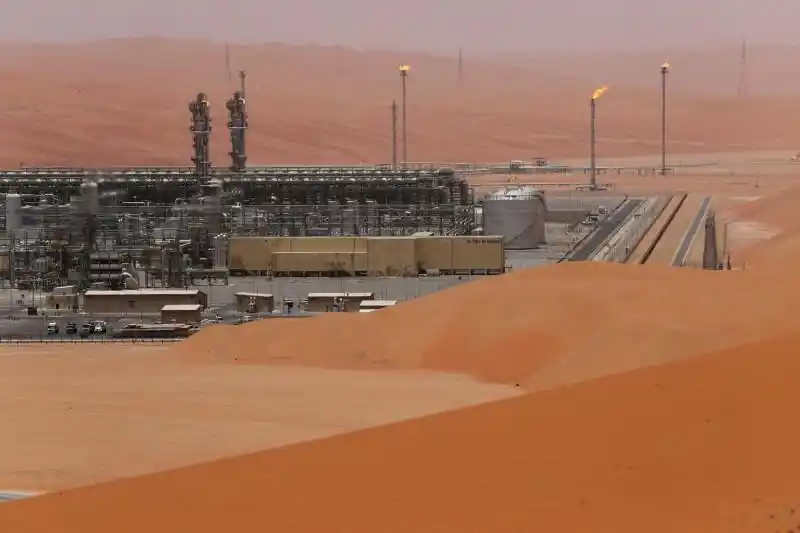
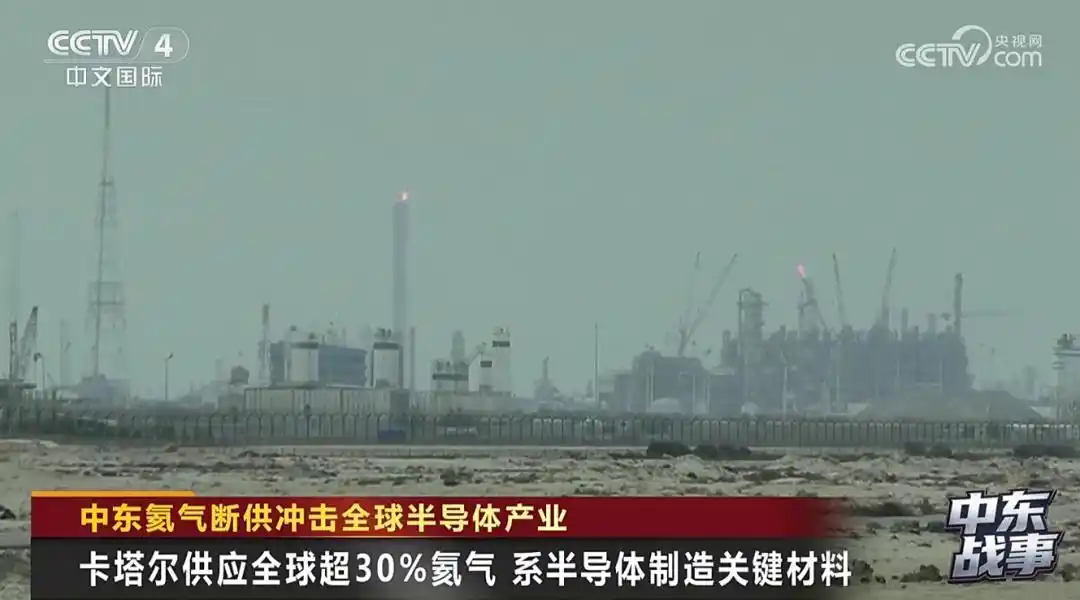
Qatar alone accounts for about one-third, primarily from the Ras Laffan Industrial City, the world's largest helium production hub, where helium is a byproduct of LNG production.
In early March this year, the spillover of Middle Eastern conflict reached the Gulf. After drone attacks and the de facto closure of the Strait of Hormuz to commercial shipping, QatarEnergy simply shut down all production at Ras Laffan, declaring force majeure. Helium production stopped alongside LNG. One-third of global supply vanished from the market in the short term.
In mid to late March, ballistic missiles struck again, this time causing tangible long-term damage. According to public statements, Qatar's helium export capacity was reduced by at least 14%, equating to about 5% of global supply. Repairing the damaged facilities will take three to five years.

The most absurd scene unfolded at the port.
Liquid helium must be transported in specialized cryogenic tank containers, each worth about $1 million, with an effective cooling window typically only 35 to 48 days. Beyond this time, the liquid helium gradually vaporizes, and to prevent excessive pressure, it must be vented through safety valves.
After the war broke out, about 200 such containers were stranded in the Middle East, stuck.
Like timed items in a game, if you don't finish the level quickly, they disappear on their own.
Even if shipping resumes one day, redeploying these expensive containers to other helium sources would take several more months.
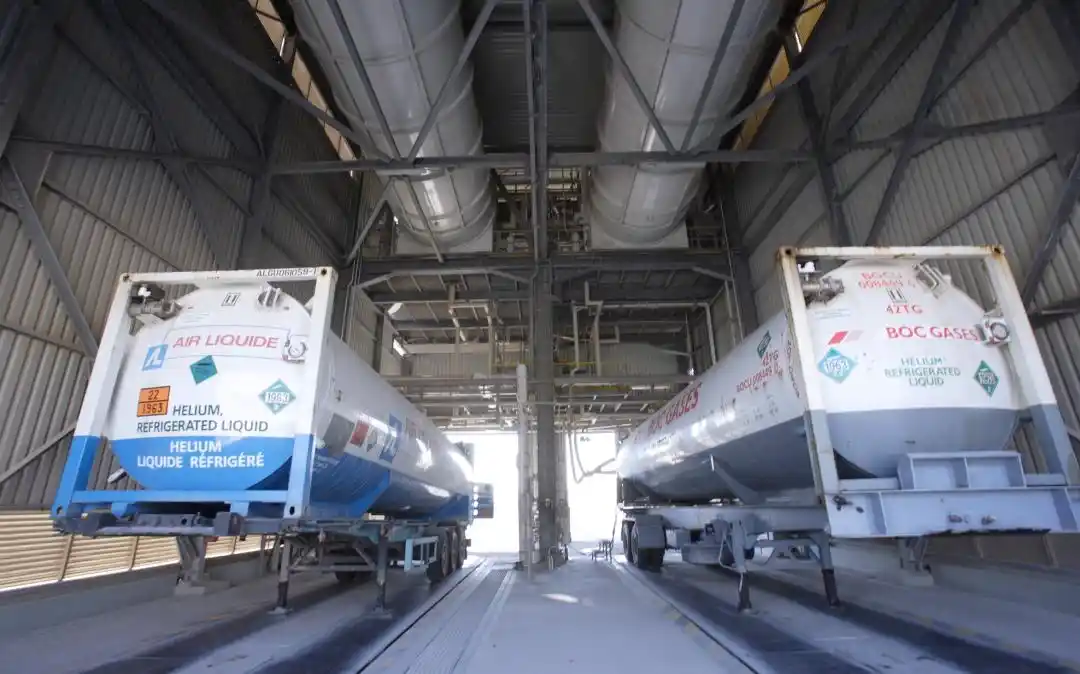
Prices were the first to spiral out of control. Global spot prices doubled in response; some major gas companies began imposing surcharges. In China, the price of bundled high-purity helium soared from 76 yuan per cubic meter to 251 yuan in seven weeks.
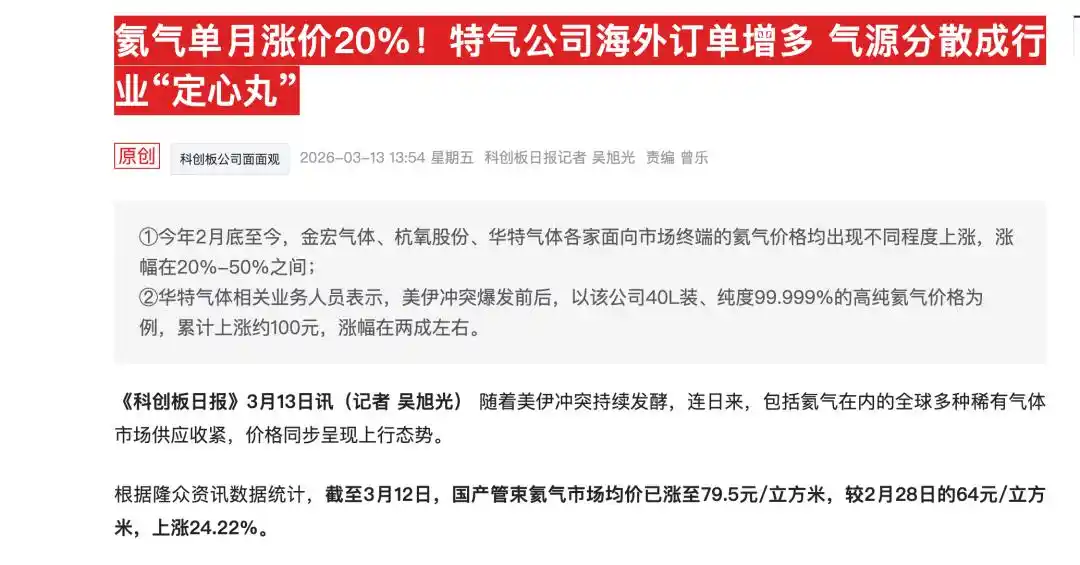
The chip industry's nerves tightened: TSMC mentioned in its April earnings call that gas and chemical prices might rise, impacting profits, and the company had prepared safety stock. Supply chain consulting firms warned more bluntly that prolonged shortages could force production cuts, affecting everything from electronics to automobiles.
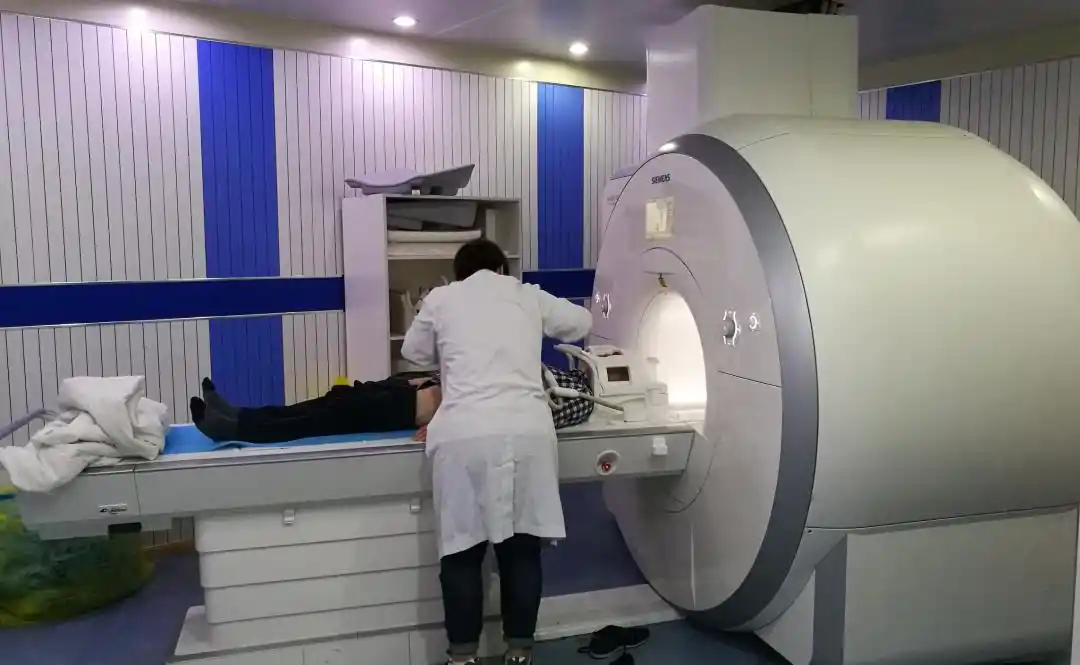
The allocation priority during shortages is also revealing: hospitals come first. One MRI machine requires about 1,500 liters of liquid helium to fill; globally, about 30% of helium is used in healthcare. Research labs, with their small contracts and low priority, are typically cut first. Chip fabs are in the middle. If shortages force cuts, the industry expects high-margin AI chips and HBM to be prioritized, while ordinary consumer-grade products are more likely to be cut.
The industry has labeled past global helium shortages with version numbers: around 2011-2013 was 2.0, around 2018-2020 was 3.0, and 2022 marked the start of 4.0. Now, the industry is already debating whether this round is just a temporary shock or 'Helium Shortage 5.0.'
The other two major players have their own issues. The United States is the world's largest producer, with ExxonMobil's field in Wyoming being one of the world's largest single helium sources. But in 2024, the US did something that seems quite peculiar in hindsight: it sold off its nearly century-old Federal Helium Reserve, including the storage reservoir and 423 miles of helium pipeline, to a private gas company, clearing the government's strategic stockpile. The world's largest producer cashed out its strategic backup in one go.
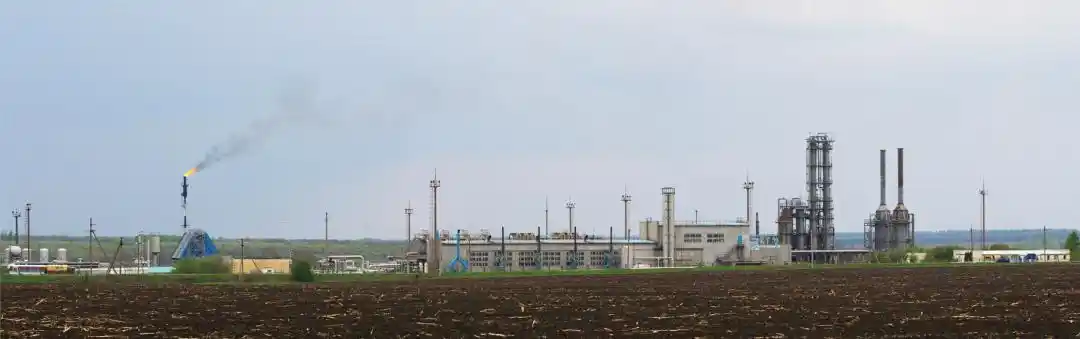
Image: Natural Gas Processing Plant
As for Russia, starting April 2026, helium exports to countries outside the Eurasian Economic Union require special government permits, a policy planned until the end of 2027.
The trouble is, the helium industry lacks an organization like OPEC, with a large pool of idle capacity ready to immediately compensate when someone goes offline.
Its global market isn't huge, but its elasticity is appallingly small. Normally, it's like an inconspicuous water pipe. Only after it breaks do people realize it's connected to MRI machines and wafer fabs.
03: You Can Play This Card Even Without the Mines
China finds itself in the most awkward position amidst this shortage.
In 2025, China's total helium supply was about 5,818 tons, of which imports were 4,913 tons, domestic production about 905 tons, resulting in an external dependence of 84.4%. Import sources are highly concentrated: Qatar accounts for about 54%, Russia about 44%, nearly 98% combined from just two countries.
On one side, affected by Qatar's production halt and transportation disruption; on the other, facing Russia's export tightening. It's like having two water pipes at home—one smashed, the other suddenly fitted with a combination lock.
Domestic tension is visible. A special gas company in Shanghai has its production line running on double shifts, with daily output doubling since the beginning of the year, yet still unable to meet demand. The person in charge of production at the factory said, 'The price changes daily.' On the demand side, wafer fab expansion is a major factor; everyone is scrambling for gas.
Yet, also in 2025, China exported about 445 tons of helium, a 96% year-on-year increase. Although exports only accounted for about 7.6% of domestic supply, with the domestic supply growing increasingly tight, this outlet seems particularly glaring.
The logic behind it isn't complicated.
Before the conflict, China's helium prices were long lower than those in Japan, South Korea, Europe, and the US. With higher prices overseas, bottled helium and liquid helium in tank containers naturally flowed towards more profitable markets. If your family's rice jar depends on deliveries, and someone is still setting up a stall downstairs selling rice, the first reaction is naturally to shut down the stall.
The ban on July 10th cut off this outward flow directly. The Ministry of Commerce's explanation was bluntly straightforward: China is a major helium importer; this action is to ensure domestic supply. It added, 'Adjustments will be made based on changes in domestic and international supply and demand.' Translation: the door isn't welded shut.
External interpretations are more colorful. Over the past three years, export controls on gallium, germanium, and rare earths have escalated step by step. The helium ban is easily placed in the same sequence, read as the latest chapter in countermeasures.
But this time is somewhat different: the legal tool used is a temporary ban under the Foreign Trade Law, not the Export Control Law. Looking at the targets of the alleged 'countermeasure,' TSMC said it expects no significant impact; SK Hynix said its supply is already diversified. Even analysis cited by AP suggests this looks more like a supply security move than a weapon.
But precisely because the whole world is short on gas, any tightening will be magnified and scrutinized globally. The fact that a ban by an importing country can alarm the entire chip industry shows just how deep this shortage has become.
So, the interesting point of playing this card may not be whom it targets.
What's truly worth a closer look is this: a helium-poor country, over 80% dependent on imports, has actually managed to accumulate something significant enough to warrant a ban.
China is a standard helium-poor country. Some helium-rich fields overseas can have helium content of a few tenths of a percent or higher. China's sources generally range from 3 to 5 parts per million—an order of magnitude or two lower. Using traditional extraction processes would be a money-losing endeavor.
The domestic solution was to collect 'scraps' from the back end of LNG plants.
When natural gas is cooled into LNG, most components liquefy. Helium, with its extremely low boiling point, stubbornly refuses to liquefy, eventually concentrating in a small stream of flash gas, known as BOG (Boil-Off Gas).
It's like after the school bell rings, all the students sit down, but helium remains standing at the door. When it was mixed among tens of thousands, it was hard to find; now, roll call is much easier.
In July 2020, in Yanchi, Ningxia, the first domestic facility extracted liquid helium from LNG tail gas. All equipment, from the cold box to the expander to the liquefier, was domestically made.
By 2025, a facility in Yan'an, Shaanxi, produced ultra-pure helium at 99.99997% (6N9 grade), passing engineering acceptance.
The journey from breaking equipment monopolies to passing acceptance for ultra-pure helium facilities took five years, all before the sound of gunfire.
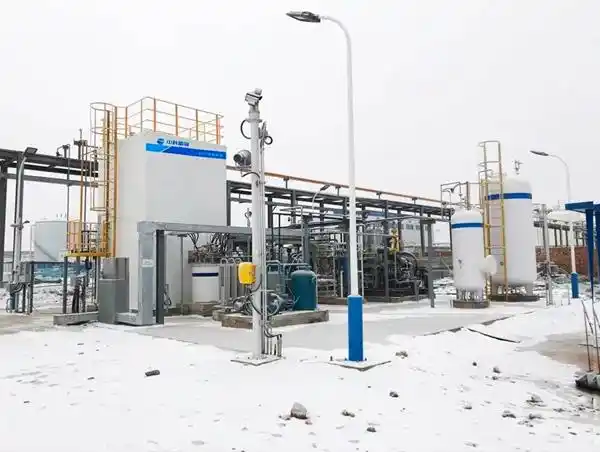
To date, domestic production volume is still not large, with a self-sufficiency rate under 20%, and the gap still filled by imports. The ban only closed the export door; import channels remain as narrow as ever. Real self-sufficiency depends on how quickly facilities like those in Yanchi and Yan'an can be replicated.
Meanwhile, globally, things will only get tighter: Qatar's damaged facilities will take years to repair; the US strategic reserve is now in private hands; Russia's permit system shows no sign of loosening; new US capacity won't come online until 2028. This shortage won't be short-lived.
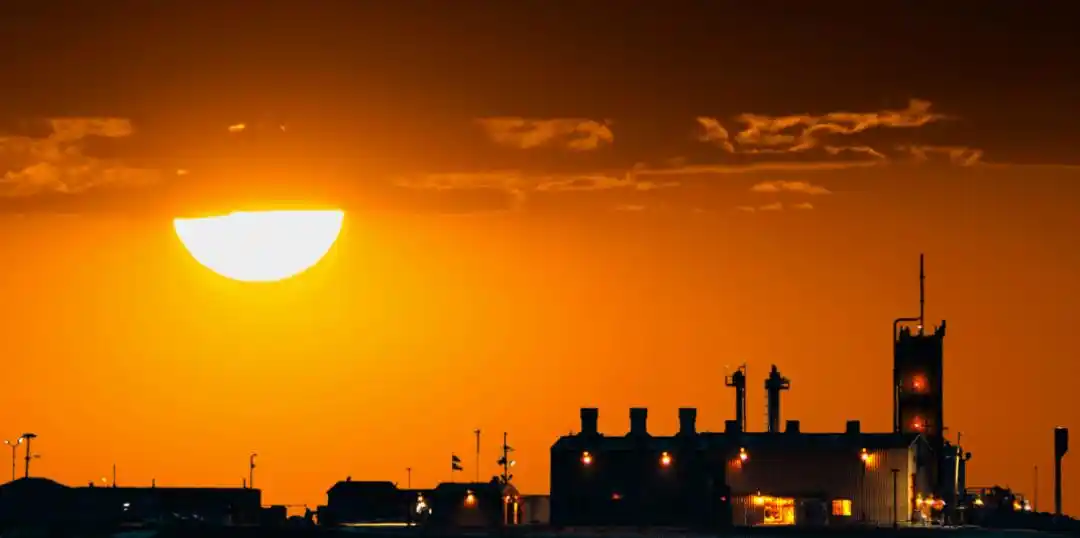
Helium has been doing the same thing since humans first started using it: floating upwards, second by second, out of the atmosphere, never to return. Over a century, people have let countless amounts of it float away, using it to fill balloons, conduct experiments, and make chips, rarely taking it seriously.
Now, those on the ground are finally starting to treat it as something that needs to be guarded.
This article is from the WeChat public account 'Cool Play Lab,' author: Cool Play Lab