# Hawkish Articoli collegati

Il Centro Notizie HTX fornisce gli articoli più recenti e le analisi più approfondite su "Hawkish", coprendo tendenze di mercato, aggiornamenti sui progetti, sviluppi tecnologici e politiche normative nel settore crypto.

The Return of the Greenspan 'Conundrum'? Could Walsh Push Long-Term Rates Down by Raising Rates?

A resurgence of the "Greenspan Conundrum" is being discussed as a potential policy option for new Fed Chair Wash. Market logic suggests that by raising short-term interest rates, Wash could strengthen the Fed's anti-inflation credibility, thereby compressing the inflation premium embedded in long-term yields and ultimately lowering borrowing costs like mortgage rates—a key goal of the Trump administration. This theory is bolstered by historical precedent. In the mid-2000s, as then-Chair Alan Greenspan raised the federal funds rate, long-term bond yields and 30-year mortgage rates fell—a phenomenon later termed the "Greenspan Conundrum." Analysts note this reflects forward-looking market pricing, where credible rate hikes can lower inflation expectations and long-term rates. Since taking office in May, Wash has consistently signaled a hawkish stance. Following his recent Senate testimony where he emphasized his independence, the 10-year Treasury yield fell sharply, mirroring the conundrum dynamic. Historical analysis shows new Fed chairs often begin with hawkish moves to establish credibility. While an immediate rate hike this week is not the base case, several FOMC members have hinted at the potential need for further tightening. Even without an immediate move, the prevailing market view is that Wash is systematically building his inflation-fighting credibility, which in itself may be the most powerful precondition for pushing long-term rates lower.

marsbitIeri 16:21

The Return of the Greenspan 'Conundrum'? Could Walsh Push Long-Term Rates Down by Raising Rates?

marsbitIeri 16:21

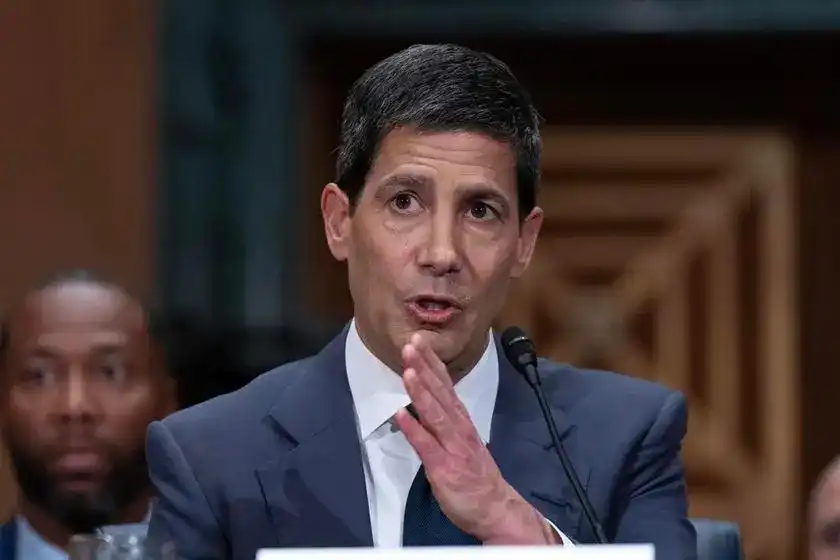
Walsh's Hearing Debut, 'New Fed Insider': Emphasizes Zero Tolerance for High Inflation but No Hint on Interest Rate Path

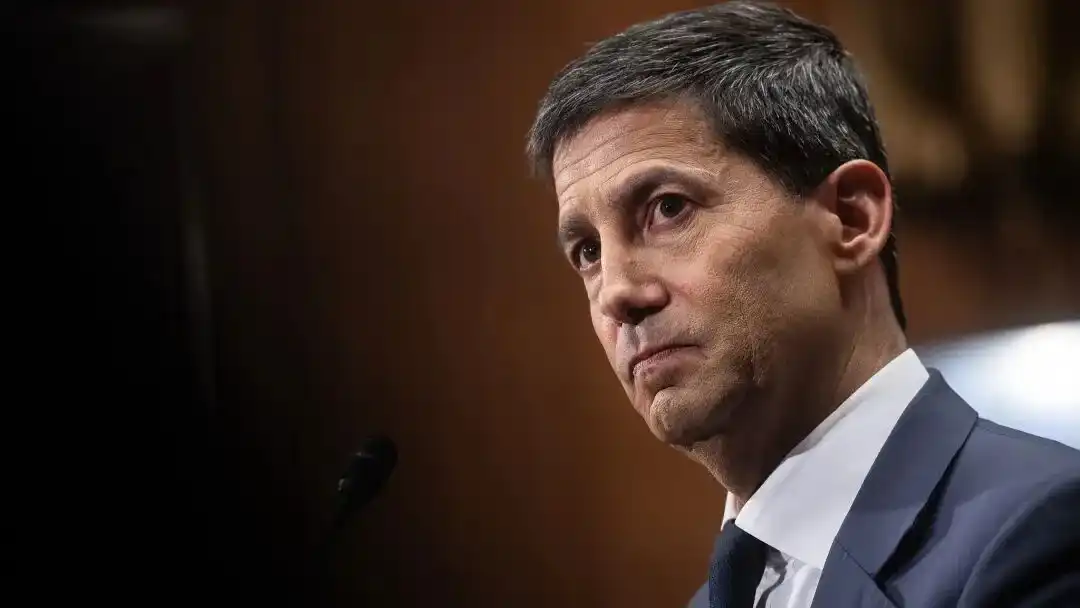
Federal Reserve Chairman Wash's inaugural congressional monetary policy hearing delivered his "new Fed policy declaration," avoiding any clear signals on future interest rate moves—whether cuts or hikes—that the market sought. Instead, he consistently emphasized the Fed's commitment to restoring price stability, maintaining central bank independence, and pledged full advance communication for any future adjustments to the balance sheet. Nick Timiraos, often called the "new Fed whisperer," noted that Wash deliberately avoided hinting at future rate paths, focusing the hearing on reaffirming the Fed's long-term goal of controlling inflation. This stance persisted even after the release of a lower-than-expected June CPI report just before the hearing, which Wash downplayed, stating he did not view the inflation mission as accomplished. Timiraos observed that Wash refrained from using the data to signal any policy inclination, instead stressing that the Fed would rely on economic data to decide how to use its policy tools—interest rates and the balance sheet—to achieve price stability. Bloomberg's analysis suggested the hearing outlined the framework of the "new Fed": upholding monetary policy independence, adhering to the 2% inflation target, rejecting the notion of a trade-off between employment and inflation, and leaving room for future balance sheet and governance reforms. Wash asserted that restoring price stability is foundational for sustained economic growth and job creation, denying any "cruel choice" between the two mandates. Regarding balance sheet reform, a key agenda item, Wash declined to prejudge an ongoing working group's conclusions but promised ample advance communication to the market to prevent sudden disruptions, reaffirming that the balance sheet should serve monetary policy, not fiscal functions. He also strongly defended the Fed's operational independence from political influence, which received positive remarks from some lawmakers across party lines. In summary, Wash's testimony did not alter the near-term interest rate outlook but reinforced a "data-dependent" communication framework. The focus remains on achieving price stability, with future policy actions hinging on incoming economic data rather than a preset path, while the Fed continues its internal reforms and emphasizes transparent communication to manage market expectations.

marsbit07/15 01:57
Walsh's Hearing Debut, 'New Fed Insider': Emphasizes Zero Tolerance for High Inflation but No Hint on Interest Rate Path

marsbit07/15 01:57

Building the Bright Path While Secretly Crossing Chencang: Is Walsh Paving the Way for a September "Rate Cut"?

The title "Building the Plank Road Openly While Secretly Crossing at Chencang: Is Walsh Paving the Way for a September 'Rate Cut'?" suggests Federal Reserve Chair Kevin Walsh's hawkish stance may be a deliberate smokescreen. Academy Securities analyst Peter Tchir argues in a report that markets, currently pricing a 75% chance of a September hike, are missing a potential path to a September rate cut that Walsh himself might be quietly preparing. Tchir posits that Walsh's hawkish rhetoric aims to suppress long-term yield risks (with the 10-year Treasury yield falling recently) while creating room for a narrative shift based on upcoming data. The potential political endgame, according to this view, could be rate cuts in September and October, ahead of the midterm elections. This hinges on a political logic where the Trump administration's preference for lower rates remains unchanged. A core part of Tchir's argument involves redefining inflation metrics. He contends the Fed under Walsh may deprioritize the PCE index, criticizing its lagging components like Owners' Equivalent Rent (OER). Instead, he points to alternative, more real-time indicators like the New Tenant Repeat Rent Index (NTRR) and the Truflation daily index, which shows core inflation around 1.45%. He suggests the Fed could shift its data narrative to justify policy easing. Furthermore, Tchir downplays AI-driven inflation fears. He argues that consumer price sensitivity, evidenced by negative market reactions to price hikes (e.g., Apple), contradicts persistent inflation narratives. He also separates AI/data center spending—which he sees as relatively rate-insensitive—from broader consumer affordability issues, implying rate hikes are misdirected. Based on this analysis, Tchir sees a re-pricing of rate cut expectations as likely, creating opportunities in short-duration Treasuries. He maintains a neutral-to-slightly-bullish view on the long end of the yield curve. For equities, he recommends a significant overweight in energy (especially global nuclear assets) and, within defense/security themes, an overweight in biotech/pharma versus an underweight in semiconductors, expressing caution on AI/data center valuations.

marsbit06/29 04:42

Building the Bright Path While Secretly Crossing Chencang: Is Walsh Paving the Way for a September "Rate Cut"?

marsbit06/29 04:42

Warsh Deals a Heavy Blow to the 'Dollar Devaluation Trade'! Gold Crashes, Bitcoin Slumps, How Long Can the Chip Frenzy Hold?

The "dollar devaluation trade" that dominated Wall Street this year is rapidly unraveling, driven by a hawkish pivot from Fed Chairman Kevin Warsh and a surging U.S. dollar. This double pressure has triggered a sharp sell-off in non-yielding assets. Gold broke below $4,000 an ounce, silver tumbled below $60, and Bitcoin fell under $60,000, with all retreating significantly from their earlier 2025 peaks. The dollar index hit a 14-month high. Warsh's emphasis on price stability has solidified market expectations for aggressive rate hikes, increasing the opportunity cost of holding assets like precious metals. Concurrently, massive fund flows are rotating out of metals and cryptocurrencies into the semiconductor sector, providing a temporary boost to stocks like Micron and SK Hynix. However, analysts warn this chip rally shows signs of a speculative top. Extreme volatility, with semiconductor stocks seeing trillion-dollar swings, is historically characteristic of major market turning points. Factors like month-end rebalancing, a flood of new equity issuance, and insider selling further signal potential exhaustion. While Micron's strong earnings briefly stemmed selling, it may offer a favorable exit point for remaining chip bulls. The sustainability of the semiconductor frenzy is now in serious doubt as the broader market reprices assets around a stronger dollar and tighter monetary policy.

华尔街日报06/25 05:49

Warsh Deals a Heavy Blow to the 'Dollar Devaluation Trade'! Gold Crashes, Bitcoin Slumps, How Long Can the Chip Frenzy Hold?

华尔街日报06/25 05:49

Fed Turns Hawkish, Wall Street Capitulates, Citi Stands as 'Last Holdout': Insists on Resuming Rate Cuts in October

Amid a surprisingly hawkish shift from the Fed and most of Wall Street capitulating on rate cut expectations, Citigroup stands as a notable outlier, holding firm to its forecast for monetary easing to restart this October. Following the June FOMC meeting, where the "dovish bias" was removed and the dot plot shifted dramatically, markets priced in nearly 37bps of tightening for 2026. Major banks like Deutsche Bank and Goldman Sachs revised their calls, predicting rate hikes as soon as September. Citigroup, however, maintains a baseline scenario for a 25bps rate cut in October, followed by two more cuts in December and January 2027. Its counter-consensus view rests on three key arguments: 1) Plunging oil prices are eliminating a major inflation upside risk. 2) Rising initial jobless claims are mirroring seasonal weakening patterns seen in 2024-2025, signaling a labor market cool-down. 3) The strong core PCE is an "outlier," heavily influenced by AI-related prices and equity market gains rather than broad consumer price pressures, with other inflation metrics showing more moderation. While Wall Street largely "surrenders" to the hawkish Fed narrative, with Deutsche Bank forecasting two hikes and Goldman Sachs warning of potential back-to-back moves, Citigroup remains the "last holdout," betting that disinflationary forces will pave the way for cuts before year-end.

marsbit06/22 10:39

Fed Turns Hawkish, Wall Street Capitulates, Citi Stands as 'Last Holdout': Insists on Resuming Rate Cuts in October

marsbit06/22 10:39

Fed's Internal Doves Flock to Hawkish Stance, Warsh's Debut "Between a Rock and a Hard Place"

U.S. Federal Reserve officials who previously advocated for rate cuts, including Governor Christopher Waller, have recently shifted their stance, with many now not ruling out the possibility of future rate hikes. This sets a challenging stage for new Fed Chair Kevin Warsh's first policy meeting. Appointed by President Trump based on his dovish views, Warsh now faces a committee where the debate has pivoted from "when to cut" to "whether to hike," driven by persistent inflation above 3%, a strong labor market, and supply-side pressures from AI infrastructure demands and geopolitical tensions. Key figures illustrate the shift. Governor Waller, once concerned about employment, now says data has pushed him toward considering rate increases. Even moderate voices like Governor Lisa Cook, while expecting inflation to ease, have indicated readiness to hike if it fails to do so. Long-time hawks such as regional Fed presidents Beth Hammack, Lorie Logan, and Neel Kashkari have grown more vocal, arguing that the real policy rate is effectively falling and that action may soon be needed. The upcoming Fed meeting is expected to keep rates steady but will likely remove the "easing bias" from its statement, signaling a neutral stance between cuts and hikes. The quarterly "dot plot" is anticipated to show most officials projecting no cuts this year, with some potentially indicating hikes. Chair Warsh, a critic of the Fed's reliance on forward guidance like the dot plot, must navigate communicating this pivot using tools he has questioned, all while steering policy in a direction counter to the preferences of the president who appointed him. The consensus suggests the Fed's next move could well be a rate increase.

marsbit06/17 05:21

Fed's Internal Doves Flock to Hawkish Stance, Warsh's Debut "Between a Rock and a Hard Place"

marsbit06/17 05:21

Warsh's First Day in Office, Markets Deliver a 'Wake-up Call': Rate Hike Expected This Year

On his first day in office, newly inaugurated Federal Reserve Chairman Warsh received a stark market warning, with expectations now fully pricing in a 25-basis-point interest rate hike this year. The shift was triggered by hawkish remarks from Fed Governor Waller, who stated that inflation is now the key policy "driver" and that the odds of a hike or cut are evenly split. This sent short-term Treasury yields higher. Waller signaled a significant pivot in his stance, citing disappointing inflation and labor data. He suggested removing "easing bias" language from Fed statements and did not rule out future rate increases if inflation fails to recede, though he noted immediate action isn't warranted without signs of unanchored inflation expectations. Chairman Warsh faces immediate pressure at his first FOMC meeting in June. With the preferred inflation gauge at a three-year high, analysts warn that failing to hike could be interpreted as an implicit easing of policy. The geopolitical situation in the Middle East is adding to existing price pressures. The market's expectation for a hike contrasts sharply with earlier forecasts for multiple cuts. While long-term Treasury yields have been contained by lower energy prices recently, analysts note they remain under structural upward pressure. Warsh's swearing-in at the White House highlights political scrutiny over Fed independence. However, the market has made it clear that inflation is the most urgent challenge, leaving the new chairman little time to settle in.

marsbit05/23 05:17

Warsh's First Day in Office, Markets Deliver a 'Wake-up Call': Rate Hike Expected This Year

marsbit05/23 05:17

活动图片