The Return of the Greenspan 'Conundrum'? Could Walsh Push Long-Term Rates Down by Raising Rates?

marsbitPubblicato 2026-07-27Pubblicato ultima volta 2026-07-27

Introduzione

A resurgence of the "Greenspan Conundrum" is being discussed as a potential policy option for new Fed Chair Wash. Market logic suggests that by raising short-term interest rates, Wash could strengthen the Fed's anti-inflation credibility, thereby compressing the inflation premium embedded in long-term yields and ultimately lowering borrowing costs like mortgage rates—a key goal of the Trump administration. This theory is bolstered by historical precedent. In the mid-2000s, as then-Chair Alan Greenspan raised the federal funds rate, long-term bond yields and 30-year mortgage rates fell—a phenomenon later termed the "Greenspan Conundrum." Analysts note this reflects forward-looking market pricing, where credible rate hikes can lower inflation expectations and long-term rates. Since taking office in May, Wash has consistently signaled a hawkish stance. Following his recent Senate testimony where he emphasized his independence, the 10-year Treasury yield fell sharply, mirroring the conundrum dynamic. Historical analysis shows new Fed chairs often begin with hawkish moves to establish credibility. While an immediate rate hike this week is not the base case, several FOMC members have hinted at the potential need for further tightening. Even without an immediate move, the prevailing market view is that Wash is systematically building his inflation-fighting credibility, which in itself may be the most powerful precondition for pushing long-term rates lower.

Author: Wall Street News

The new Federal Reserve Chair, Kevin Walsh, is facing a policy choice with a distinct historical echo: raising interest rates might actually push long-term rates down, thereby achieving the Trump administration's much-desired goal of lowering mortgage rates.

As the Federal Reserve's policy meeting convenes this week, bond markets have priced in a 38% probability of a target increase in the federal funds rate, a significant jump from less than 10% before Walsh's testimony at the Senate Banking Committee hearing. Bloomberg Economics' Fed Official Sentiment Index indicates that the overall hawkishness of policymakers is currently at its highest since the start of the 2023 tightening cycle, with a marked hawkish tilt among the seven voting members.

Although a rate hike is not the base case this time, this logic chain is quietly circulating in the market: If Walsh uses a rate hike to reinforce his anti-inflation credibility, it could squeeze the inflation premium embedded in long-term rates, thereby pushing down real borrowing costs like mortgage rates and auto loan rates—precisely the outcome the White House truly desires.

This logic is not without precedent; history provides an example. The late Fed Chair Alan Greenspan faced a similar situation in 2004: The Fed raised its federal funds rate target from 1% to 4.75% by early 2006, yet long-term bond yields fell instead of rising, with the 30-year mortgage rate declining from a mid-2004 high of 6.34% to a low of 5.47% a year later. This phenomenon later became known as the Greenspan "Conundrum."

However, Bloomberg Opinion Executive Editor Robert Burgess points out that this is less of a "conundrum" and more a manifestation of the market's forward-looking pricing mechanism—each rate hike strengthens investors' assessment of the credibility of the central bank's commitment to fighting inflation, putting downward pressure on long-term rates.

Treasury Secretary Bessent is no stranger to the aforementioned logic. He explicitly stated early last year that his and President Trump's policy focus was on lowering long-term rates, not pushing the Fed to cut short-term target rates. Wells Fargo Securities Chief Economist Tom Porcelli highlighted this line of thinking in a research note to clients last week:

"We frequently hear from those who believe the Fed will raise rates soon that, by doing so, Walsh could achieve what he and Bessent truly want—lower long-term rates. The logic is that a rate hike would strengthen Walsh's anti-inflation credibility and compress the inflation premium embedded in the long-end of the yield curve."

Since taking over from Powell as Fed Chair in May, Walsh has consistently signaled a tough stance. At the July 15 Senate Banking Committee hearing, when pressed on whether he maintains communication with President Trump, Walsh stated clearly:

"I have said the same thing repeatedly to the President and the Treasury Secretary: They chose an independent person to do an independent job, and that is exactly what I plan to do."

Bloomberg Economics' assessment of the hearing noted that Walsh "showed his hawkish side unapologetically," believing the task of price stability is more severe than that of full employment after 63 consecutive months of inflation exceeding the Fed's 2% target. Walsh also pointed out that AI infrastructure construction is exacerbating inflationary pressures because demand-side shocks materialize faster than supply-side responses.

Notably, as Walsh spoke, the yield on the 10-year Treasury note fell, posting its largest single-day decline in three weeks—a miniaturized replay of the "Greenspan Conundrum," where hawkish talk actually lowered long-term rates.

Historical precedent is also worth examining. According to research by TS Lombard strategist Dario Perkins, Paul Volcker initiated rate hikes less than two months after becoming Fed Chair; Alan Greenspan, Ben Bernanke, and Jerome Powell all acted within one month of taking office. Only Janet Yellen was an exception—she didn't raise rates until 22 months into her tenure. Perkins wrote in a research note to clients:

"Newcomers always start hawkish; it helps build anti-inflation credibility. Volcker once summed up this atmosphere in one sentence, welcoming Greenspan's first rate hike with the words: 'Congratulations—you are now a real central banker.'"

However, practical constraints cannot be ignored. The latest inflation data show price pressures have moderated somewhat. The five working groups Walsh announced to conduct a comprehensive review of the Fed's operations are expected to release their findings by year-end—the timing of abruptly tightening monetary policy before these conclusions are announced is delicate. Furthermore, Walsh holds only one vote on the FOMC; changing the policy rate requires support from seven votes.

Still, with several members already hinting that further policy tightening may be needed, this threshold might not be as difficult to cross as it appears. Even if no hike occurs this week, the prevailing market judgment is: Walsh is systematically reinforcing his anti-inflation credibility, and that in itself may already be the most powerful precondition for pushing long-term rates down.


Crypto di tendenza

Domande pertinenti

QWhat is the 'Greenspan Conundrum' mentioned in the article, and why is it relevant to current Fed policy?

AThe 'Greenspan Conundrum' refers to the phenomenon, observed in 2004-2006, where the Federal Reserve raised the federal funds rate from 1% to 4.75%, but long-term bond yields and 30-year mortgage rates fell instead of rising. The article suggests this is relevant today because it presents a potential policy path for new Fed Chair Waller: raising short-term rates to reinforce the Fed's inflation-fighting credibility, which could subsequently lower the inflation premium embedded in long-term rates, thereby reducing borrowing costs like mortgage rates—an outcome desired by the administration.

QAccording to the article, what is the logic behind the argument that Chair Waller might raise rates to lower long-term interest rates?

AThe logic is that by raising the federal funds rate, Chair Waller would solidify the Federal Reserve's credibility in fighting inflation. A stronger anti-inflation commitment would reduce the inflation risk premium that investors demand in long-term bond yields. This compression of the long-term yield would lead to lower rates for mortgages, auto loans, and other long-term borrowing, which is a stated goal of the Trump administration.

QHow did financial markets react to Chair Waller's hawkish testimony before the Senate Banking Committee, according to the article?

AFollowing Chair Waller's notably hawkish testimony before the Senate Banking Committee, the 10-year U.S. Treasury yield fell, marking its biggest one-day drop in three weeks. The article describes this as a mini-version of the 'Greenspan Conundrum,' where a hawkish stance (signaling potential rate hikes) paradoxically led to a decrease in long-term interest rates.

QWhat historical pattern regarding new Fed Chairs and interest rate hikes does the article cite?

AThe article cites research showing a historical pattern where new Federal Reserve Chairs often begin their tenure with a hawkish move. Paul Volcker raised rates within two months of taking office. Alan Greenspan, Ben Bernanke, and Jerome Powell all implemented their first rate hikes within one month of becoming Chair. Janet Yellen was the exception, waiting 22 months before her first hike. This pattern is seen as a way for new chairs to establish anti-inflation credibility early on.

QWhat are some of the practical constraints that might prevent an immediate rate hike by Chair Waller, as noted in the article?

AThe article notes several practical constraints: recent inflation data has shown some moderation in price pressures; Chair Waller has initiated a comprehensive review of the Fed's operations via five working groups, with results expected by year-end—making a policy shift before the review's conclusion seem delicate; and he holds only one vote on the Federal Open Market Committee (FOMC), requiring support from six other members to change the policy rate, though the article suggests this threshold may not be as high as it seems given other members' hints at needing further tightening.

Letture associate

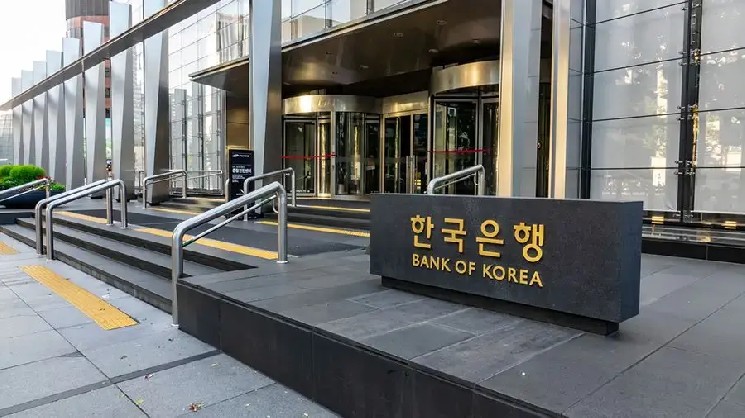
Bank of Korea Reveals Results of Tokenized Deposit Testing

The Bank of Korea has announced the results of its pilot test for tokenized deposits. Involving 28 central banks and international financial organizations, the project saw participation from major South Korean banks including KB Kookmin Bank, NH NongHyup Bank, Shinhan Bank, Woori Bank, and Hana Bank. Transactions, from payment orders to final settlement, were completed in real time, averaging just 80 seconds. The test involved 30 transactions across 17 different scenarios—such as corporate and interbank transfers—and was conducted in six currencies, including the Korean won, US dollar, and euro, with a total transaction value reaching approximately $995,000. The central bank reported that the platform operated stably throughout, despite being only partially connected to the existing banking infrastructure. Settlements using tokenized deposits were executed seamlessly, quickly, and transparently. An internal transfer of 20 million won (about $13,890) between NH NongHyup Bank and Shinhan Bank was also successfully processed via the Project Agora platform, which involved connecting to the Bank of Korea's CBDC test platform, Project Hangang. Additionally, KB Kookmin Bank and Japan's MUFG Bank tested cross-border payments using these deposit tokens—digital certificates issued by commercial banks within the pilot, not directly by the central bank. The Bank of Korea plans to continue testing payments with tokenized deposits. This follows last year's pledge by South Korean authorities to tighten regulations for won-based stablecoins, which will require approval from both the central bank and the Financial Services Commission.

cryptonews.ru1 h fa

Bank of Korea Reveals Results of Tokenized Deposit Testing

cryptonews.ru1 h fa

Trading

Spot

Articoli Popolari

Come comprare PUSH

Benvenuto in HTX.com! Abbiamo reso l'acquisto di Push Protocol (PUSH) semplice e conveniente. Segui la nostra guida passo passo per intraprendere il tuo viaggio nel mondo delle criptovalute.Step 1: Crea il tuo Account HTXUsa la tua email o numero di telefono per registrarti il tuo account gratuito su HTX. Vivi un'esperienza facile e sblocca tutte le funzionalità,Crea il mio accountStep 2: Vai in Acquista crypto e seleziona il tuo metodo di pagamentoCarta di credito/debito: utilizza la tua Visa o Mastercard per acquistare immediatamente Push ProtocolPUSH.Bilancio: Usa i fondi dal bilancio del tuo account HTX per fare trading senza problemi.Terze parti: abbiamo aggiunto metodi di pagamento molto utilizzati come Google Pay e Apple Pay per maggiore comodità.P2P: Fai trading direttamente con altri utenti HTX.Over-the-Counter (OTC): Offriamo servizi su misura e tassi di cambio competitivi per i trader.Step 3: Conserva Push Protocol (PUSH)Dopo aver acquistato Push Protocol (PUSH), conserva nel tuo account HTX. In alternativa, puoi inviare tramite trasferimento blockchain o scambiare per altre criptovalute.Step 4: Scambia Push Protocol (PUSH)Scambia facilmente Push Protocol (PUSH) nel mercato spot di HTX. Accedi al tuo account, seleziona la tua coppia di trading, esegui le tue operazioni e monitora in tempo reale. Offriamo un'esperienza user-friendly sia per chi ha appena iniziato che per i trader più esperti.

571 Totale visualizzazioniPubblicato il 2024.12.13Aggiornato il 2026.06.02

Come comprare PUSH

Discussioni

Benvenuto nella Community HTX. Qui puoi rimanere informato sugli ultimi sviluppi della piattaforma e accedere ad approfondimenti esperti sul mercato. Le opinioni degli utenti sul prezzo di PUSH PUSH sono presentate come di seguito.

活动图片