# Cooling Articoli collegati

Il Centro Notizie HTX fornisce gli articoli più recenti e le analisi più approfondite su "Cooling", coprendo tendenze di mercato, aggiornamenti sui progetti, sviluppi tecnologici e politiche normative nel settore crypto.

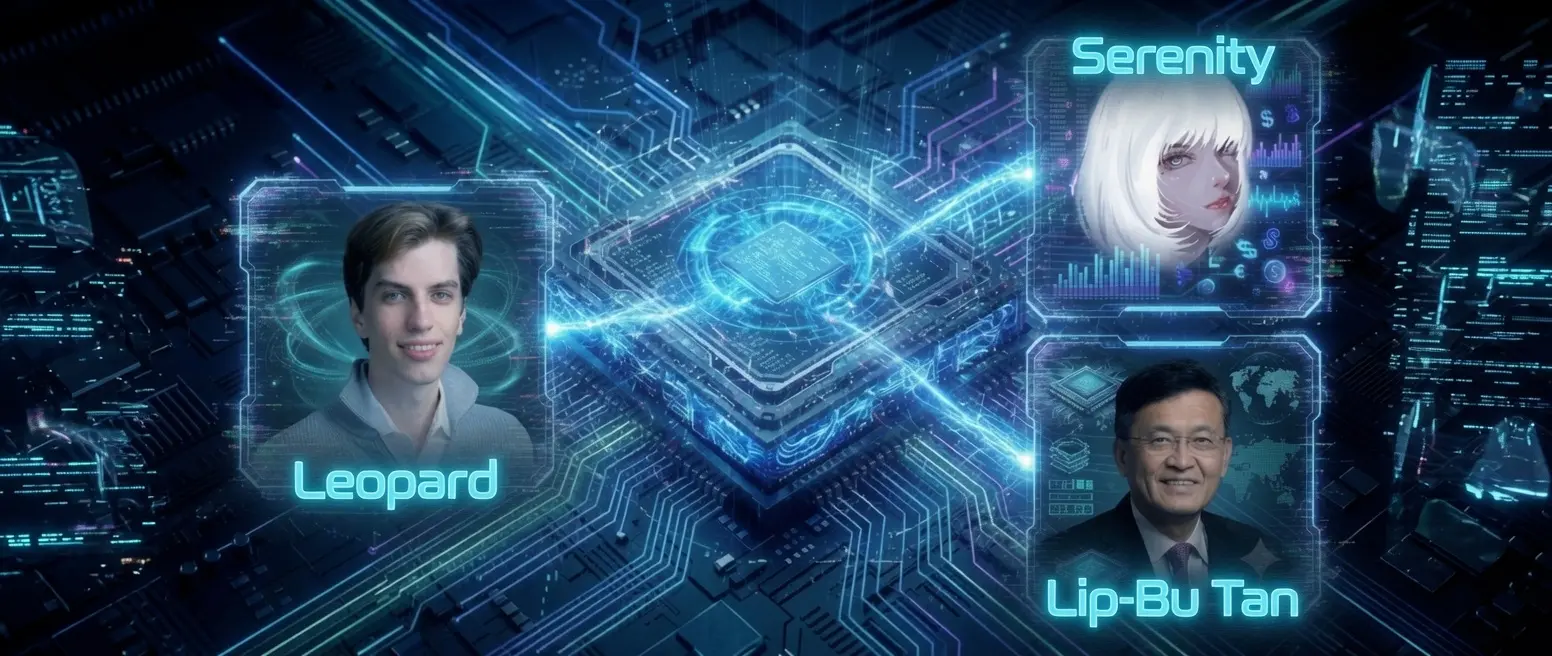
From the White-Haired Stock God to the Billion-Dollar Fund Titan: The Smart People Shorting NVIDIA Are Getting Rich Using the Same Framework

From "white-haired stock god" to billionaire fund manager, those profiting from shorting NVIDIA share a common framework. The article analyzes the critical bottlenecks in the AI hardware supply chain, which have become key investment focal points. The core argument is that the real constraint on the AI boom isn't software or algorithms, but fundamental physical infrastructure. The piece dissects nine major bottlenecks, organized around the lifecycle of an AI accelerator circuit board. *Before the Board*: The pre-manufacturing stage faces constraints in EDA tools, new materials (like GaN, SiC, InP) replacing silicon, and the critical, non-renewable supply of helium for semiconductor fabrication. *On the Board*: The primary bottlenecks are High-Bandwidth Memory (HBM), essential for unleashing GPU power, and advanced packaging (e.g., CoWoS), required to integrate components. Both are in severe shortage. *Between Boards*: Chip-to-chip communication is hitting limits with copper, pushing photonics and optical interconnects (CPO) as the next-gen solution, with NVIDIA heavily investing in this area. *Around the Board*: Power delivery requires new materials (GaN/SiC) for efficient voltage conversion from 48V to sub-1V. High-density AI racks (120kW+) are forcing a shift from air to liquid cooling as the standard. *Beyond the Board*: The ultimate bottleneck is electricity. AI data centers consume power equivalent to mid-sized cities, and grid expansion lags far behind demand, causing project delays and a scramble for power contracts. Prominent investors like Leopold and "white-haired stock god" are heavily betting on these infrastructure bottlenecks. Leopold's fund, for instance, holds no NVIDIA stock but uses massive put options to short the semiconductor sector while going long on power and physical infrastructure. His thesis is that while chip competition may eventually erode margins, the scarcity of foundational elements like electricity is more persistent. The framework's validity is tied to the supply-demand gap. Major new capacity in HBM and photonics is scheduled for 2027-2028, but demand continues to outpace it. Experts like Intel's CEO suggest no relief before 2028. However, the article warns of a potential reversal around 2028-2029 if AI capex slows and new capacity floods the market, turning scarcity into oversupply. Until then, the imbalance persists.

链捕手06/26 01:29

From the White-Haired Stock God to the Billion-Dollar Fund Titan: The Smart People Shorting NVIDIA Are Getting Rich Using the Same Framework

链捕手06/26 01:29

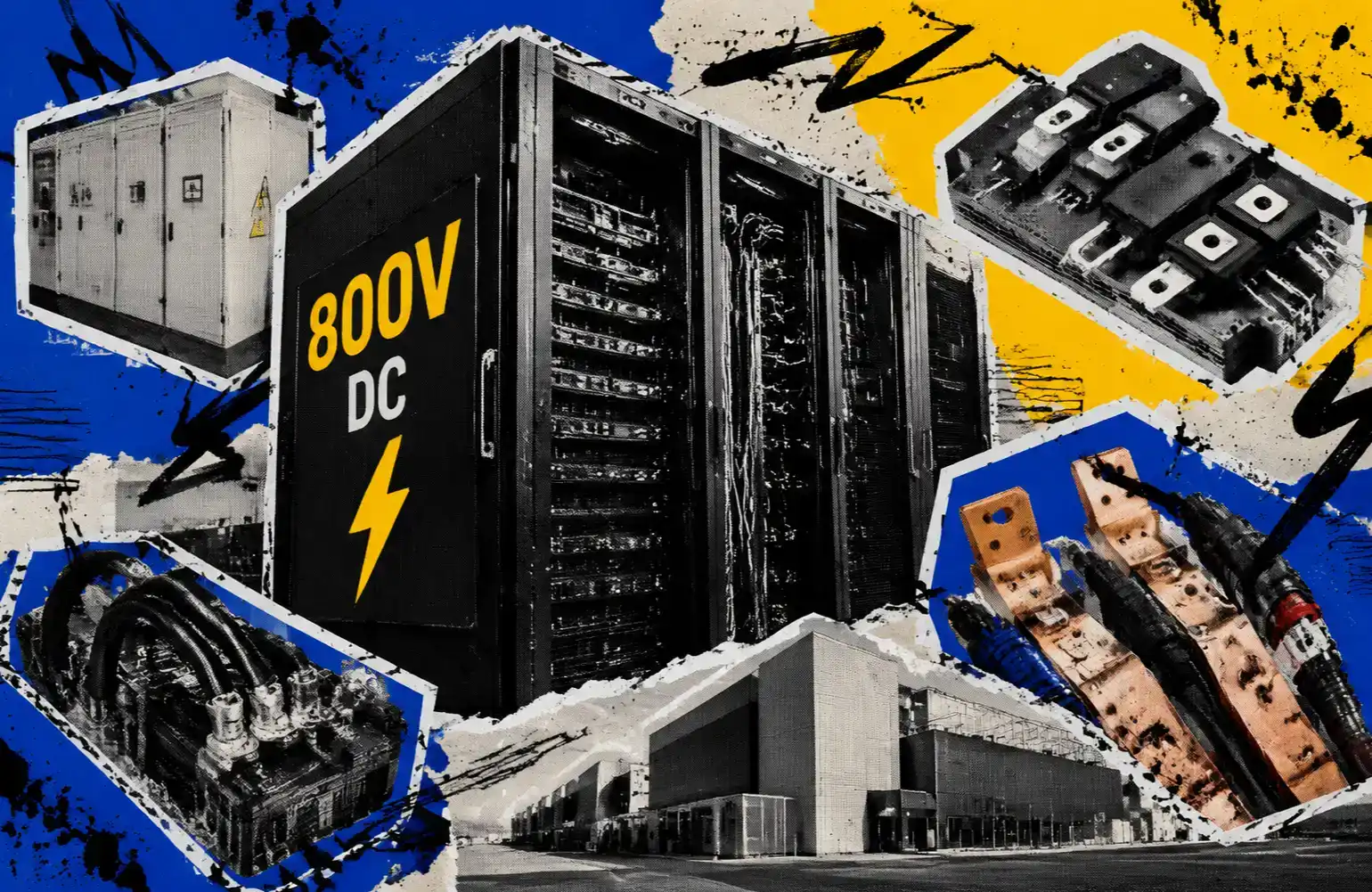
The 800V Voltage Standard Championed by Nvidia: Which Infrastructure Providers Stand to Benefit?

NVIDIA is actively promoting the 800VDC architecture as a key direction for its next-generation AI factories and high-power racks, particularly for the upcoming Rubin and Kyber platforms. The primary driver is the rapidly increasing power density of AI racks, with designs like GB200/GB300 NVL72 reaching 120-140kW and future systems potentially hitting 180-220kW. At such high power levels, traditional low-voltage power delivery becomes inefficient due to massive current, leading to significant copper use, cable bulk, heat, and power loss. The 800VDC standard aims to increase efficiency by transmitting power at higher voltage and lower current to the rack before stepping it down locally for GPUs. NVIDIA claims this can improve efficiency by up to 5%, reduce total cost of ownership (TCO) by up to 30%, and cut copper usage by approximately 45%. This shift redefines infrastructure roles, pushing power engineering to the forefront alongside GPU performance. Key beneficiaries and ecosystem partners highlighted include: 1. **Power Infrastructure Providers:** Companies like Vertiv, Schneider Electric, Delta Electronics (台达电), and Korean firms LS Electric and HD Hyundai Electric are involved in designing next-gen AI factory power distribution, rack power supplies, and backup systems. 2. **Power Semiconductors:** Suppliers of SiC/GaN devices, such as Infineon and STMicroelectronics, are better suited for high-voltage, high-efficiency conversion in this new architecture. 3. **Connectivity & Structure:** The focus shifts to high-reliability components like busbars, high-voltage connectors, and advanced PCBs that meet stricter insulation and safety requirements. 4. **Liquid Cooling & Rack ODM:** As power and heat density rise, liquid cooling becomes critical. Full-rack system integrators (e.g., Dell, Wiwynn, Wistron) must now demonstrate robust pre-delivery testing capabilities, including burn-in testing under full load, requiring significant power and cooling infrastructure in their factories. The transition is not immediate for all data centers but is targeted at high-density AI factories. NVIDIA’s 800VDC ecosystem is in a preparatory phase, with full-scale production expected to align with the 2027 launch of Kyber rack-scale systems. The investment thesis revolves around which companies can demonstrate proven product integration, customer validation, and reliable delivery of complete, high-power AI rack systems, making power, cooling, and testing capabilities new critical variables in the AI infrastructure value chain alongside GPUs.

marsbit06/15 09:41

The 800V Voltage Standard Championed by Nvidia: Which Infrastructure Providers Stand to Benefit?

marsbit06/15 09:41

Behind Musk and Huang Jen-hsun's 'AI Factories', an Unseen Battle for Freshwater Has Begun

Behind the "AI factories" of Elon Musk and Jensen Huang lies a hidden battle for a critical resource: fresh water. As AI models like ChatGPT and Claude process billions of prompts daily, they consume vast amounts of water for cooling. By 2030, global AI infrastructure is projected to use 9.3 trillion liters annually—enough to meet the basic needs of 1.3 billion people. This "water grab" stems from the massive heat generated by high-powered GPUs. Over 70% of data centers use evaporative cooling systems, where water absorbs heat and evaporates into the atmosphere, depleting local groundwater. Training models like GPT-4 can consume over 600 million liters of water. Tech giants like Google and Microsoft report skyrocketing water usage, sparking conflicts with local communities over resources. A flashpoint occurred in Memphis, Tennessee, where Musk's xAI built the Colossus supercomputer. It draws nearly 3.8 million liters of drinking water daily from local aquifers, leading to public outrage and legal action. In response, xAI is building an $80 million water recycling plant to use treated wastewater instead. Facing pressure, companies like Microsoft promote "waterless" closed-loop cooling systems. However, these systems increase electricity consumption by 20-30%, shifting the water burden to power plants, which require immense cooling water themselves—a case of indirect water footprint transfer. For China's AI industry, this crisis offers a strategic warning and opportunity. Instead of replicating the West's resource-intensive model, China can leverage its "East Data, West Computing" policy to locate data centers in cooler, water-rich regions like Guizhou. Furthermore, developing lightweight edge computing for smart homes and embodied AI robots can drastically reduce the need for constant cloud queries, cutting both water and energy consumption at the source. The freshwater war underscores a fundamental question: Will AI be a tool for human advancement or a silicon-based monster competing for our planet's last drops of clean water? The answer is becoming clearer as the water vapor rises.

marsbit06/11 05:23

Behind Musk and Huang Jen-hsun's 'AI Factories', an Unseen Battle for Freshwater Has Begun

marsbit06/11 05:23

NVIDIA Launches DSX Platform, Expanding into AI Factory Infrastructure

NVIDIA has unveiled the DSX platform at its GTC Taipei event, marking a strategic expansion from GPU sales into comprehensive AI factory infrastructure solutions. The platform addresses challenges like power supply, cooling, and resource orchestration as AI models scale, shifting the industry focus from single-chip performance to overall infrastructure efficiency. DSX integrates NVIDIA's chips, systems, software, and partner technologies to cover the entire AI factory lifecycle—from design and simulation to deployment and operations. It aims to accelerate deployment, improve reliability and operational efficiency, and reduce the cost per generated token in AI inference. The software suite includes DSX MaxLPS, which uses 45°C liquid cooling and rack-level optimization to allow up to 40% more GPUs per megawatt, and DSX OS, an open-source platform for AI factory operations. The platform also encompasses reference designs, digital twin simulation (DSX Sim), dynamic workload adjustment based on grid conditions (DSX Flex), and data exchange between systems. Early adopters include cloud providers like CoreWeave and Lambda. Major hardware partners, including Dell, HPE, Lenovo, and Supermicro, are developing DSX-ready systems. Pilot projects for DSX Flex are underway with energy providers. Strategically, DSX represents NVIDIA's ongoing transition from an AI chip supplier to a full-stack AI infrastructure platform provider, aiming to set industry standards and solidify its market leadership.

marsbit06/01 04:27

NVIDIA Launches DSX Platform, Expanding into AI Factory Infrastructure

marsbit06/01 04:27

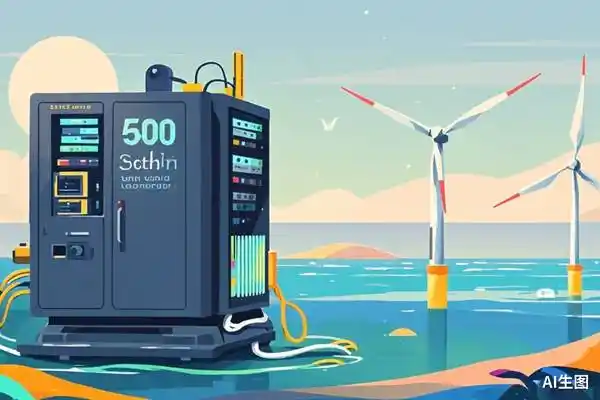
Sinking Servers into the Sea? They're Dead Serious About This

Sinking Servers into the Sea: A Serious Undertaking The article details China's launch of the world's first offshore, directly wind-powered, subsea data center in the East China Sea near Shanghai. This 1.95 billion yuan project houses over 2,000 servers in a submerged 10-meter-deep module. It is directly powered by a nearby offshore wind farm (over 95% green energy) and cooled by seawater. This innovative approach tackles the two core challenges of data centers: massive power consumption and heat dissipation. It achieves an exceptional Power Usage Effectiveness (PUE) of 1.15, far better than China's national average of 1.48, saving an estimated 61 million kWh of electricity annually. It also uses no freshwater and requires significantly less land. The concept builds upon earlier experiments, like Microsoft's Project Natick, which proved servers could reliably operate underwater with lower failure rates due to a stable, inert environment. The Shanghai project advances the model by co-locating with wind farms, simultaneously solving both the power source and cooling source problems in an economically viable way. This integration reduces infrastructure costs and eliminates grid transmission losses for the electricity used on-site. Looking ahead, the vision is to integrate data center modules directly into the foundations of future large-scale, deep-sea wind turbines. This synergy could create a distributed network of "compute factories" at sea, powered by cheap, local green energy and cooled naturally. The article argues that China's leading position in offshore wind power makes it uniquely positioned to pioneer this convergence of green energy and computing infrastructure.

marsbit05/20 04:29

Sinking Servers into the Sea? They're Dead Serious About This

marsbit05/20 04:29

活动图片